Comparing Fractions Adding up to 100 Misc Worksheets for Ages 7-9
10 filtered results
-
From - To
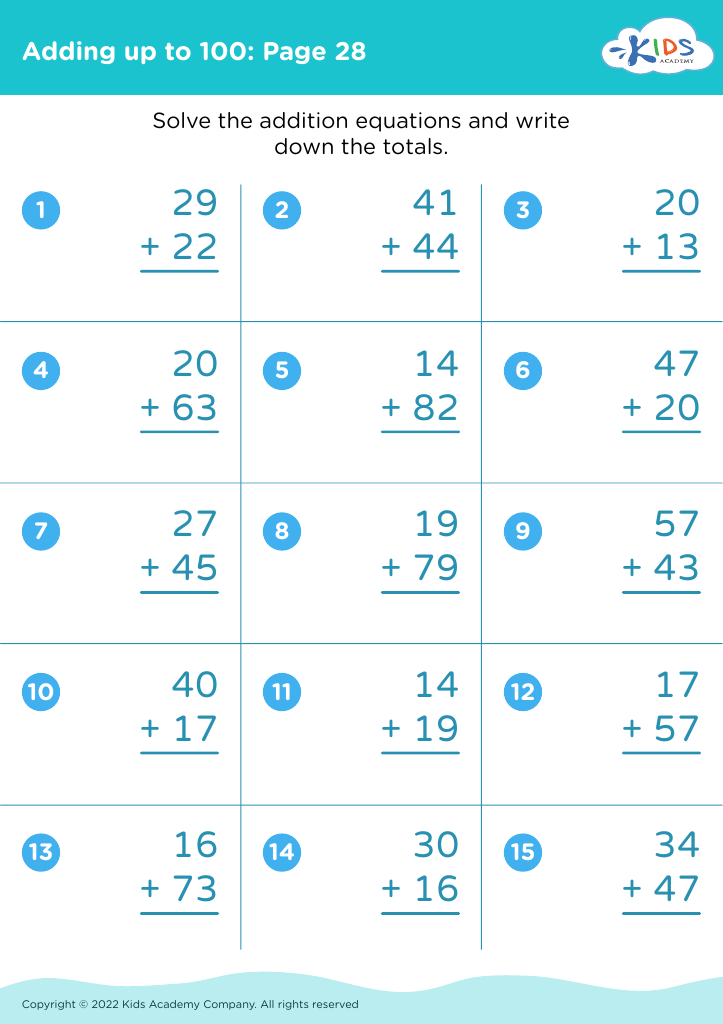
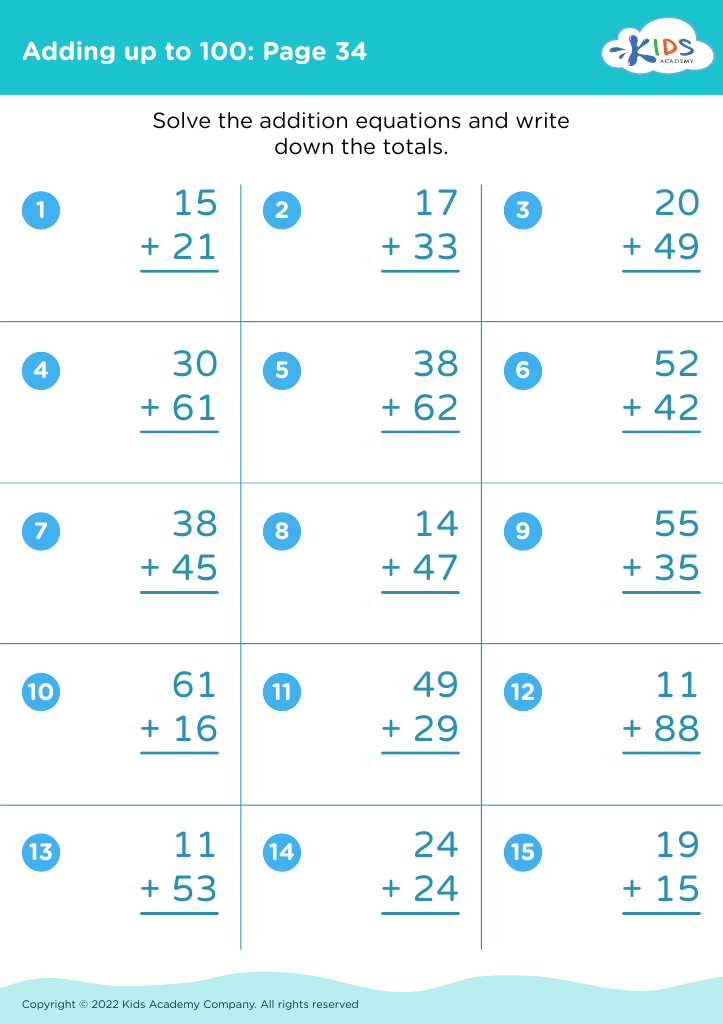
Discover our engaging "Comparing Fractions Adding Up to 100" worksheets designed for children aged 7-9. These resources will help young learners develop a solid understanding of fractions while enhancing their arithmetic skills. Each worksheet features fun and interactive exercises that encourage students to compare different fractions, building essential reasoning skills as they explore how fractions relate to one another while adding up to 100. Perfect for classroom use or at-home practice, these worksheets make learning about fractions enjoyable and accessible. Equip your child with the tools they need to excel in math by integrating these valuable resources into their study routine!
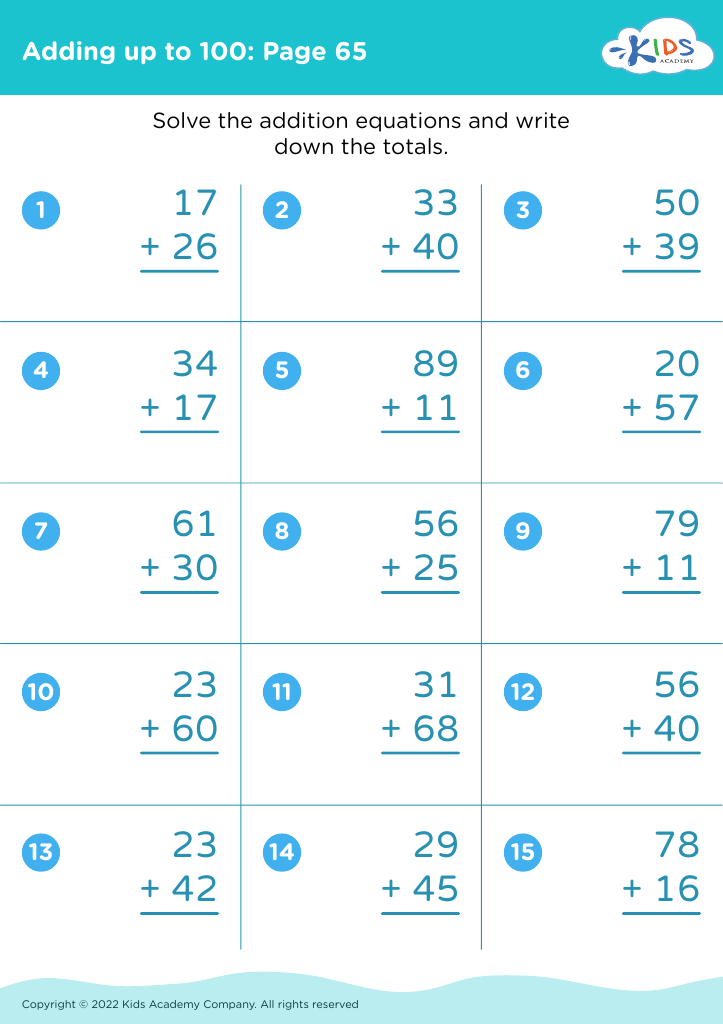
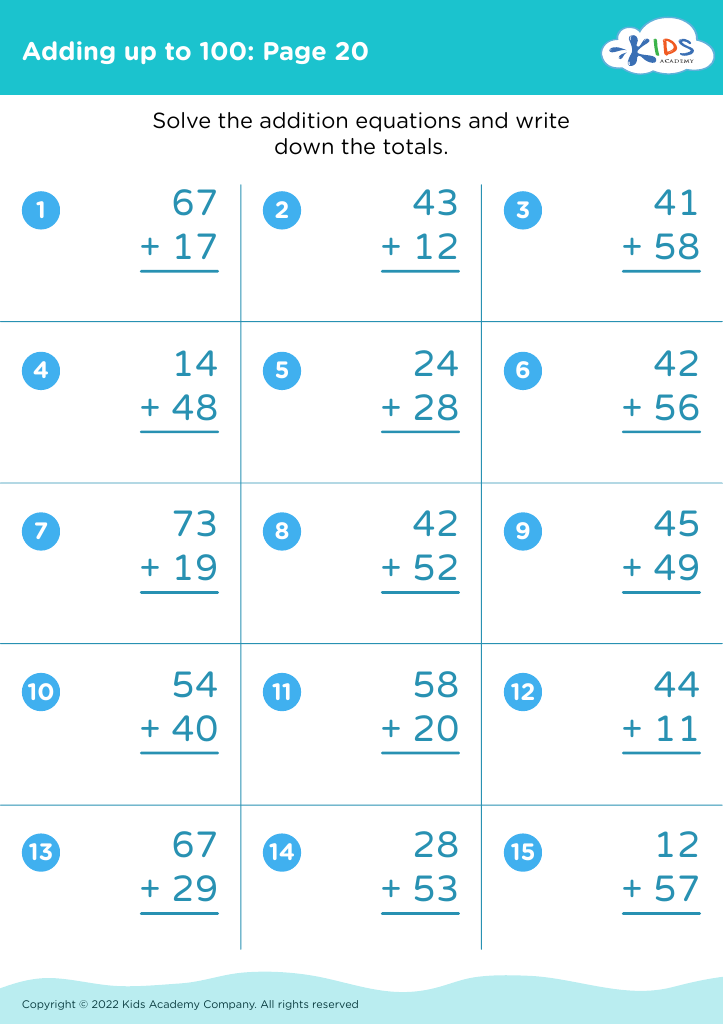
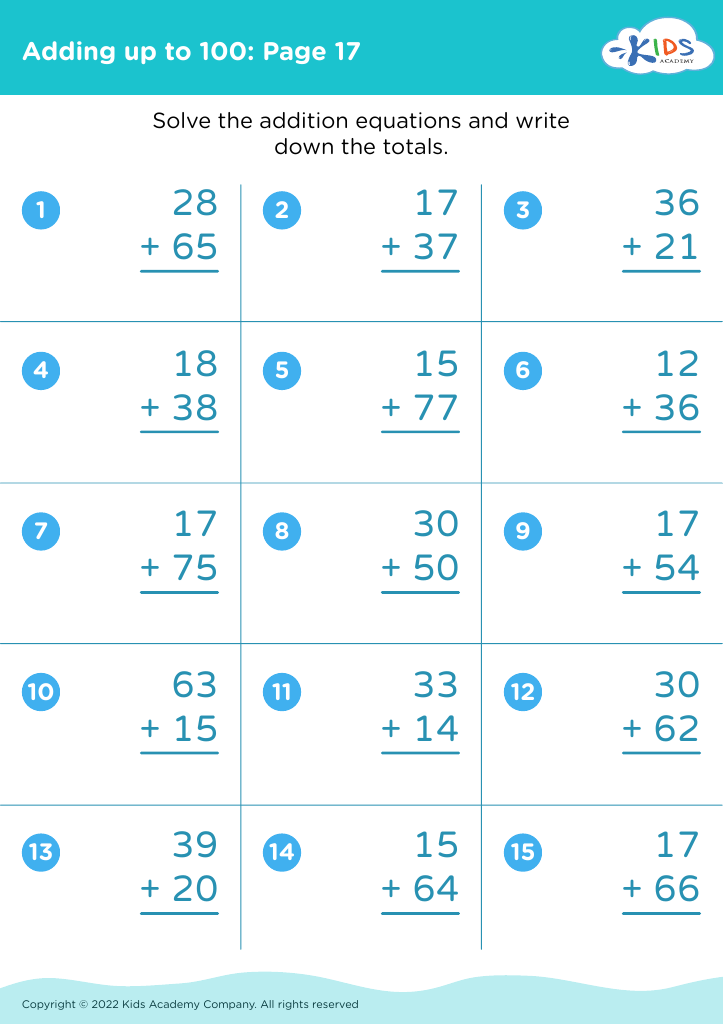
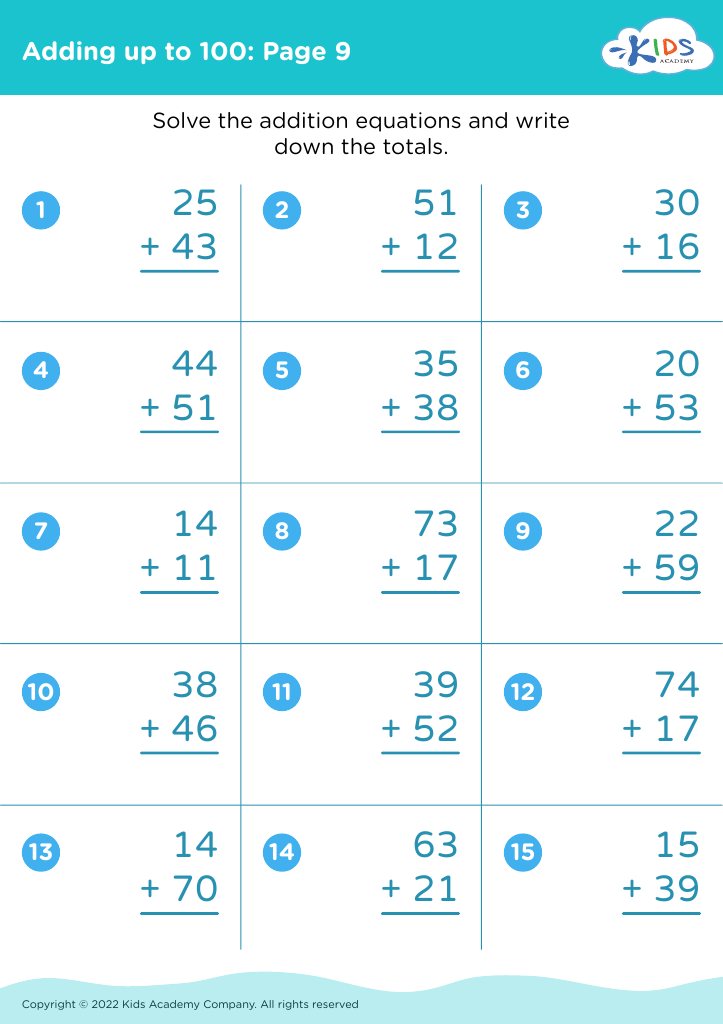
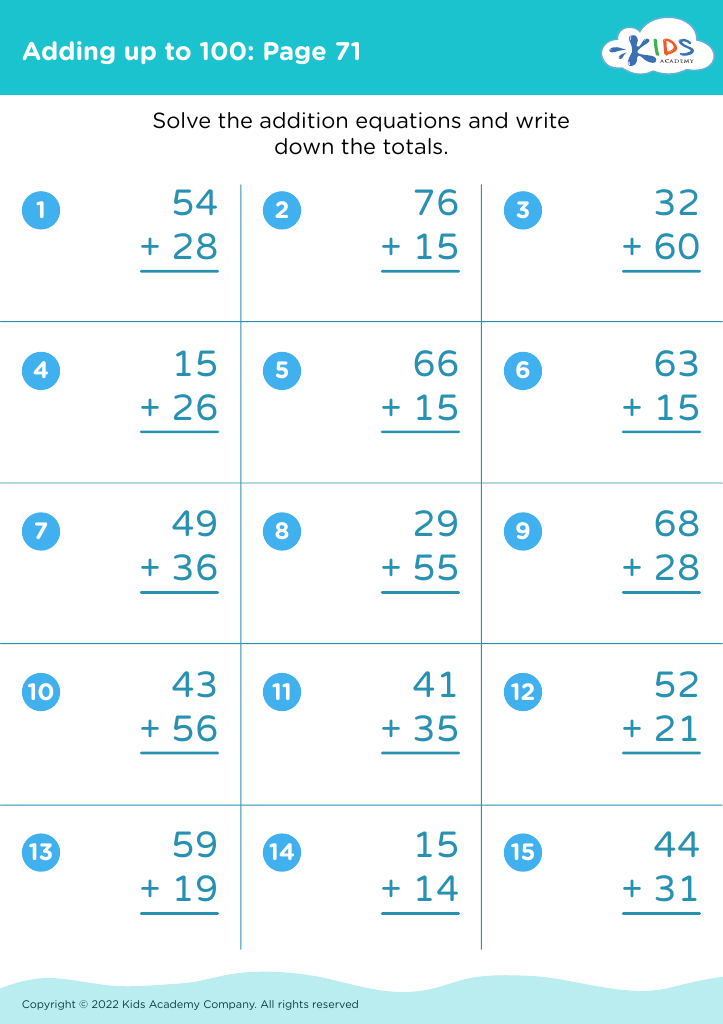
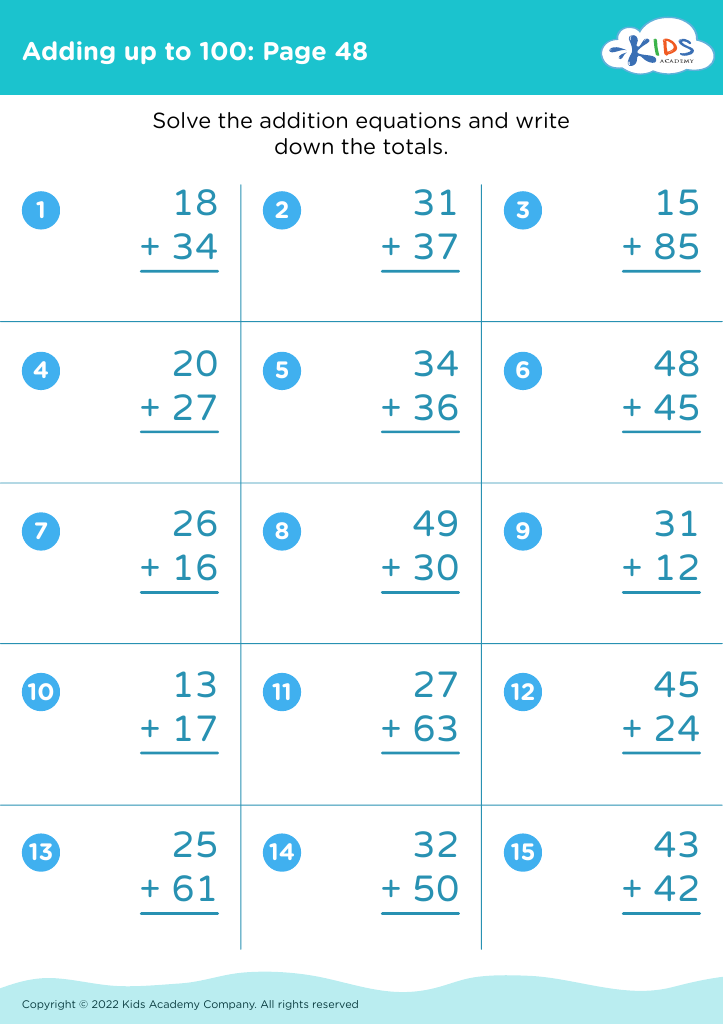
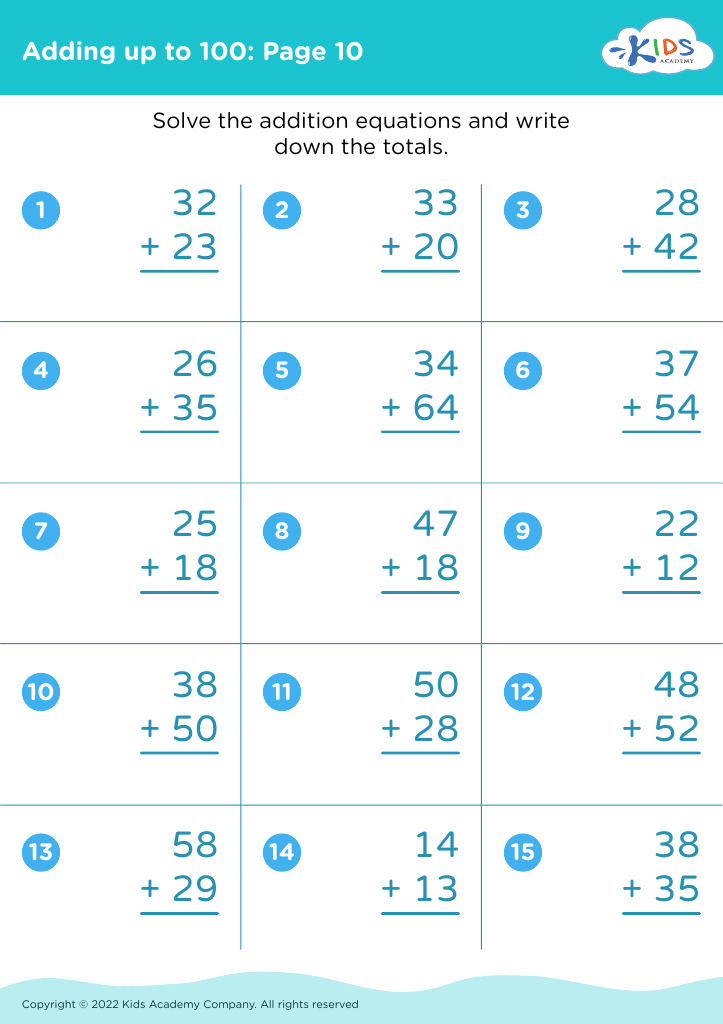
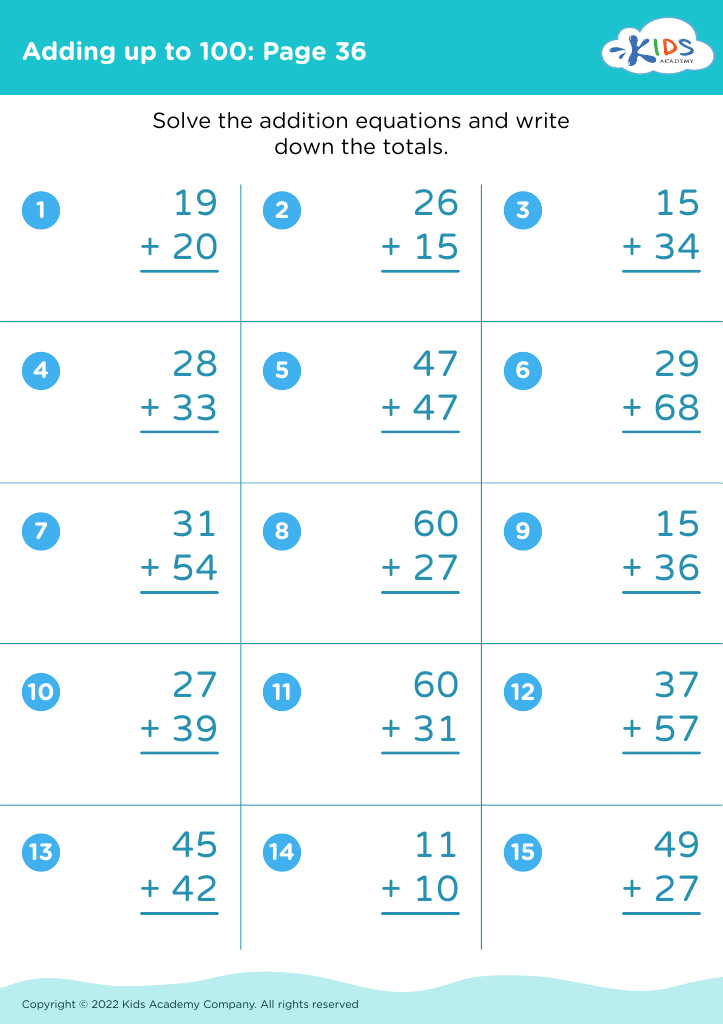


Comparing fractions is a fundamental math skill that helps children develop critical thinking and problem-solving abilities. For students aged 7-9, understanding how to compare fractions lays the groundwork for more advanced mathematical concepts in later grades. When educators and parents emphasize the importance of fractions, it promotes numerical literacy, boosts confidence, and prepares children for real-world applications.
Fraction understanding is especially crucial in tasks that involve comparisons, such as determining proportional parts in group settings, understanding recipe modifications, or sharing resources equitably among peers. Adding up to 100 with fractions reinforces this concept, helping children recognize that parts must be considered within a whole.
Engaging fractional activities enhances attention and fosters a questioning mindset as children learn to analyze numerical relationships. Supporting and nurturing these skills at an early age contributes significantly to a child's academic journey. Furthermore, collaborating between parents and teachers on such concepts creates a supportive learning environment where children feel encouraged and motivated. Ultimately, by prioritizing the learning of comparing fractions from ages 7 to 9, we are equipping children with essential tools for their future education and everyday problem-solving endeavors.