Fine Motor Skills Adding up to 100 Misc Worksheets for Ages 7-9
5 filtered results
-
From - To
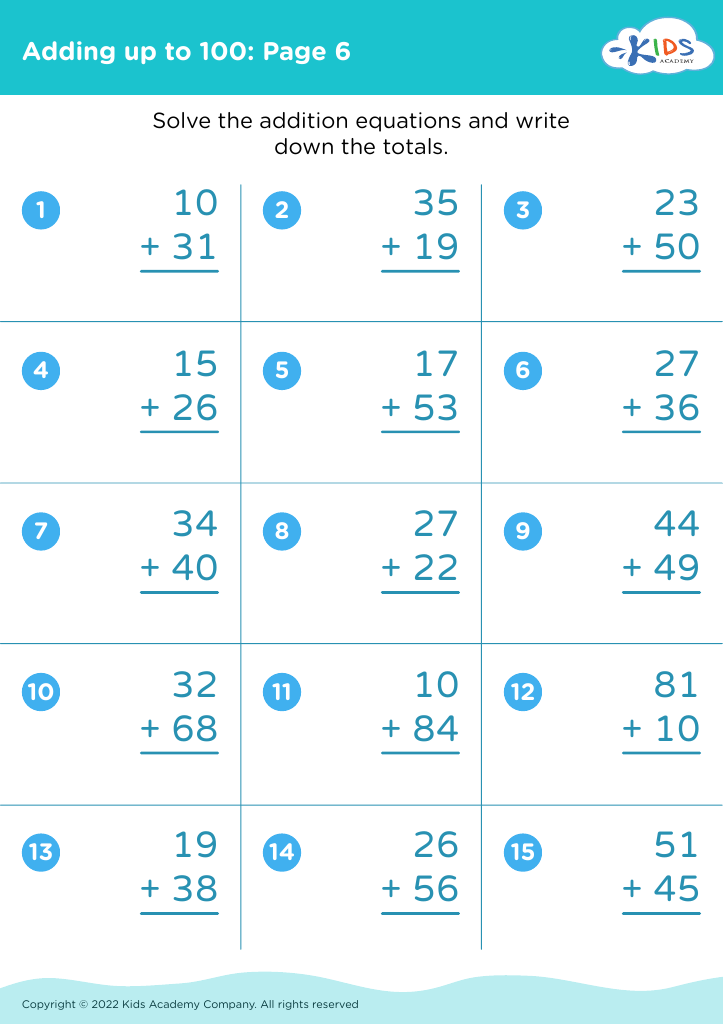
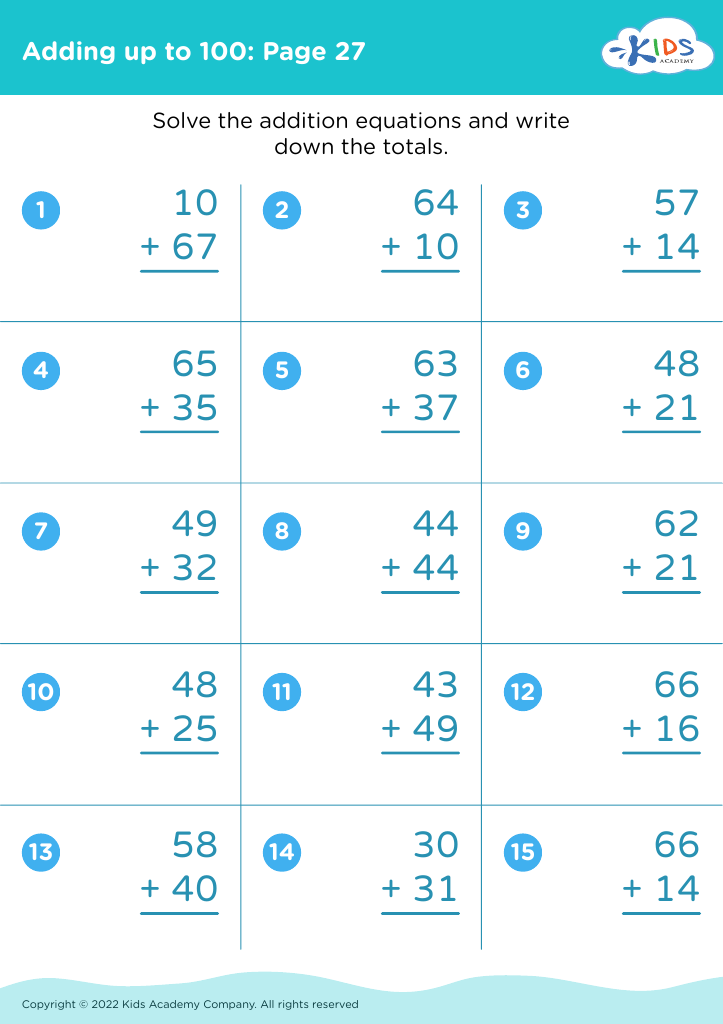
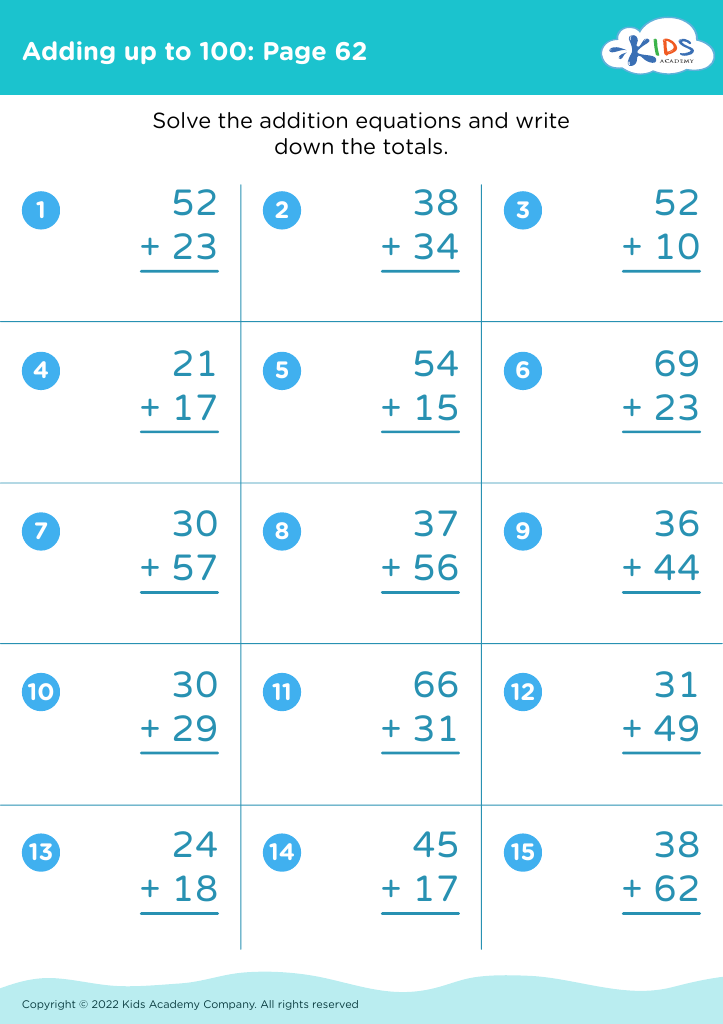
Welcome to our "Fine Motor Skills Adding Up to 100 Misc Worksheets" page, designed specifically for ages 7-9! These engaging worksheets aim to enhance fine motor skills while helping kids practice addition up to 100. With a variety of fun activities, such as tracing, coloring, and cutting, children will develop their hand-eye coordination and dexterity in a playful way. Our resources are perfect for both home and classroom settings! Encourage your child’s mathematical confidence and motor skill development with these creative worksheets, making math fun and interactive. Discover the joy of learning through play and watch your child's skills blossom today!
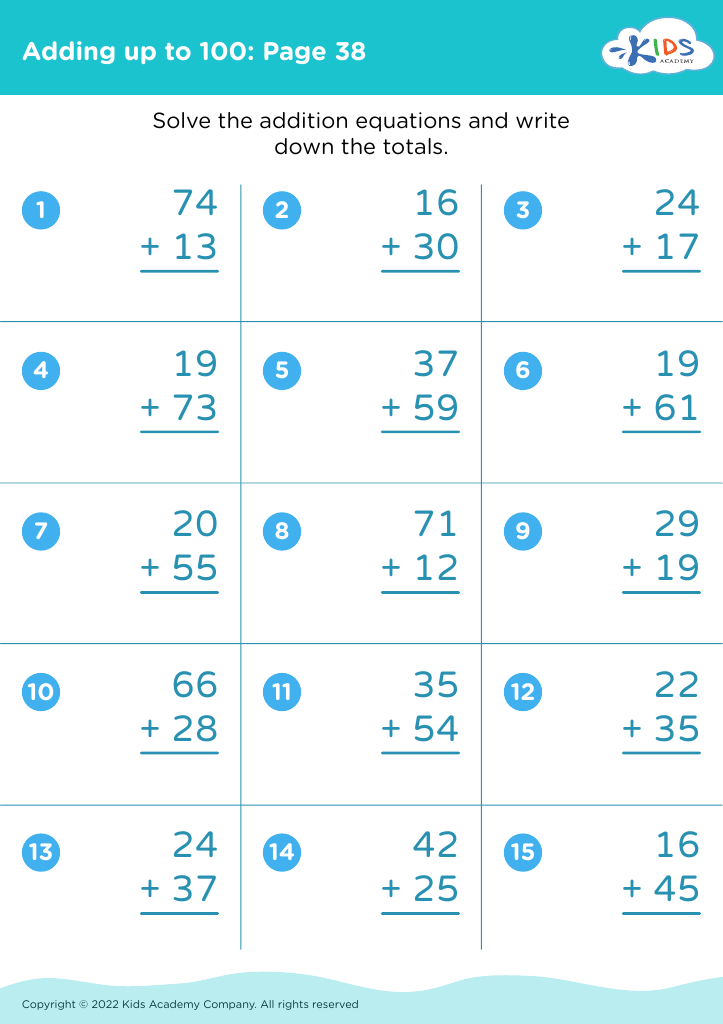
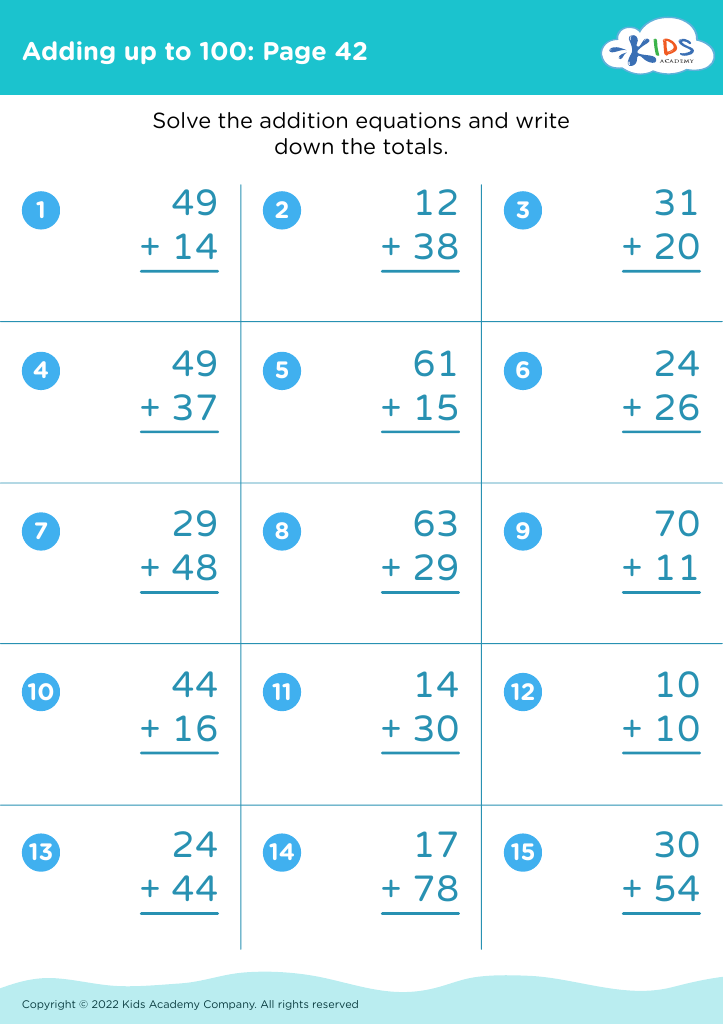


Fine motor skills are essential for children aged 7 to 9, as they significantly impact a child’s development and daily functioning. During this age, children are transitioning from basic motor skills to more intricate movements that are crucial for academic success and everyday tasks. For parents and teachers, fostering these skills is vital because they lay the groundwork for tasks such as writing, drawing, cutting, and manipulating smaller objects—all important activities in school and home environments.
Strong fine motor skills enhance a child’s ability to express themselves through art and writing, promotes independence in self-care tasks like buttoning clothes or tying shoes, and improves their hand-eye coordination. Additionally, as children become involved in activities that require dexterity, such as sports or musical instruments, their confidence and self-esteem grow.
Moreover, building fine motor skills can support cognitive development, as activities that require manipulation often contribute to problem-solving and critical thinking. Parents and teachers, being at the forefront of children's growing independence and learning, should prioritize skill-building activities like crafting, puzzles, and games that incorporate hand-eye coordination, ensuring that children can thrive academically and socially as they progress through their formative years.