Fraction simplification Adding up to 100 Misc Worksheets for Ages 7-9
6 filtered results
-
From - To
Welcome to our engaging collection of worksheets designed for ages 7-9, focused on fraction simplification and adding up to 100. These resources provide a fun and interactive way for young learners to grasp essential math skills, combining the complexities of fractions with the foundational concept of addition. Each worksheet allows students to practice simplifying fractions through various exercises while reinforcing their understanding of numbers that sum up to 100. Ideal for teachers and parents, our worksheets foster critical thinking and mathematical proficiency in children, ensuring they build confidence in their math abilities. Start your child's journey towards mastering fractions today!
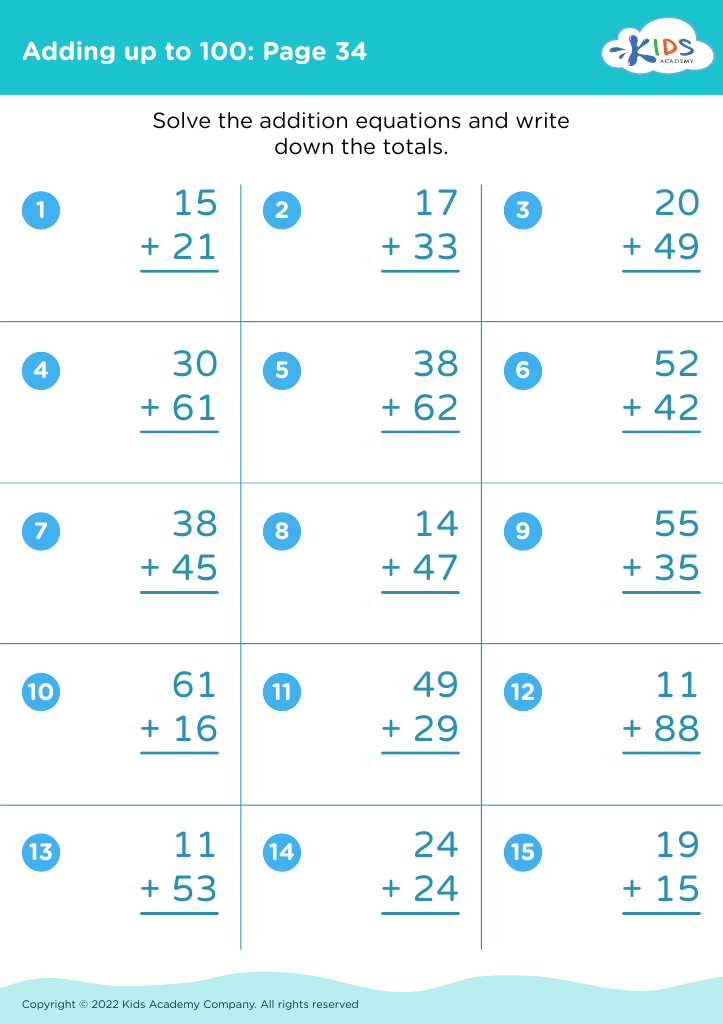
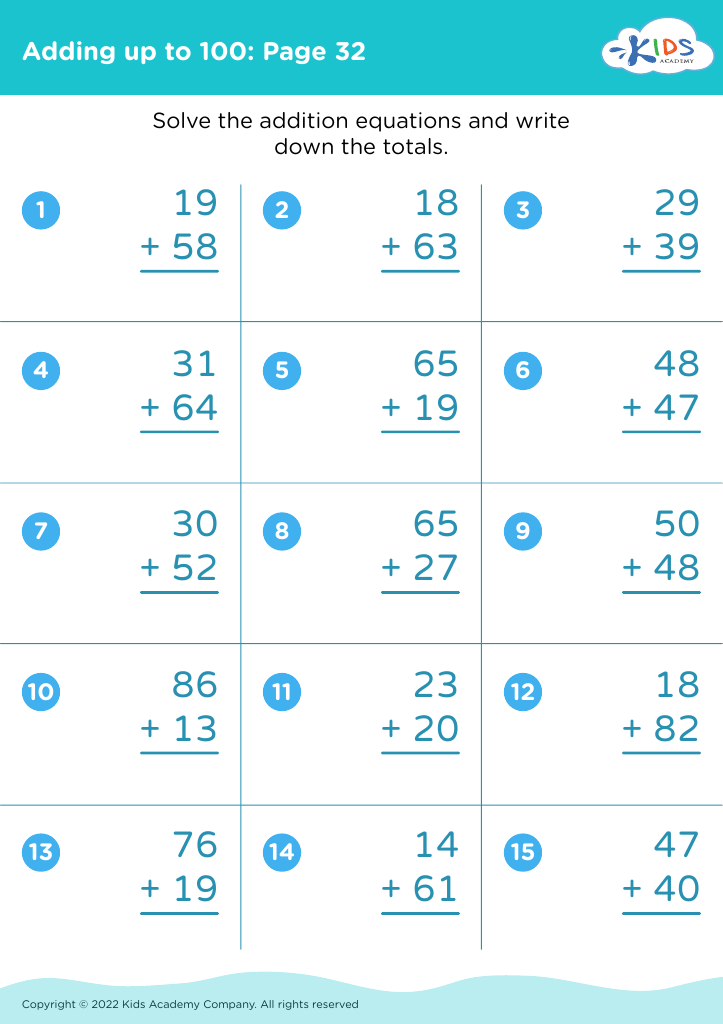
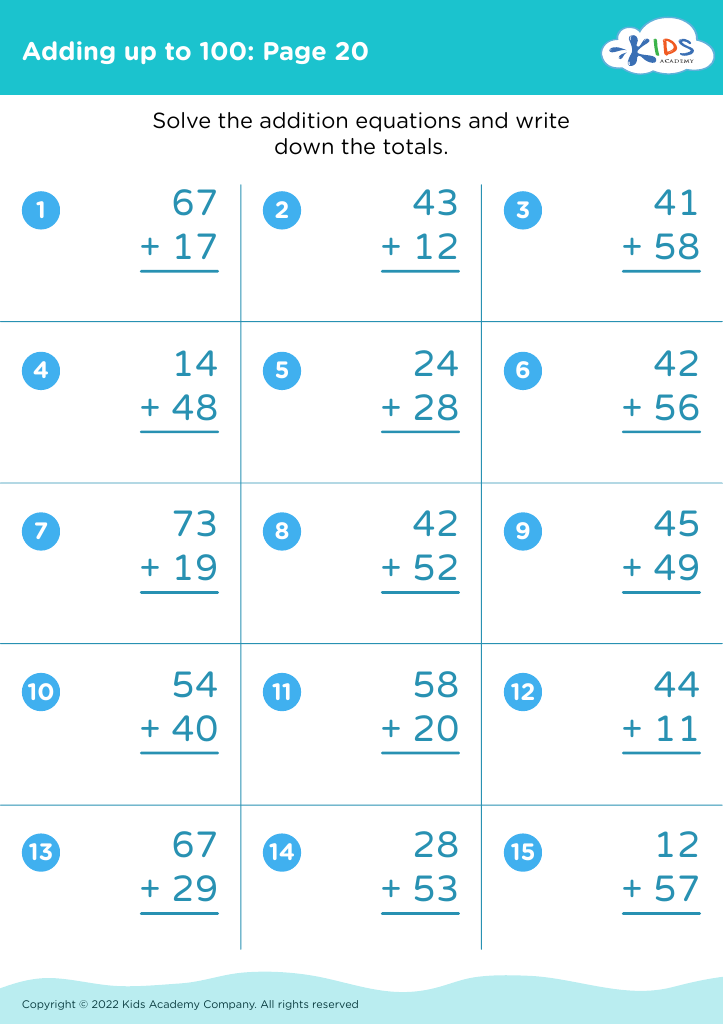
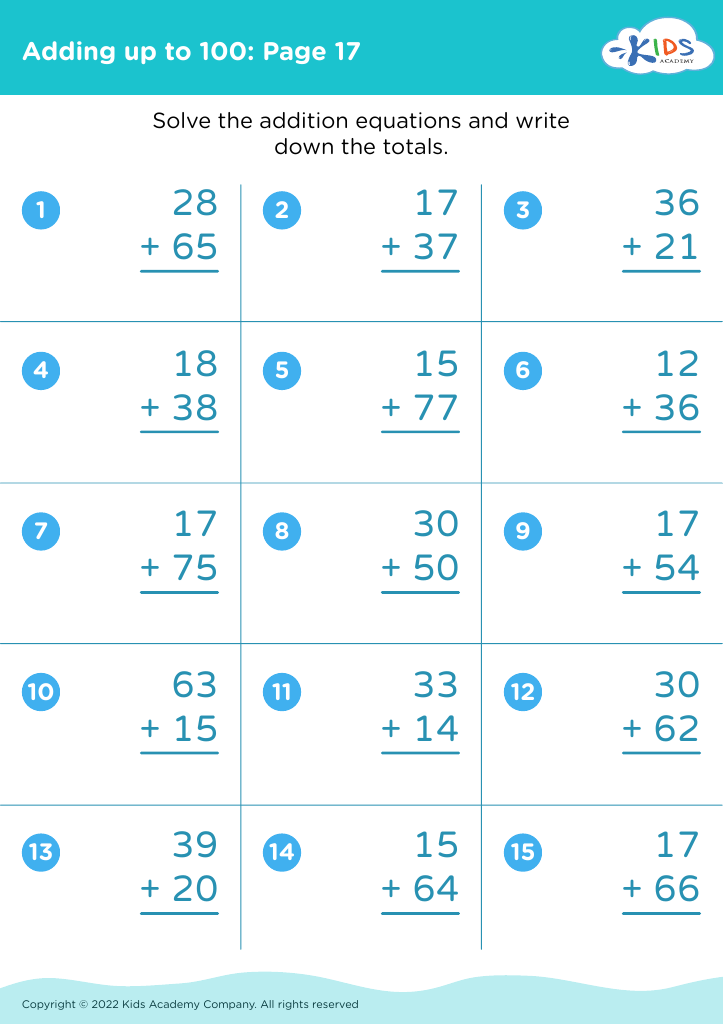
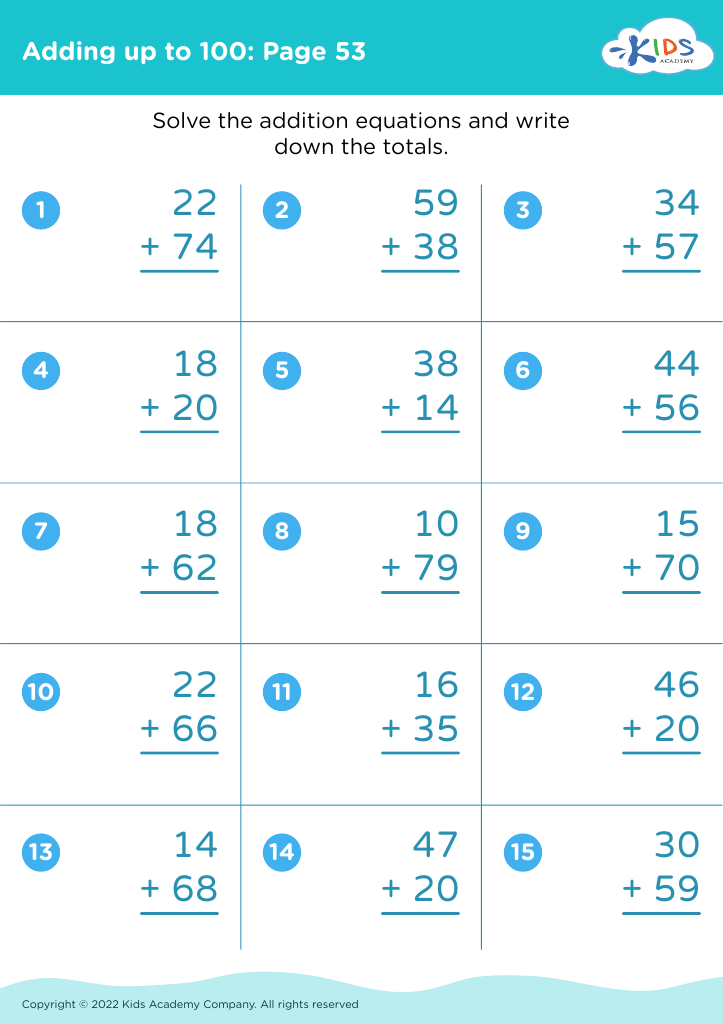
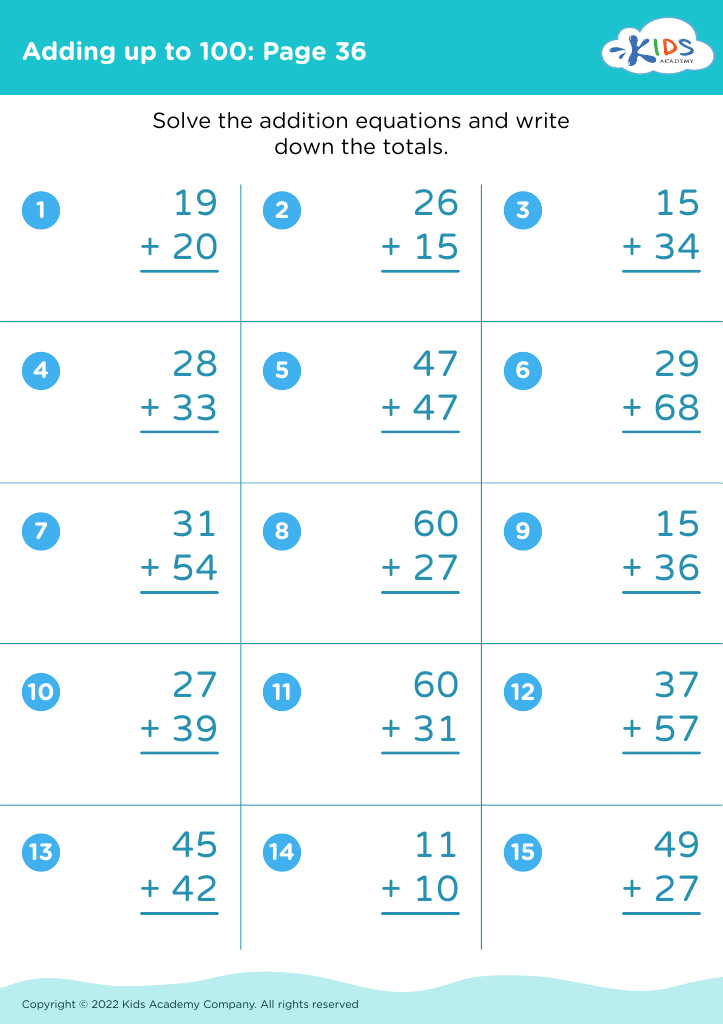


Parents and teachers should prioritize teaching fraction simplification and adding up to 100 for children aged 7-9 because these skills lay the groundwork for essential math understanding and problem-solving abilities. Fraction simplification helps students grasp the concept of equivalence and enables them to work more efficiently with numbers. It promotes critical thinking as children learn to identify factors and divisors, nurturing their analytical skills in a practical context.
Similarly, the ability to add up to 100 is crucial for mental math development. This skill enhances children's capacity to perform quick calculations, fostering confidence in their math skills. It also aids in understanding complementary numbers and patterns, which are foundational pieces for more complex mathematical concepts encountered in later grades.
Moreover, these topics contribute to overall cognitive development. Engaging with fractions and number additions offers an opportunity for interactive learning, nurtures persistence, and encourages exploration—important traits for young learners. Encouragement from parents and teachers provides children with a supportive environment to cultivate a positive attitude toward math, ultimately impacting their future academic success. Investing time into these areas not only enhances immediate math skills but also prepares children for lifelong mathematical understanding.