Understanding fractions Adding up to 100 Misc Worksheets for Ages 7-9
16 filtered results
-
From - To
Unlock the potential of your young mathematician with our "Understanding Fractions and Adding up to 100 Misc Worksheets for Ages 7-9." These engaging and educational worksheets are designed to help children master key math skills such as fraction concepts and adding numbers up to 100. Perfect for ages 7 to 9, each worksheet combines fun and learning to make grasping these essential math concepts easier than ever. Whether at home or in the classroom, these printable worksheets offer a variety of activities to fit every child's learning style, ensuring a comprehensive understanding of fractions and addition. Get started and make math exciting today!
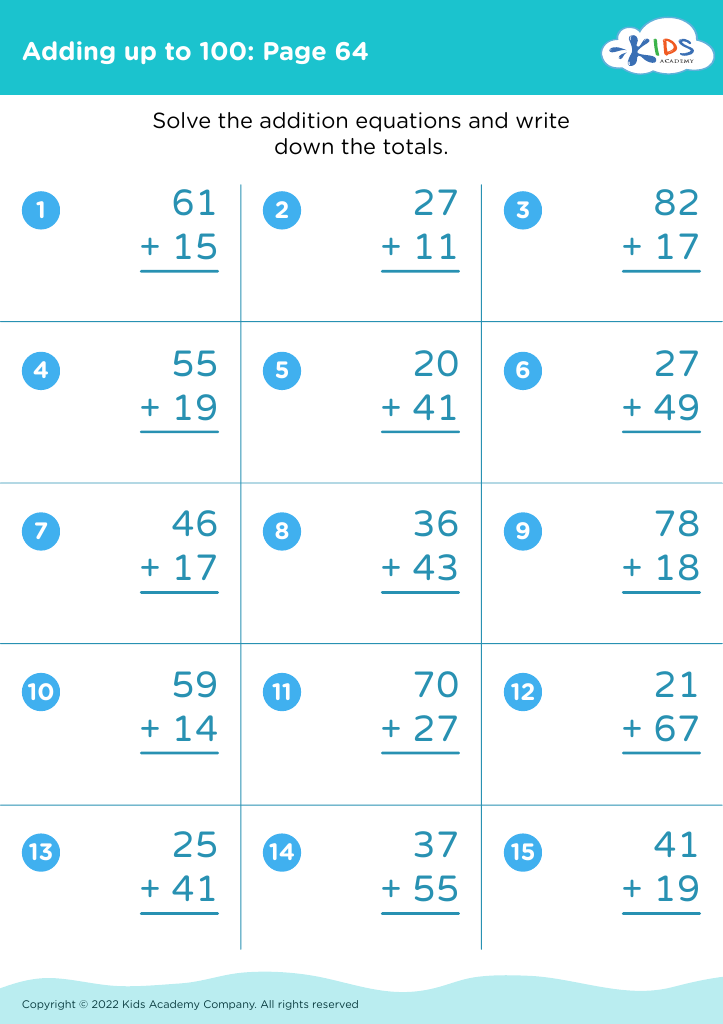
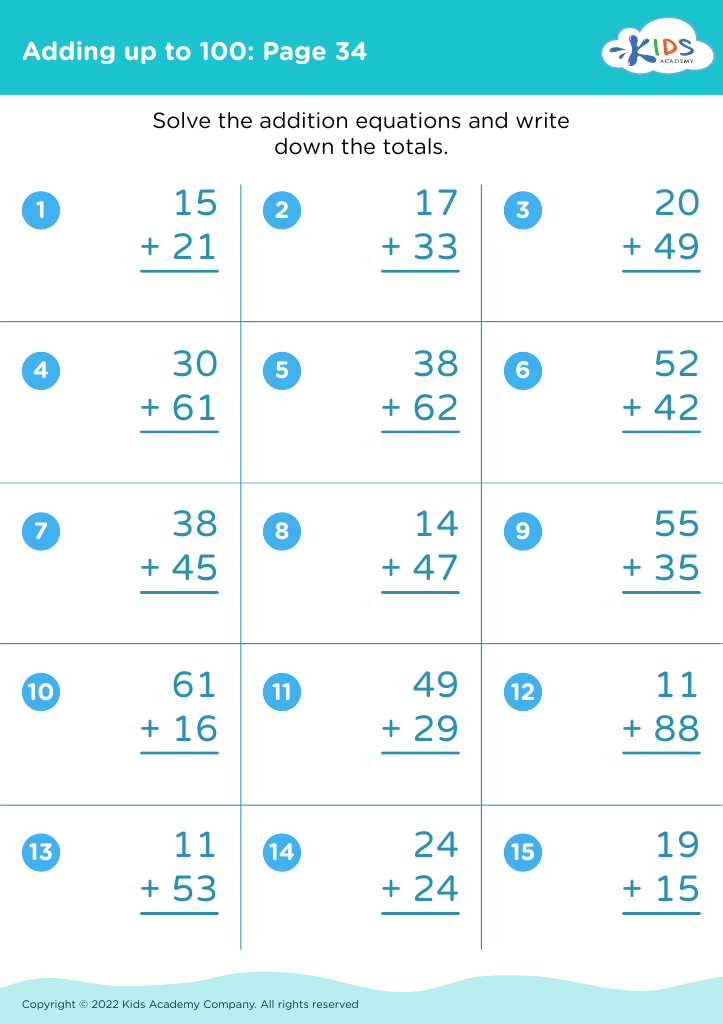
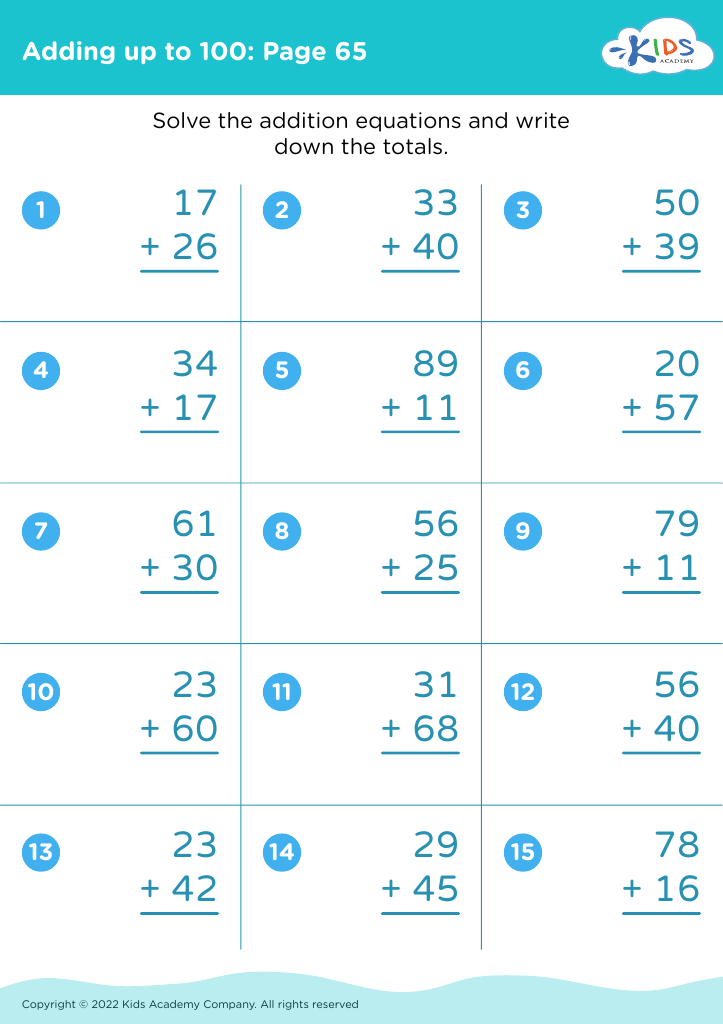
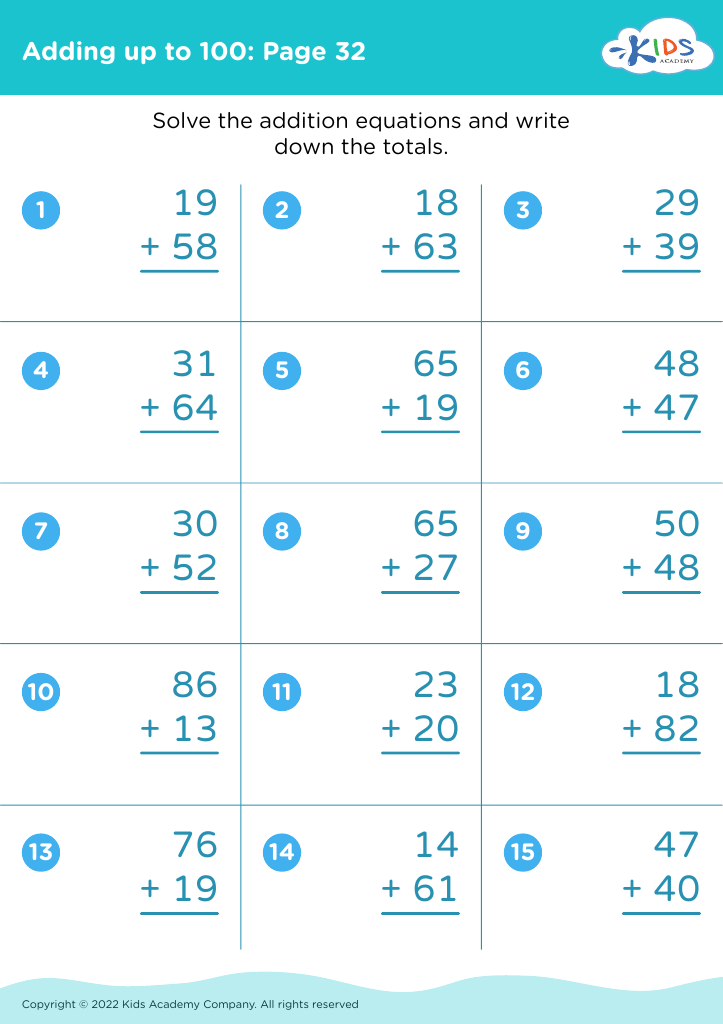
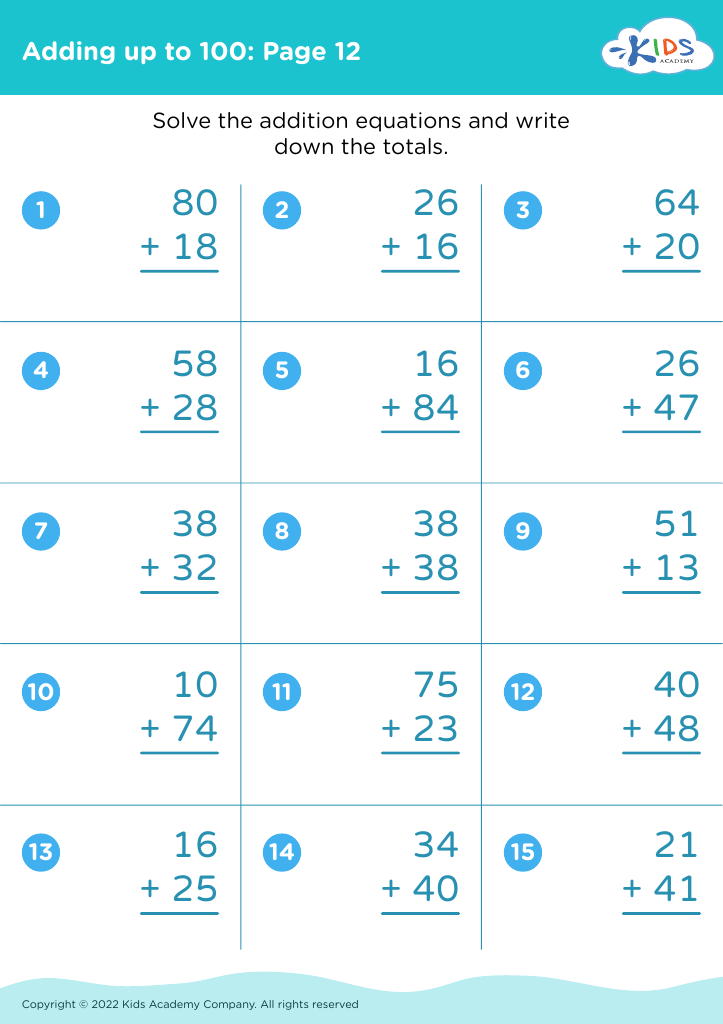
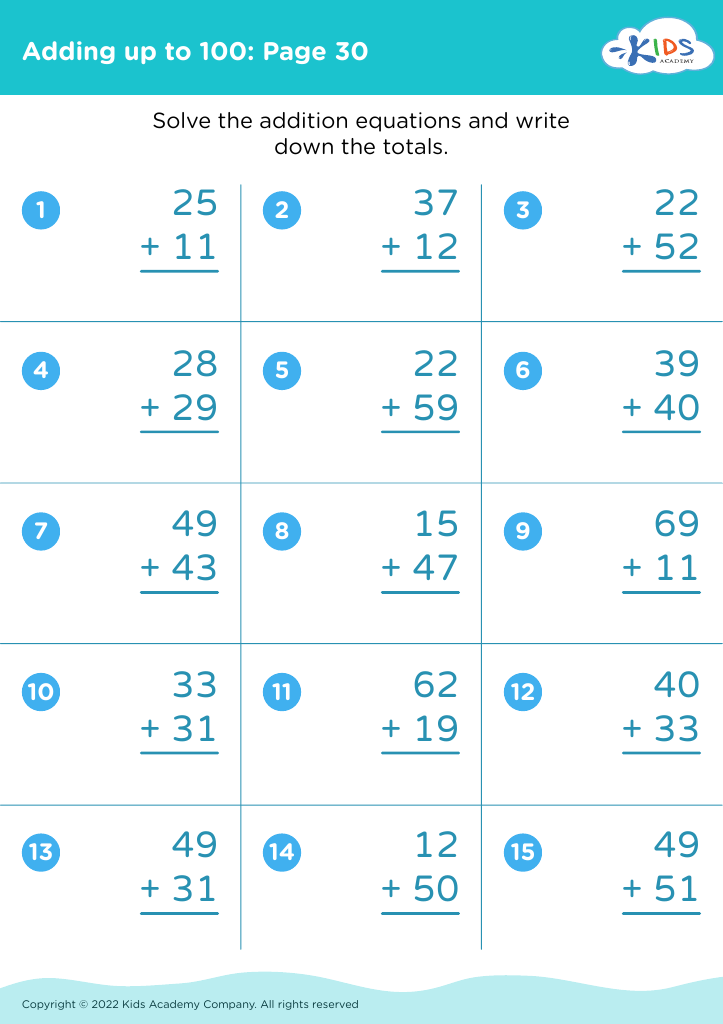
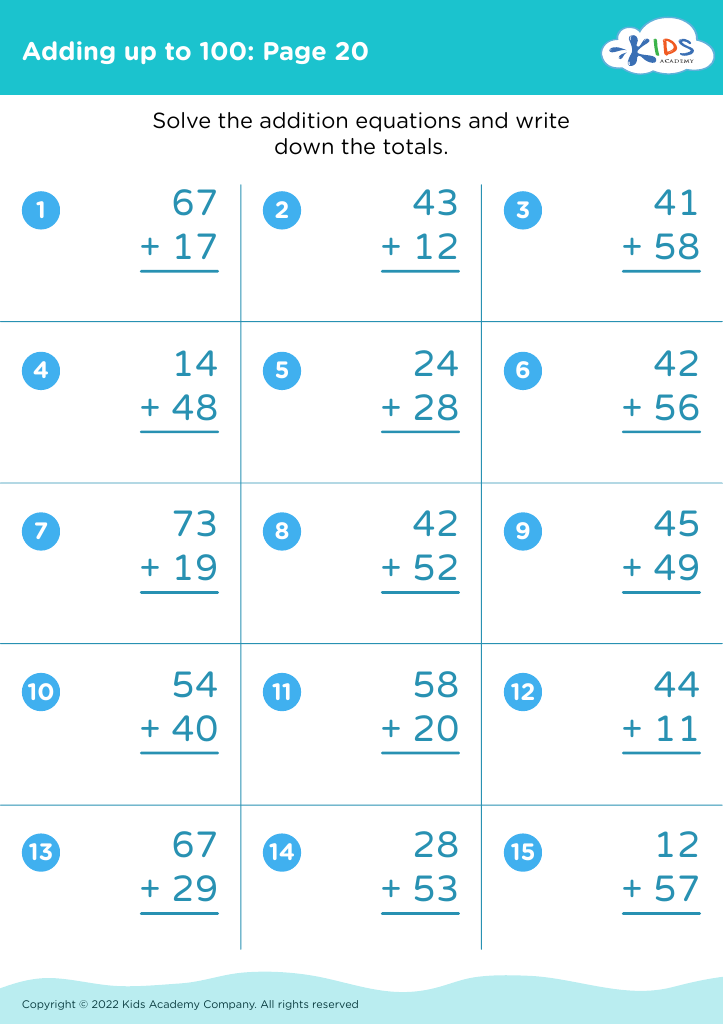
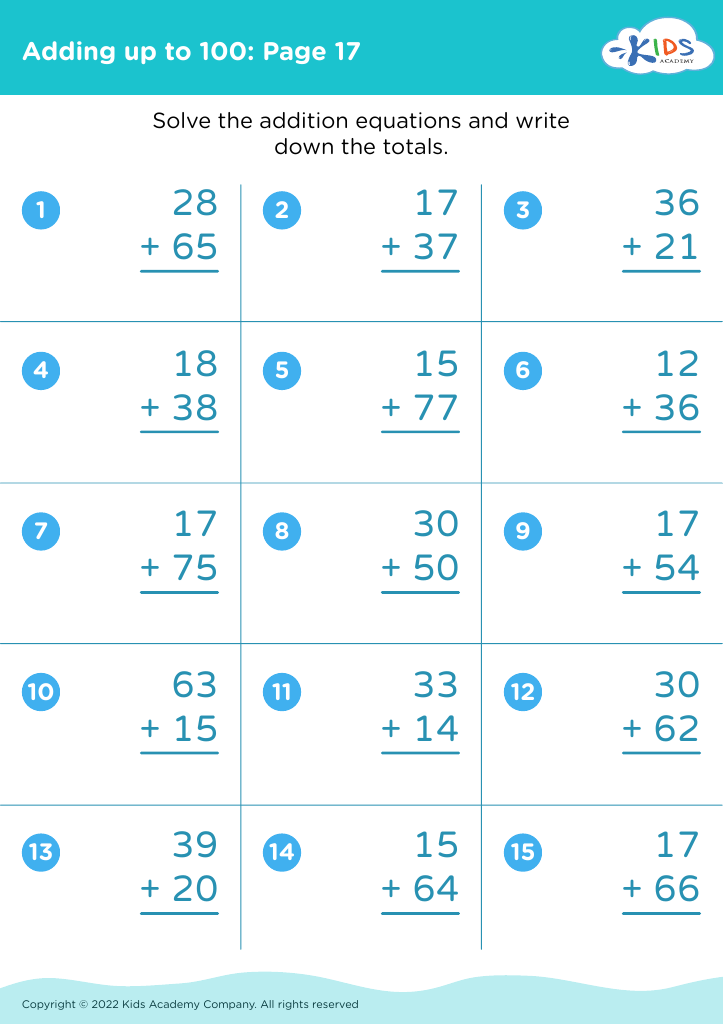
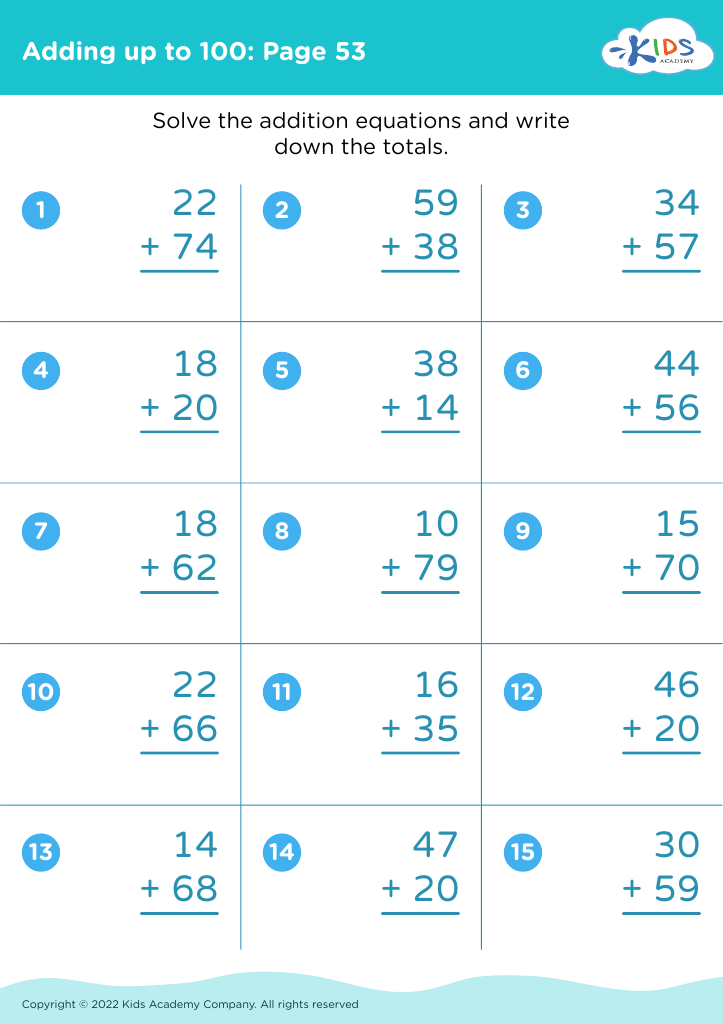
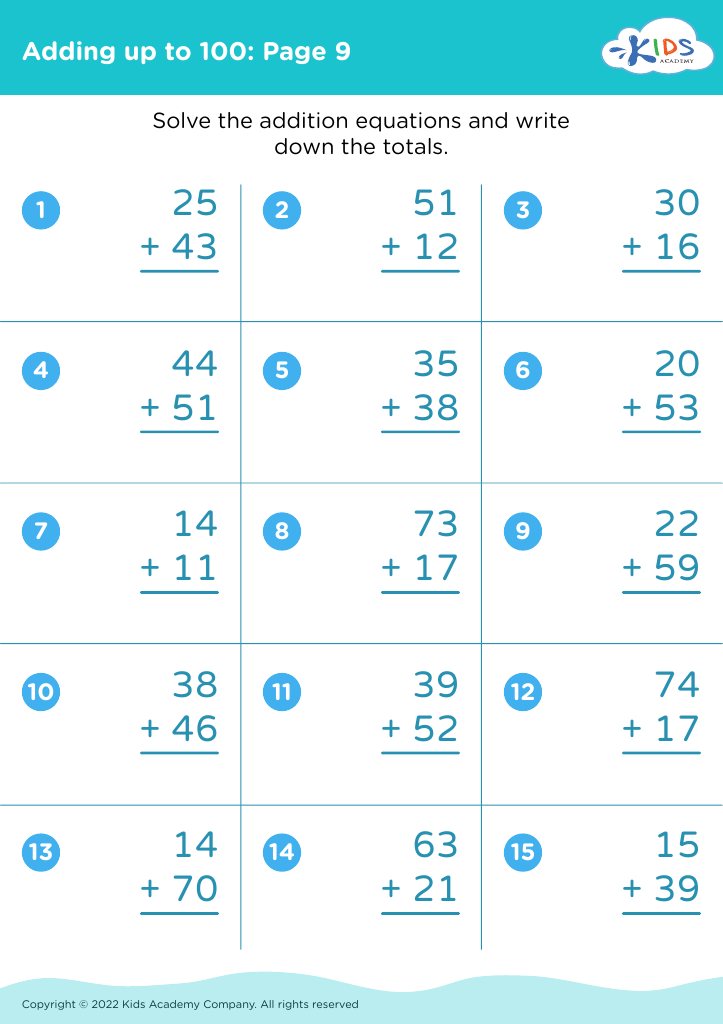
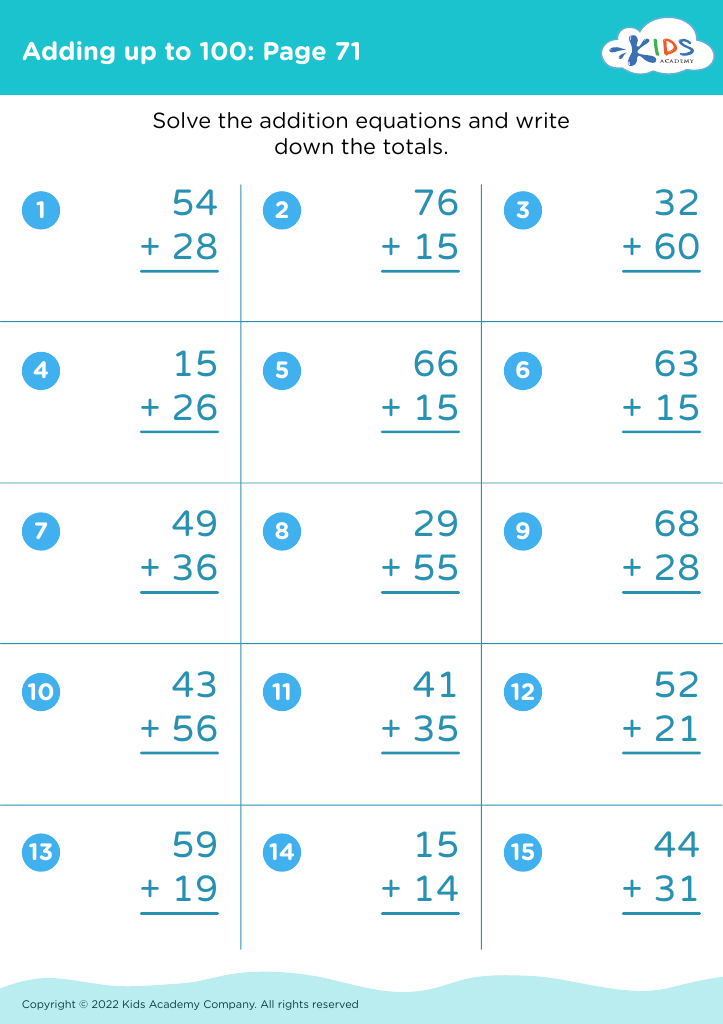
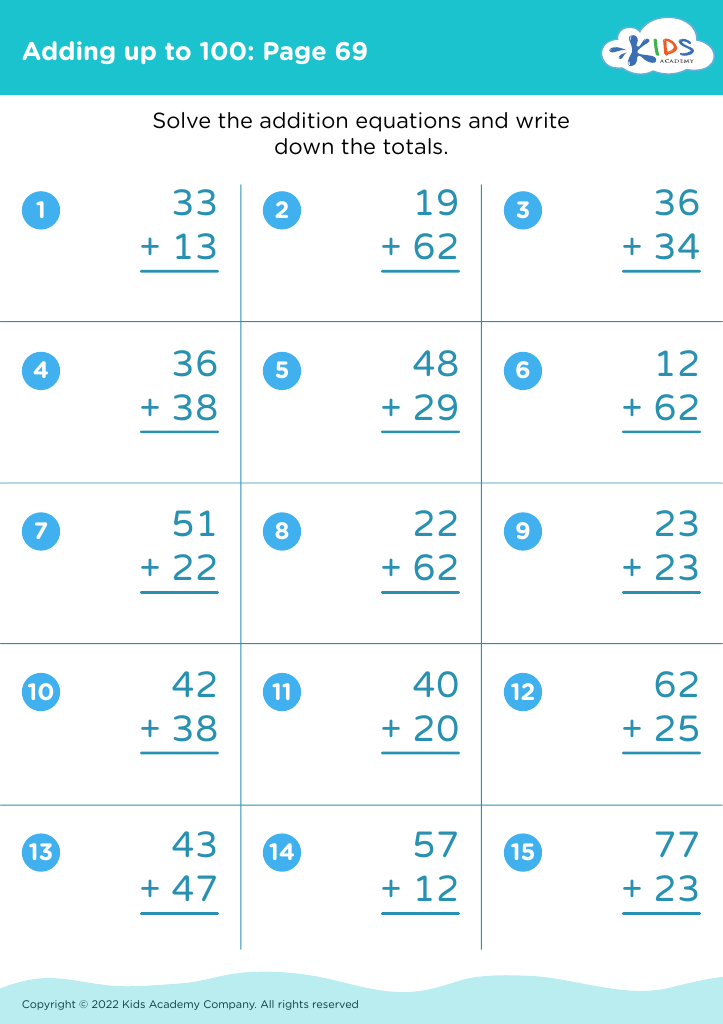
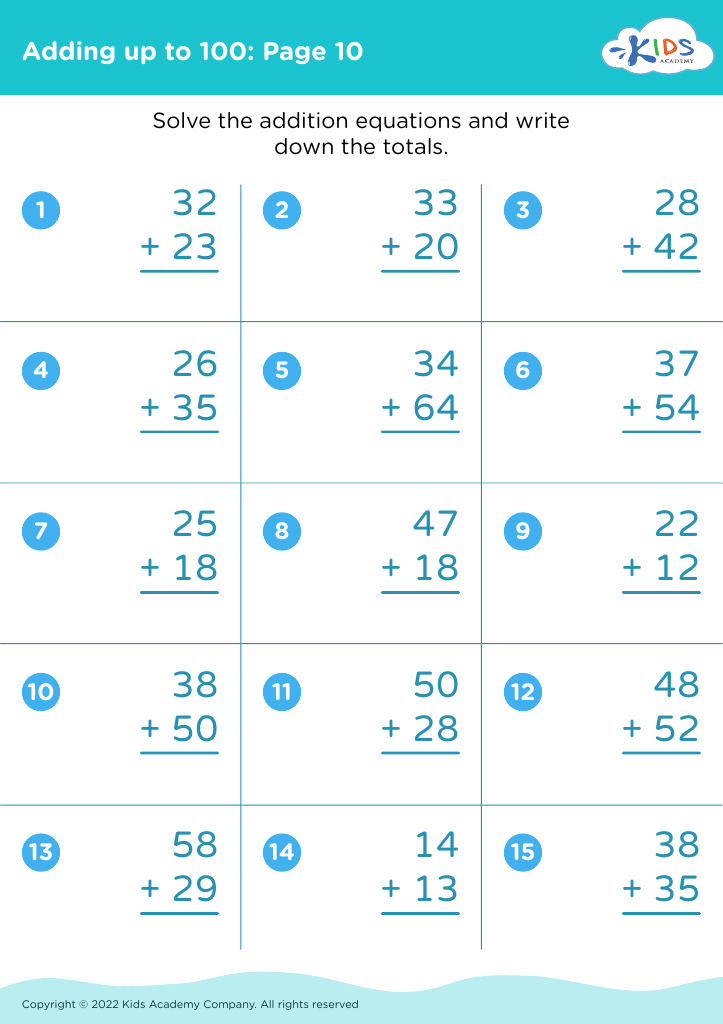
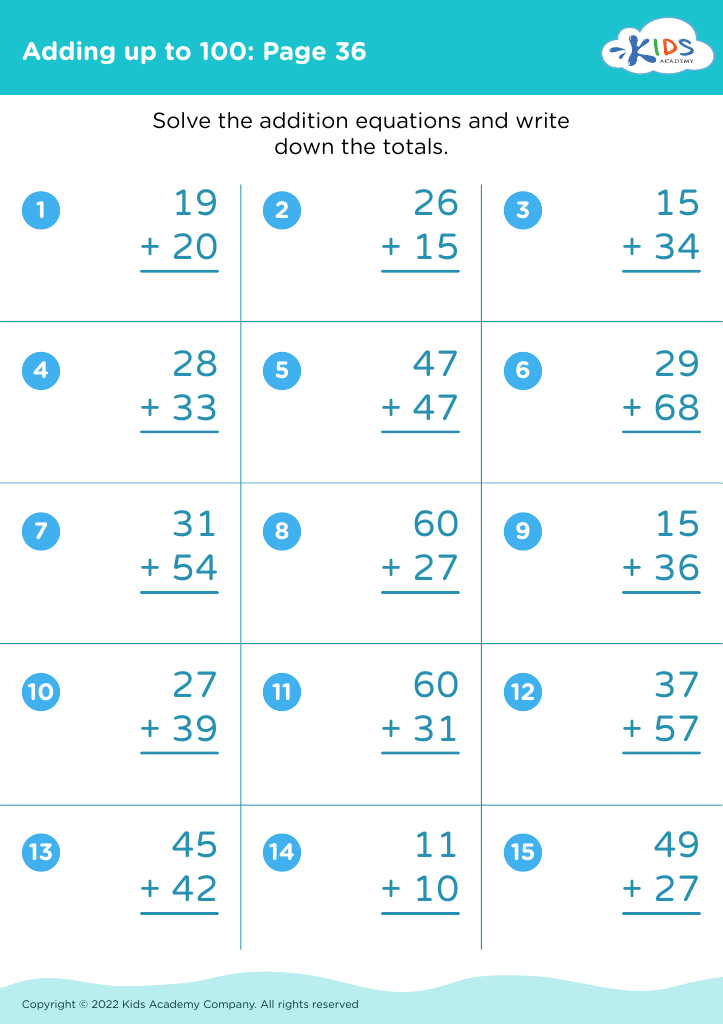


Understanding fractions, partial sums, and other math concepts at an early age is crucial for children's cognitive development and academic success. For ages 7-9, these skills form the foundation of more complex arithmetic and analytical thinking. Introducing fractions helps children grasp the idea of parts of a whole, which is a vital mathematical concept they will encounter in more advanced topics, such as algebra and geometry.
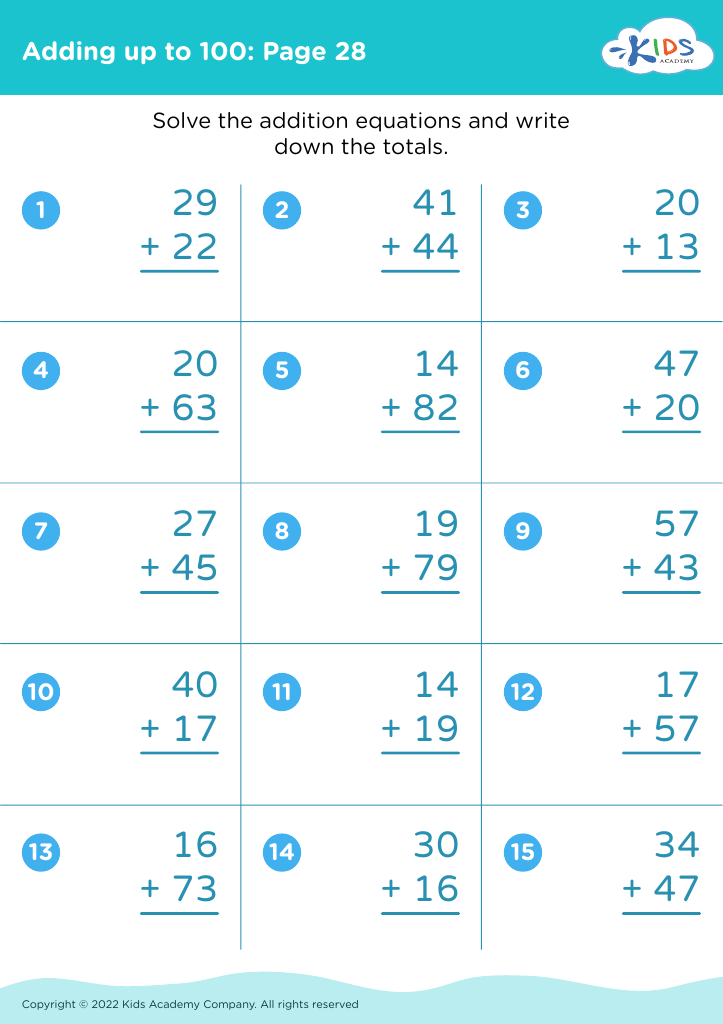
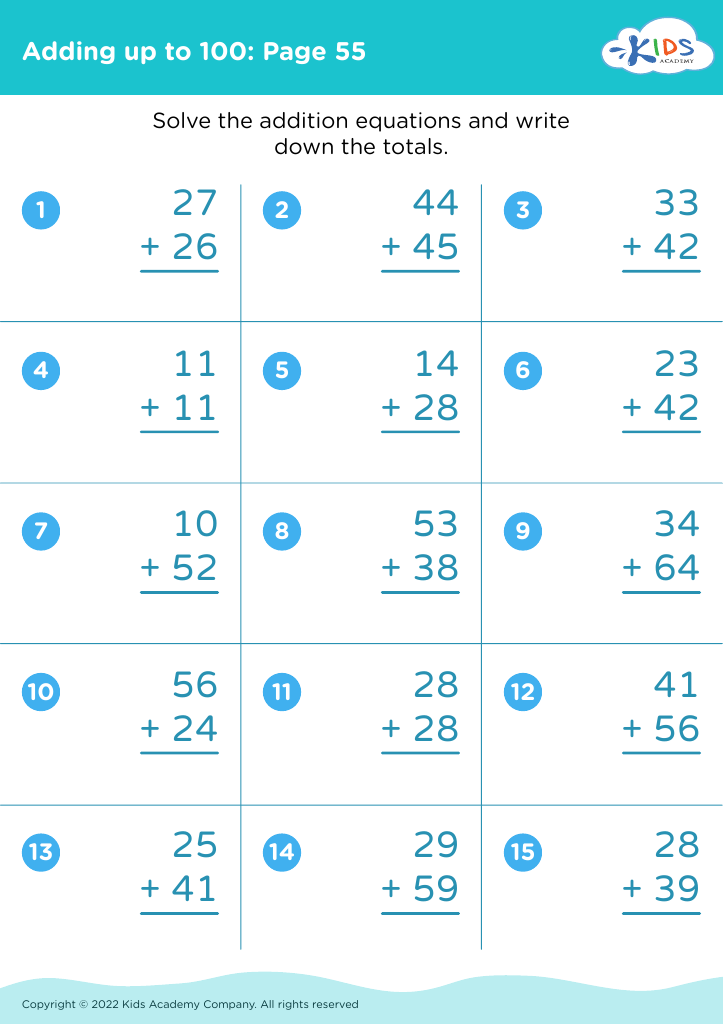
Adding up to 100 enhances their numerical fluency and mental arithmetic skills. Mastering these essential addition facts supports more efficient problem-solving and builds confidence in their ability to handle larger numbers. This skill is important not just in mathematics, but in everyday life scenarios, such as handling money or understanding quantities.
Beyond just academic growth, learning these concepts promotes critical thinking and attention to detail. It fosters a positive attitude towards math, reducing anxiety and building a growth mindset. Parents and teachers can support children by providing engaging, age-appropriate activities, and real-world examples. This partnership not only boosts their immediate academic performance but also sets them up for future success across multiple subjects.
In summary, mastery in these areas at a young age equips children with critical life skills and a strong mathematic foundation, benefiting their overall education journey.