Understanding patterns Adding up to 100 Misc Worksheets for Ages 7-9
6 filtered results
-
From - To
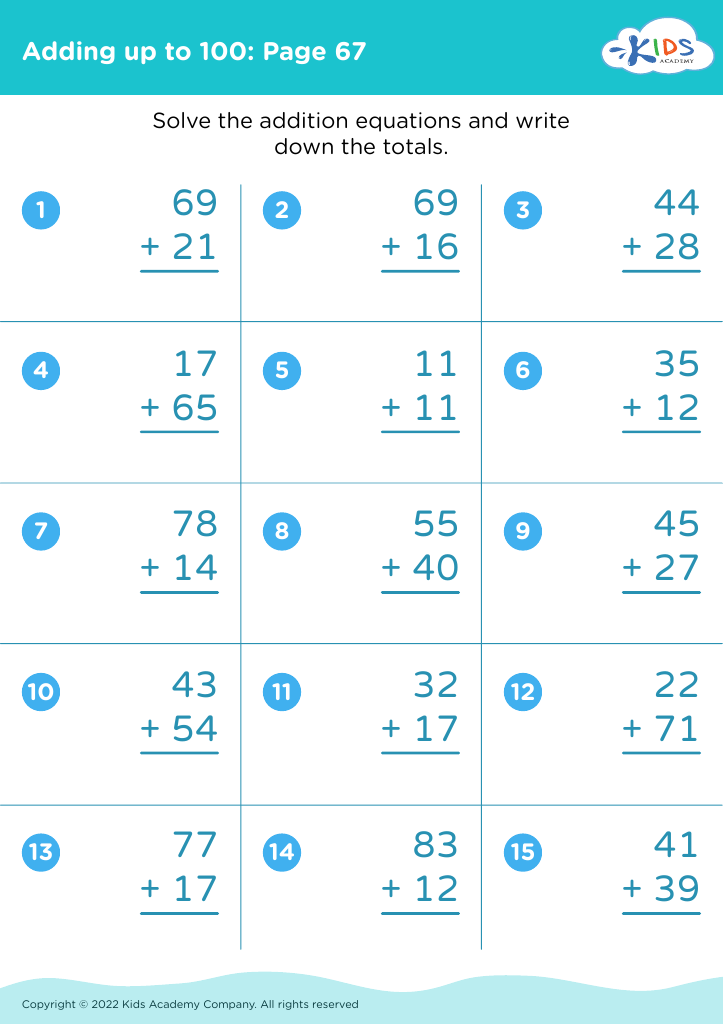
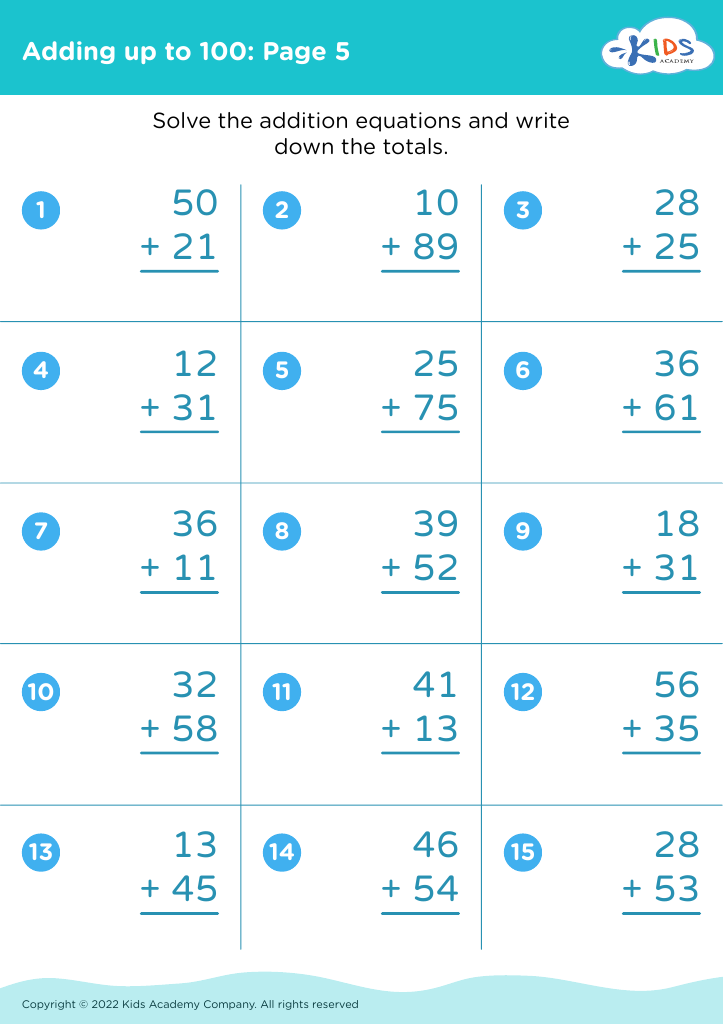
Explore our engaging "Understanding Patterns: Adding up to 100 Misc Worksheets" designed specifically for ages 7-9! These worksheets provide fun and interactive activities that help young learners grasp essential math concepts while reinforcing their pattern recognition skills. Through a variety of exercises, children can enhance their understanding of numbers, addition strategies, and sequencing, all while building confidence in their math abilities. Perfect for home or classroom use, these resources make learning enjoyable and effective. Empower your child to master adding up to 100 with these thoughtfully crafted worksheets that stimulate critical thinking and problem-solving skills!
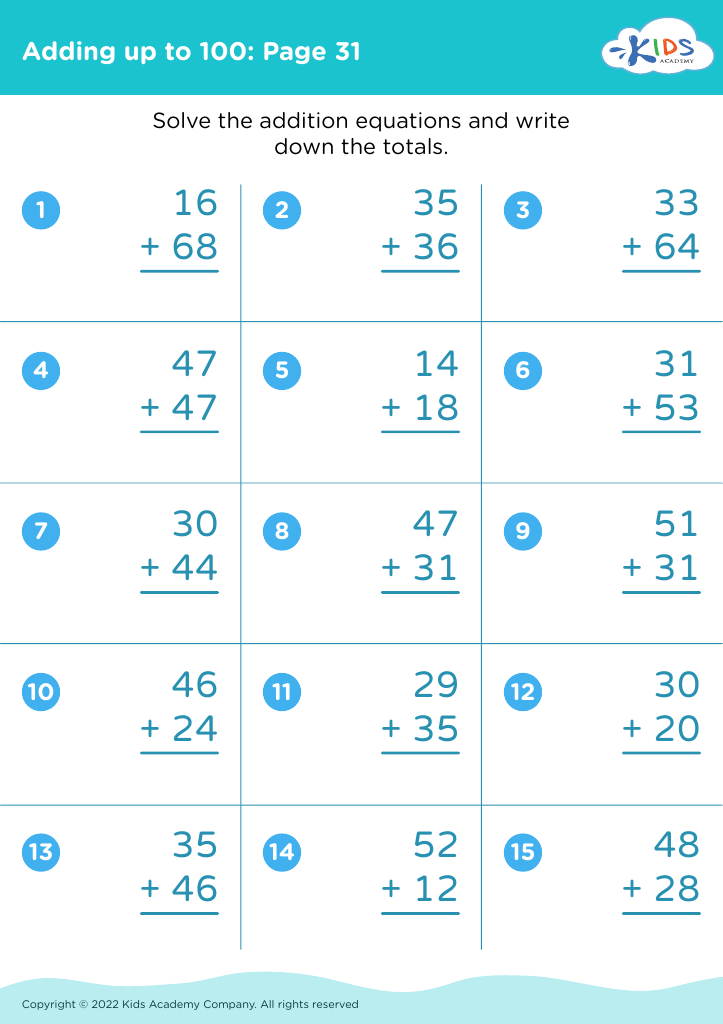
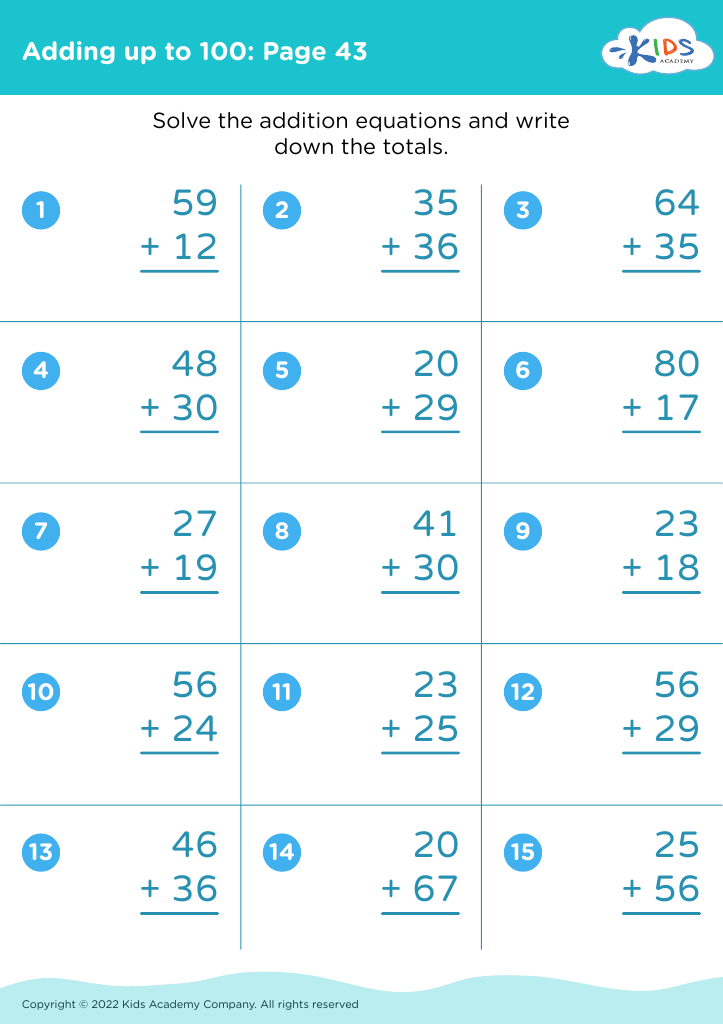
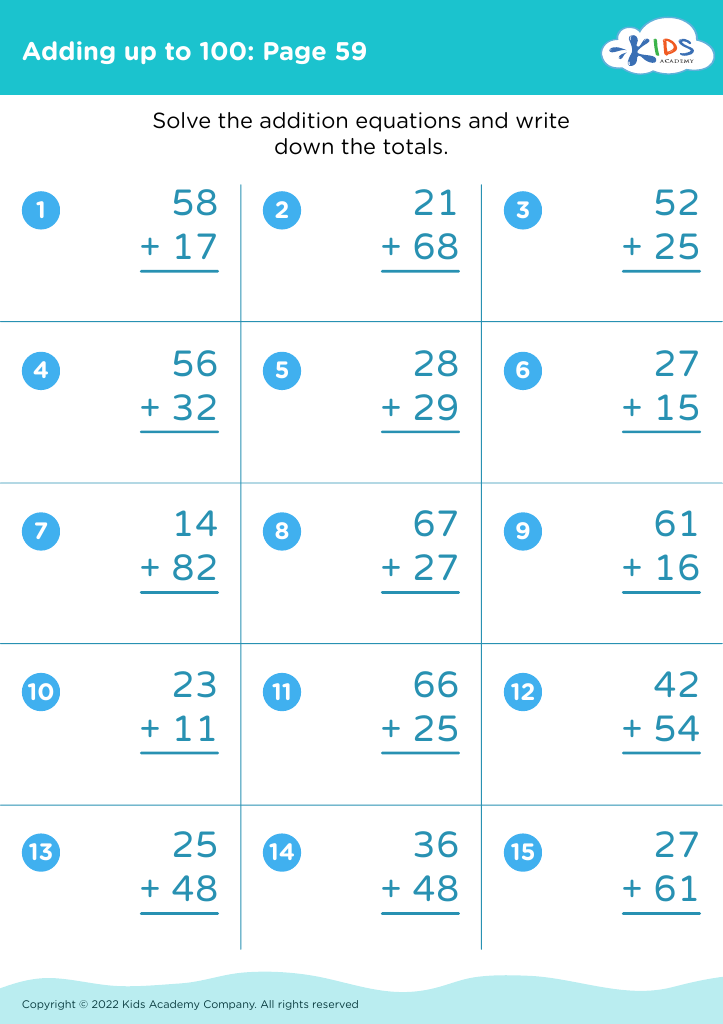
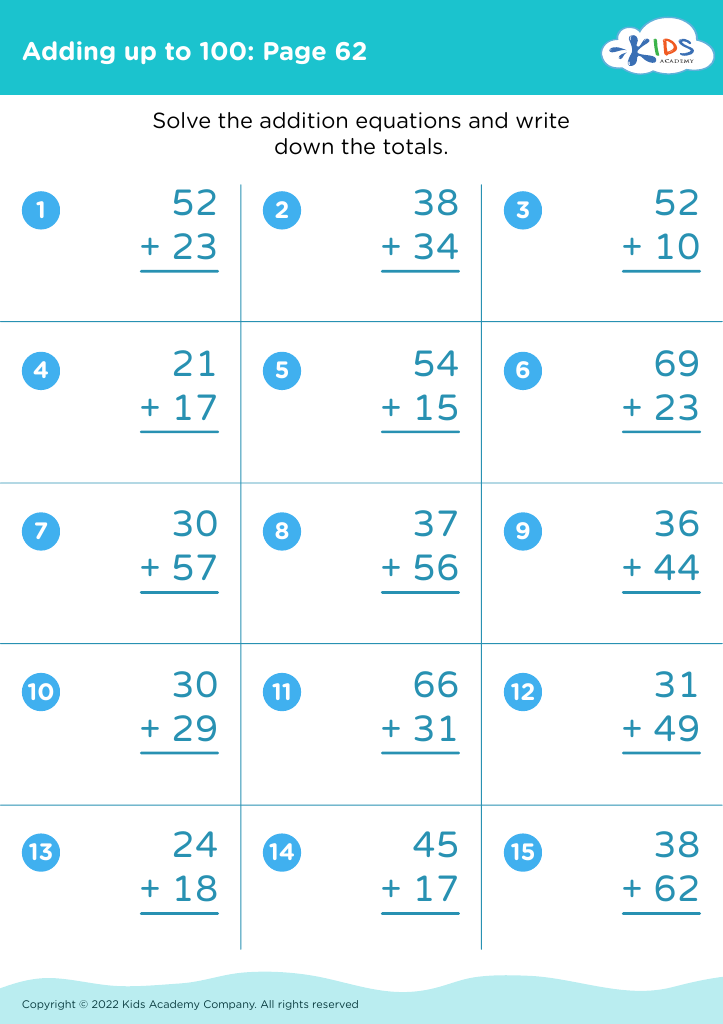


Understanding patterns in the context of adding up to 100 is crucial for students aged 7-9, as it forms the foundation for advanced mathematical skills. At this age, children are developing their number sense and beginning to grasp more complex concepts. Learning to identify and utilize patterns—such as pairs that total to 100 or grouping tens and ones—enhances their problem-solving abilities and strengthens their mental math skills.
For parents and teachers, fostering this understanding helps students become more confident and proficient in mathematics, which is vital for academic success. Engaging children in activities that explore these patterns encourages critical thinking and promotes cognitive development. It also prepares them for concepts they will encounter in higher grades, such as algebra.
Additionally, recognizing and using patterns supports the development of logical reasoning. When children see that 50 + 50 = 100 can be represented in multiple ways (like 40 + 60), they not only master addition but also learn flexibility in thinking, which is applicable across various subjects. Ultimately, supporting children in mastering these concepts contributes to their overall learning journey, setting a solid groundwork for success in mathematics and beyond.