Understanding Sequences Adding up to 100 Misc Worksheets for Ages 7-9
4 filtered results
-
From - To
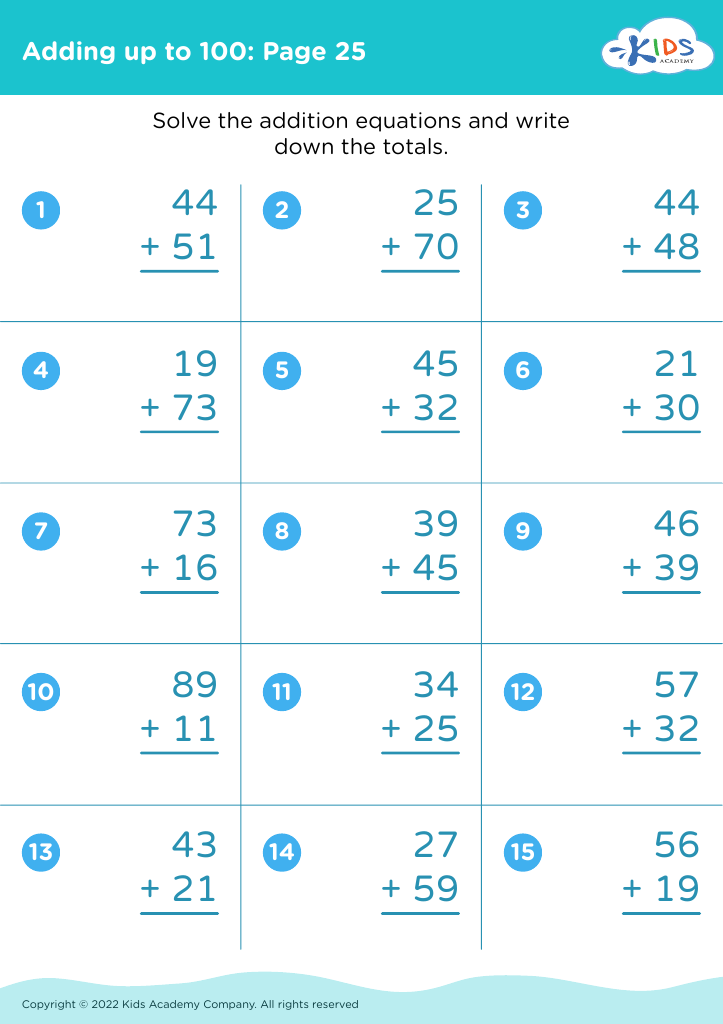
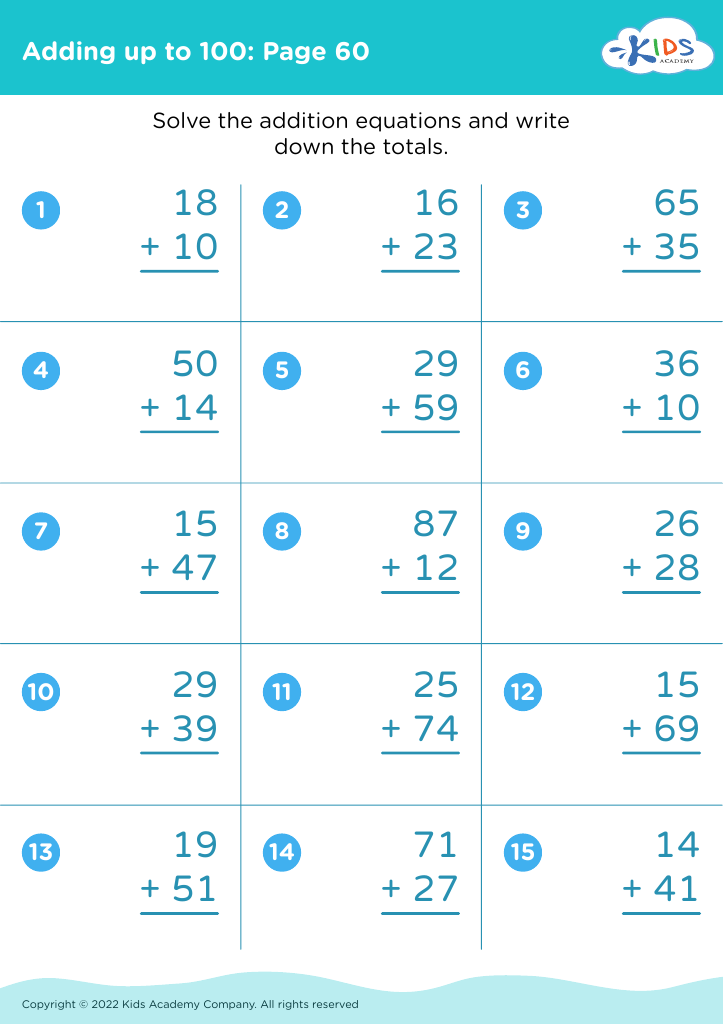
Explore our "Understanding Sequences Adding up to 100 Misc Worksheets" designed for children ages 7-9! These engaging worksheets provide a fun and interactive way for young learners to enhance their math skills by practicing sequences and addition. Each activity encourages critical thinking and supports number recognition, promoting a solid foundation in mathematics. Kids will enjoy solving problems that challenge their understanding of patterns and numerical relationships, all while aiming for a total of 100. Perfect for classroom use or at-home learning, these resources make math exciting and accessible for every young mathematician. Download today and watch their confidence soar!
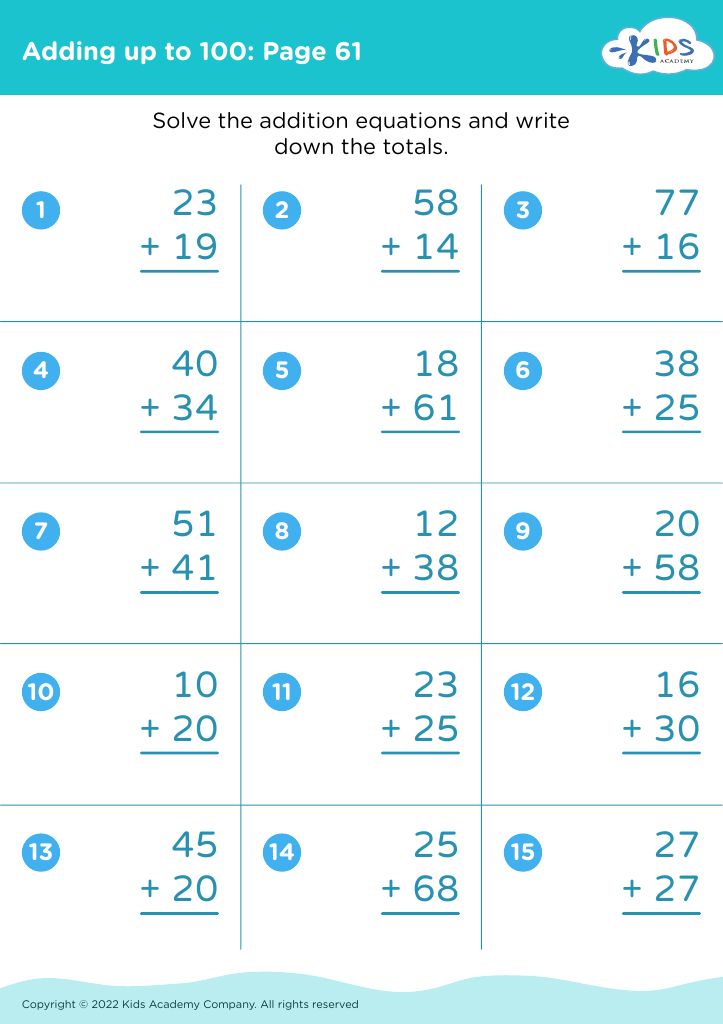
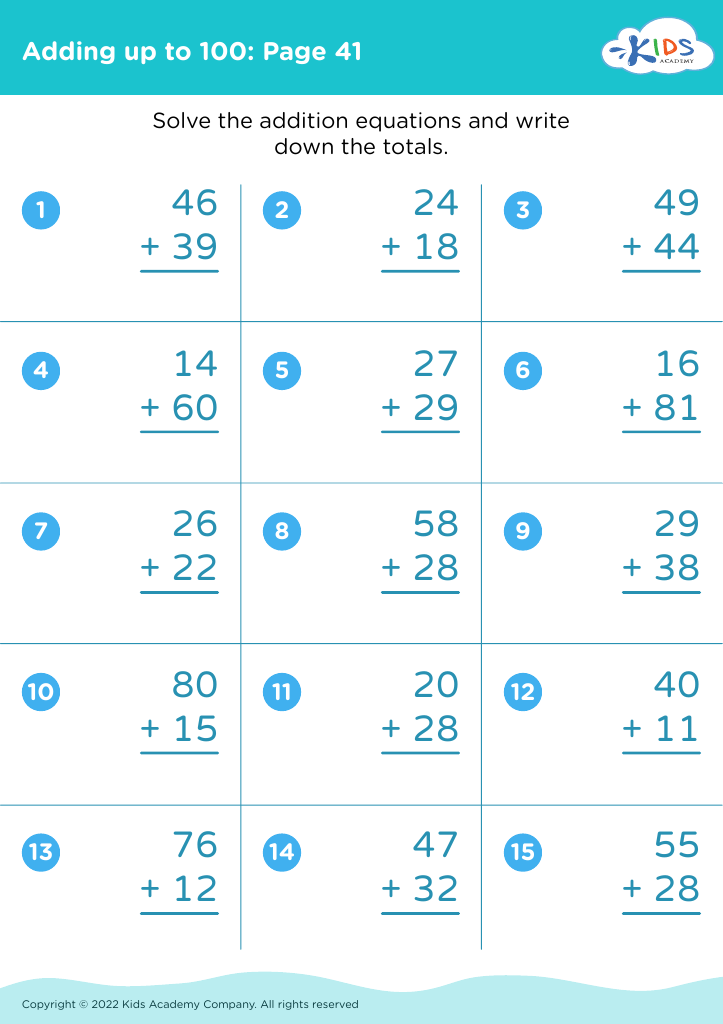


Understanding sequences that add up to 100 is vital for children aged 7-9, as it fosters foundational math skills essential for their academic development. This age group is at a crucial stage where they transition from basic arithmetic to more complex mathematical concepts. By exploring sequences, children learn to recognize patterns, develop problem-solving strategies, and enhance their number sense.
Parents and teachers should care about this topic because it lays the groundwork for understanding addition, subtraction, and ultimately, algebraic thinking. When children grasp how to create sequences that total 100, they not only improve their math fluency but also cultivate critical thinking and logical reasoning skills.
Engaging with these sequences also promotes cognitive growth, as children practice articulating their thought processes and collaborating with peers to discover solutions. Moreover, mastering these concepts boosts confidence in math, potentially reducing anxiety around the subject.
Supporting students in this area can yield long-term benefits, laying the path for more advanced mathematical competency in later years. Ultimately, by nurturing these skills, parents and teachers equip children to tackle increasingly complex math challenges in the future, helping them become successful learners both in and outside the classroom.