Comparing Fractions Adding up to 1000 Misc Worksheets for Ages 7-9
5 filtered results
-
From - To
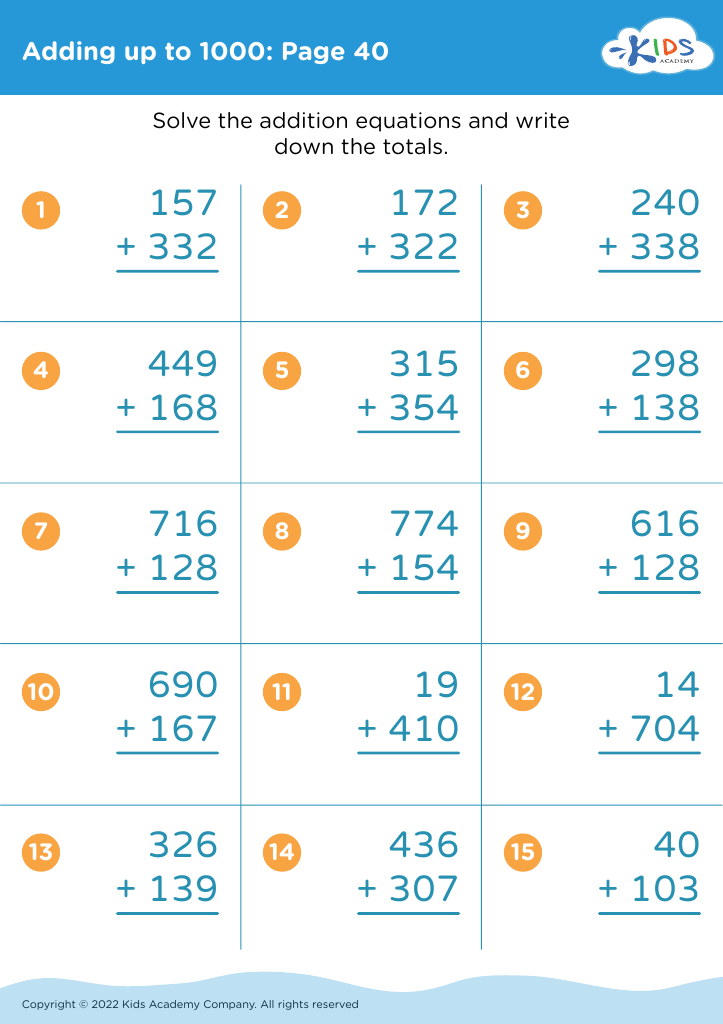
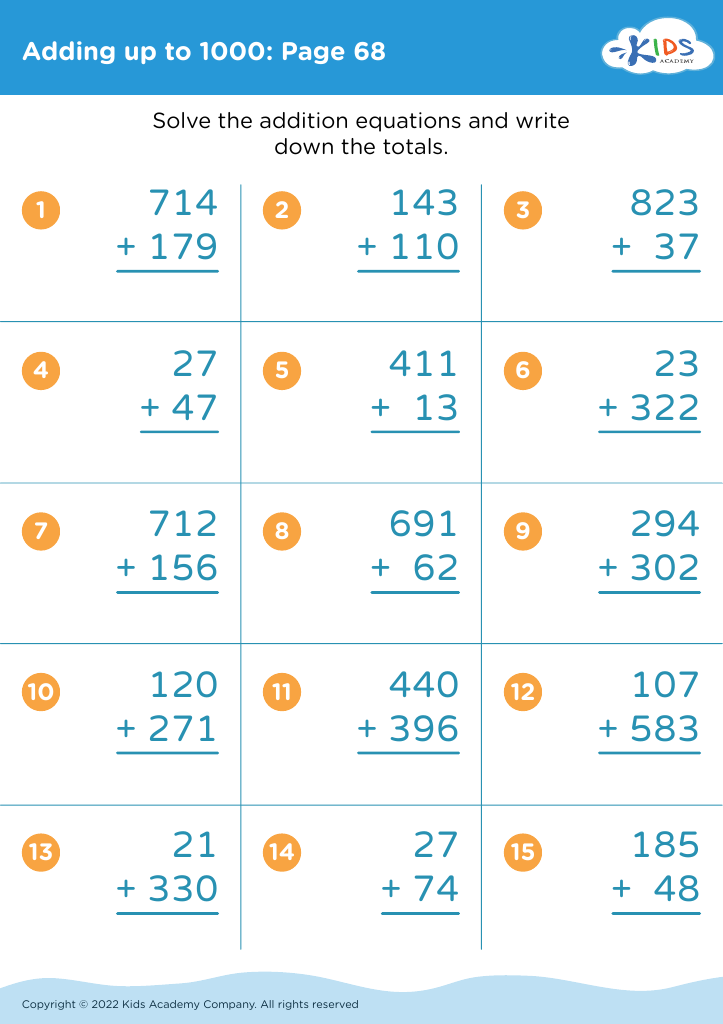
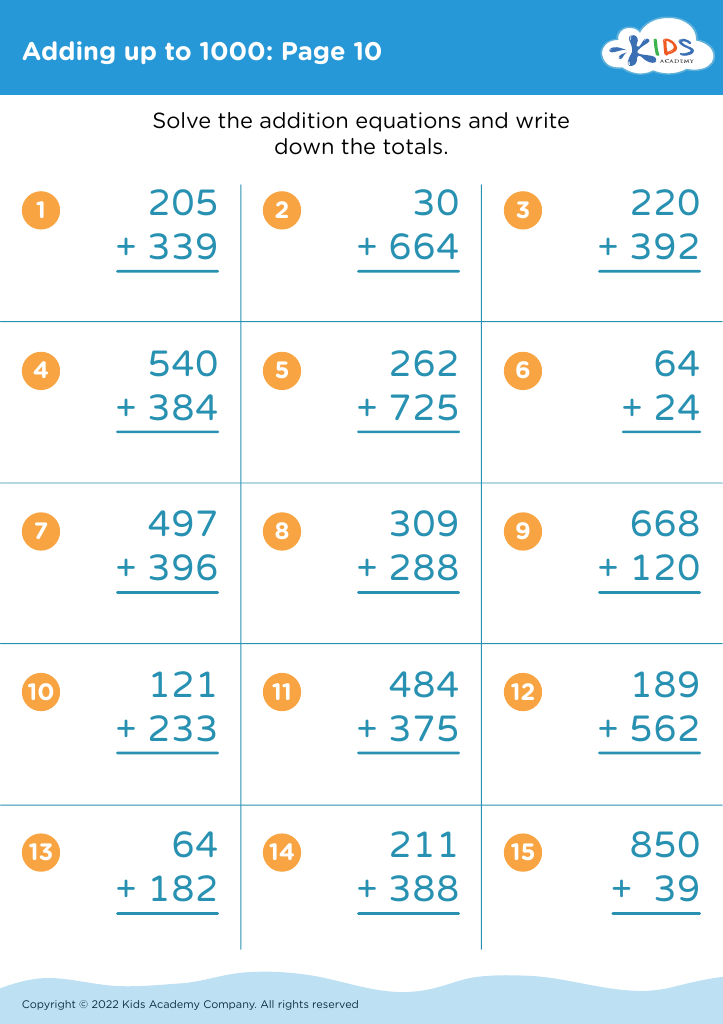
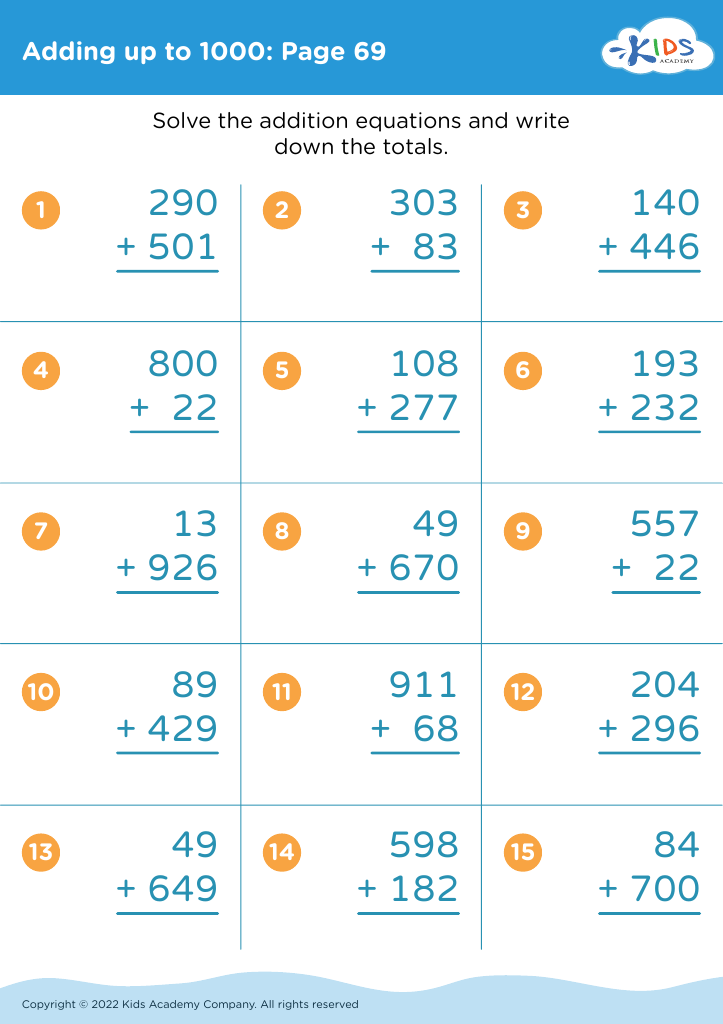
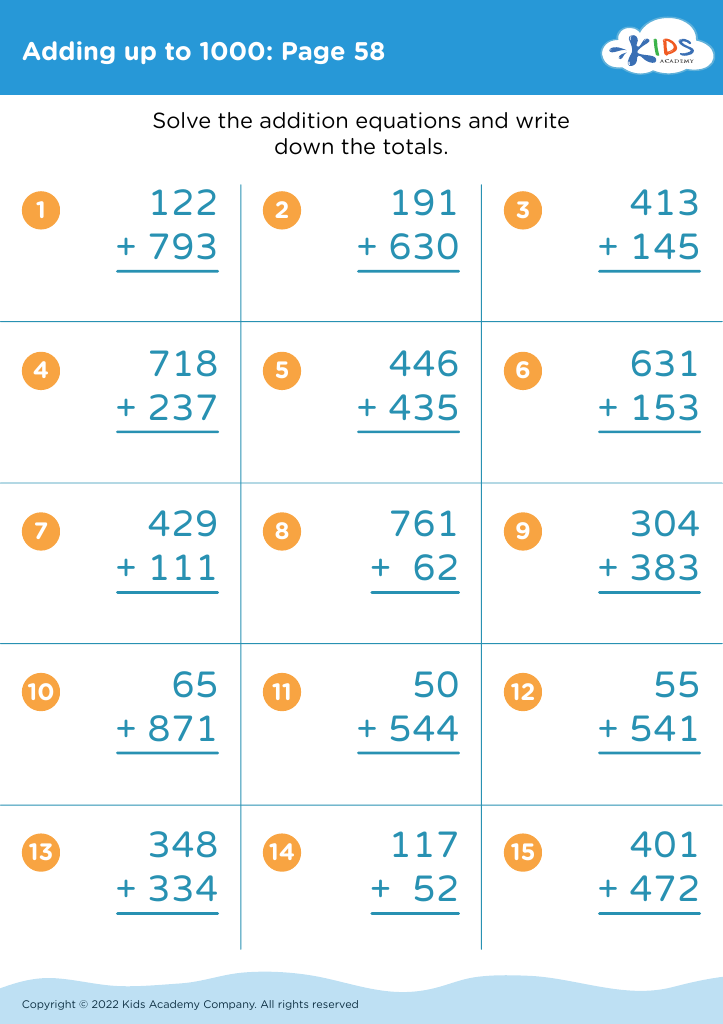
Explore our engaging "Comparing Fractions Adding Up to 1000" worksheets designed specifically for children ages 7 to 9. These fun and interactive activities help young learners master their fraction comparison skills through colorful visuals and relatable examples. By tackling diverse problems that total up to 1000, students enhance their understanding of fractions in a practical context. These worksheets not only support mathematical development but also foster critical thinking and problem-solving abilities. Ideal for both classroom use and home study, our resources make learning fractions enjoyable and effective. Start your child's mathematical journey today with our specially crafted exercises!


Comparing fractions is a crucial skill that underpins students' mathematical understanding, particularly for those aged 7-9. At this stage, children are building foundational skills that will serve them in more advanced mathematics. Understanding how to compare fractions helps them make connections between numerical values, leading to stronger problem-solving strategies.
When students learn to compare fractions, they develop critical thinking and reasoning skills. This competence extends beyond math; it encourages analytical thinking, which is useful in everyday decision-making. For parents and teachers, investing time in this skill promotes confidence in students, fostering a positive attitude towards math.
Additionally, comprehending fractions prepares young learners for future concepts, such as addition and subtraction of fractions, and real-life applications like cooking or budgeting. Engaging children with activities that compare fractions helps make math relatable and enjoyable, enhancing their interest in the subject.
Resourceful tools, like games or interactive lessons focusing on comparing fractions, can aid teachers and parents in creating a supportive learning environment. By prioritizing these skills, educators can set students on a path toward academic success, laying a solid foundation for more complex mathematical concepts in the future.