Fine Motor Skills Adding up to 1000 Misc Worksheets for Ages 7-9
5 filtered results
-
From - To
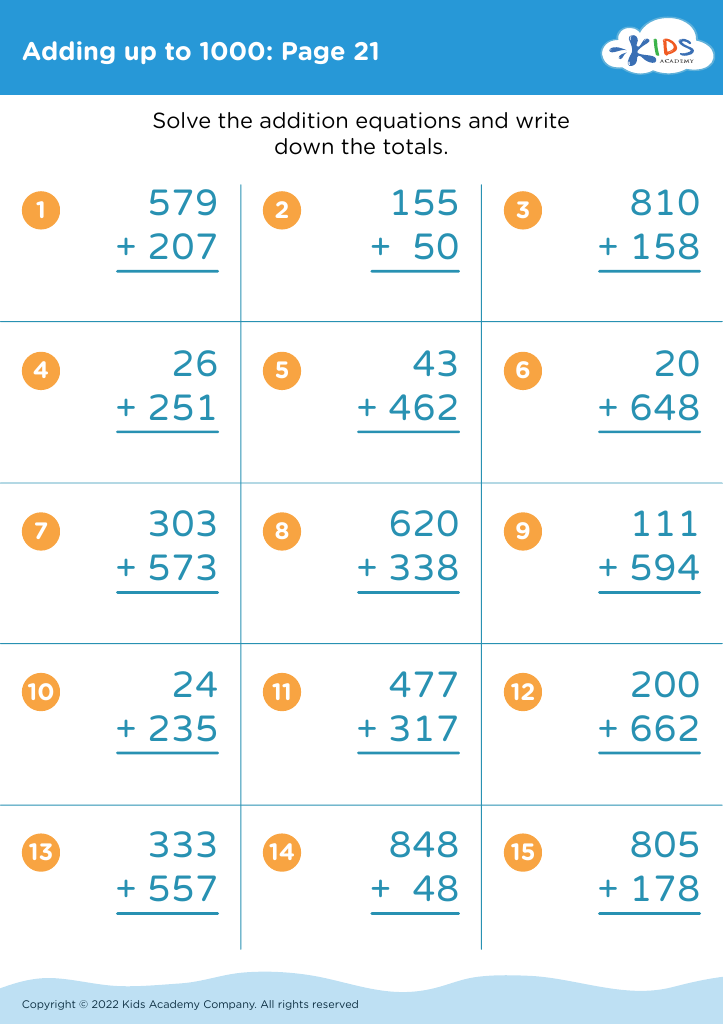
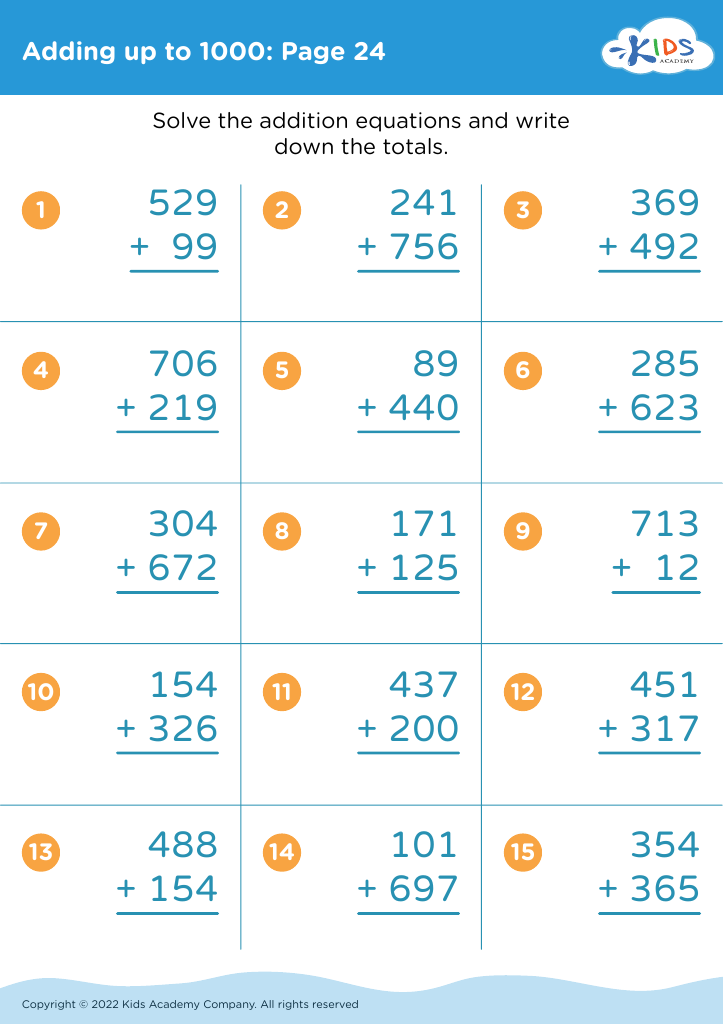
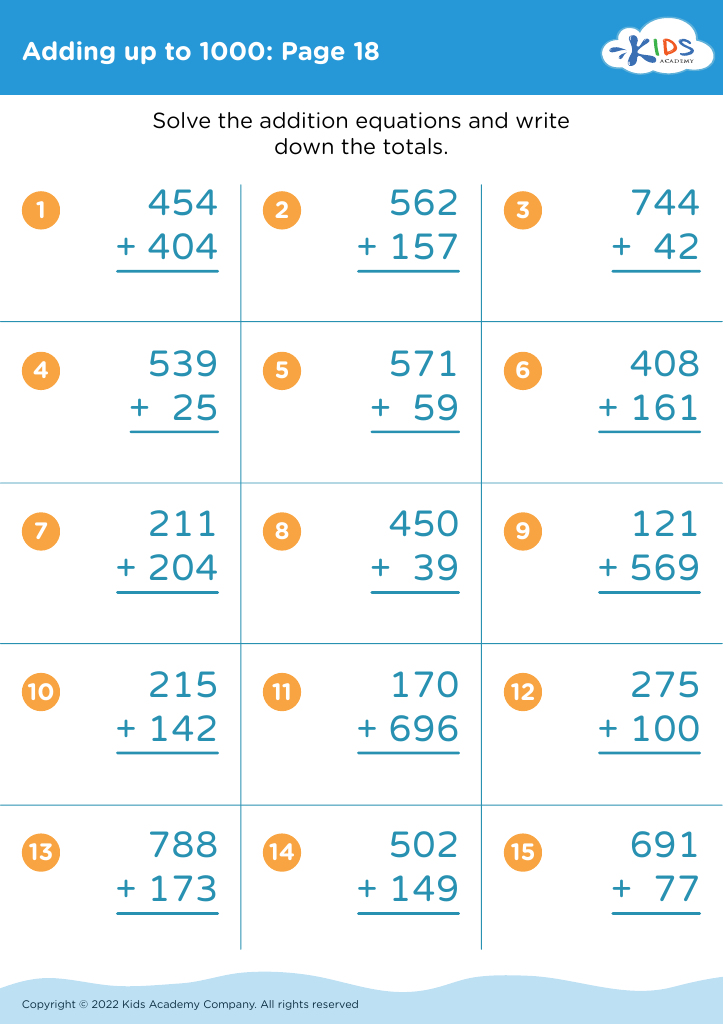
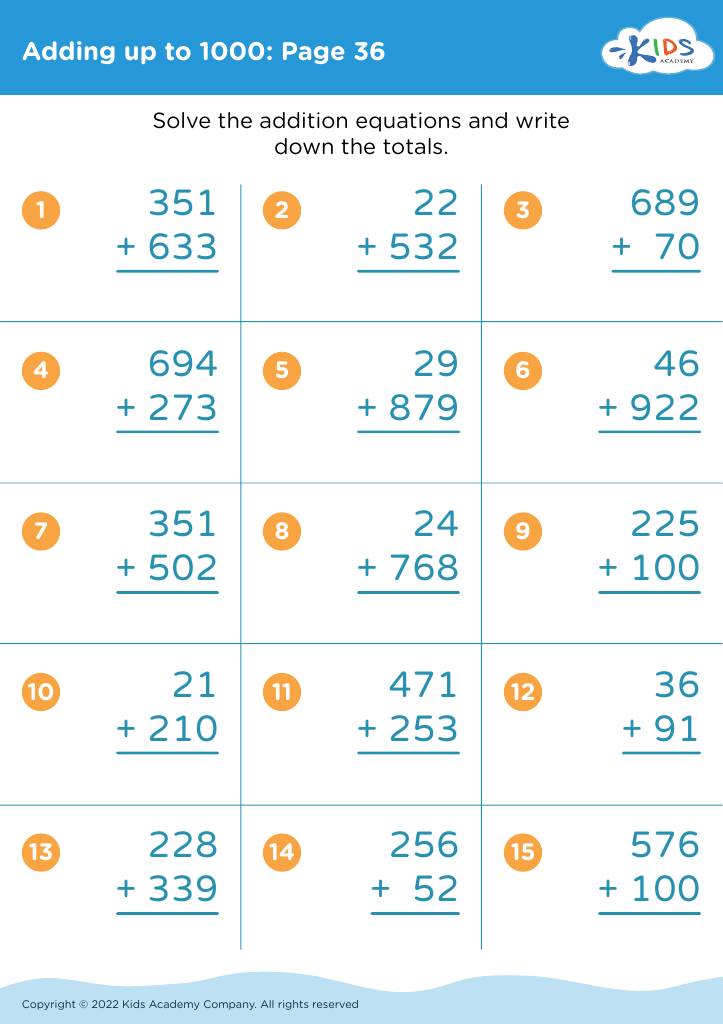
Enhance your child's arithmetic and fine motor abilities with our "Fine Motor Skills Adding up to 1000 Misc Worksheets for Ages 7-9". These engaging worksheets blend essential math practice with activities designed to strengthen hand-eye coordination and dexterity. With fun exercises that range from solving addition problems to completing interactive tasks, your child will develop a robust foundation in addition while improving precision and control. Ideal for young learners, these worksheets provide an enjoyable and educational way to grasp the concept of adding numbers up to 1000, ensuring both academic and motor skill development hand-in-hand.
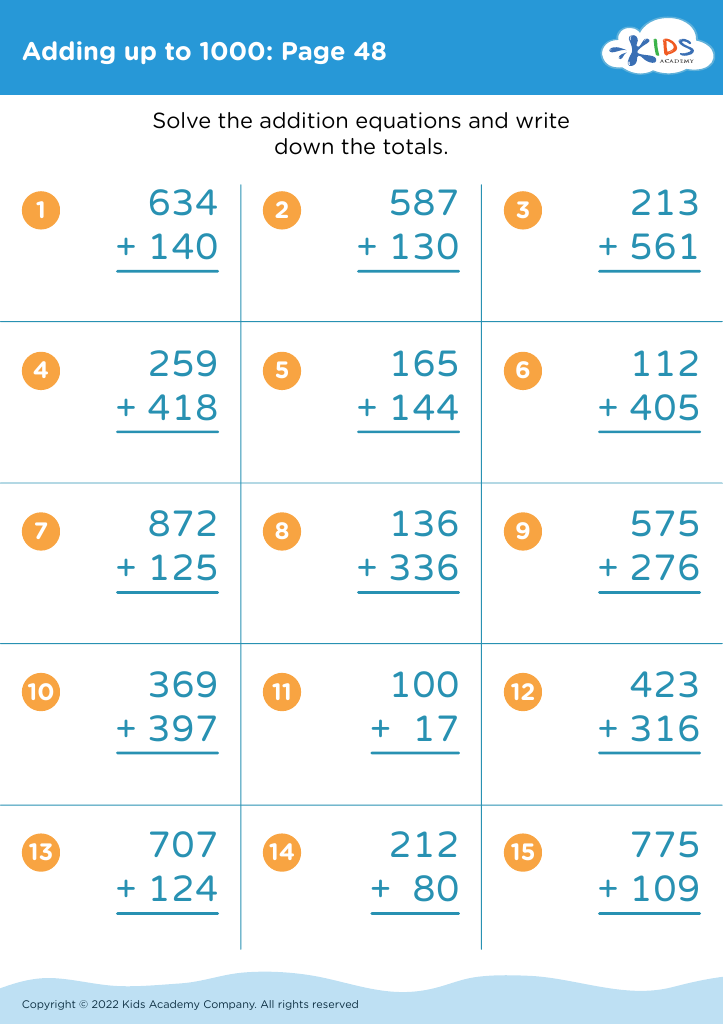


Fine motor skills are essential for children aged 7-9 because they are foundational for a wide range of everyday tasks and academic activities. These skills involve the coordination of small muscles, particularly in the hands and fingers, with the eyes, enabling children to perform precise movements. At this age, fine motor skills significantly impact a child's ability to write clearly, which is crucial for all subjects as they begin to produce more written work and complex sentences.
Parents and teachers should recognize that adding up to 1000—often included in math curriculum for this age group—is not just a cognitive task but also one that engages fine motor skills. Children need to be able to write numbers neatly and align them correctly to perform addition using columns, which helps prevent errors. Engaging these muscles helps with number formation, spacing, and positioning, essential for visual clarity and accuracy.
Moreover, strong fine motor skills translate to better self-sufficiency in everyday tasks like buttoning clothes, tying shoelaces, and using utensils. Encouraging activities that strengthen these skills, such as drawing, playing with building blocks, or cutting with scissors, supports overall development. Therefore, paying attention to and encouraging the development of fine motor skills is crucial for academic success and everyday competence.