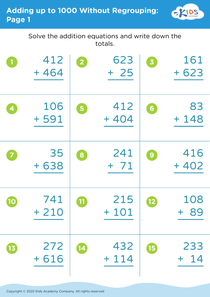
Fraction simplification Adding up to 1000 Misc Worksheets for Ages 7-9
5 filtered results
-
From - To
Discover engaging fraction simplification worksheets designed for children ages 7-9! Our "Fraction Simplification Adding Up to 1000" collection offers a variety of fun and educational activities that help young learners master the concepts of fractions while building their math skills. These worksheets are perfect for reinforcing essential fraction knowledge and enhancing problem-solving abilities, all while keeping your child entertained. With user-friendly activities that align with educational standards, your kids will enjoy practicing adding fractions and simplifying them effortlessly. Explore our comprehensive resources to support your child's learning journey and inspire a love for math today!
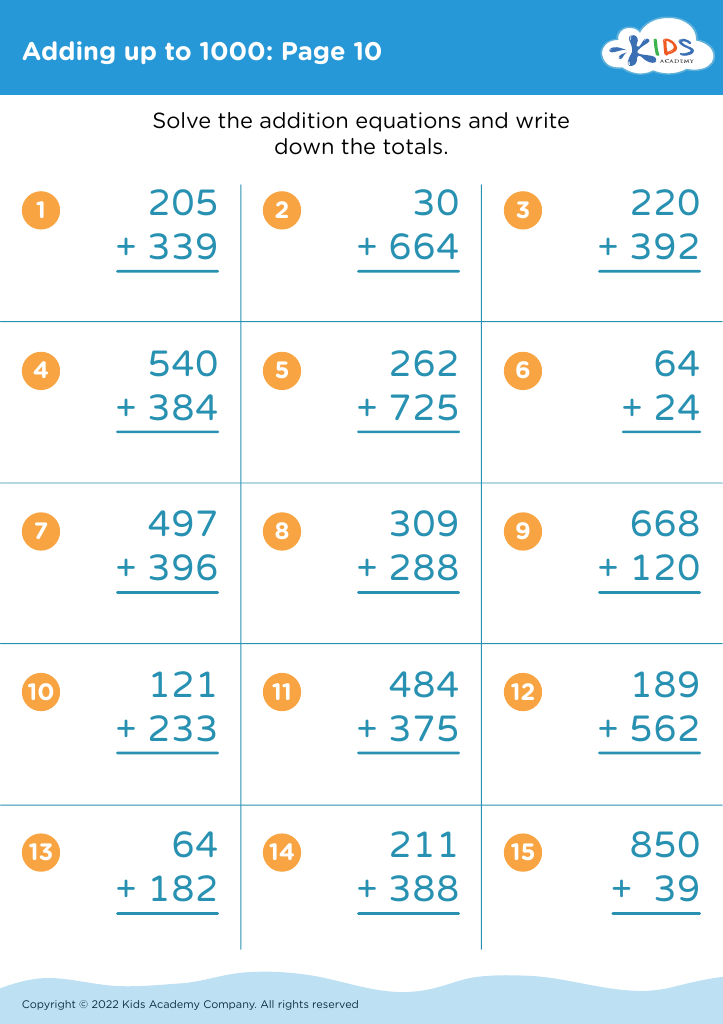
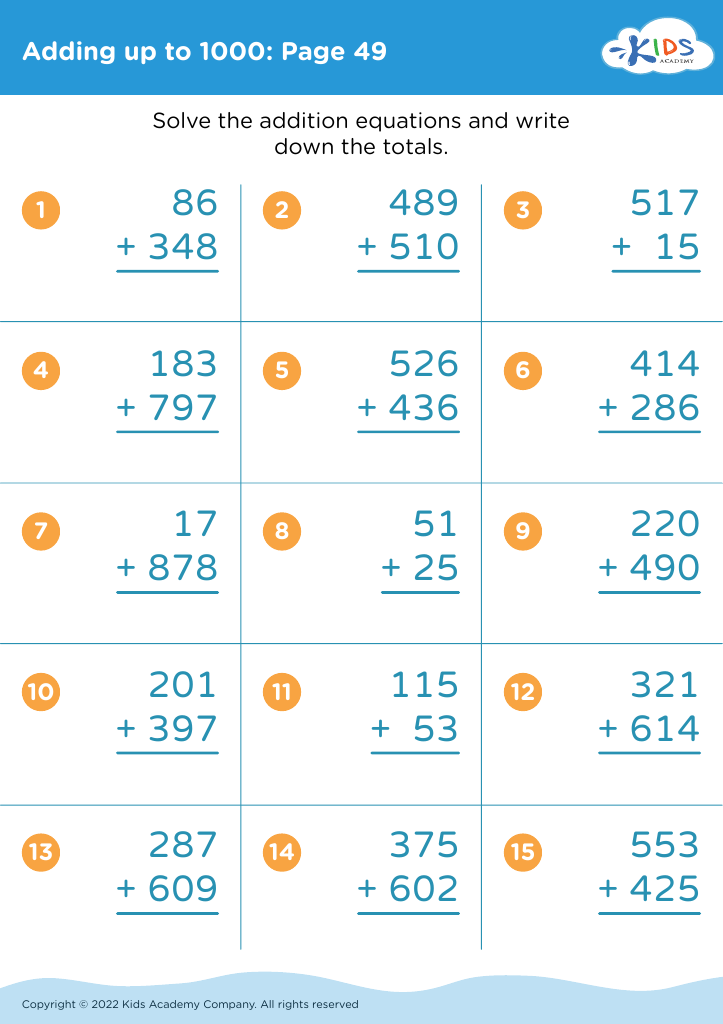
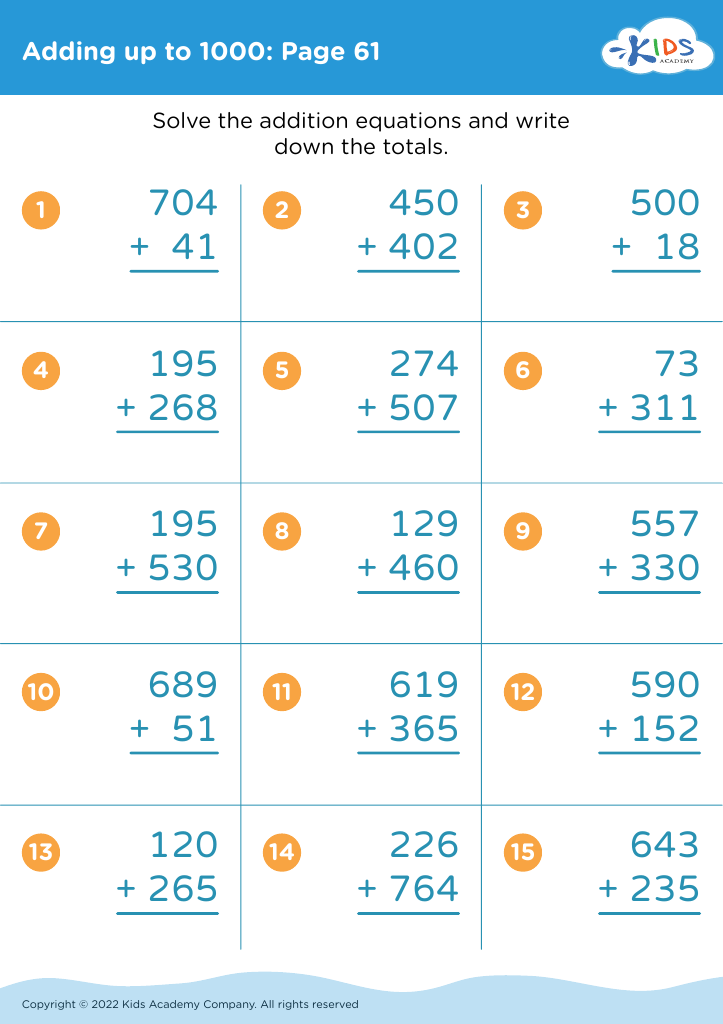
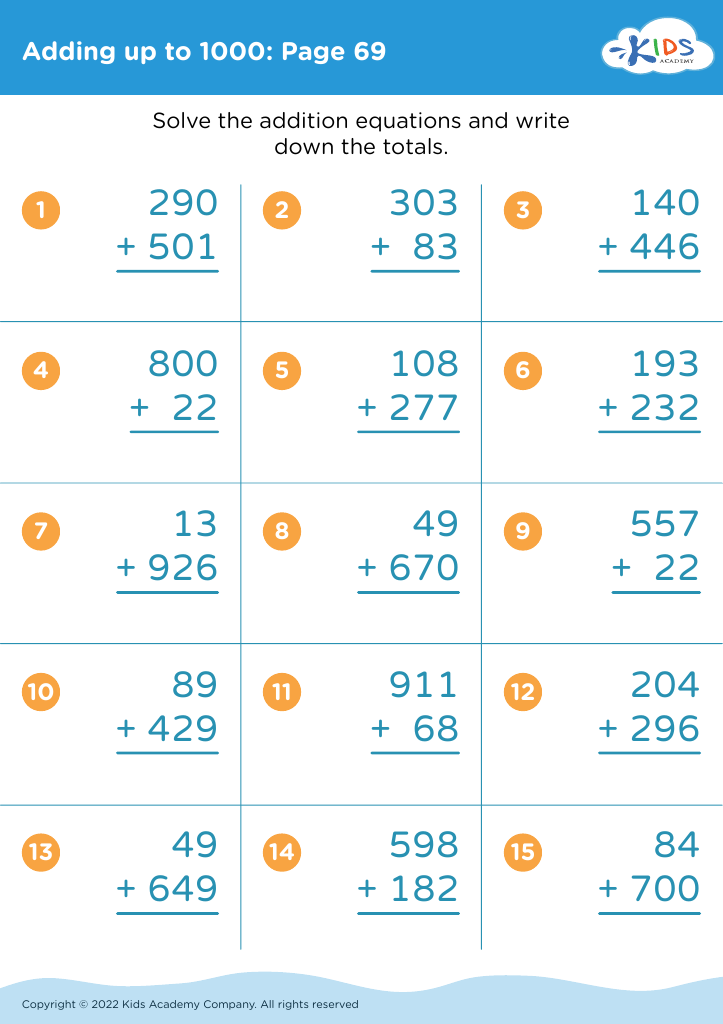
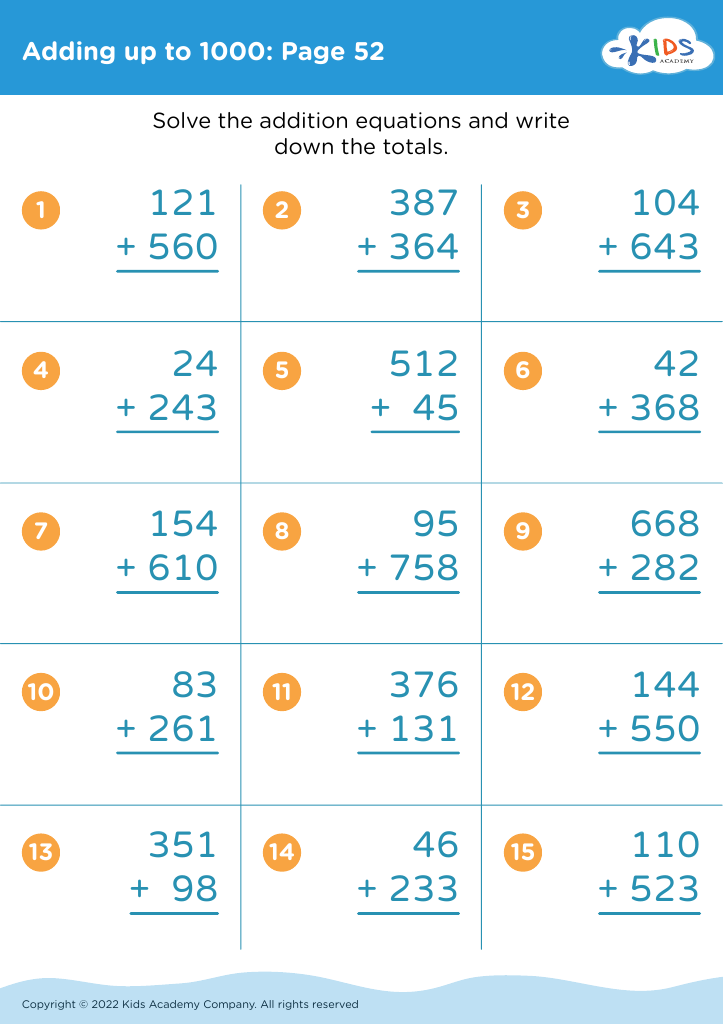


Understanding fraction simplification is crucial for children ages 7 to 9, as it lays the foundation for more advanced mathematical concepts. Parents and teachers should care about this topic because it enhances students' number sense and arithmetic skills. Simplifying fractions helps children recognize and work with equivalent values, which is essential when adding, subtracting, or comparing fractions.
Moreover, mastering this concept fosters problem-solving abilities and critical thinking, encouraging students to approach tasks methodically. As they simplify fractions, children practice careful analysis, promoting a sense of mathematical confidence.
Additionally, incorporating activities that involve fractions adds excitement and relevance to math learning. Engaging lessons can relate fractions to real-life scenarios, such as cooking or sharing items, making the material more accessible and interesting. Finally, competency in fraction simplification prepares students for future topics in math, including ratios, proportions, and ultimately algebra.
In summary, caring about fraction simplification is essential for guiding young learners toward mathematical proficiency. Equipped with strong foundational skills, children will be better prepared for successful learning and application of math in varied contexts.