Addition Practice Adding up to 1000 with Regrouping Worksheets for Ages 7-9
3 filtered results
-
From - To
Welcome to our Addition Practice page, designed for children ages 7-9! Our engaging worksheets focus on adding numbers up to 1000, ensuring students grasp the concept of regrouping. With a variety of fun and interactive exercises, your child will develop essential addition skills while enhancing their confidence in math. Our printable worksheets provide step-by-step guidance, making learning enjoyable and effective. Challenge your young learners with continuous practice that reinforces their understanding of regrouping and whole number addition. Perfect for classroom use or home study, these resources lay a solid foundation for future math success. Start your addition journey today!
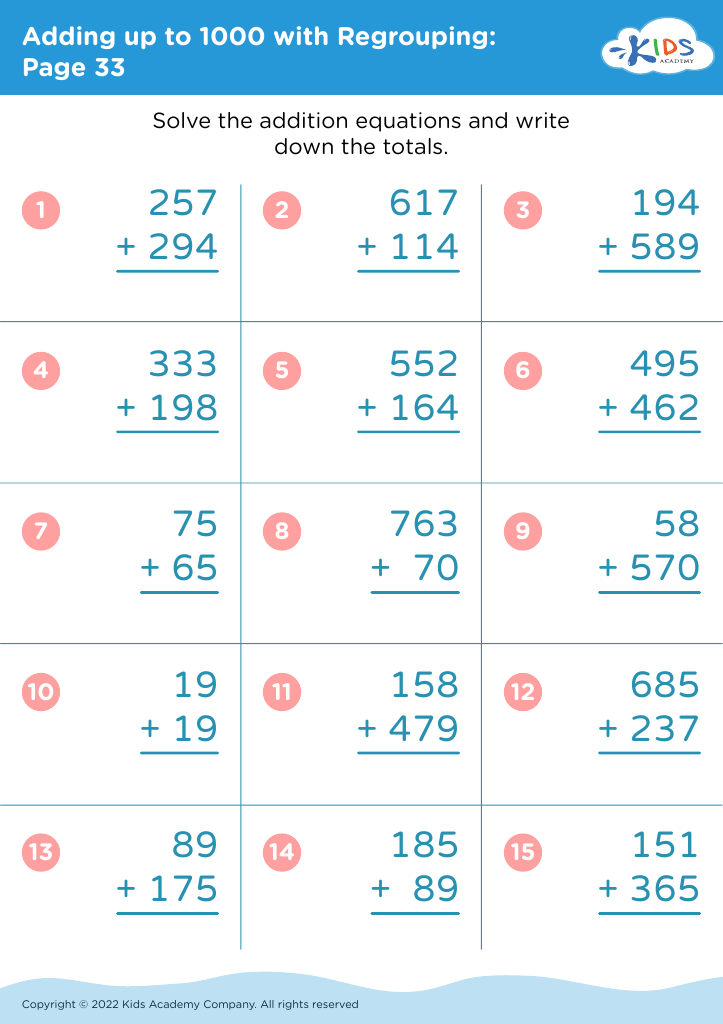
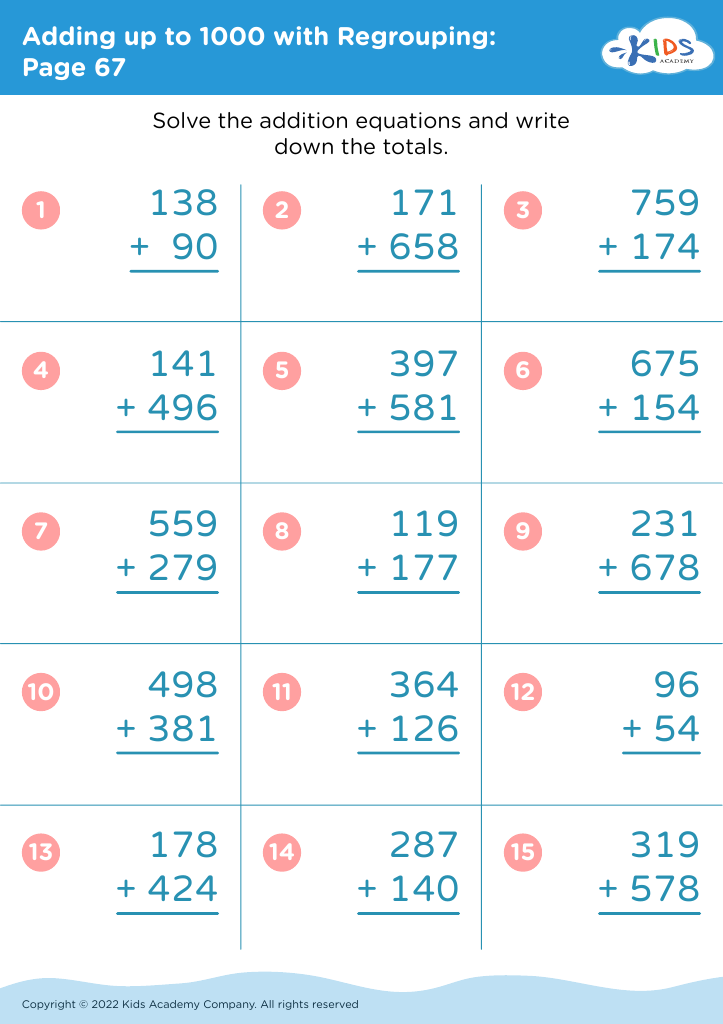
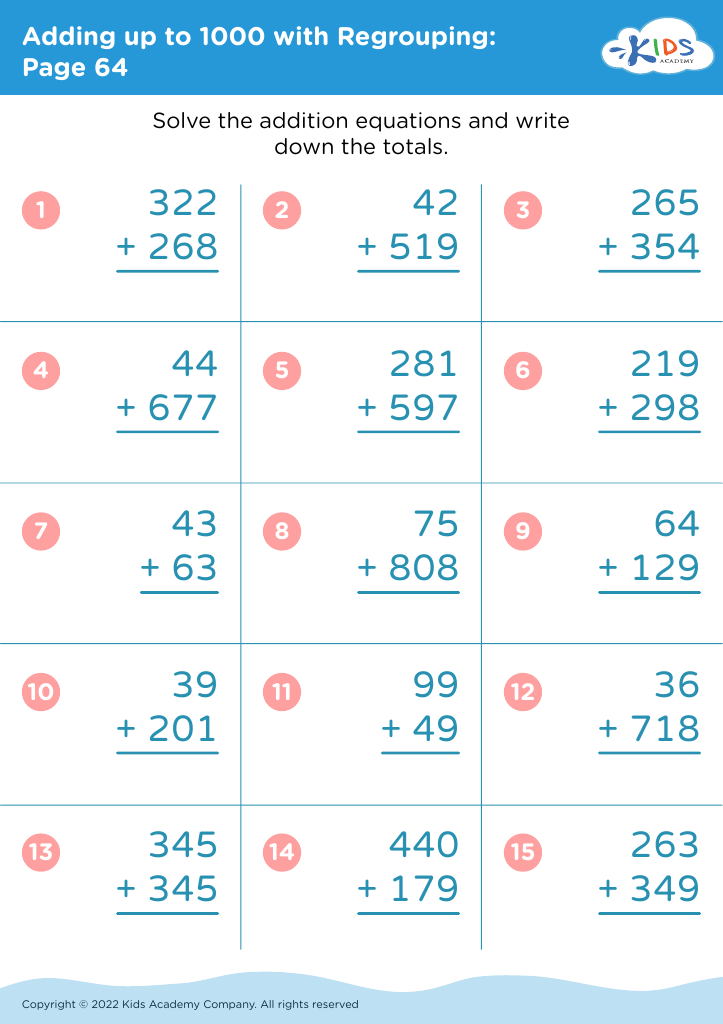


Addition practice, particularly adding up to 1000 with regrouping, is a critical skill for children aged 7-9. This age group is at a pivotal point in their mathematical development, transitioning from basic arithmetic to more complex problem-solving. Mastering addition through regrouping builds their number sense, helping them understand place value and how numbers work together, which is essential for success in higher-level math concepts.
For parents and teachers, focusing on this skill is crucial for fostering confidence and competence in math. Proficient addition skills lay the groundwork for future mathematical concepts such as subtraction, multiplication, and division, while also enhancing critical thinking abilities. Moreover, regular practice in a supportive environment helps children develop perseverance and a positive mindset toward learning.
Engaging children in addition with regrouping also fosters excitement for math, shifting the perception from a daunting task to an enjoyable challenge. Early competency in these foundational skills ultimately shapes their attitudes toward math in adolescence and adulthood, influencing educational and career choices. By prioritizing addition practice in this age group, parents and teachers can empower children with essential tools for academic success and lifelong learning.