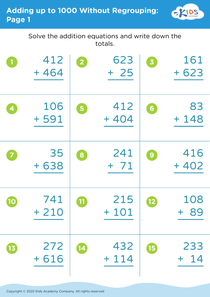
Fine Motor Skills Adding up to 1000 with Regrouping Worksheets for Ages 7-9
4 filtered results
-
From - To
Enhance your child's fine motor skills with our engaging "Adding up to 1000 with Regrouping Worksheets" designed for ages 7-9! These worksheets combine essential math concepts with fun, hands-on activities that promote dexterity and coordination. As children practice addition with regrouping, they will improve their handwriting and control while solving mathematical problems. Each worksheet is crafted to ensure that learning is both enjoyable and effective, reinforcing their understanding of regrouping in addition. Perfect for home or classroom use, these resources help develop the foundational skills necessary for successful learning in math and beyond. Explore our fine motor skills worksheets today!
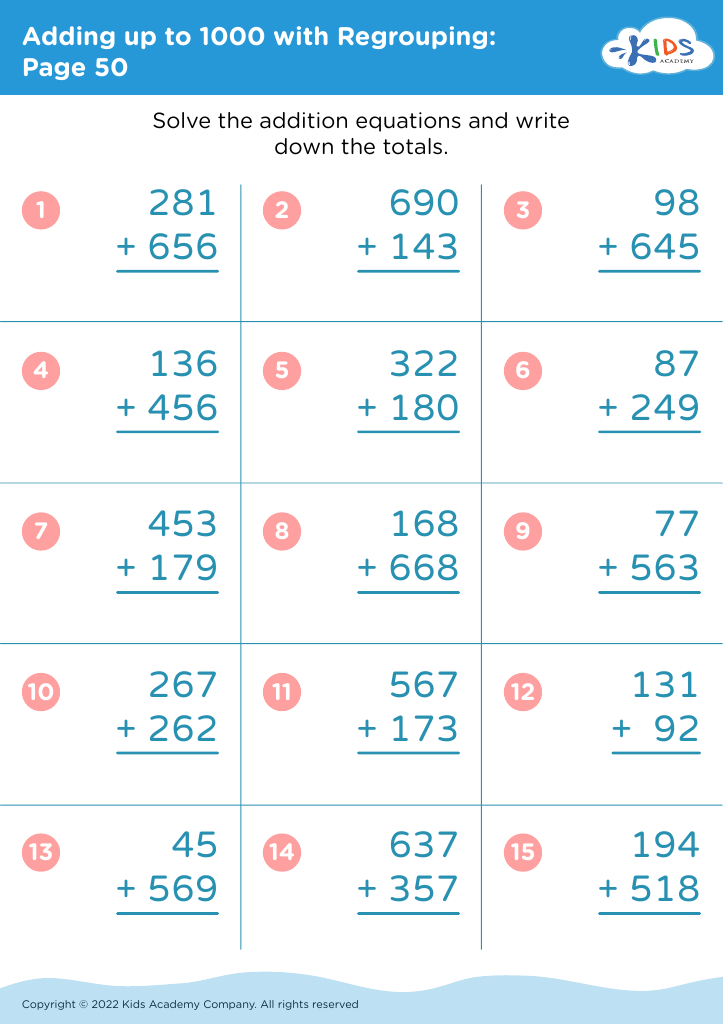
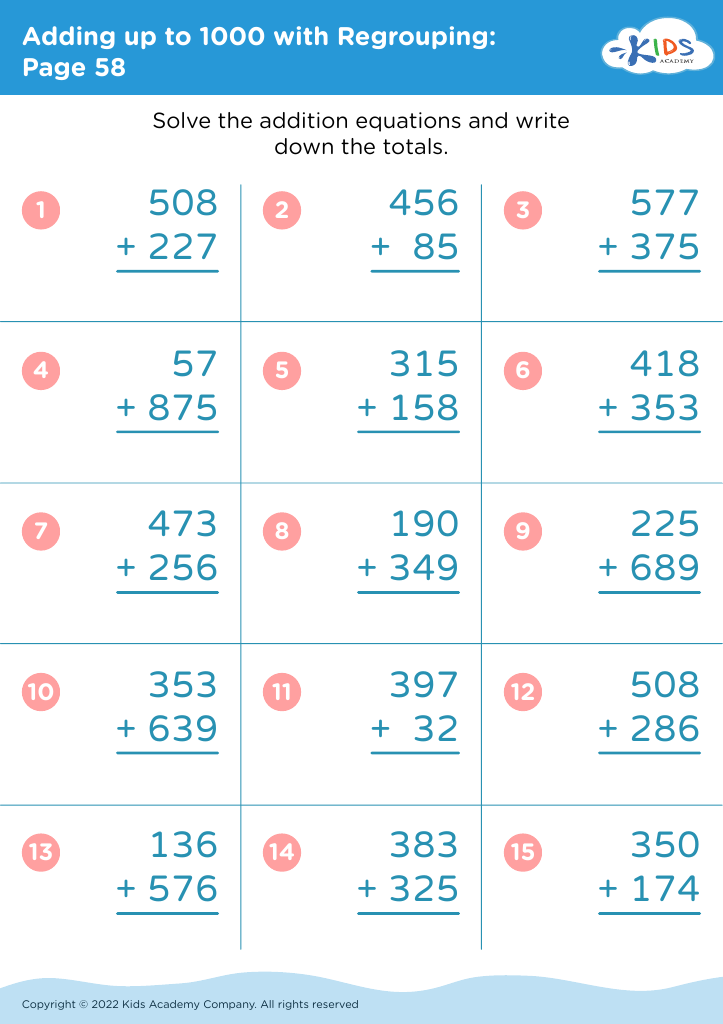
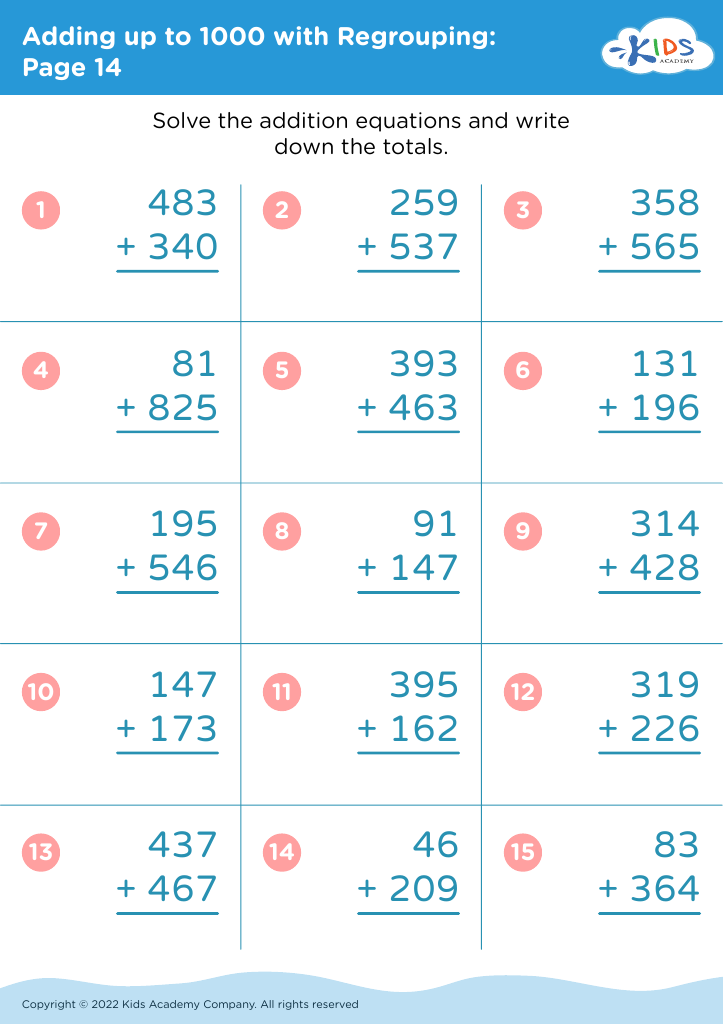
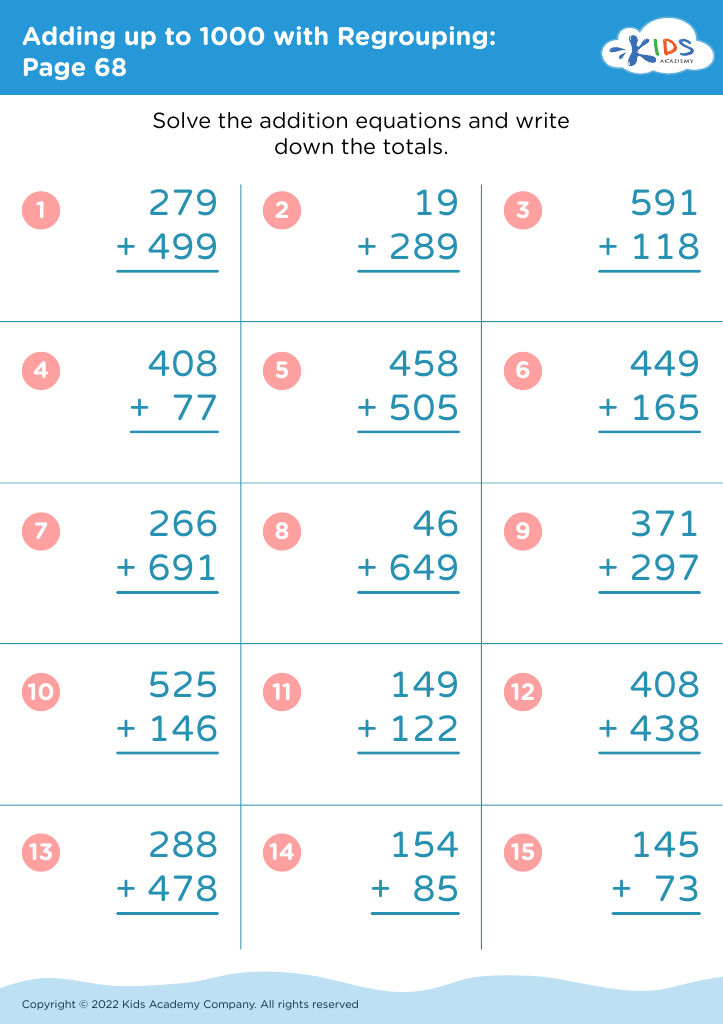


Fine motor skills are crucial for children aged 7-9 as they influence various aspects of learning and daily life. Firstly, fine motor skills involve the coordination of small muscles in fingers and hands, which are essential for writing, drawing, and manipulating objects. With the increasing complexity of math concepts, such as addition with regrouping (carrying over numbers), strong fine motor skills allow students to better manage writing and arranging numbers systematically.
When children write numbers legibly and form them correctly, they're less likely to make mistakes in calculations. This attention to detail fosters a more profound understanding of mathematical principles and boosts confidence during arithmetic tasks. Additionally, as children become more adept at managing tools like pencils and erasers, they can focus better on the cognitive load of math calculations rather than struggling with their handwriting.
Moreover, fine motor skills contribute to children’s independence. Proficient use of hands enables them to engage in a wide range of activities—from tying shoelaces to completing homework—which promotes self-reliance and boosts their confidence. In summary, nurturing fine motor skills can significantly enhance the academic experience for children aged 7-9, particularly when tackling complex math concepts like addition with regrouping.