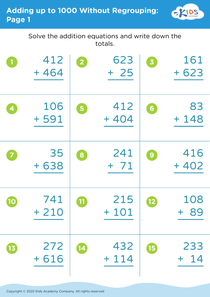
Fraction comparison Adding up to 1000 with Regrouping Worksheets for Ages 7-9
3 filtered results
-
From - To
Help your child master the art of comparing fractions with our engaging worksheets designed for ages 7-9. Our "Fraction Comparison Adding Up to 1000 with Regrouping" worksheets challenge young learners to think critically and boost their math skills. With colorful illustrations and real-world examples, these worksheets make learning fractions enjoyable and relatable. Each exercise encourages students to regroup and solve problems to reach a total of 1000. Ideal for reinforcing classroom lessons or supplementing home study, these resources promote confidence and fluency in fraction comparison. Download now and watch your child excel in math while having fun!
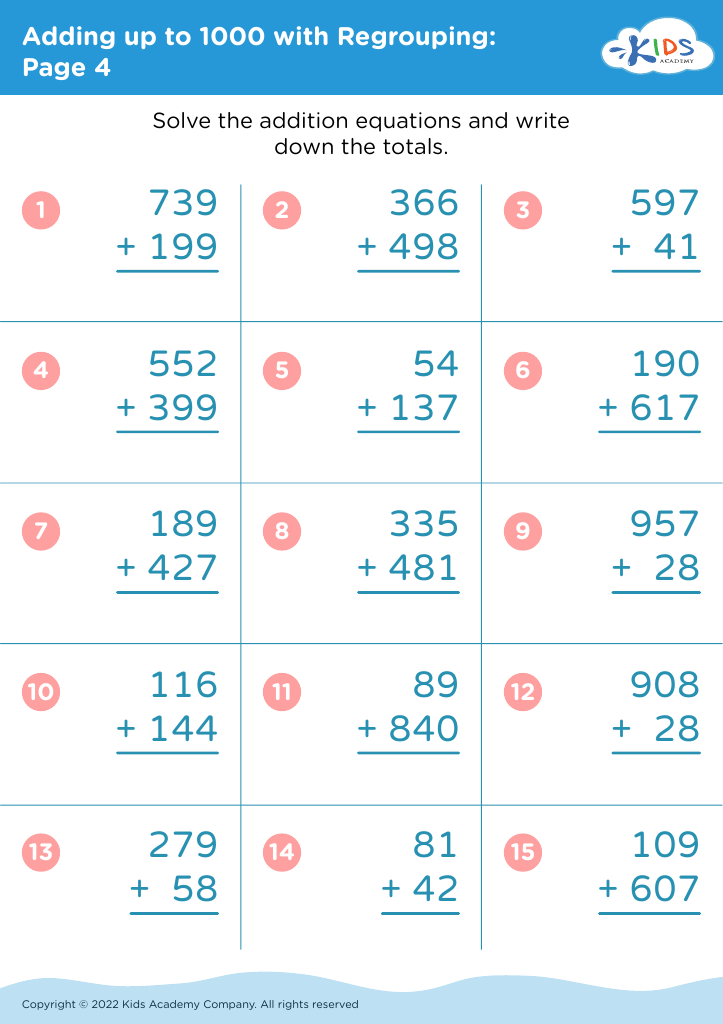
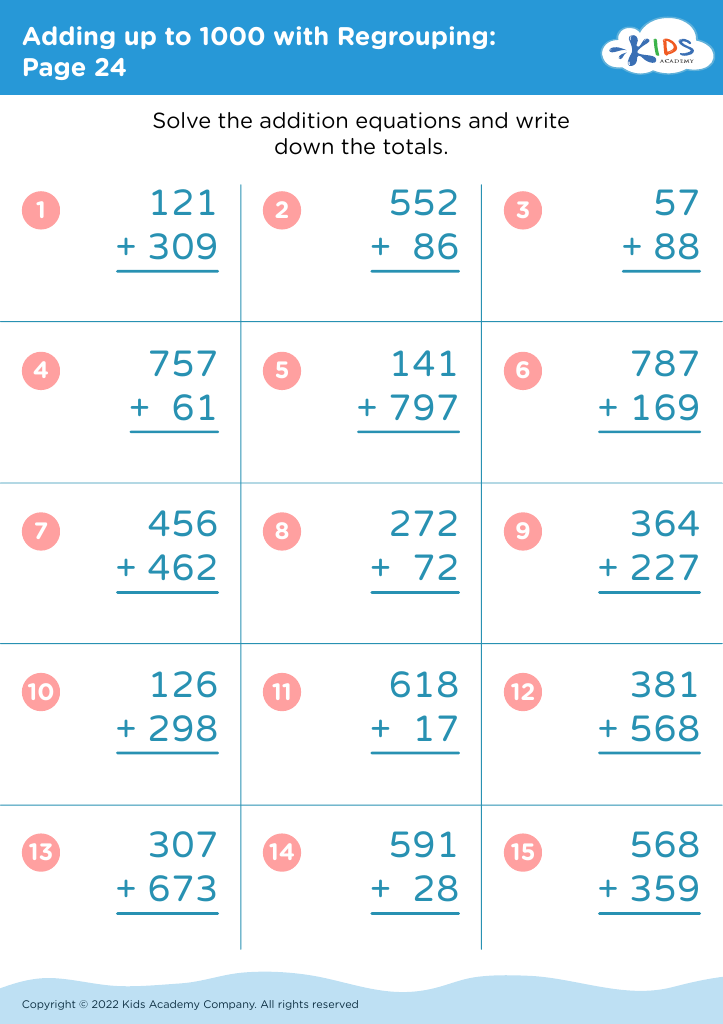
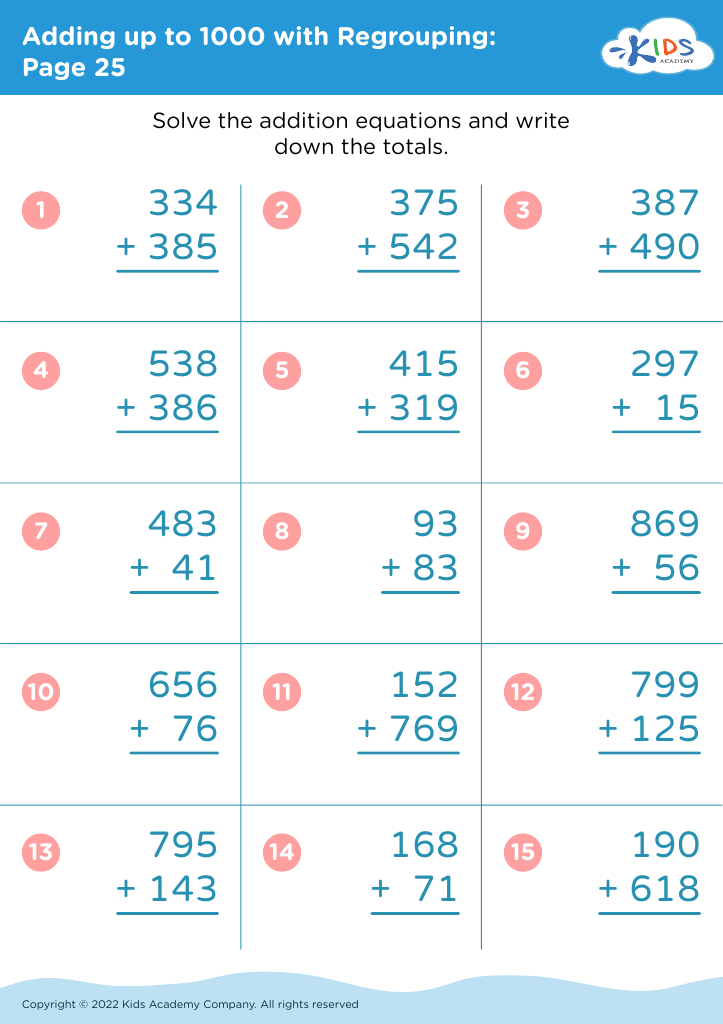


Parents and teachers should care about teaching fraction comparison and addition with regrouping, particularly for ages 7-9, because these concepts are foundational for students’ mathematical development. This age group is crucial for nurturing critical thinking skills, and understanding fractions helps children grasp more complex mathematical ideas later on.
Fraction comparison reinforces a child's ability to analyze and understand numerical relationships, paving the way for effective problem-solving skills. For instance, by comparing fractions, students learn to identify greater or lesser values, aiding their understanding of proportional reasoning necessary in real-life situations like cooking or budgeting.
Moreover, adding up to 1000 with regrouping is an important skill for developing number sense and mental math strategies. Regrouping teaches children about place value, which is essential for building a strong arithmetic foundation. As they learn to handle larger numbers and multiple steps, they become more confident and prepared for higher-level math concepts, such as multiplication and division.
Encouraging mastery in these areas can foster a positive math experience, reduce math anxiety, and promote lifelong learning habits. Overall, bolstering these skills lays the groundwork for both academic success and daily practical applications.