Problem-Solving Skills Adding up to 1000 with Regrouping Worksheets for Ages 7-9
5 filtered results
-
From - To
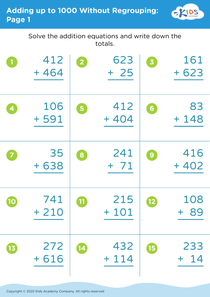
Boost your child's mathematical abilities with our "Problem-Solving Skills Adding up to 1000 with Regrouping Worksheets", specially designed for ages 7-9. These engaging worksheets enhance problem-solving skills, allowing young learners to grasp the concept of addition with regrouping. With fun, varied exercises, kids practice adding numbers up to 1000 step-by-step, building accuracy and confidence. Ideal for classroom or home use, these resources are perfect for reinforcing essential math skills and fostering a love for learning. Set your child on the path to math success today with our expertly crafted worksheets!
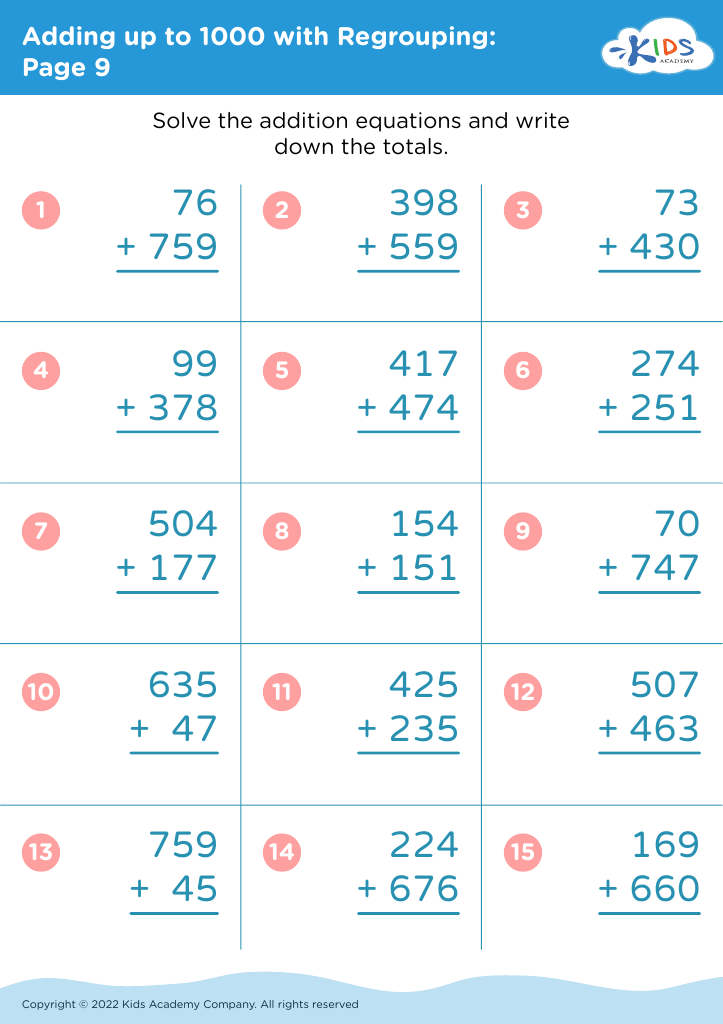
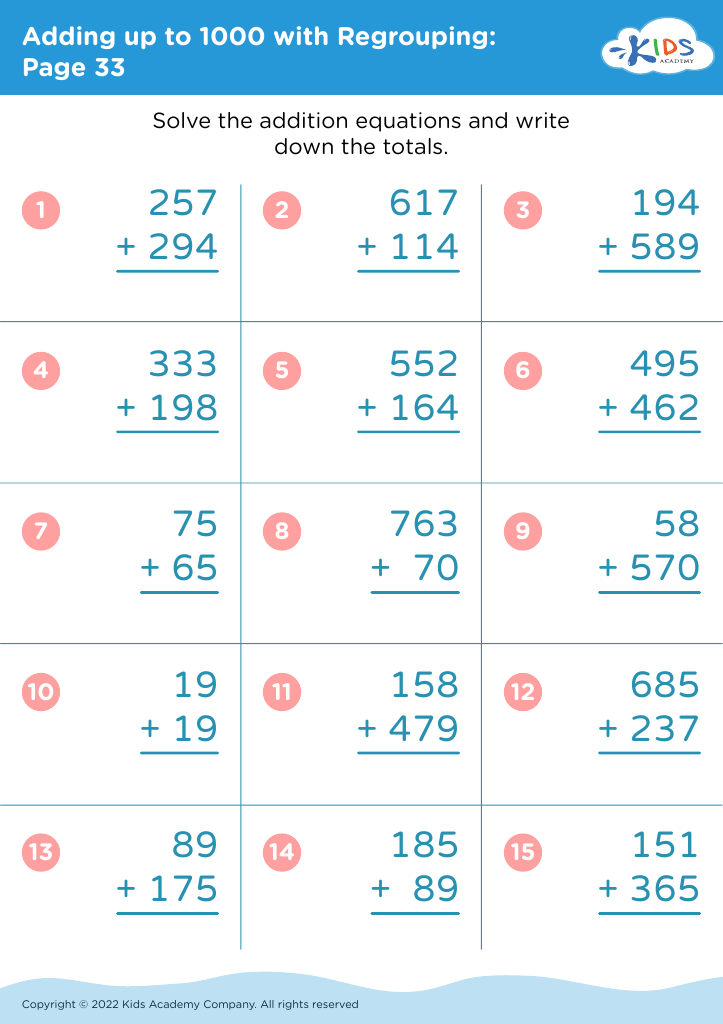
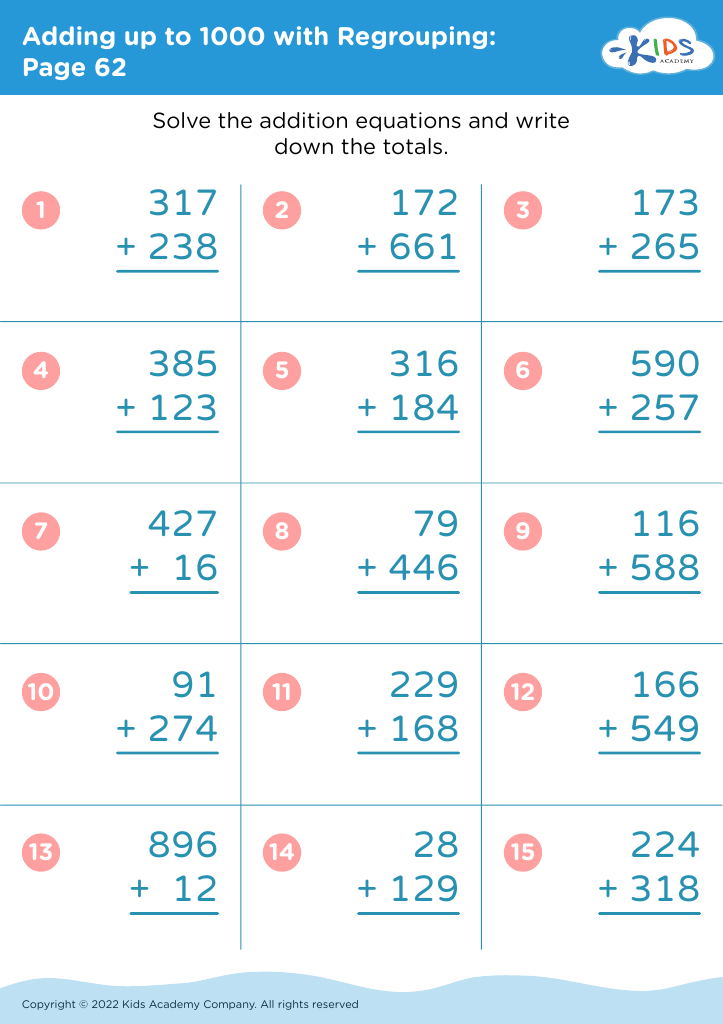
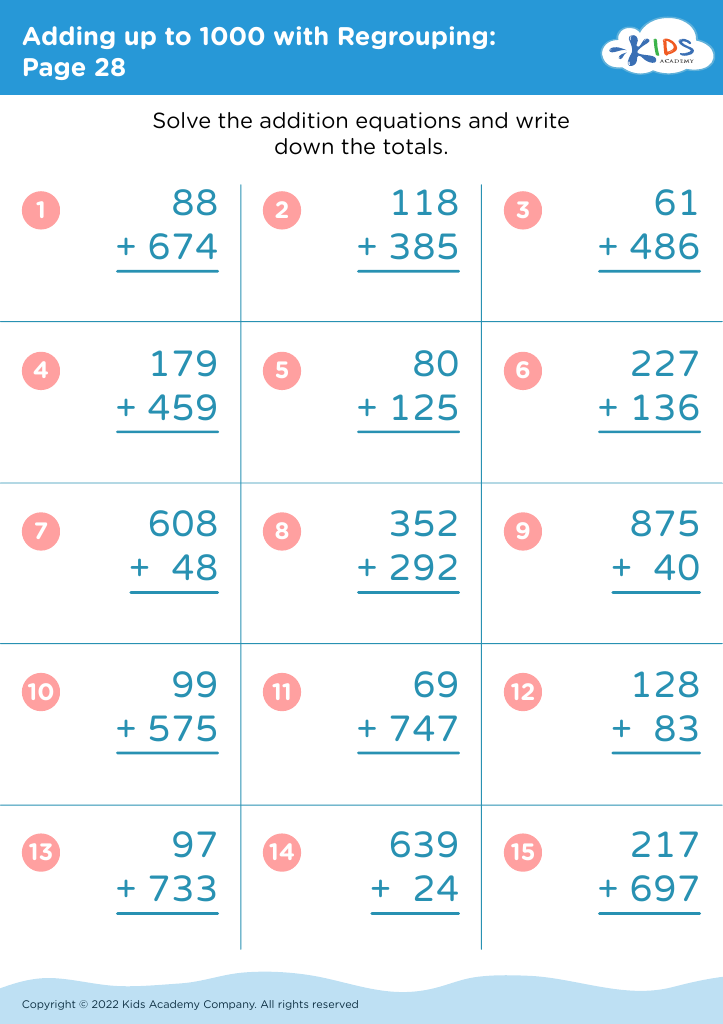
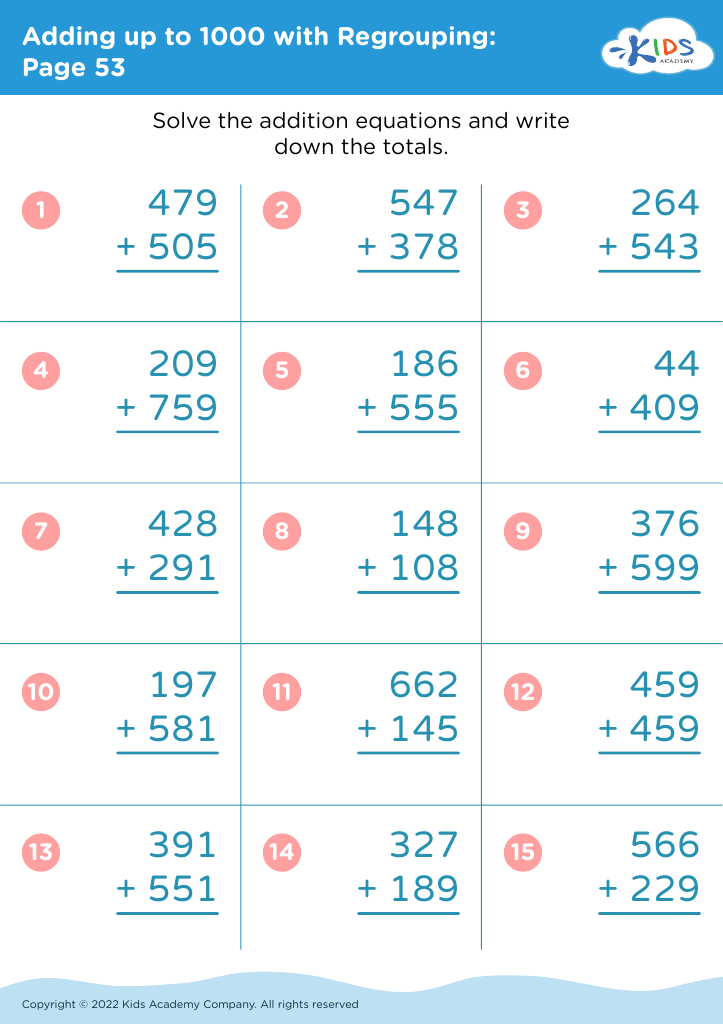


Problem-solving skills involving addition up to 1000 with regrouping are crucial for children aged 7-9. At this developmental stage, mastering such skills equips them with a solid foundation in math, a critical subject that underpins much of everyday life and future learning. Regrouping, also known as carrying, is pivotal in complex arithmetic operations and helps kids understand the importance of place value—tens, hundreds, and thousands.
When children tackle these problems, they foster analytical thinking and improve their ability to break down larger, seemingly overwhelming tasks into manageable steps. This not only enhances their mathematical fluency but also cultivates critical thinking and perseverance. Skills learned in math class impart strategies for problem-solving in various life scenarios, nurturing resilience and confidence.
Moreover, competence in math at such a young age boosts self-esteem and lays the groundwork for future academic success. Parents and teachers who emphasize these skills can help children overcome anxieties related to math and foster a positive attitude toward the subject. Engaging with addition problems and regrouping also provides opportunities for hands-on learning using educational tools and activities, making learning both fun and effective. Therefore, it is essential for parents and teachers to prioritize the development of these skills to ensure the overall growth and readiness of children for future academic challenges.