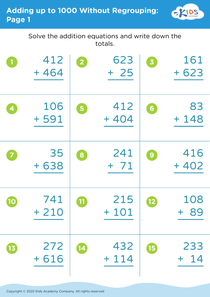
Shape Recognition Adding up to 1000 with Regrouping Worksheets for Ages 7-9
6 filtered results
-
From - To
Welcome to our "Shape Recognition Adding Up to 1000 with Regrouping Worksheets" for ages 7-9! These engaging and carefully designed worksheets combine essential math skills with fun shape recognition activities. Students will not only learn to add numbers up to 1000 using regrouping, but they will also become familiar with various geometric shapes. Our interactive exercises encourage critical thinking and problem-solving, making math a fun and exciting experience. Ideal for classroom or home use, these worksheets are a perfect way to enhance your child’s math proficiency and visual-spatial awareness simultaneously. Get ready for a creative learning journey!
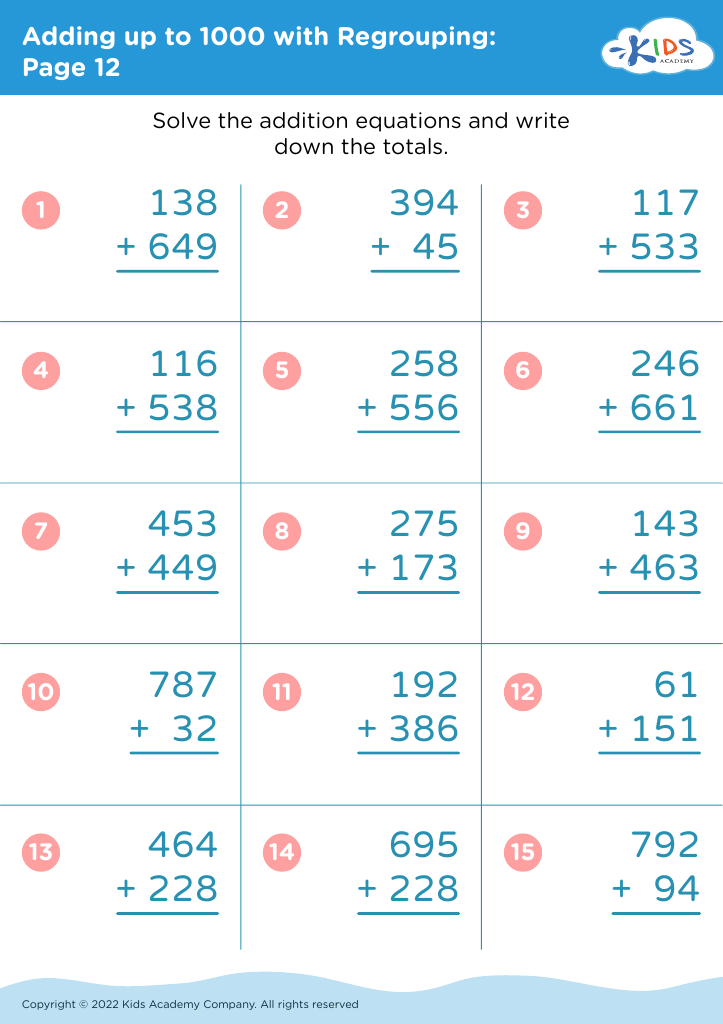
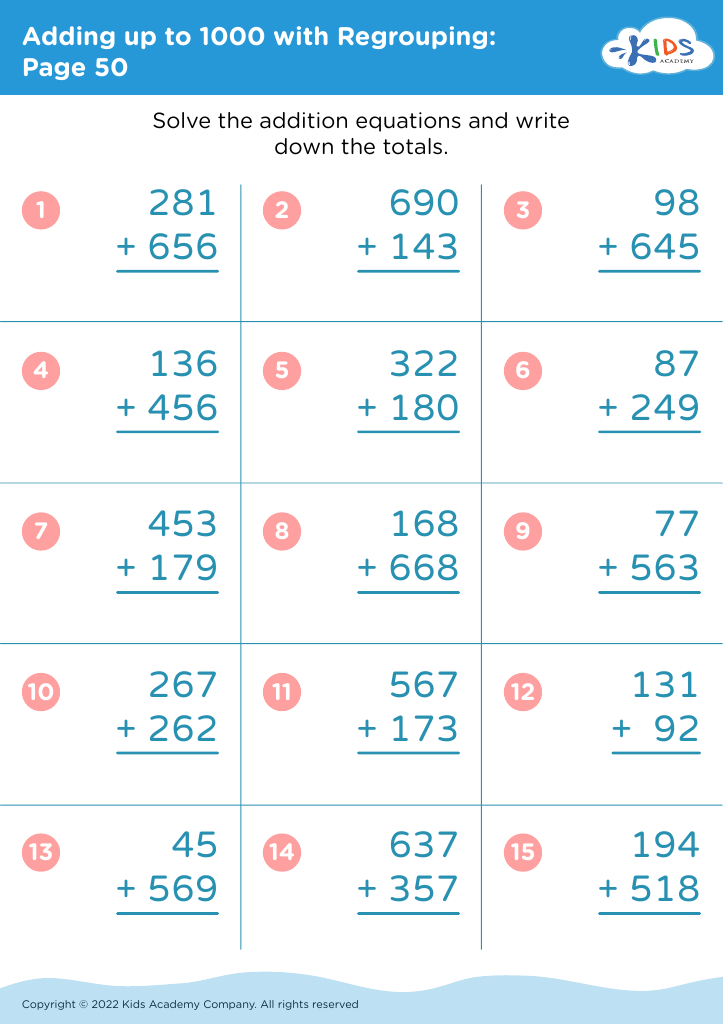
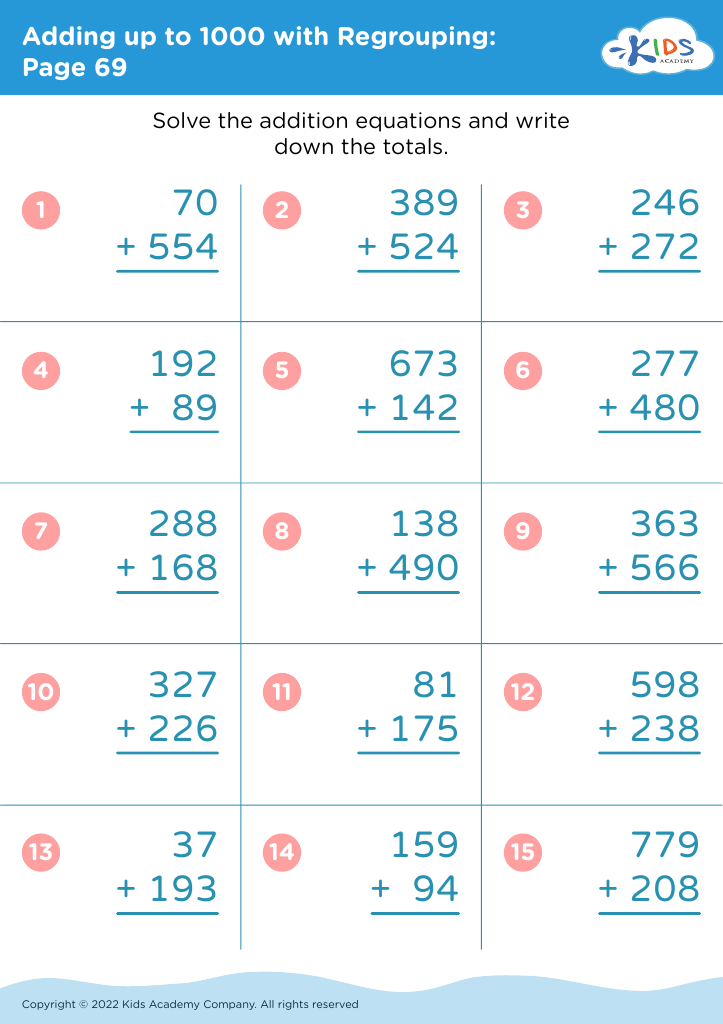
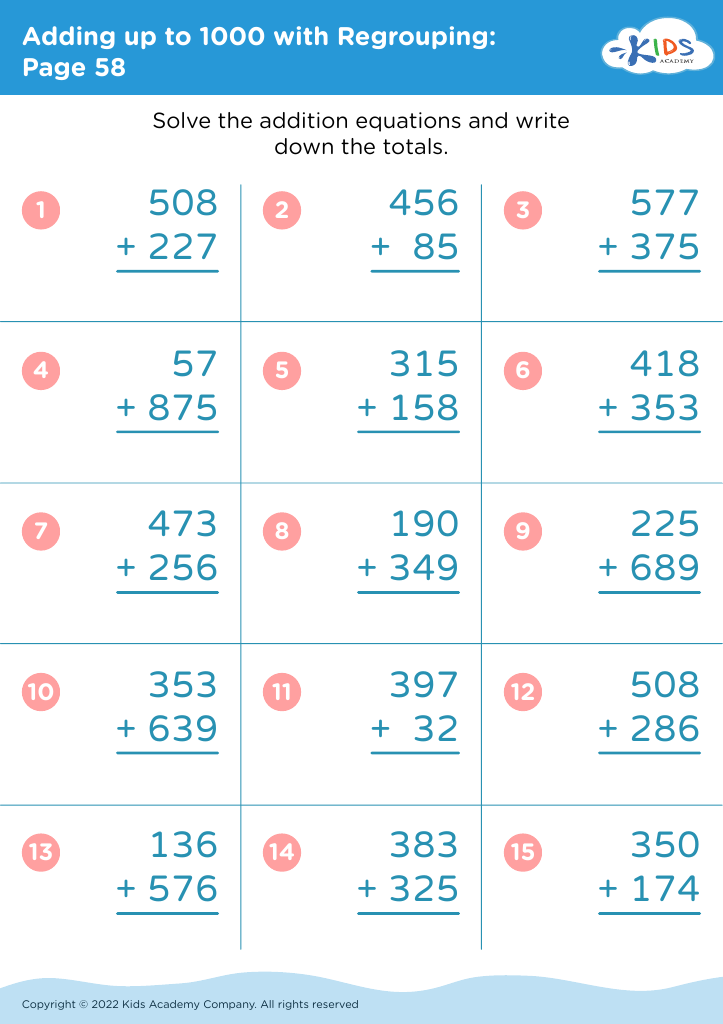
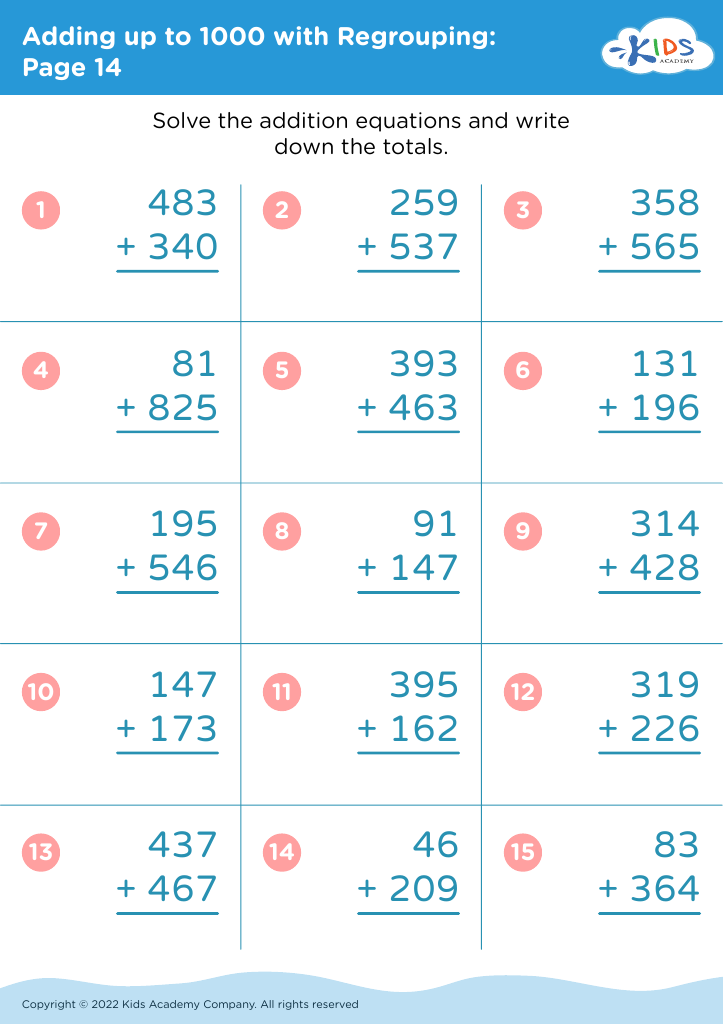
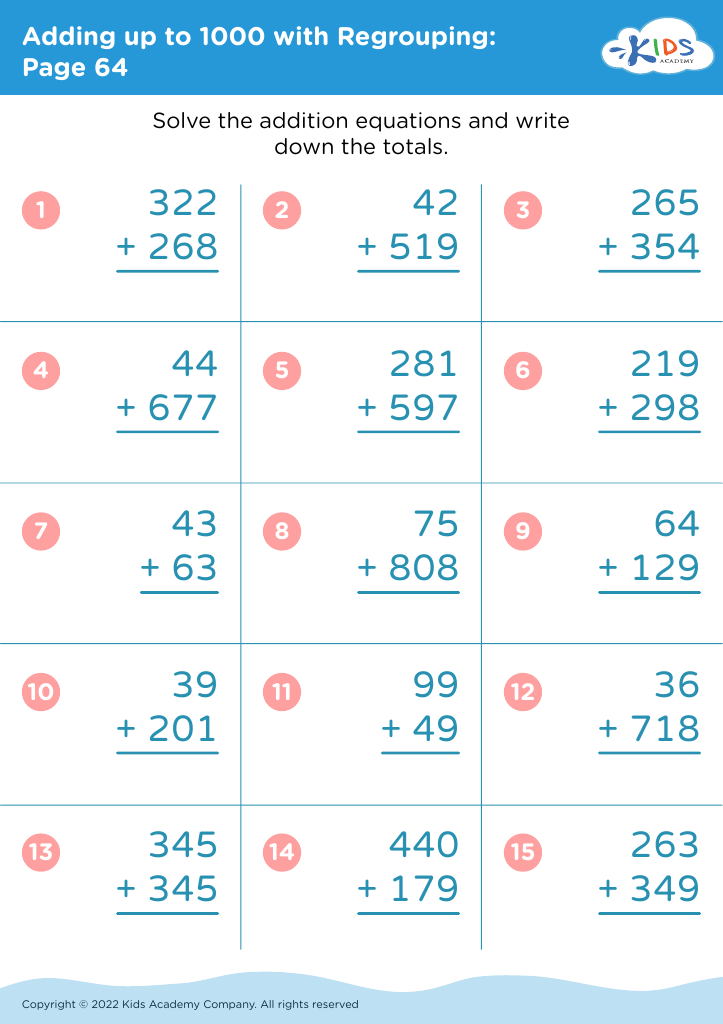


Shape recognition and addition with regrouping are fundamental skills for children aged 7 to 9 that significantly contribute to their overall cognitive development. Parents and teachers should prioritize these skills as they form the basis for more complex mathematical concepts, fostering critical thinking and problem-solving abilities.
Shape recognition helps children understand objects and their properties, enabling them to make connections between two-dimensional shapes and their three-dimensional counterparts. This visual-spatial awareness is crucial for subjects beyond math, such as science, art, and engineering.
Simultaneously, addition with regrouping teaches children how to handle larger numbers, an essential skill as they progress through more advanced math. It develops their number sense and promotes fluency in calculation, crucial for solving real-world problems. This skill also instills discipline and patience, helping them maintain focus during challenging tasks.
Furthermore, being proficient in both areas boosts confidence, encouraging students to tackle higher-level math with enthusiasm. Collaborative activities involving shape recognition and addition can also strengthen social skills and teamwork. When parents and teachers work together to emphasize these skills, they pave the way for academic success and foster a love for learning that can last a lifetime.