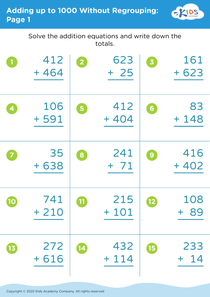
Simplifying Fractions Adding up to 1000 with Regrouping Worksheets for Ages 7-9
3 filtered results
-
From - To
Welcome to our "Simplifying Fractions Adding Up to 1000 with Regrouping Worksheets" designed for young learners aged 7-9! These engaging worksheets aim to help students master the concept of simplifying fractions while strengthening their skills in addition and regrouping. With clear instructions and interactive problems, children will practice breaking down complex fractions into simpler forms, equipping them for more advanced math challenges. Each worksheet is crafted to make learning enjoyable, ensuring that vital math concepts stick. Whether at home or in the classroom, these resources provide a fantastic opportunity for kids to enhance their math proficiency in a fun, supportive environment.
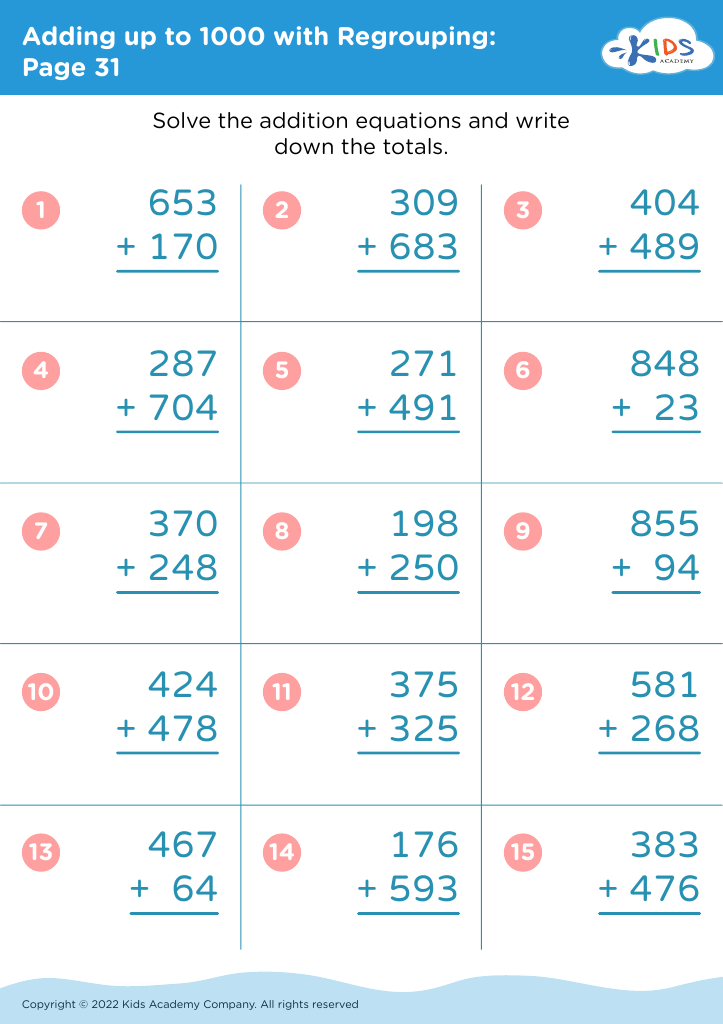
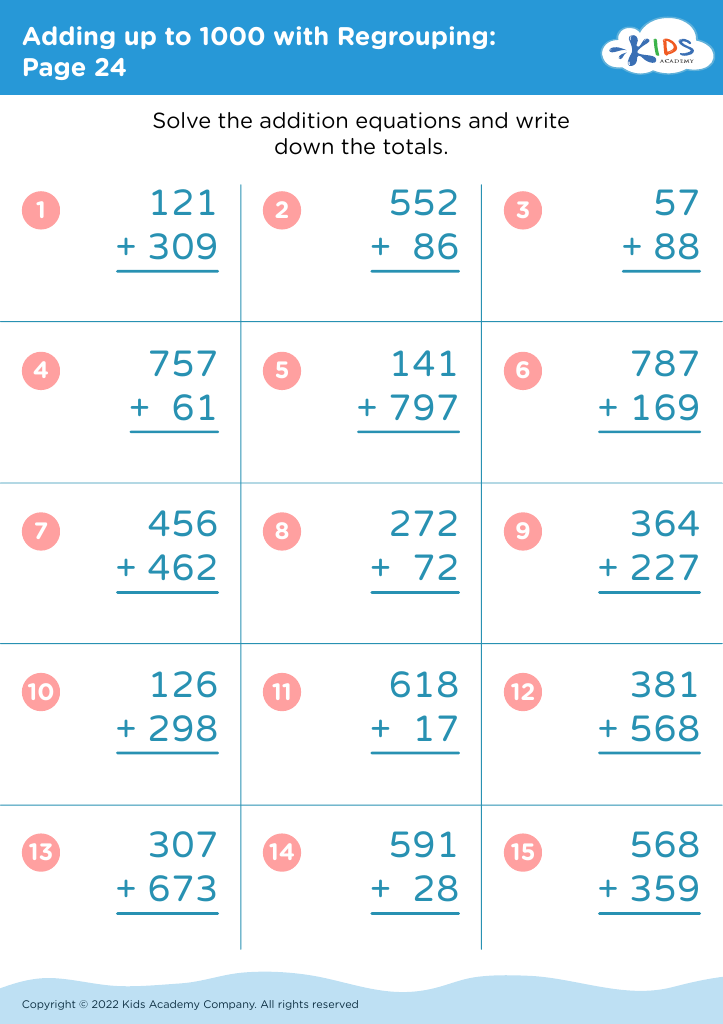
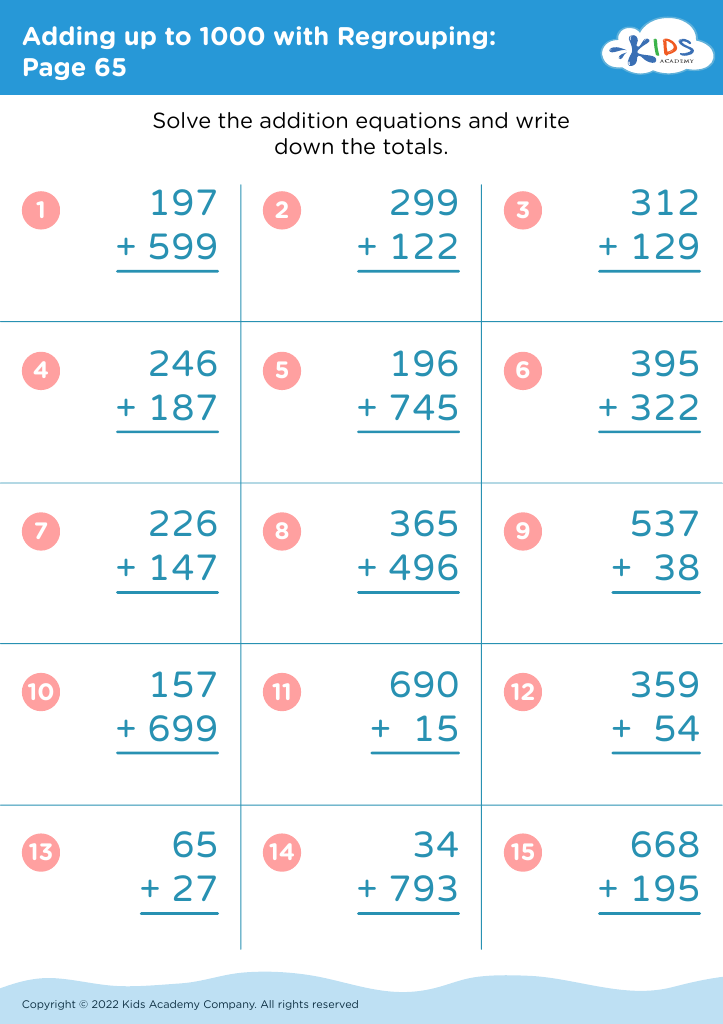


Parents and teachers should prioritize teaching children the concept of simplifying fractions that add up to 1,000 with regrouping for several critical reasons. First, this foundational math skill enhances their number sense, enabling children to understand relationships between numbers and develop problem-solving abilities. As they learn to manipulate and simplify fractions, they build a stronger grasp of mathematical concepts and operations, fostering a sense of accomplishment.
Introducing this concept at ages 7-9, when children's cognitive abilities are rapidly evolving, helps improve their analytical skills, critical thinking, and resilience in tackling more complex math problems in the future. Furthermore, simplifying fractions is also essential for real-life applications, such as cooking or budgeting, reinforcing the relevance of math in everyday life.
Additionally, these skills are essential for standardized assessments, which can influence future educational opportunities. Involving parents in the learning process can strengthen the home-school connection and create a supportive learning environment, ensuring that children feel encouraged and motivated. By focusing on simplifying fractions that add up to 1,000 with regrouping, we pave the way for a more mathematically literate generation, equipped with the skills necessary for success in various academic and practical contexts.