Alphabet Recognition Adding up to 1000 Without Regrouping Worksheets for Ages 7-9
3 filtered results
-
From - To
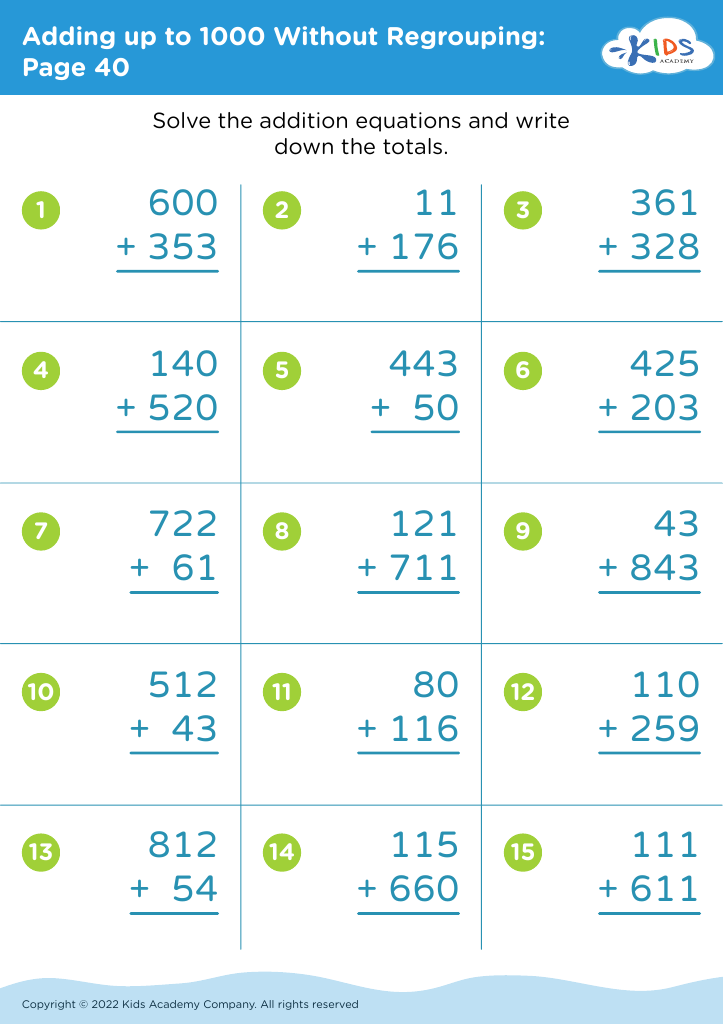
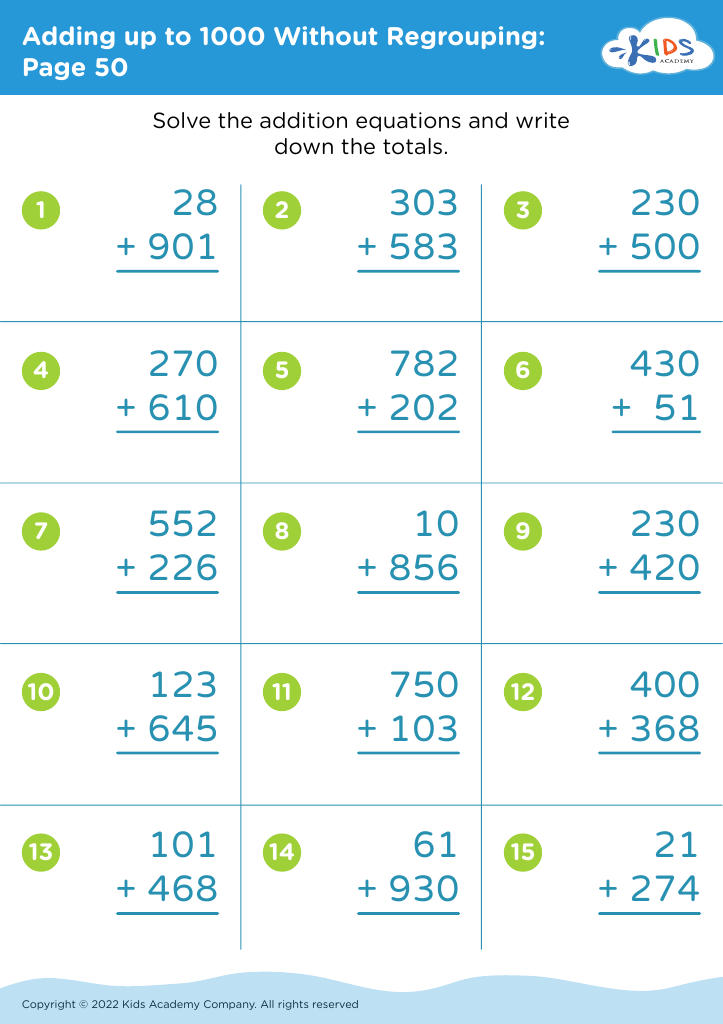
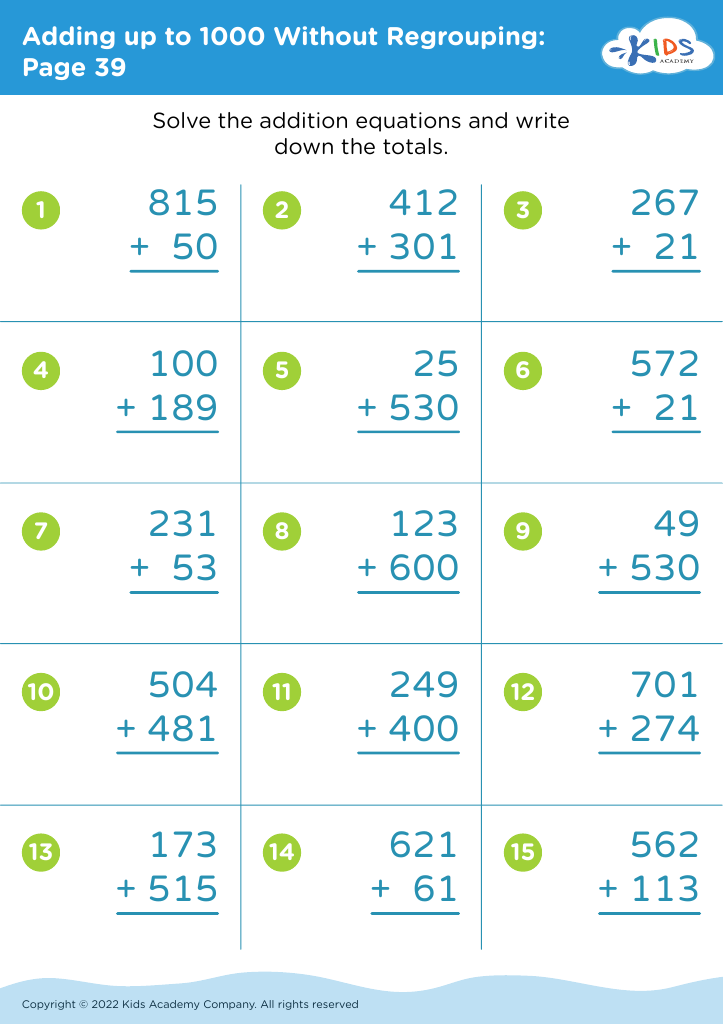
Discover our engaging "Alphabet Recognition Adding up to 1000 Without Regrouping Worksheets" designed for children ages 7-9. This resource combines essential math skills with fun alphabet recognition exercises, helping students strengthen their understanding of both subjects. Children will enjoy a variety of activities that challenge them to practice addition without regrouping while also identifying and matching letters of the alphabet. Perfect for enhancing literacy and numeracy skills simultaneously, these worksheets are ideal for classroom or home learning. Encourage your child’s learning journey with engaging content that promotes confidence and mastery in math and language arts. Get started today for a brighter academic future!


Alphabet recognition is a fundamental skill for children, laying the groundwork for effective reading and writing. For parents and teachers of children aged 7-9, this focus becomes critical as children prepare for more advanced literacy tasks. Being able to recognize letters effortlessly contributes to fluency, allowing children to decode words and increase comprehension, which in turn enhances their overall learning experience.
Simultaneously, mastering addition skills—specifically, adding numbers up to 1000 without regrouping—is equally important. At this age, children are developing their mathematical reasoning and problem-solving abilities. This specific skill supports mental math and helps build confidence in numerical tasks. When children can add larger numbers without carrying over, they develop a solid foundation in basic arithmetic operations, which are essential for future advanced math topics.
Parents and teachers play a pivotal role in supporting these skills. Engaging children in fun, interactive activities, such as games or songs that reinforce both alphabet recognition and addition, makes learning enjoyable. By prioritizing both areas, adults can foster a love for learning and encourage academic success, equipping children with crucial competencies for their educational journey and overall cognitive development.








