Comparing Fractions Adding up to 1000 Without Regrouping Worksheets for Ages 7-9
3 filtered results
-
From - To
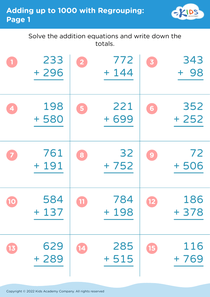
Welcome to our "Comparing Fractions Adding up to 1000 Without Regrouping" worksheets, specifically designed for children ages 7 to 9! These engaging resources help young learners grasp the concept of fractions while practicing addition without regrouping. By exploring various exercises, students will enhance their fractional comparison skills, boosting their confidence in mathematics. The worksheets utilize fun illustrations and clear instructions to make learning enjoyable and accessible. Ideal for classroom use or at-home practice, these sheets encourage critical thinking and problem-solving abilities. Start exploring the exciting world of fractions today and watch your child's math proficiency flourish!
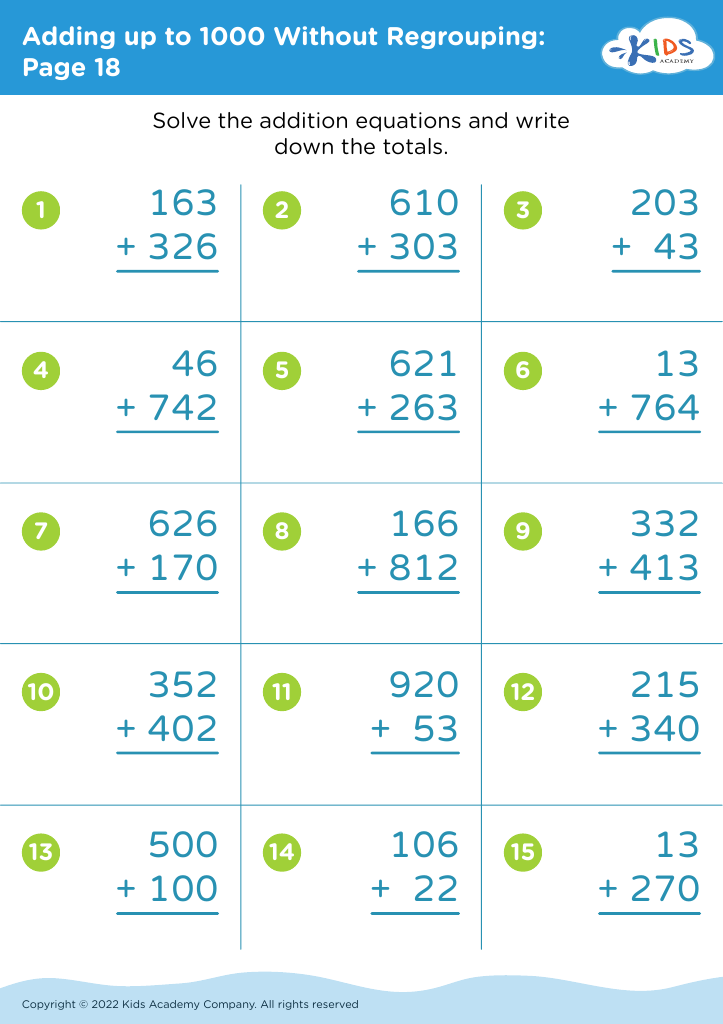
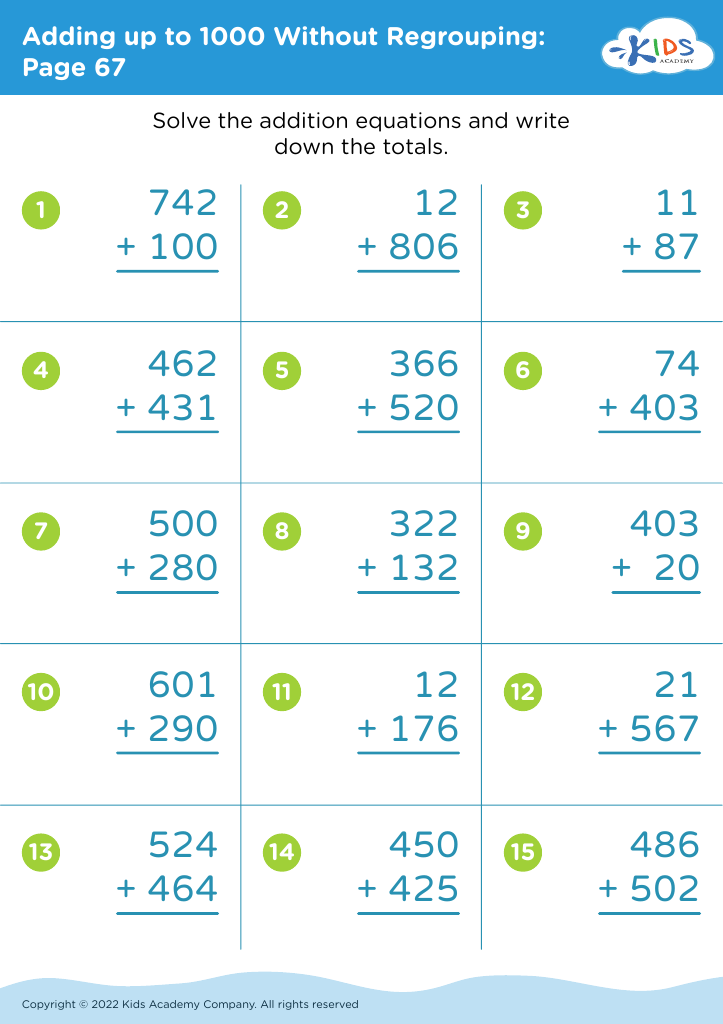
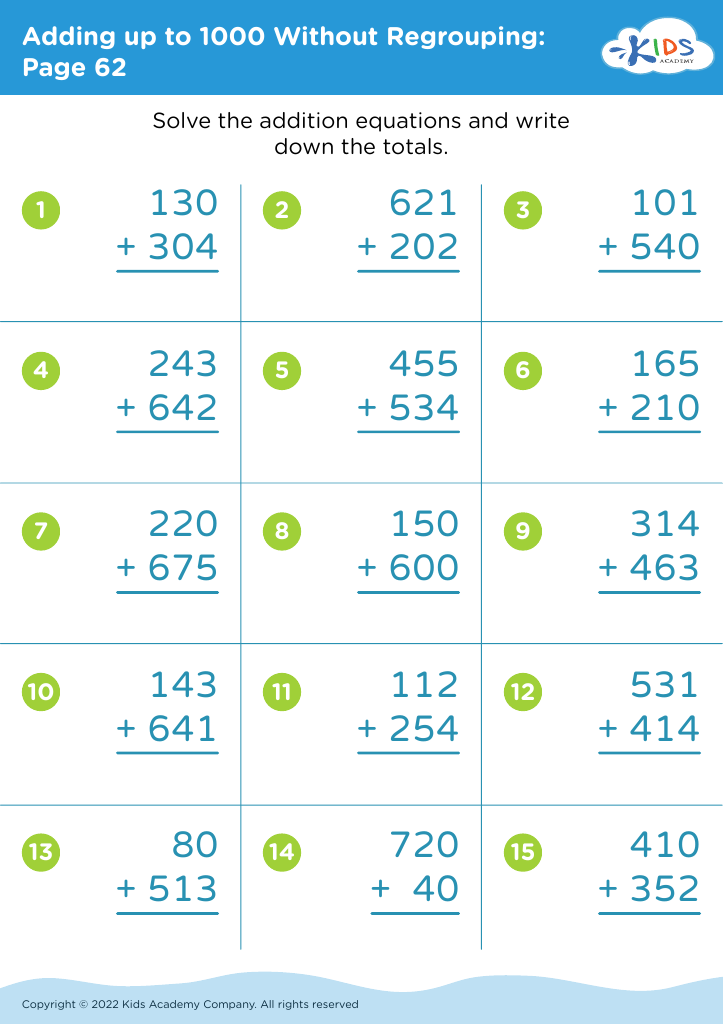


Understanding how to compare fractions is a foundational skill that significantly impacts a child's mathematical development, especially for students aged 7-9. At this stage, children begin to build a solid understanding of fractions, which are crucial for various aspects of mathematics, from addition and subtraction to measurements and proportions. When parents or teachers focus on comparing fractions, it fosters critical thinking and problem-solving skills.
Additionally, learning to add fractions that sum up to a whole—like 1000 in this case—without regrouping helps children grasp the concept of equivalence and reinforces their number sense. It promotes an understanding of how different parts contribute to a whole, enabling them to visualize and manipulate numbers effectively. This skill aligns with common core standards and prepares students for more complex mathematical concepts, such as ratios and decimals, encountered in later grades.
Moreover, engaging in fraction comparisons and operations can encourage persistence and resilience in learning, as children learn to articulate their thought processes and strategies. Therefore, parents and teachers should prioritize these topics, ensuring children are not only prepared academically but also develop a positive attitude towards mathematics that will serve them throughout their educational journey.