Counting practice Adding up to 1000 Without Regrouping Worksheets for Ages 7-9
4 filtered results
-
From - To
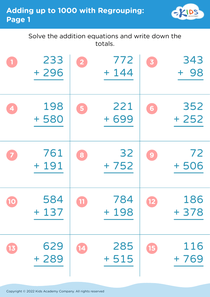
These engaging Counting Practice Adding up to 1000 Without Regrouping Worksheets for ages 7-9 help children master foundational math skills. Perfect for developing young minds, these printable worksheets offer diverse exercises that enhance counting and addition prowess, all without the need for regrouping. Tailored for classwork or homeschool settings, they foster confidence and proficiency in arithmetic, making learning fun and effective. Brightly designed and easily accessible, these worksheets provide the essential practice needed to excel in math, ensuring your child builds a solid understanding of adding larger numbers in a supportive, easy-to-follow format.
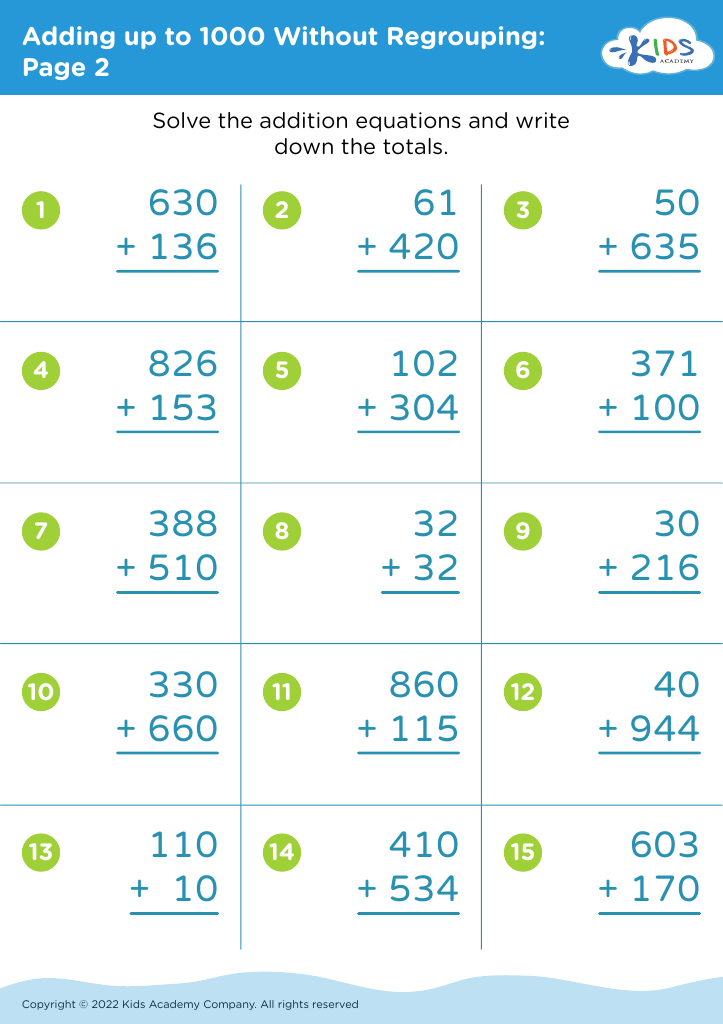
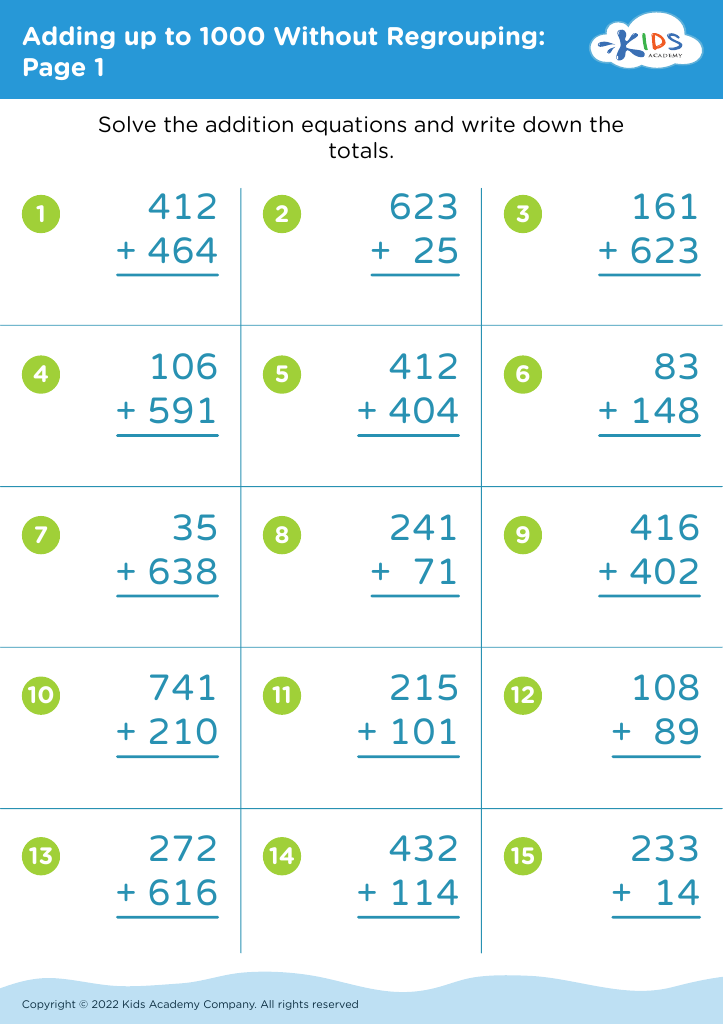
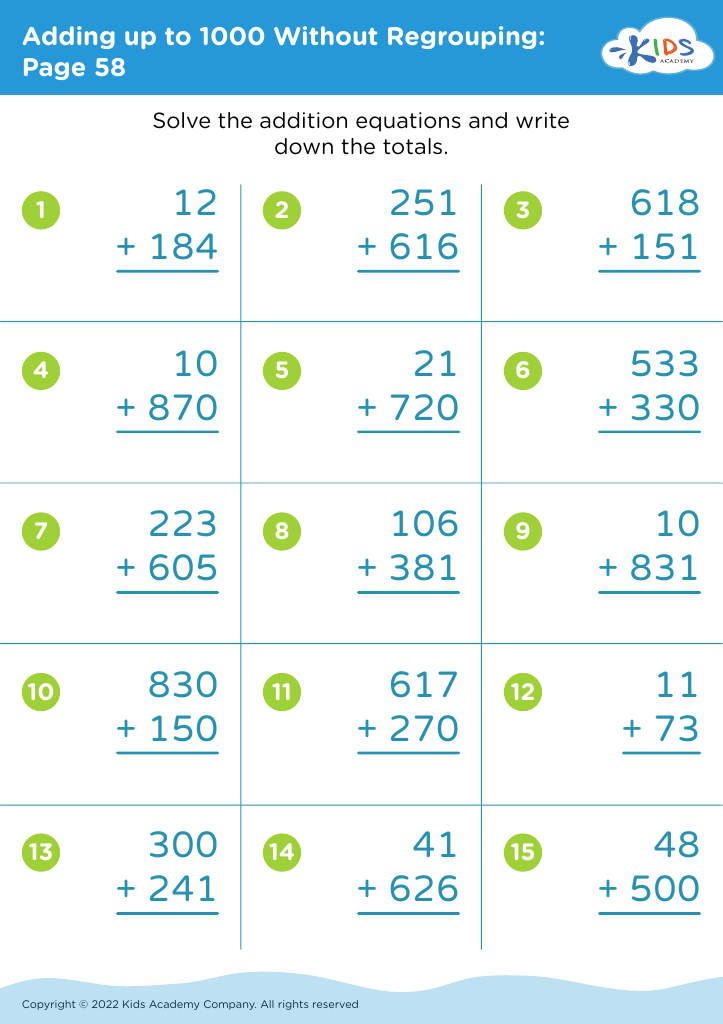
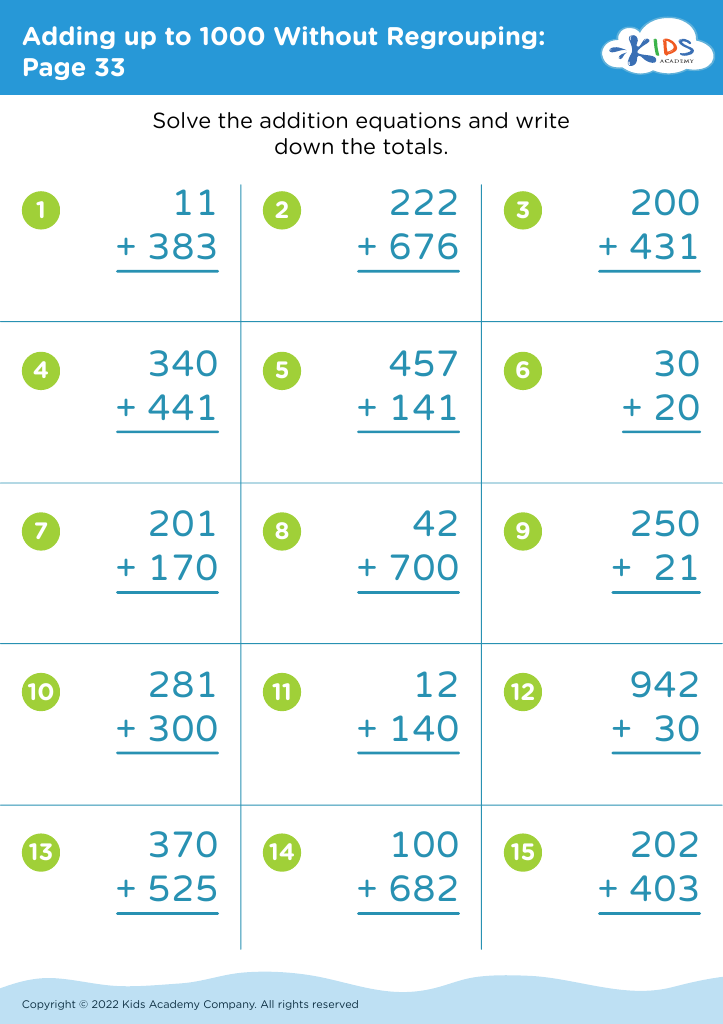


Counting practice and adding up to 1000 without regrouping is crucial for children aged 7-9 because it lays a solid foundation for their mathematical development. At this age, kids are transitioning from basic addition to more complex arithmetic, and mastering these skills builds their confidence and competence.
First, this practice enhances their understanding of number sense and place value. Kids learn to recognize the importance of each digit in a number, which is fundamental for moving on to more advanced math topics. It also helps improve mental arithmetic skills as they get comfortable breaking down larger numbers into simpler parts, reinforcing their basic addition facts.
Second, this proficiency is essential for academic progression. Many aspects of math education, such as multiplication, division, and later, algebra, demand a solid grounding in addition skills. Confidence and accuracy in addition can reduce frustration and make learning enjoyable, fostering a positive attitude towards the subject.
Lastly, strong arithmetic skills are valuable in everyday life. From managing money to understanding measurements, being adept at adding large numbers can serve children well beyond the classroom. For these reasons, parents and teachers should actively encourage and support counting practice and addition up to 1000 without regrouping.