Improving counting skills Adding up to 1000 Without Regrouping Worksheets for Ages 7-9
4 filtered results
-
From - To
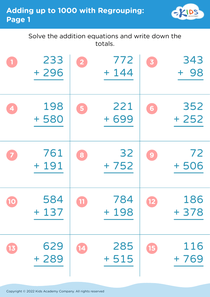
Enhance your child’s counting proficiency with our "Adding up to 1000 Without Regrouping Worksheets" designed for ages 7-9. These educational printables are perfect for strengthening foundational math skills, focusing on addition without the complexity of regrouping. Ideal for young learners, these worksheets pair engaging formats with clear instructions, making math practice enjoyable and effective. Developed by educational experts, they aim to boost accuracy, speed, and confidence in counting and adding large numbers. Give your child the head start they need in math by incorporating these fun and challenging exercises into their daily learning routine.
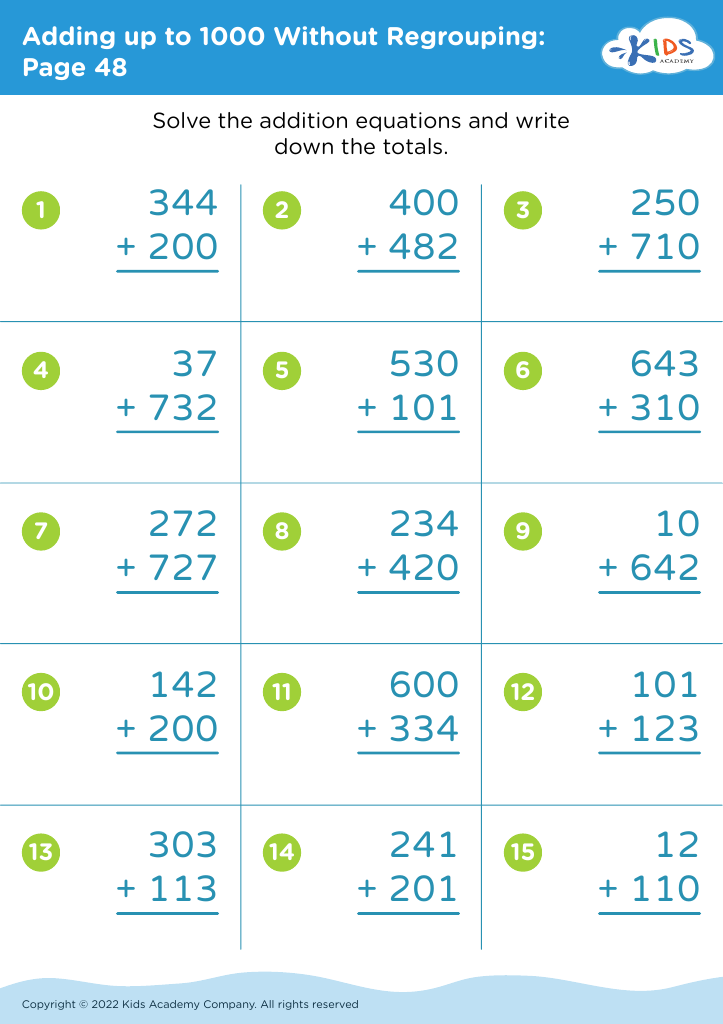
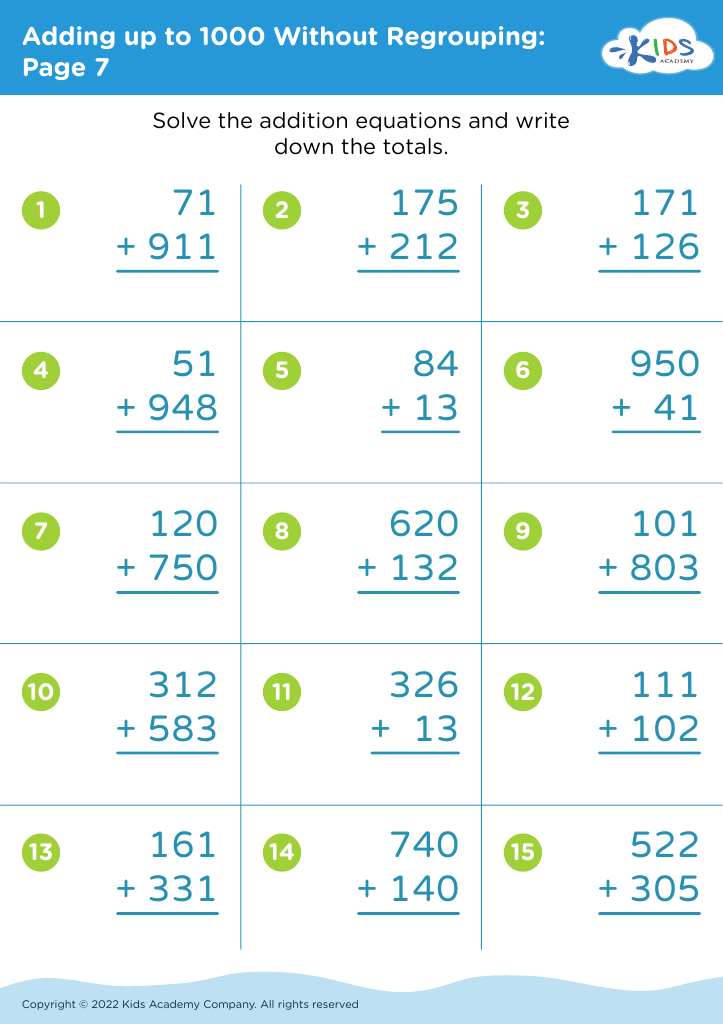
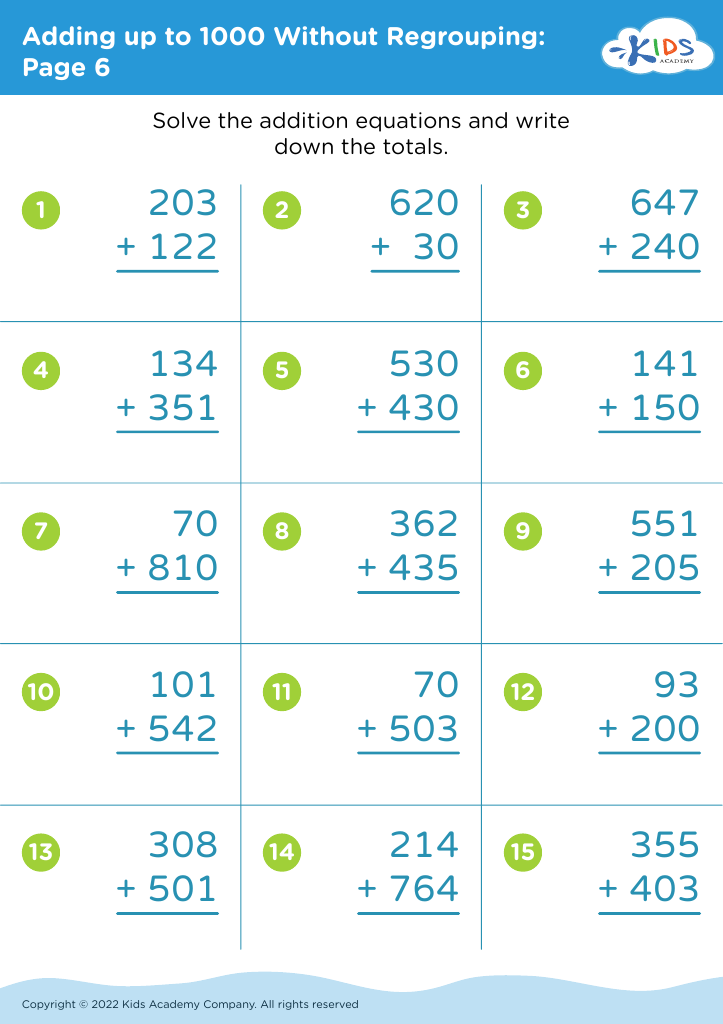
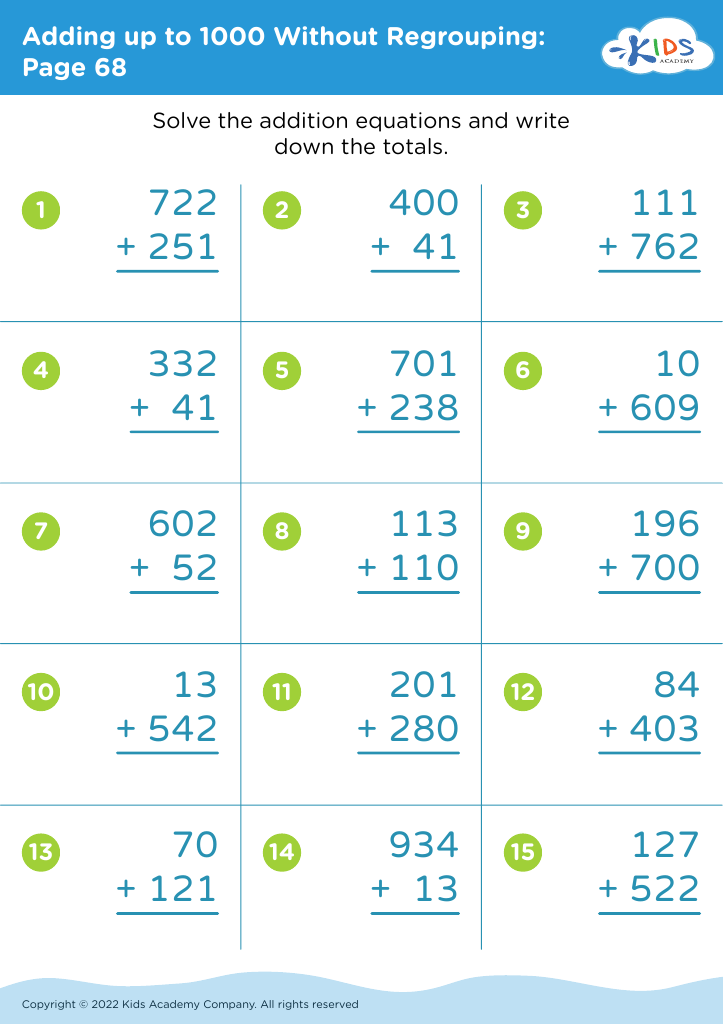


Improving counting skills and being able to add up to 1,000 without regrouping for children aged 7-9 is vital for several reasons. Firstly, mastering basic arithmetic serves as a foundational skill upon which more complex mathematical concepts are built. By understanding and being comfortable with adding numbers up to 1,000, children gain confidence and can more easily transition to operations involving larger numbers or fractions.
Strong arithmetic skills also enhance cognitive development. Engaging with numbers boosts logical thinking, problem-solving abilities, and pattern recognition. These skills are not just limited to math but extend into other areas of learning and daily life.
For parents and teachers, fostering these skills early enables children to excel academically. Consistent practice in arithmetic translates into better performance in school assessments and builds a positive attitude toward learning. Early proficiency breaks down the perceived barriers to math as children advance to higher grades, allowing them to tackle more advanced problems without anxiety.
Additionally, in our increasingly data-driven world, numeracy is as crucial as literacy. Cultivating strong numeracy skills early on gives children a lifelong advantage, opening up opportunities for careers in diverse fields. By focusing on improving counting and addition skills up to 1,000, parents and teachers lay a robust groundwork for future learning and personal development.