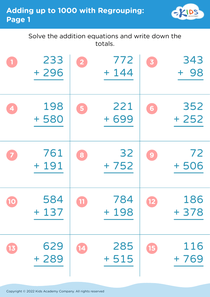
Reading comprehension Adding up to 1000 Without Regrouping Worksheets for Ages 7-9
4 filtered results
-
From - To
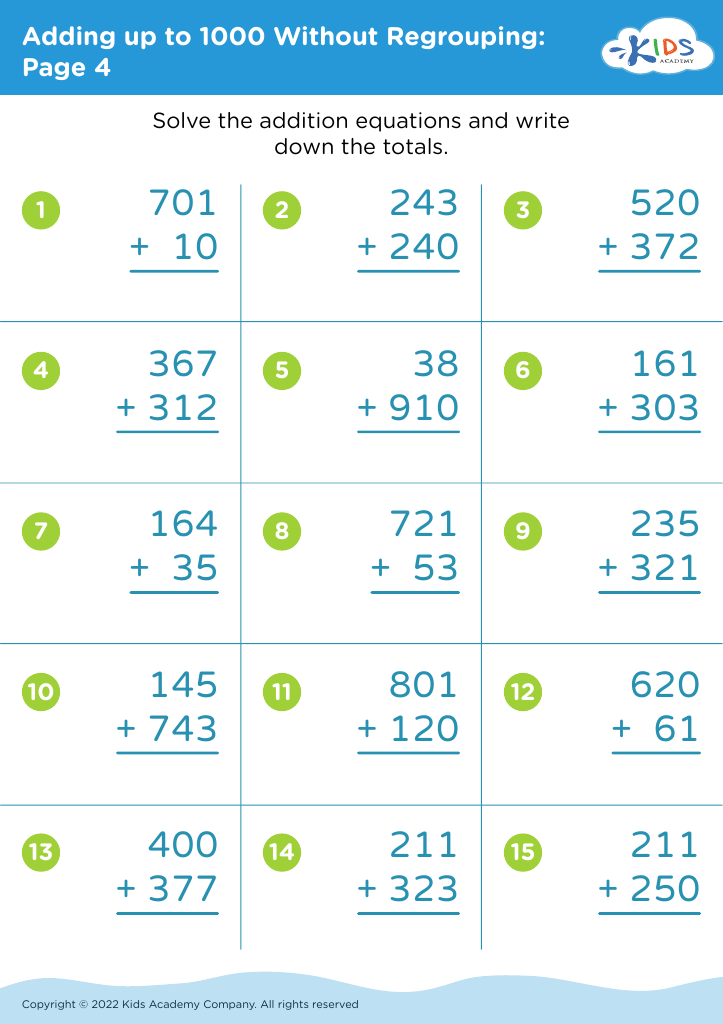
Welcome to our Reading Comprehension Worksheets designed specifically for ages 7-9! Our "Adding Up to 1000 Without Regrouping" worksheets combine math skills and reading abilities, providing a fun and effective way to enhance both areas. Students will engage with text-based math problems that encourage them to practice their addition skills without the complication of regrouping. Each worksheet aims to improve reading comprehension through contextually relevant exercises while reinforcing essential mathematical concepts. Perfect for the classroom or at-home practice, these worksheets not only make learning enjoyable but also foster critical thinking skills in young learners. Explore our collection today!
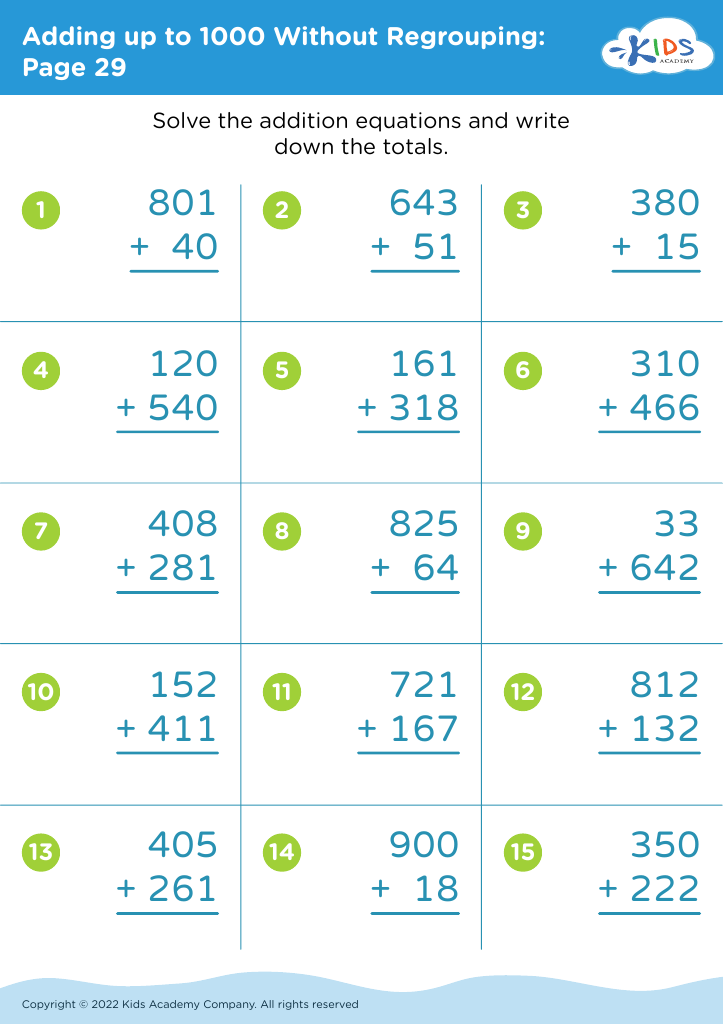
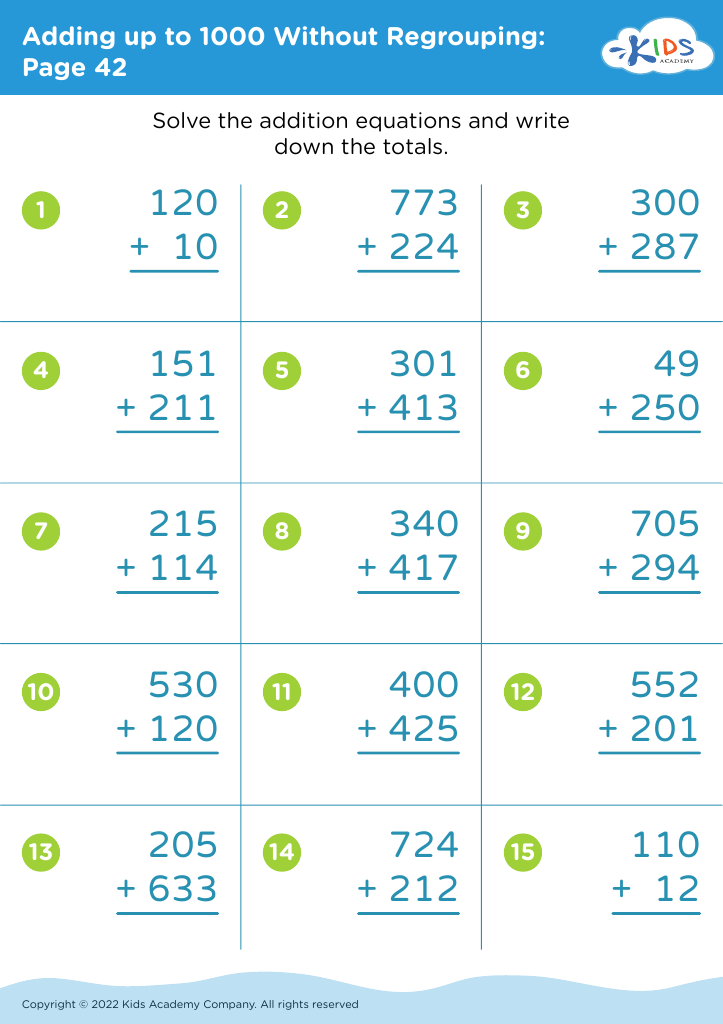
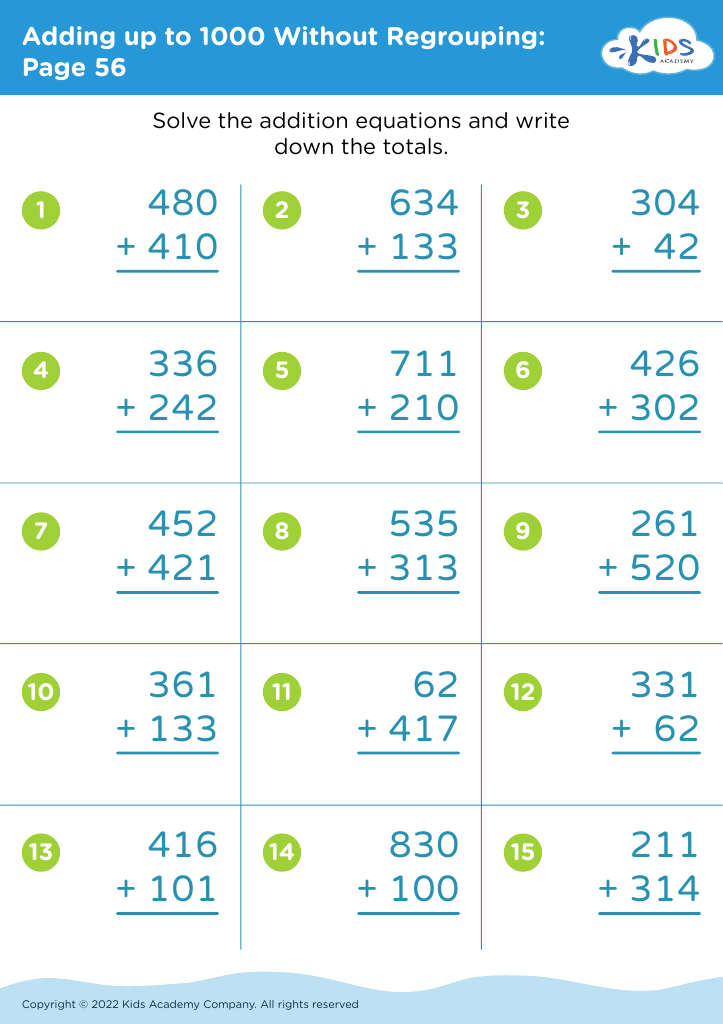


Reading comprehension is vital for children aged 7-9 as it lays the foundation for all future learning. At this age, students begin to engage with more complex texts and ideas, making it crucial for them to understand what they read. Strong reading comprehension skills enhance vocabulary, improve critical thinking, and allow children to connect concepts across subjects. When students grasp reading content, they are more likely to excel in other areas such as science and mathematics, fostering overall academic success.
Furthermore, understanding reading comprehension grows deeper when aligned with practical math skills, such as adding without regrouping. When children learn to read word problems effectively, they can comprehend the necessary steps to solve them correctly. Incorporating activities that connect reading and math facilitates a more integrated learning experience, ensuring students not only recognize numbers but can also interpret situations involving those numbers.
For parents and teachers, supporting children in reading comprehension and math skills is an investment in their children's future. It cultivates self-confidence, promotes independent thinking, and nurtures a lifelong love for learning. Engaging children with activities that combine these skills prepares them comprehensively for academic challenges ahead, ultimately setting them up for success.