Recognizing shapes Adding up to 1000 Without Regrouping Worksheets for Ages 7-9
3 filtered results
-
From - To
Explore our engaging "Recognizing Shapes Adding Up to 1000 Without Regrouping Worksheets," specifically designed for children ages 7-9. These worksheets combine geometry and arithmetic, helping young learners not only recognize various shapes but also enhance their addition skills up to 1000 – all without the need for regrouping. Each worksheet is carefully crafted to promote learning through interactive and fun exercises, encouraging children to connect mathematical concepts with visual shapes. Ideal for classroom or home use, these resources foster critical thinking, problem-solving, and a strong foundation in mathematics. Watch your child's confidence soar as they master both shapes and numbers!
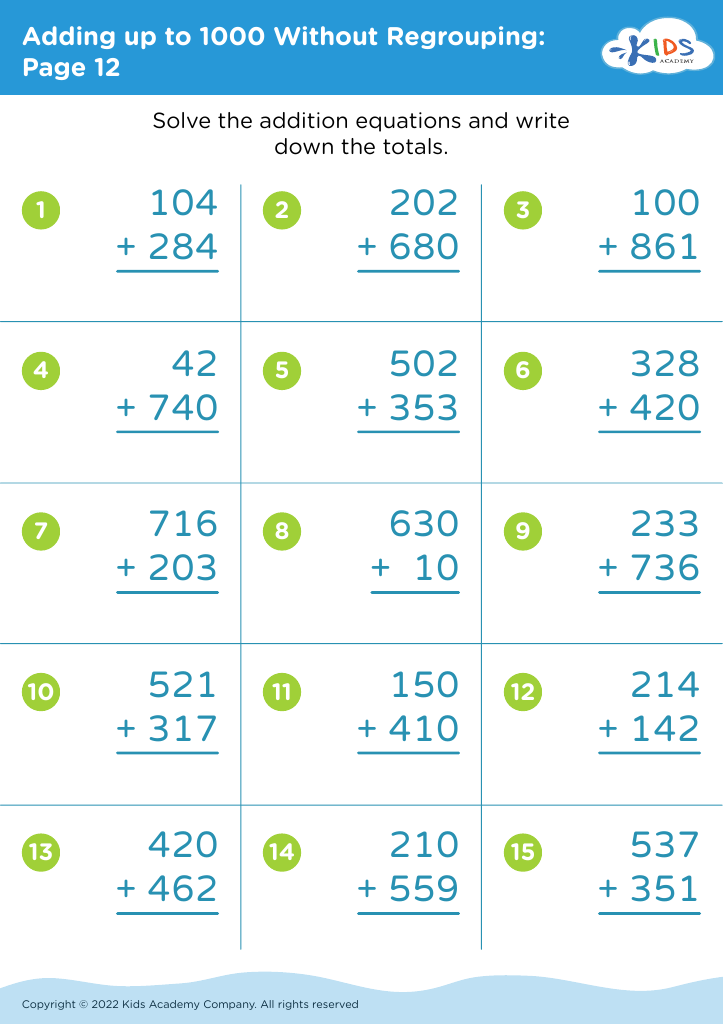
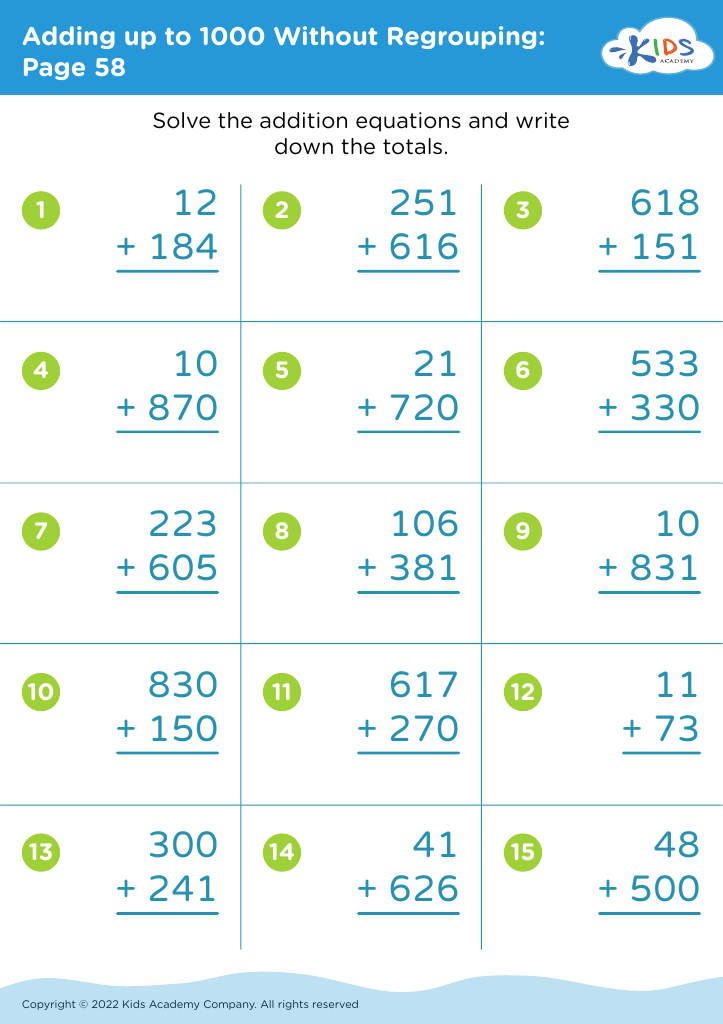
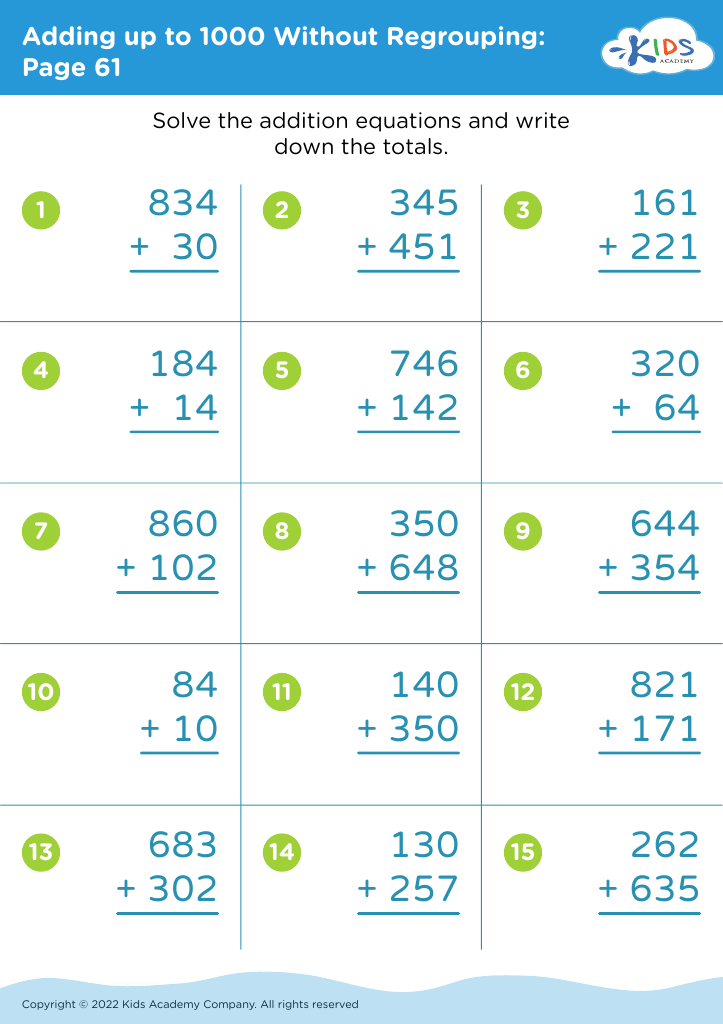


Recognizing shapes and adding numbers up to 1000 without regrouping are foundational skills for children ages 7-9 that foster critical cognitive and problem-solving abilities.
First, shape recognition enhances spatial awareness, which is crucial in subjects like math, science, art, and design. Understanding shapes supports children in identifying patterns, which is vital for developing geometry concepts and engaging in practical activities like building and crafting.
Meanwhile, mastering addition without regrouping strengthens arithmetic skills, a necessity for more complex mathematics that students will encounter later. When children learn to add numbers up to 1000 confidently, they not only build computational fluency but also encourage mental math strategies that decrease dependence on calculators and foster independence in problem-solving.
These abilities provide a bridge to greater academic success. By emphasizing shape recognition and arithmetic skills, parents and teachers can inspire children's curiosity, promote engagement in STEM learning, and prepare them for higher-order skills. In essence, nurturing these competencies cultivates a strong mathematical foundation, enabling children to approach advanced concepts with confidence and enthusiasm, ultimately contributing to their overall intellectual and personal growth.