Shape Recognition Adding up to 1000 Without Regrouping Worksheets for Ages 7-9
3 filtered results
-
From - To
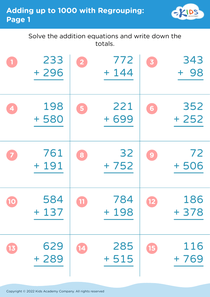
Discover our engaging "Shape Recognition Adding Up to 1000 Without Regrouping" worksheets, specially designed for children ages 7-9. These interactive resources blend essential math skills with shape identification, promoting both numerical comprehension and spatial awareness. Each worksheet offers a fun approach to addition, allowing kids to practice adding numbers up to 1000 without regrouping while recognizing and categorizing different shapes. Whether in classroom settings or at home, these worksheets are perfect for enhancing critical thinking and problem-solving skills. Foster your child's confidence in math with this enjoyable learning tool, which makes mastering addition and shape recognition exciting and effective!
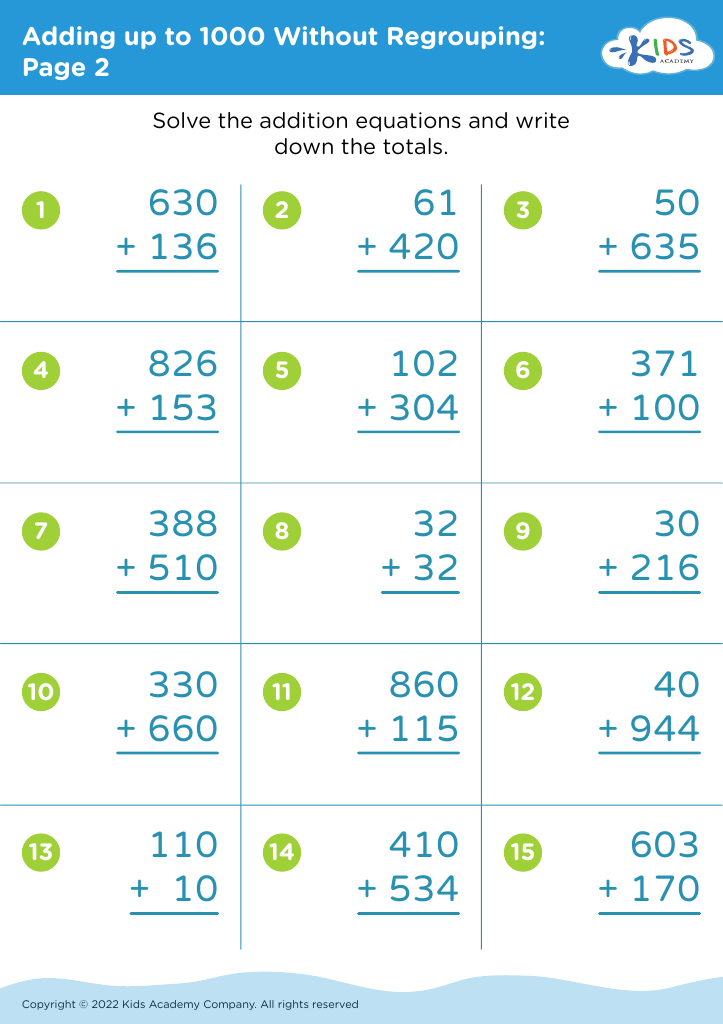
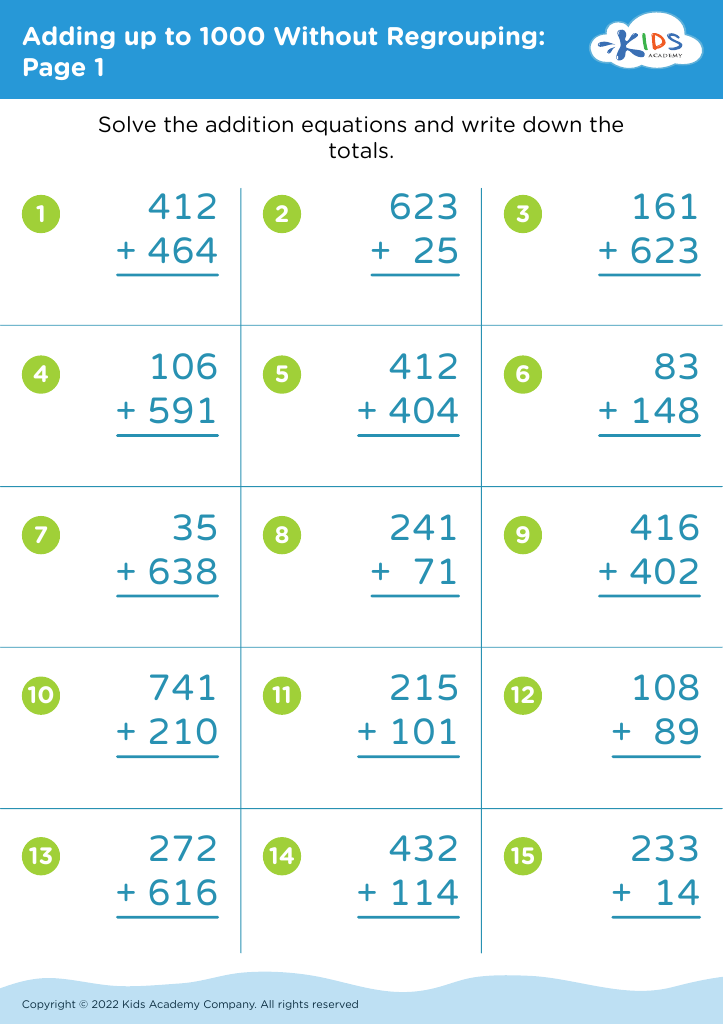
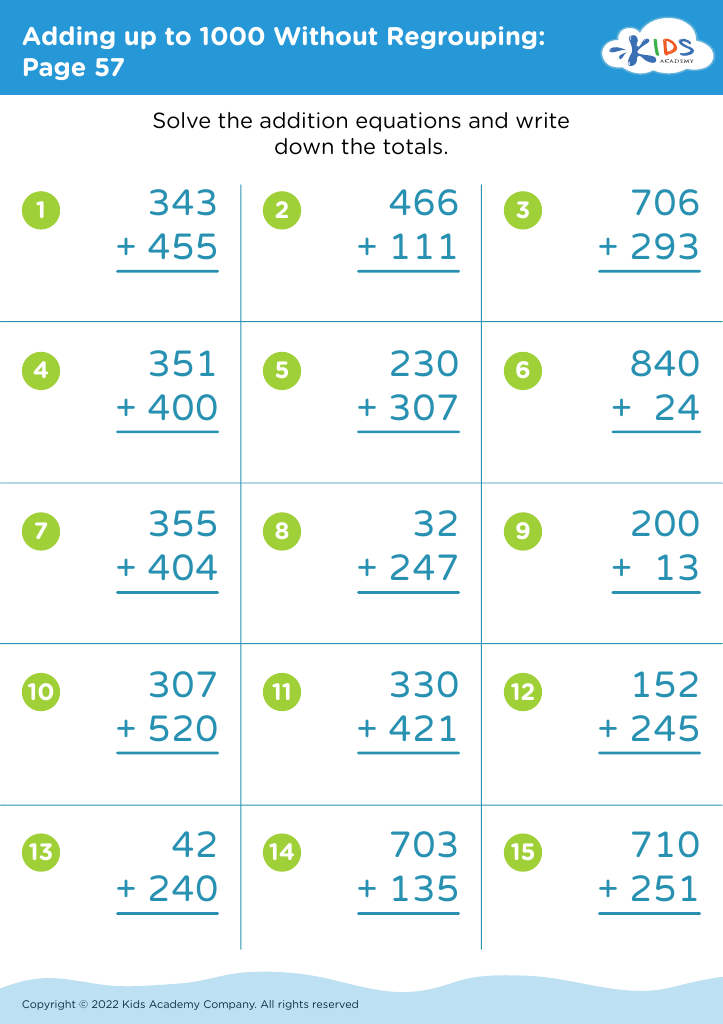


Shape recognition and the ability to add numbers up to 1000 without regrouping are fundamental skills for children aged 7-9, and both play a critical role in their overall cognitive development. Shape recognition is essential as it helps children understand geometric concepts, enhances spatial awareness, and cultivates problem-solving skills. Recognizing different shapes lays the groundwork for more complex topics in mathematics and science, promoting analytical thinking that extends beyond the classroom.
Simultaneously, mastering addition without regrouping is vital for developing mathematical fluency. As children begin to work with larger numbers, building a solid foundation in basic addition boosts their confidence and builds a positive attitude towards math. This skill enhances their ability to perform mental calculations quickly and accurately, essential for everyday activities and fostering logical reasoning.
Parents and teachers should care about these skills because they contribute to children's success in both academic and real-world settings. By encouraging shape recognition and addition skills, adults can support children in developing critical thinking and problem-solving abilities, paving the way for future academic achievement and empowering them with skills for lifelong learning. Investing in these foundational competencies today will yield significant benefits in students' educational journeys tomorrow.