Filters

16 filtered results

Clear all filters
Favorites
With answer key
Interactive

16 filtered results

Difficulty Level

Grade


Unlock the exciting world of fractions for young learners with our "Comparing Fractions Adding up to 1000 Worksheets for Ages 7-9"! Tailored to enhance math skills, these engaging worksheets help children grasp the concept of comparing fractions in the context of numbers adding up to 1000. Featuring colorful, interactive content and structured problems, they build a foundation for a deep understanding of fractions while keeping learning fun and stimulating. Ideal for ages 7-9, these worksheets support crucial learning objectives and help foster confidence in math proficiency. Explore a new realm of mathematical learning today!
Check out this FREE Trial Lesson on Adding up to 1000 for age 7-9!

X

Favorites
With answer key
Interactive
  • 7-9
  • Comparing Fractions
  • Adding up to 1000
Adding up to 1000 with Regrouping: Page 63
Worksheet
Adding up to 1000 with Regrouping: Page 26
Worksheet
Adding up to 1000: Page 40

Adding up to 1000: Page 40

Adding up to 1000: Page 40
Worksheet
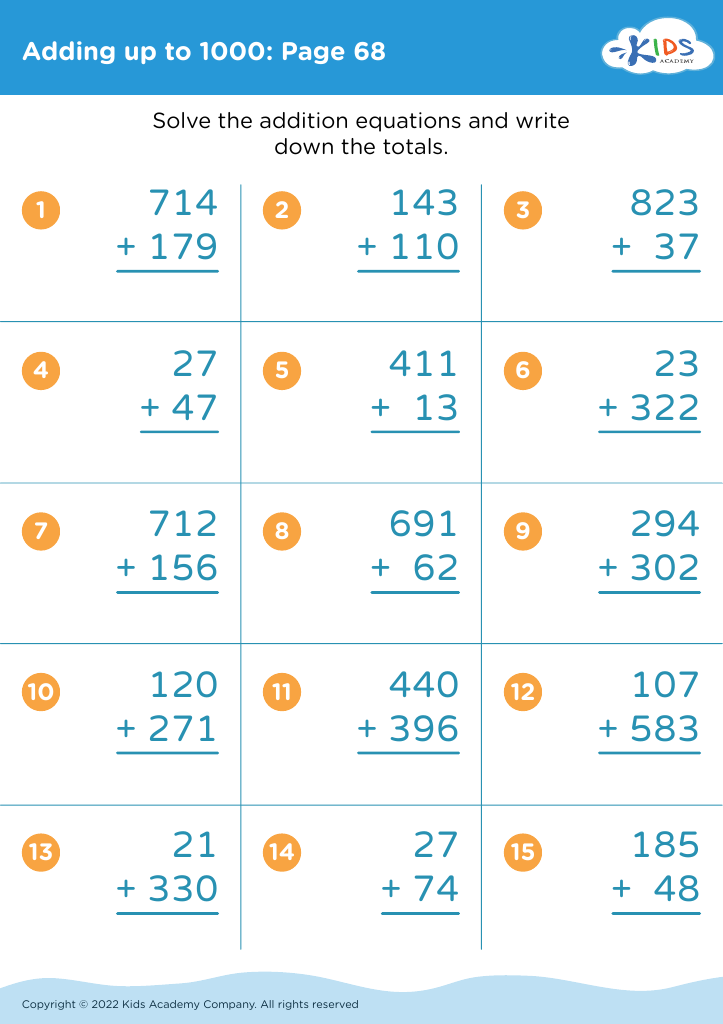
Adding up to 1000: Page 68

Adding up to 1000: Page 68

Adding up to 1000: Page 68
Worksheet
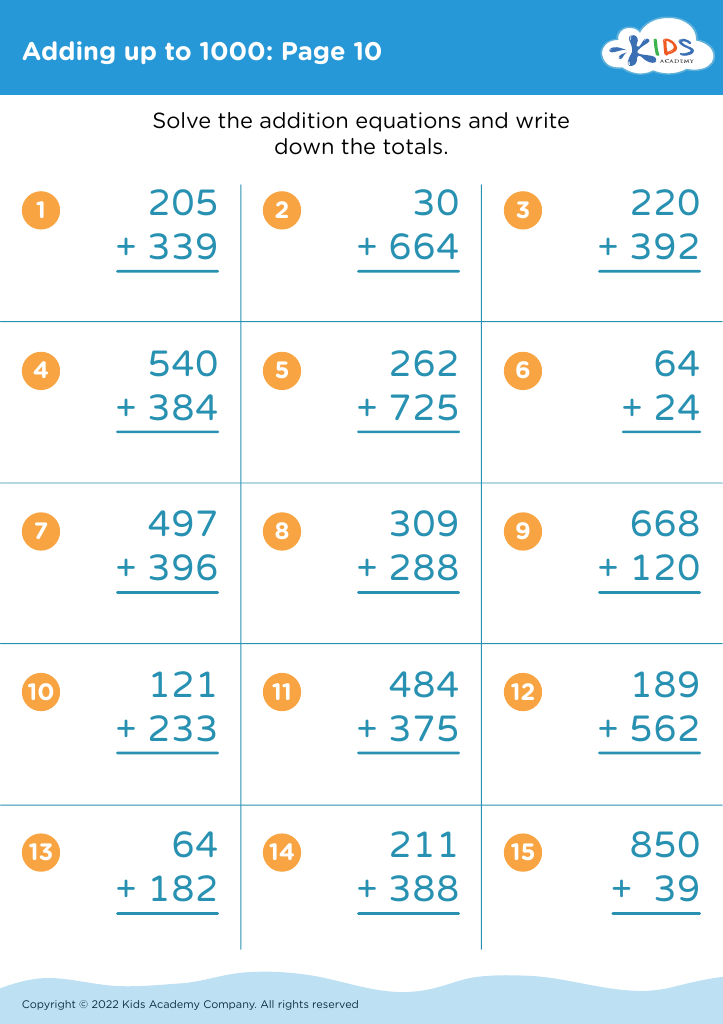
Adding up to 1000: Page 10

Adding up to 1000: Page 10

Adding up to 1000: Page 10
Worksheet
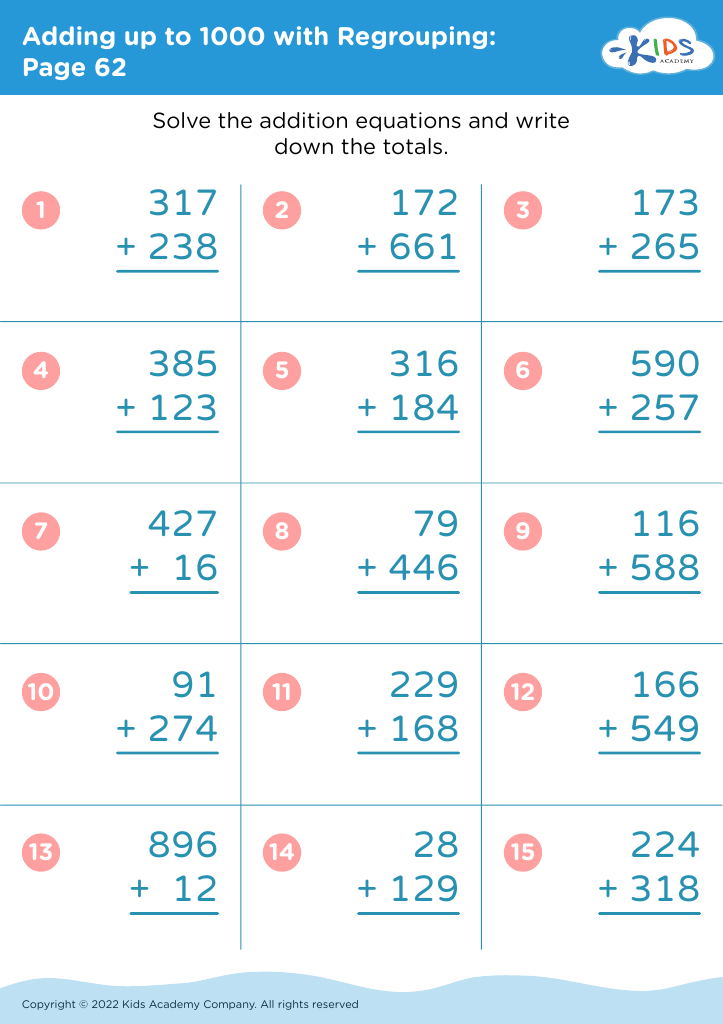
Adding up to 1000 with Regrouping: Page 62
Worksheet
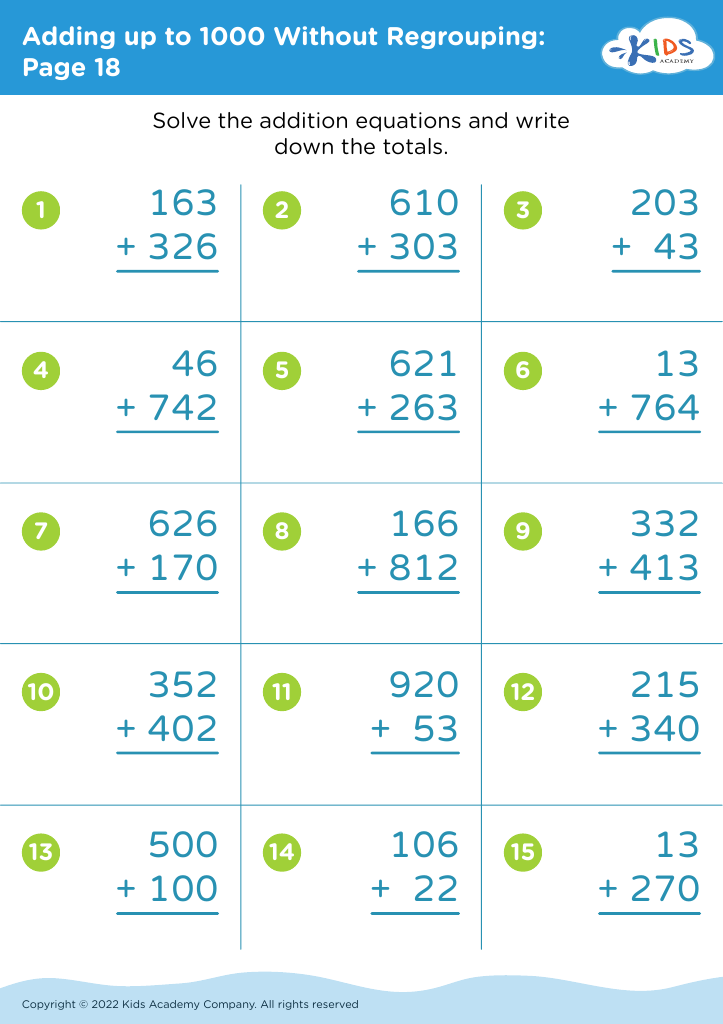
Adding up to 1000 Without Regrouping: Page 18
Worksheet
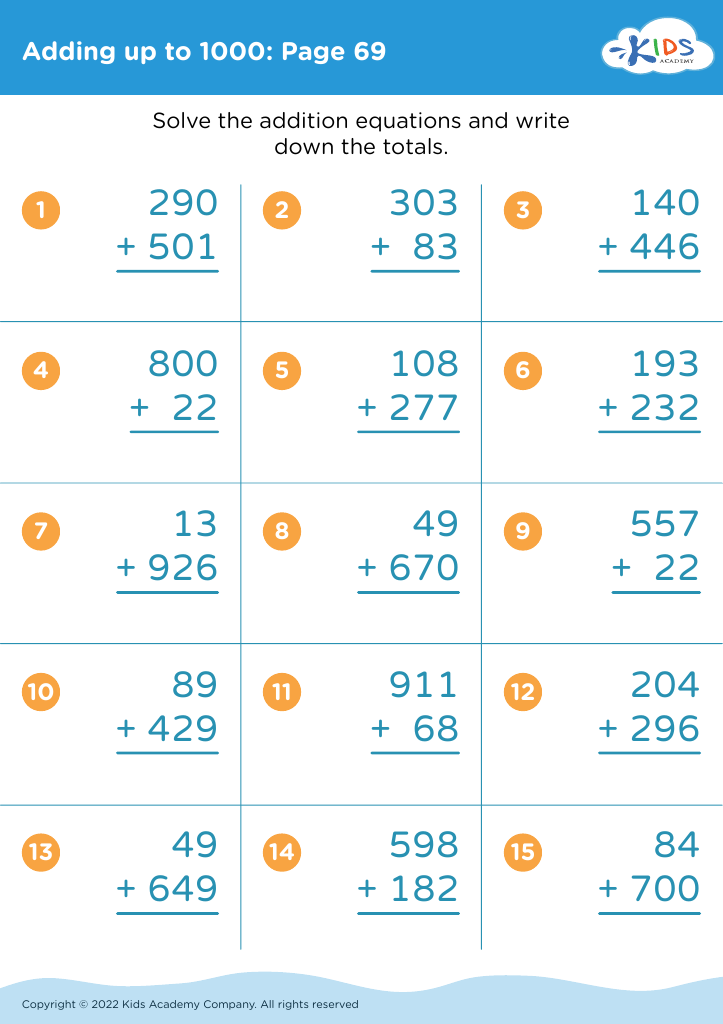
Adding up to 1000: Page 69

Adding up to 1000: Page 69

Adding up to 1000: Page 69
Worksheet
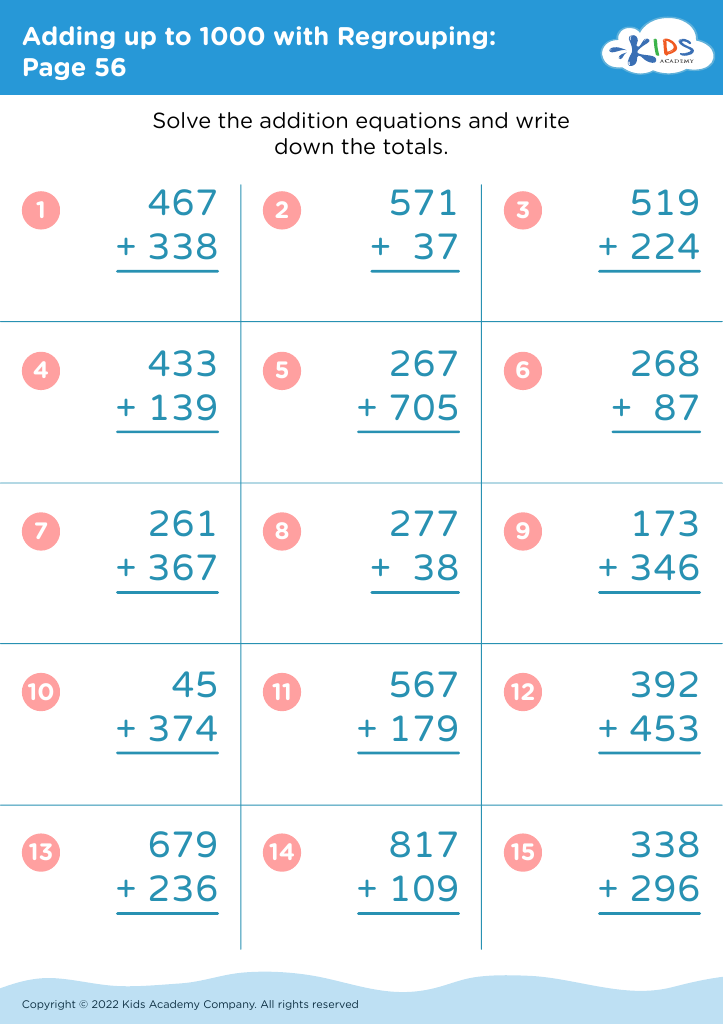
Adding up to 1000 with Regrouping: Page 56
Worksheet
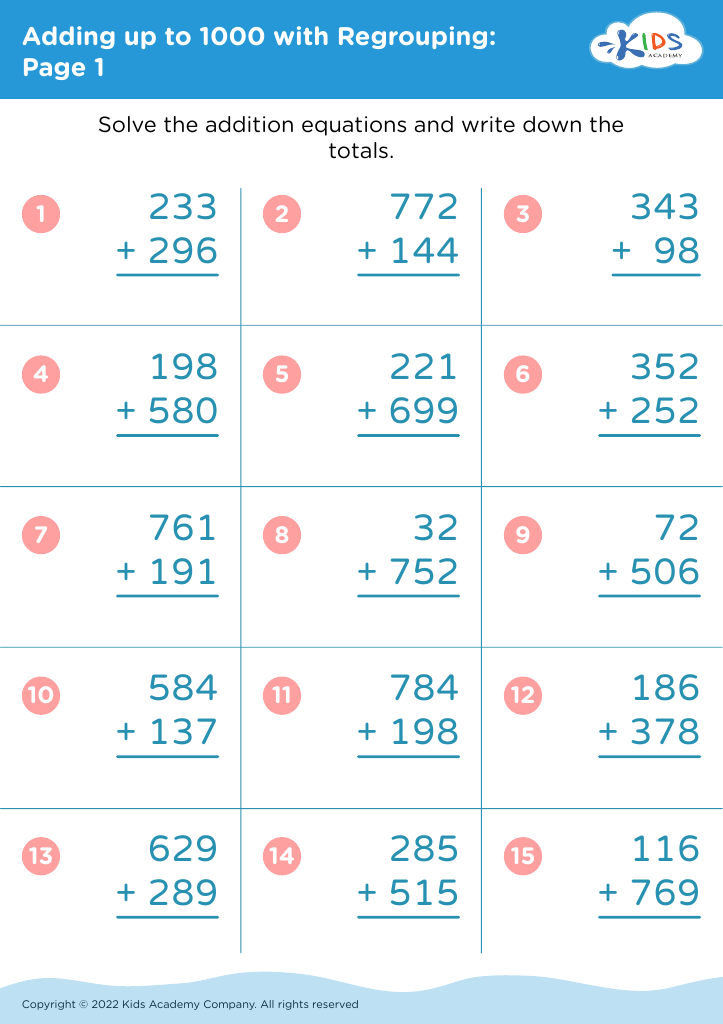
Adding up to 1000 with Regrouping: Page 1
Worksheet
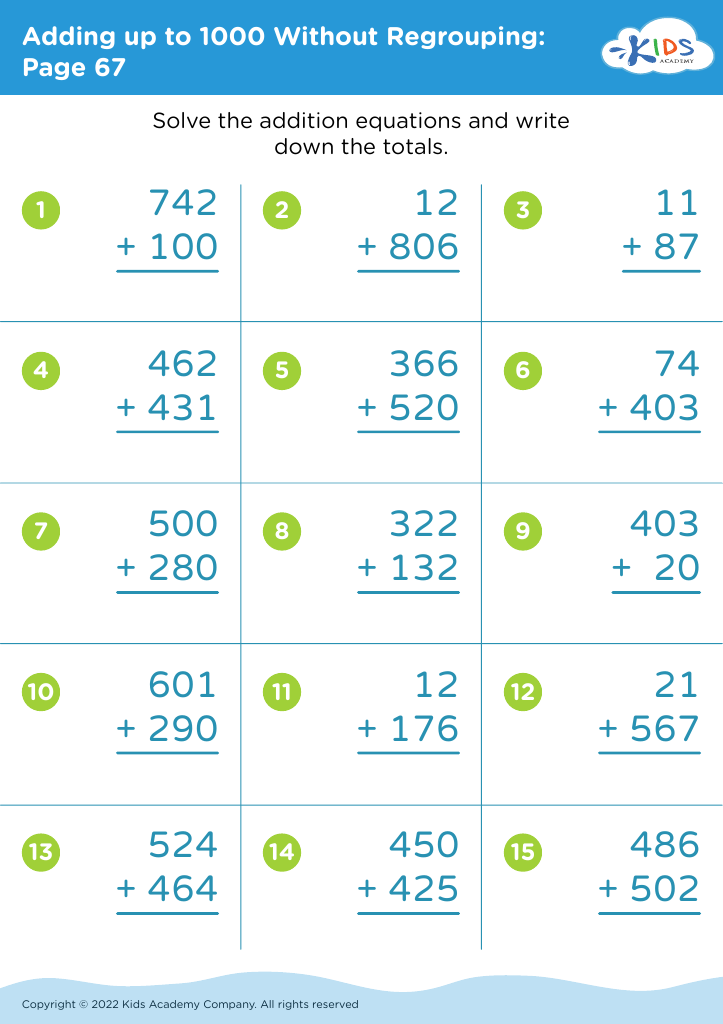
Adding up to 1000 Without Regrouping: Page 67
Worksheet
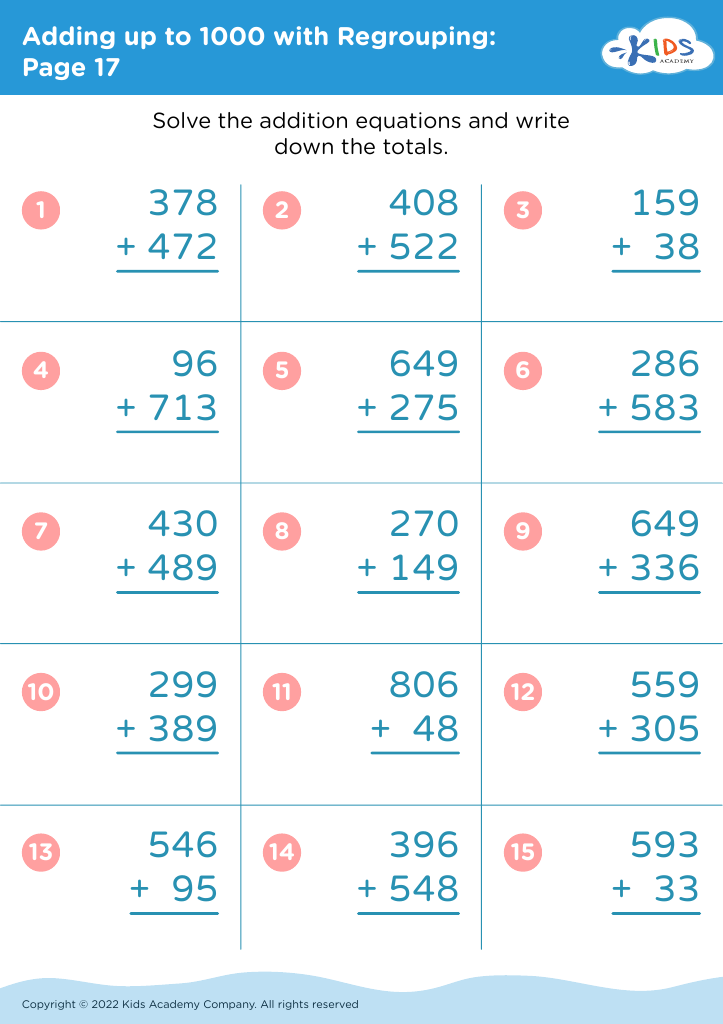
Adding up to 1000 with Regrouping: Page 17
Worksheet
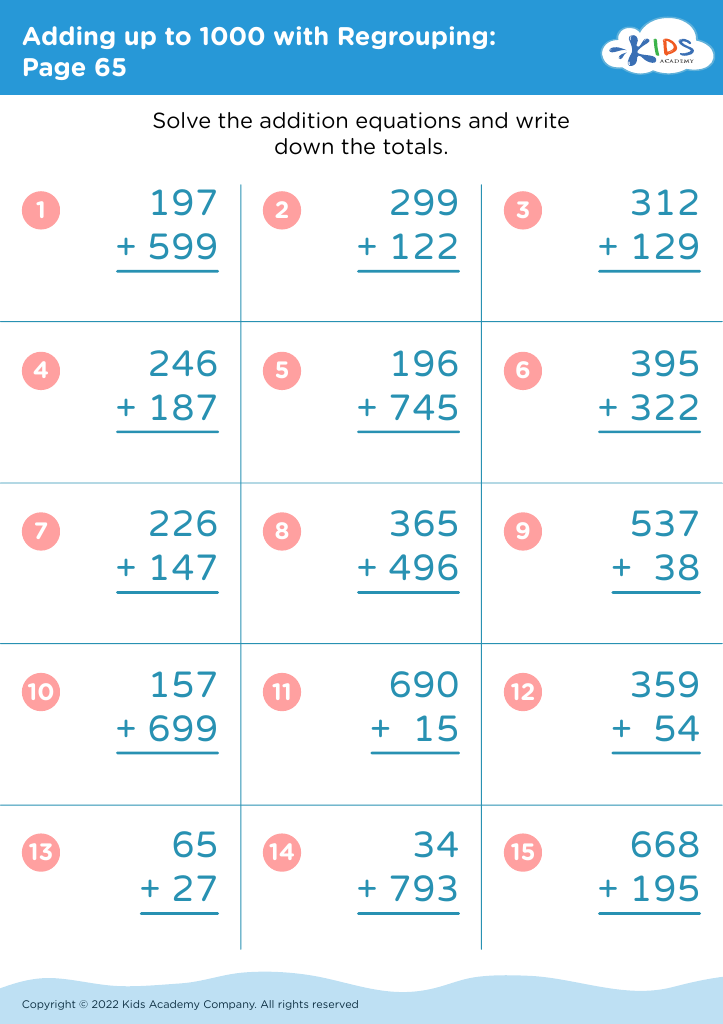
Adding up to 1000 with Regrouping: Page 65
Worksheet
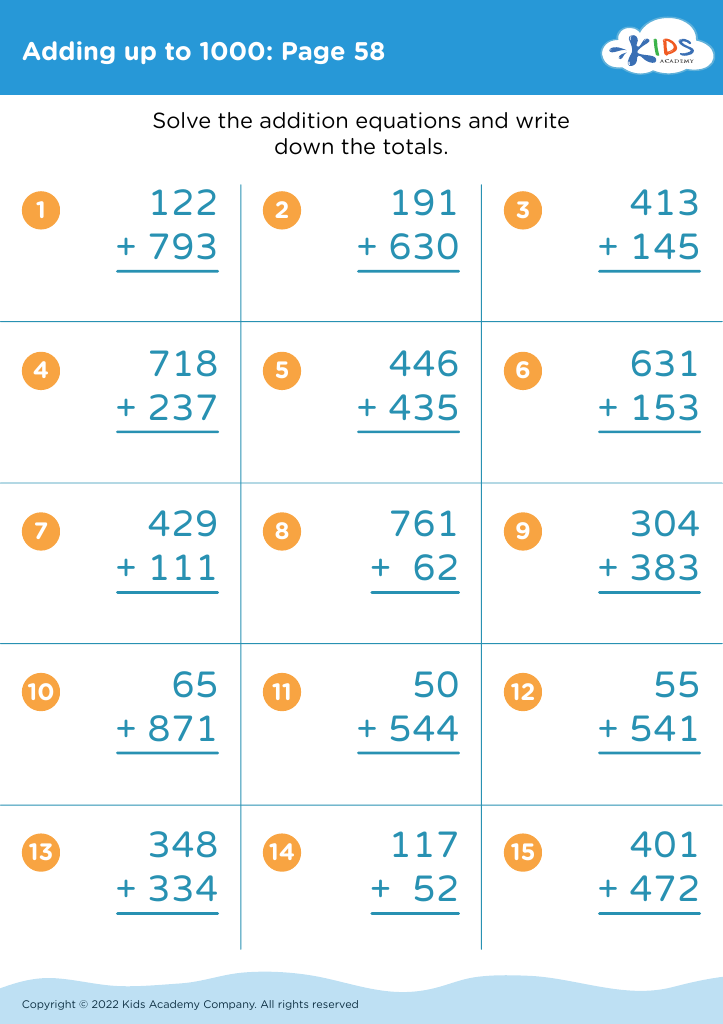
Adding up to 1000: Page 58

Adding up to 1000: Page 58

Adding up to 1000: Page 58
Worksheet
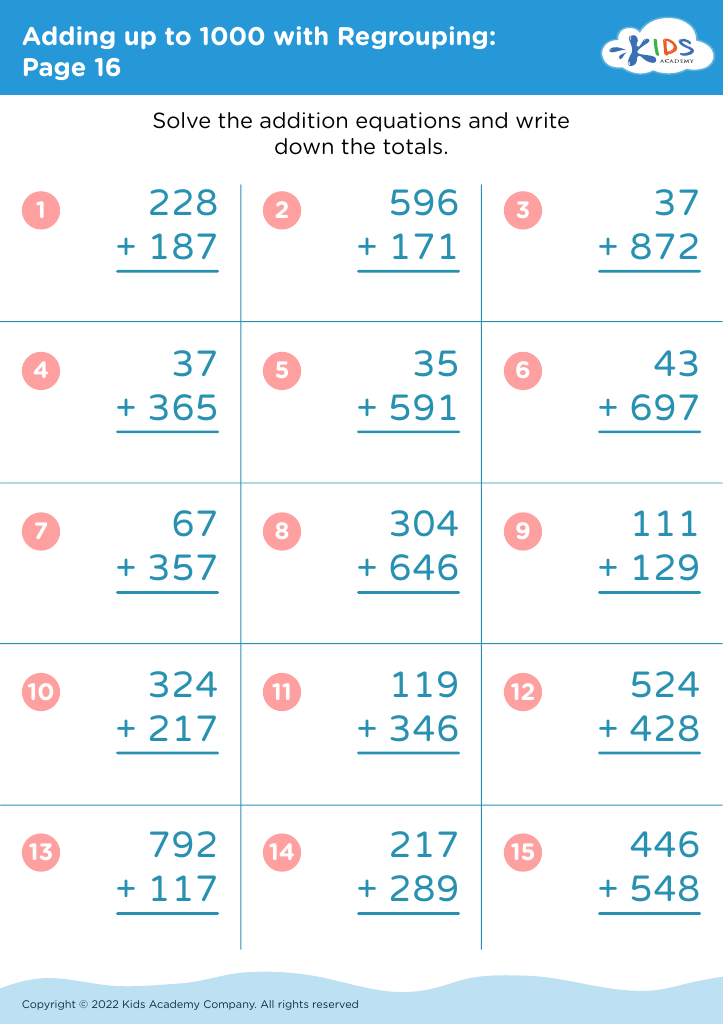
Adding up to 1000 with Regrouping: Page 16
Worksheet
Adding up to 1000 Without Regrouping: Page 62
Worksheet


Teaching children ages 7-9 about comparing fractions and adding up to 1000 is essential for their mathematical development for several reasons. During these formative years, kids are building foundational skills that will support more complex math learning in later grades. Understanding fractions is a critical component of this foundation because it fosters numerical and proportional reasoning, which is significant in many aspects of daily life and advanced mathematics.

When children compare fractions, they develop a sense of size and relative magnitude, crucial for grasping concepts like division, ratios, and eventually algebra. It also helps them understand that fractions are numbers that can be ordered and compared, making the abstract tangible.

Adding up to 1000 enhances students’ fluency with larger numbers, helping them become comfortable with multi-digit addition and subtraction. It ensures they grasp place value, an essential concept for all future arithmetic work. By working with larger numbers, children learn to use strategies for breaking down complex problems into manageable parts, enhancing their problem-solving skills.

Furthermore, these activities encourage perseverance, critical thinking, and a growth mindset, as students realize that effort leads to understanding and success. Both comparing fractions and working with larger numbers align with the curriculum and standards, ensuring that learners are not only proficient but also prepared for higher-order math concepts.