Filters

19 filtered results

Clear all filters
Favorites
With answer key
Interactive

19 filtered results

Difficulty Level

Grade


Foster math proficiency with our "Counting Practice Adding up to 1000 Worksheets for Ages 7-9." These expertly designed worksheets from Kids Academy are tailored to enhance counting and addition skills in young learners. Suitable for students aged 7 to 9, the exercises provide engaging activities that make mastering adding up to 1000 both fun and effective. Boost confidence and build strong mathematical foundations through interactive tasks that challenge and excite. Explore a diverse range of printable worksheets to support your child's learning journey and watch them excel in counting and addition with ease. Start your math adventure with us today!
Check out this FREE Trial Lesson on Adding up to 1000 for age 7-9!

Match Exactly the Same

Favorites
With answer key
Interactive
  • 7-9
  • Counting practice
  • Adding up to 1000
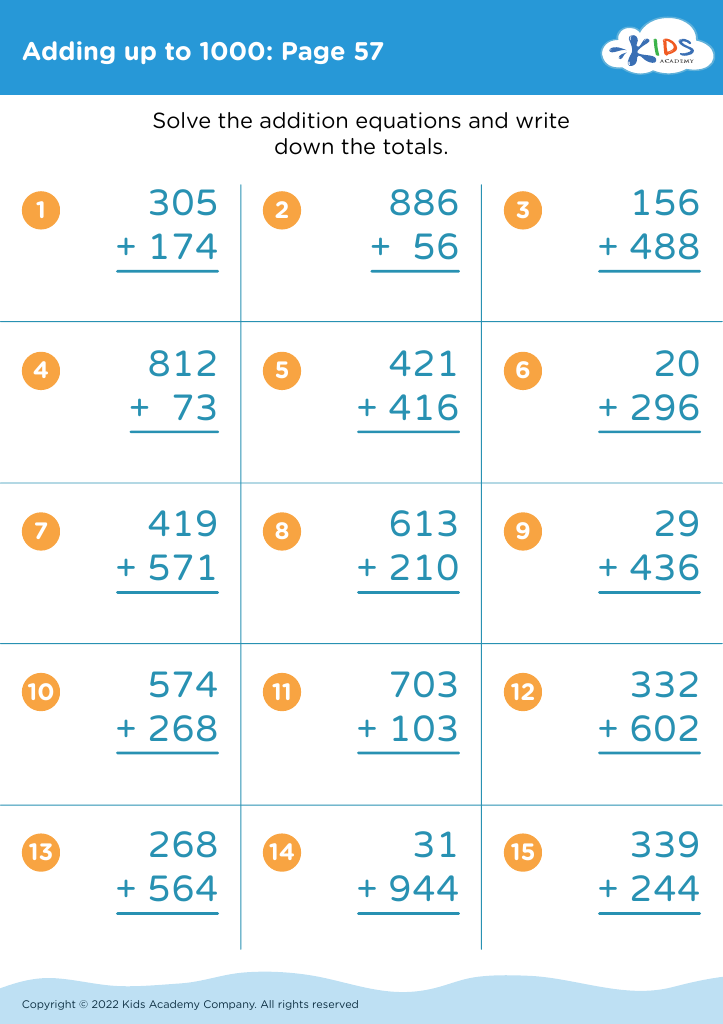
Adding up to 1000: Page 57

Adding up to 1000: Page 57

Adding up to 1000: Page 57
Worksheet
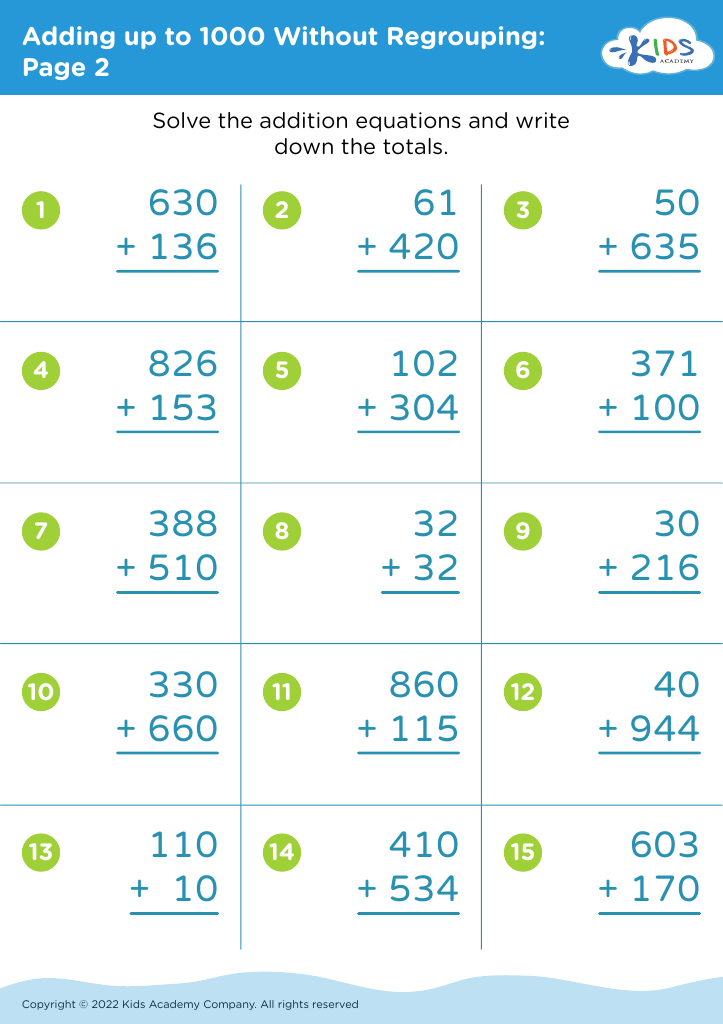
Adding up to 1000 Without Regrouping: Page 2
Worksheet
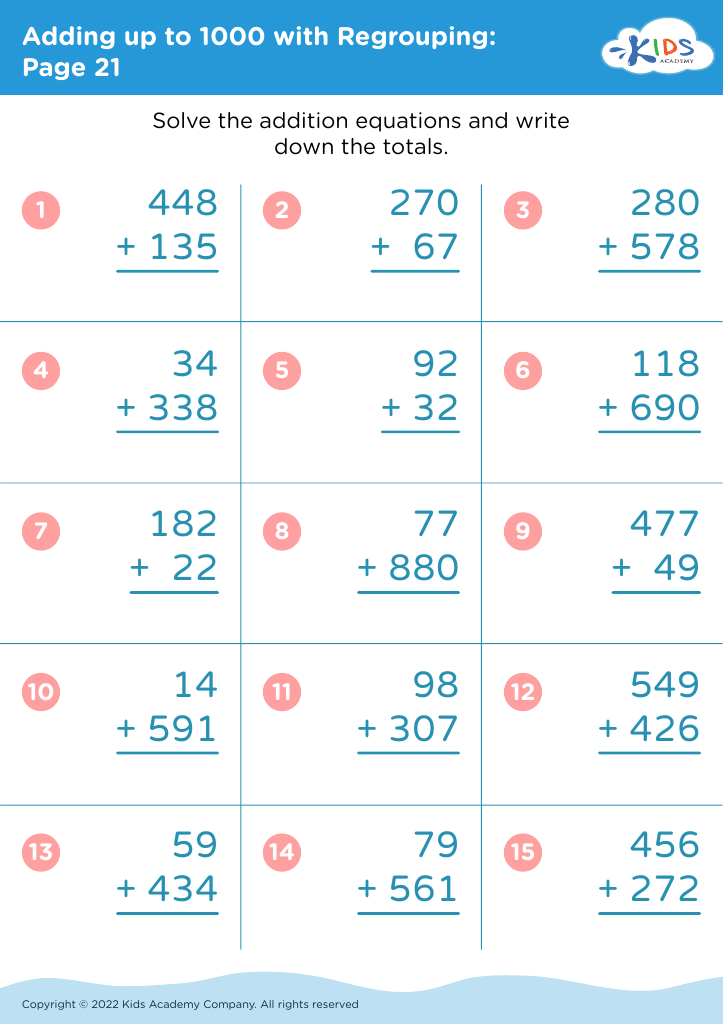
Adding up to 1000 with Regrouping: Page 21
Worksheet
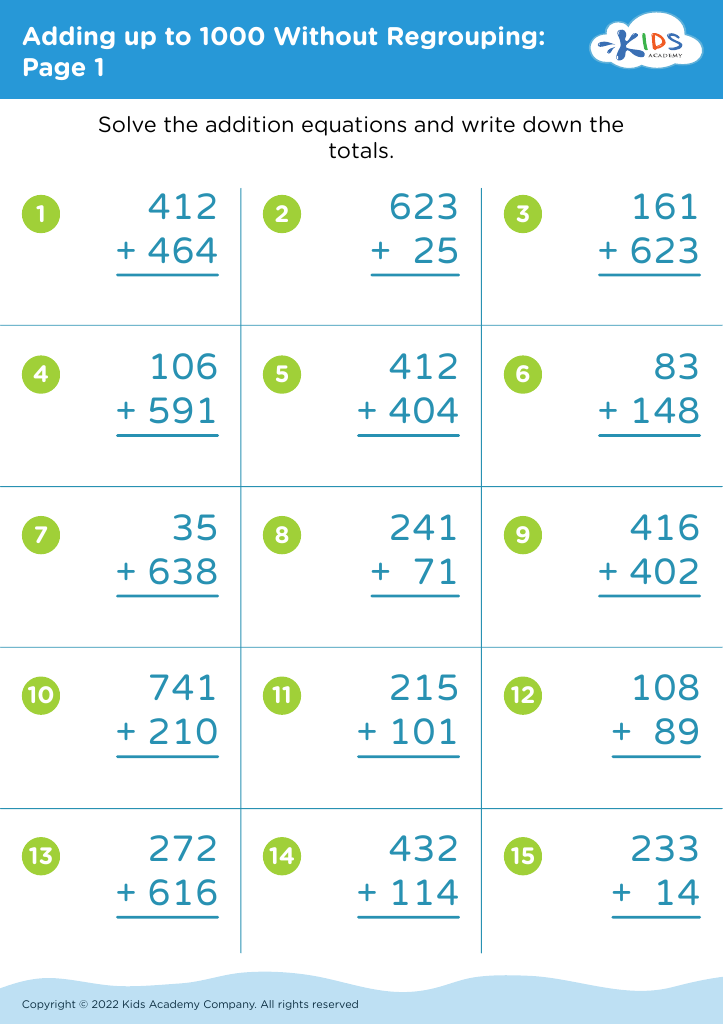
Adding up to 1000 Without Regrouping: Page 1
Worksheet
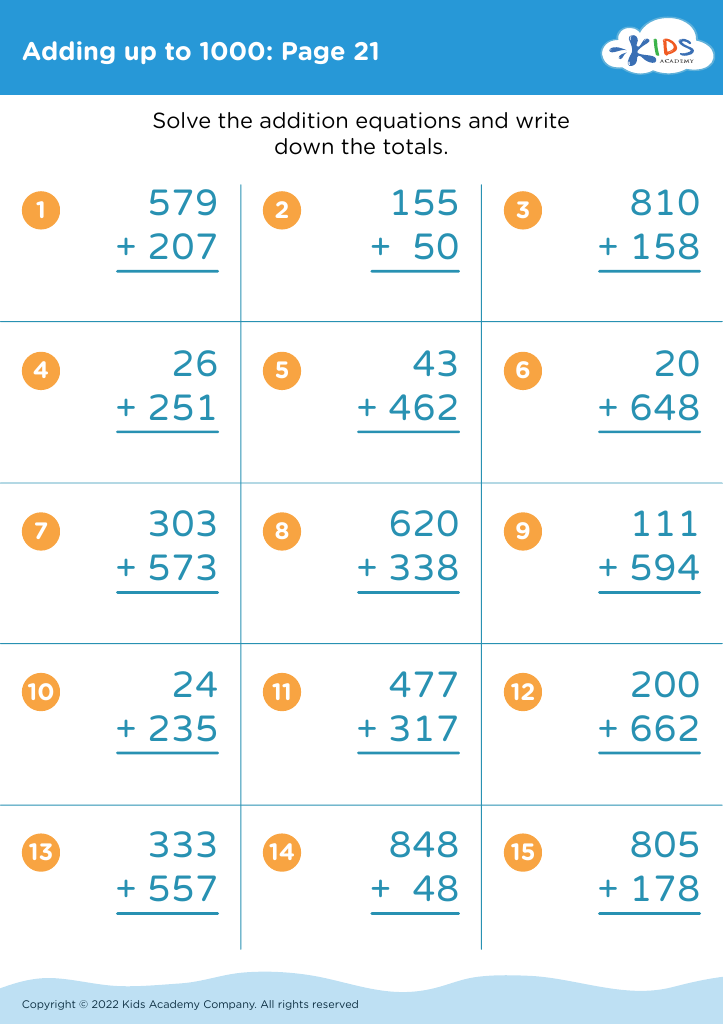
Adding up to 1000: Page 21

Adding up to 1000: Page 21

Adding up to 1000: Page 21
Worksheet
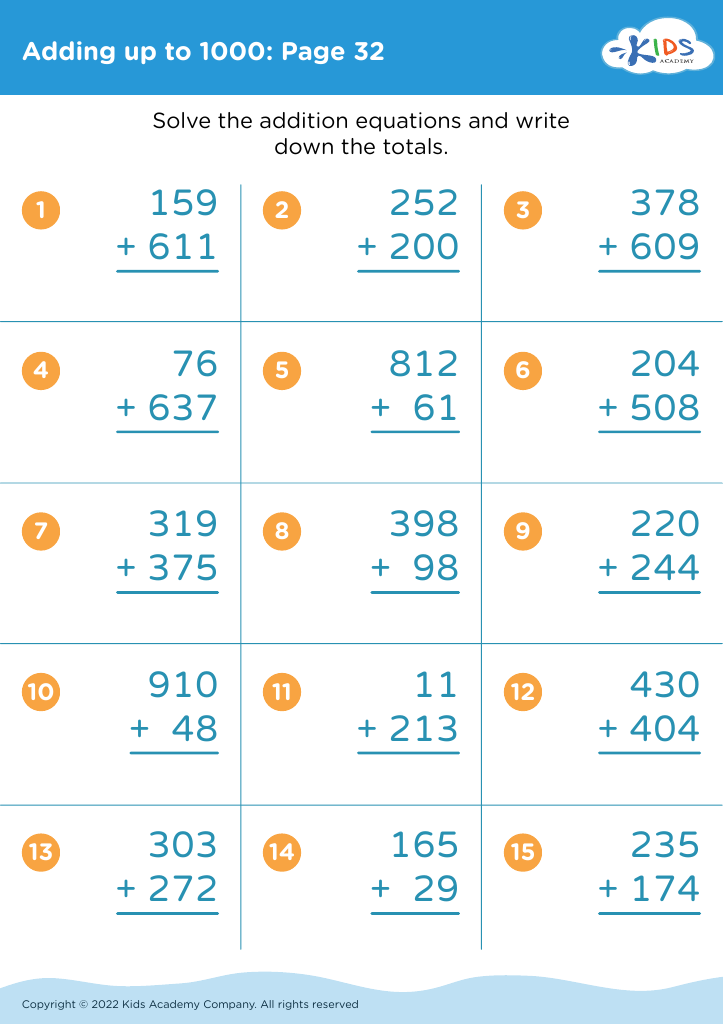
Adding up to 1000: Page 32

Adding up to 1000: Page 32

Adding up to 1000: Page 32
Worksheet
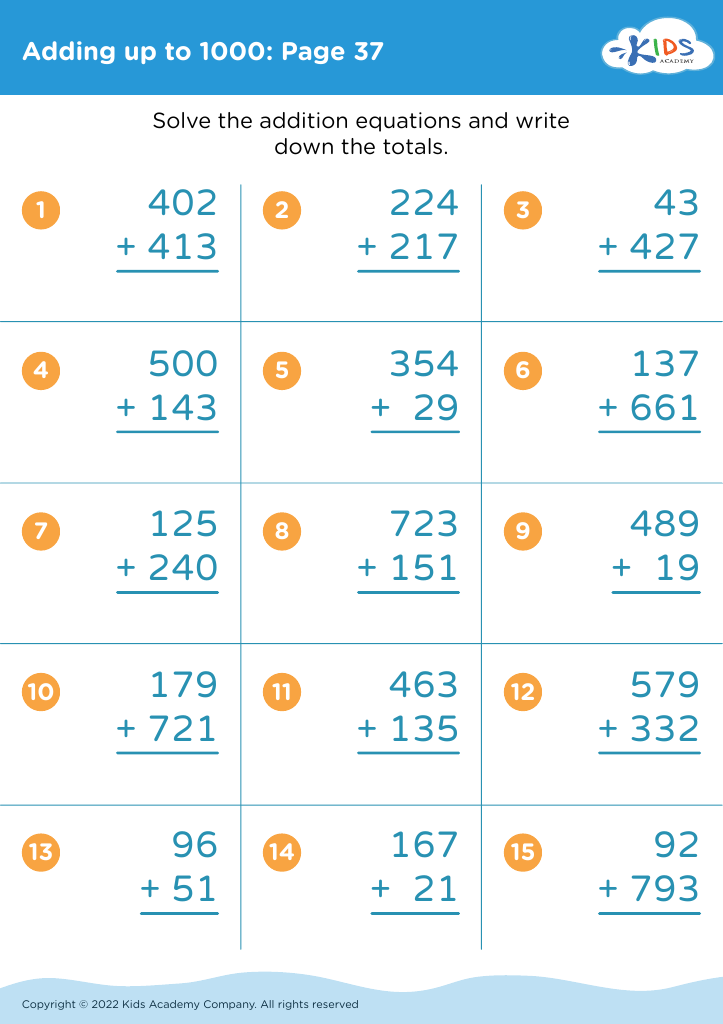
Adding up to 1000: Page 37

Adding up to 1000: Page 37

Adding up to 1000: Page 37
Worksheet
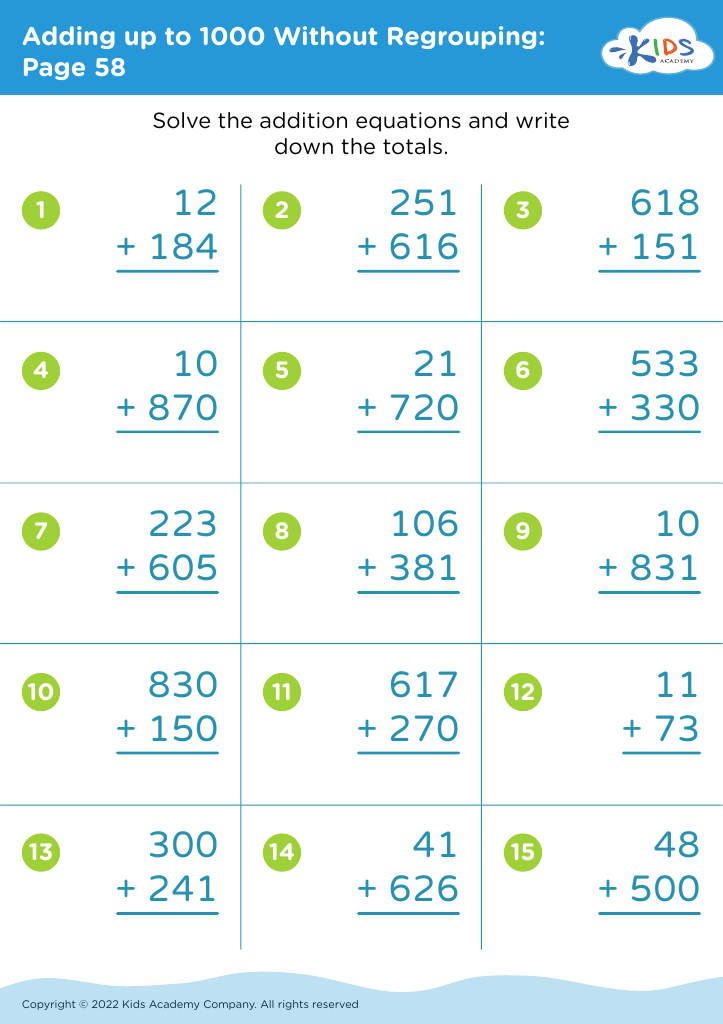
Adding up to 1000 Without Regrouping: Page 58
Worksheet
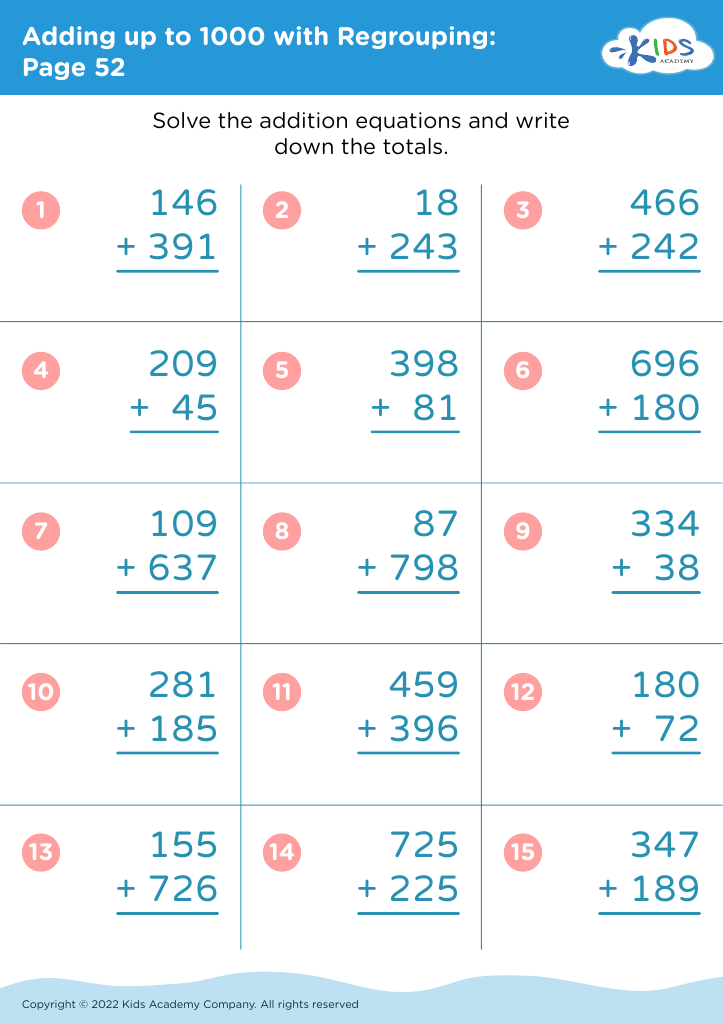
Adding up to 1000 with Regrouping: Page 52
Worksheet
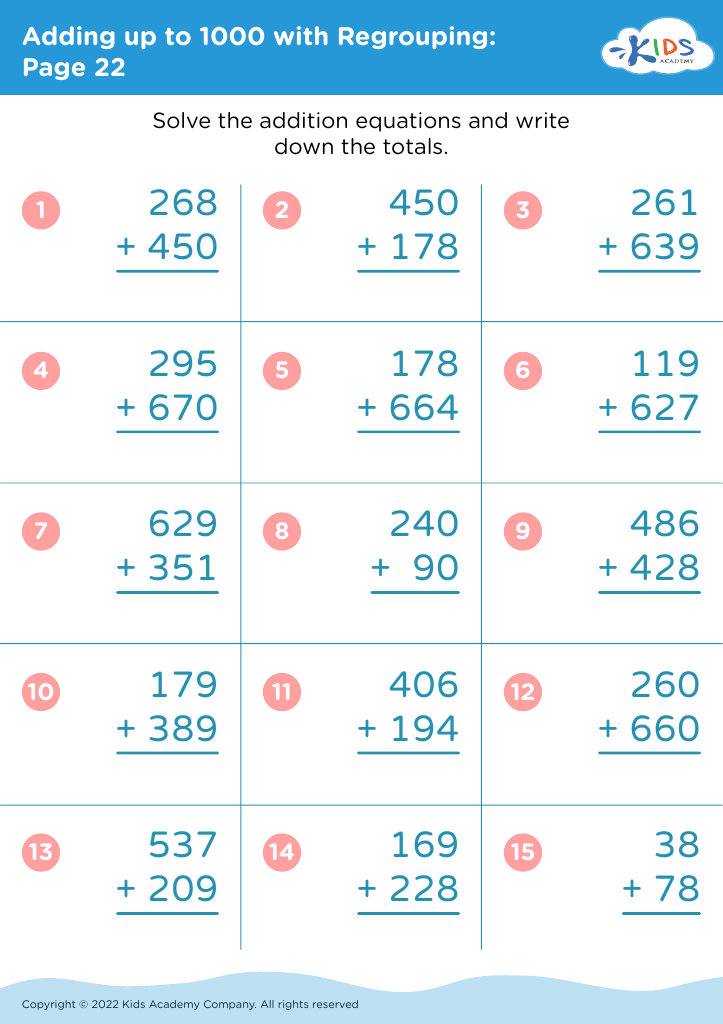
Adding up to 1000 with Regrouping: Page 22
Worksheet
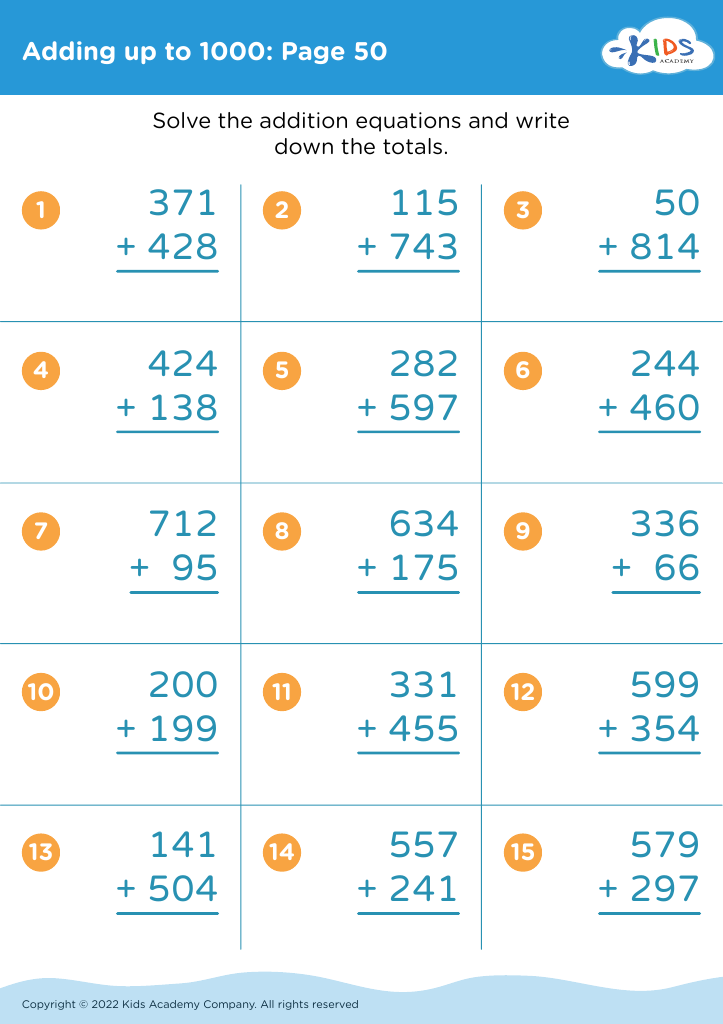
Adding up to 1000: Page 50

Adding up to 1000: Page 50

Adding up to 1000: Page 50
Worksheet
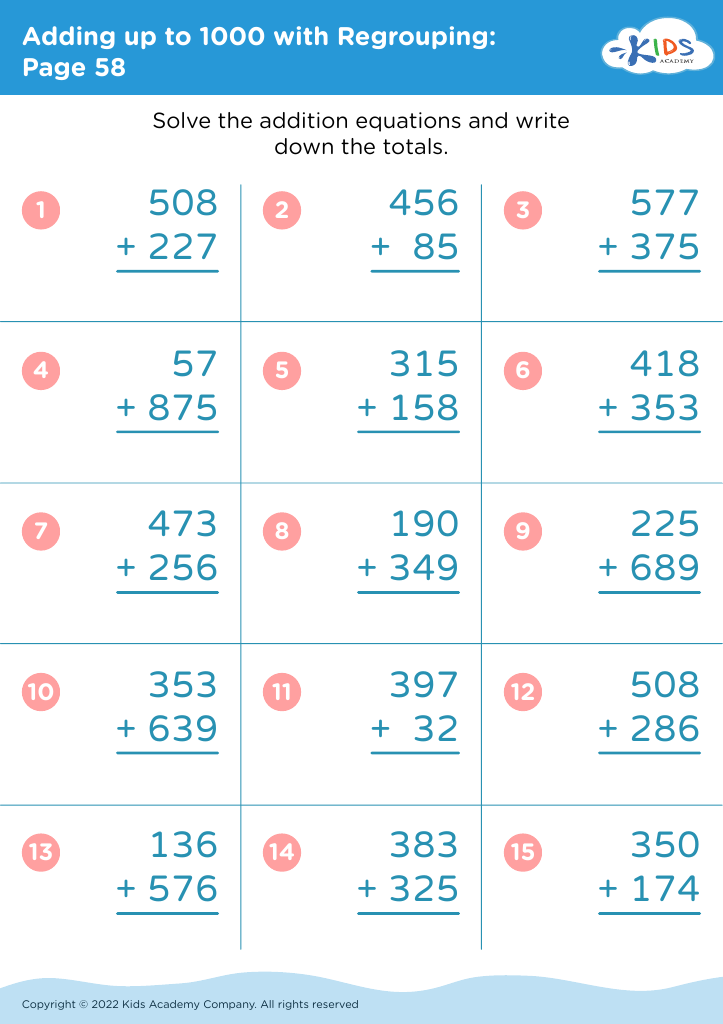
Adding up to 1000 with Regrouping: Page 58
Worksheet
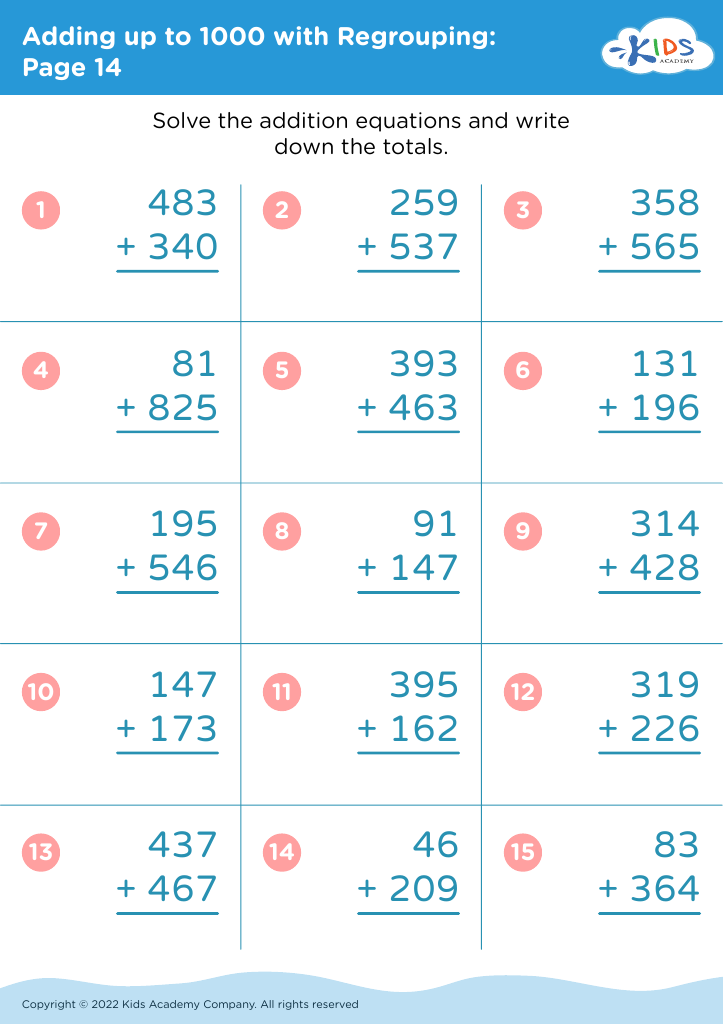
Adding up to 1000 with Regrouping: Page 14
Worksheet
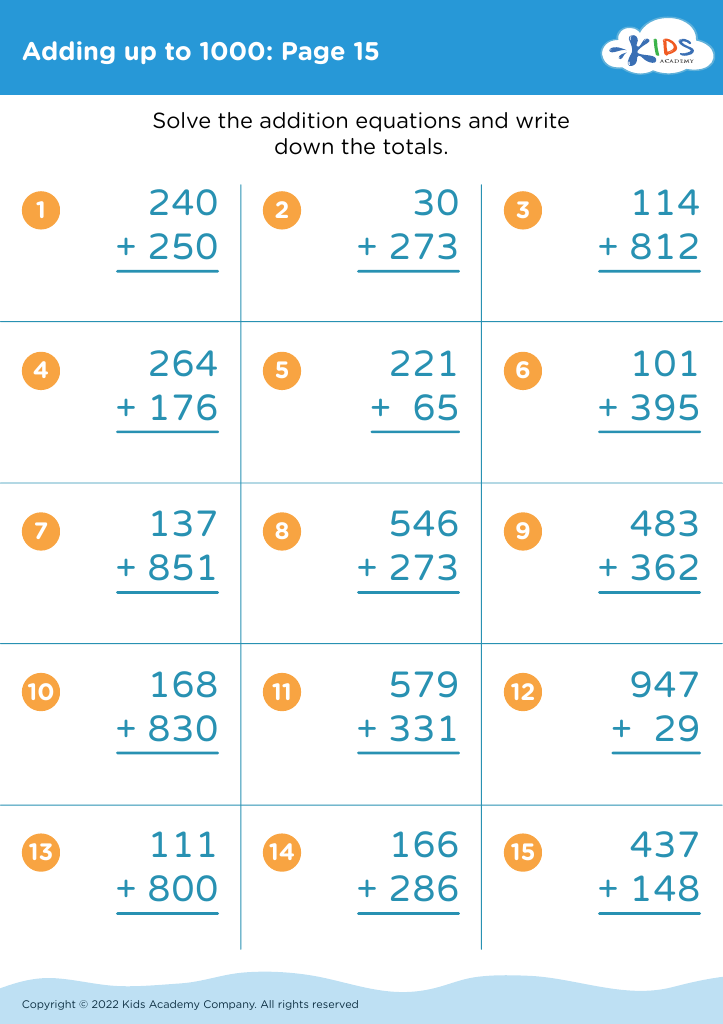
Adding up to 1000: Page 15

Adding up to 1000: Page 15

Adding up to 1000: Page 15
Worksheet
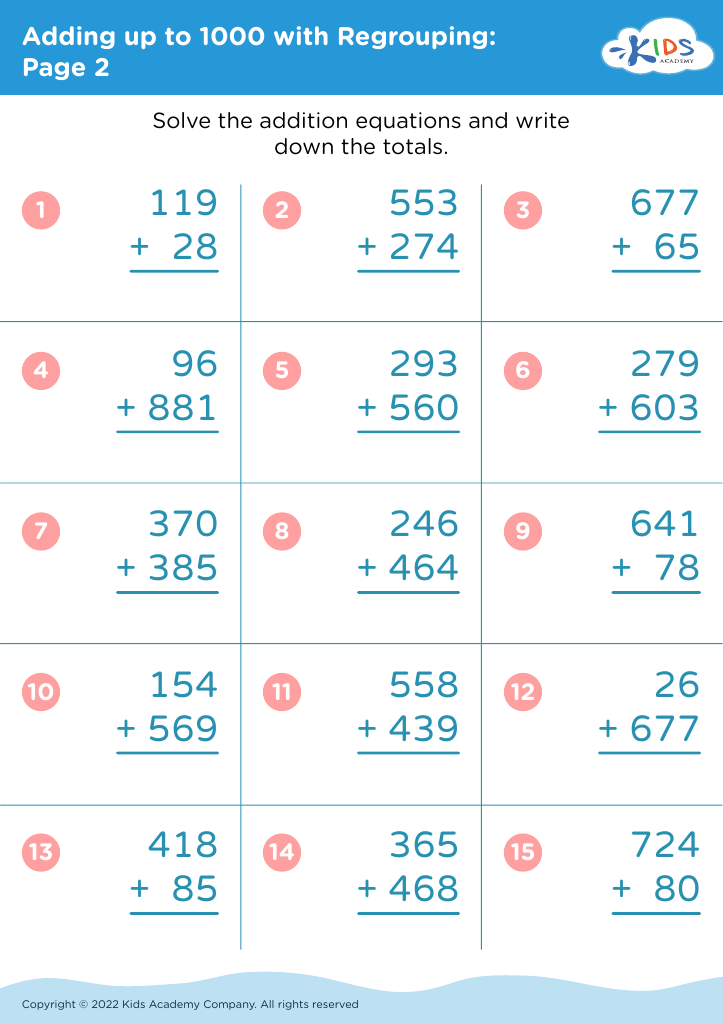
Adding up to 1000 with Regrouping: Page 2
Worksheet
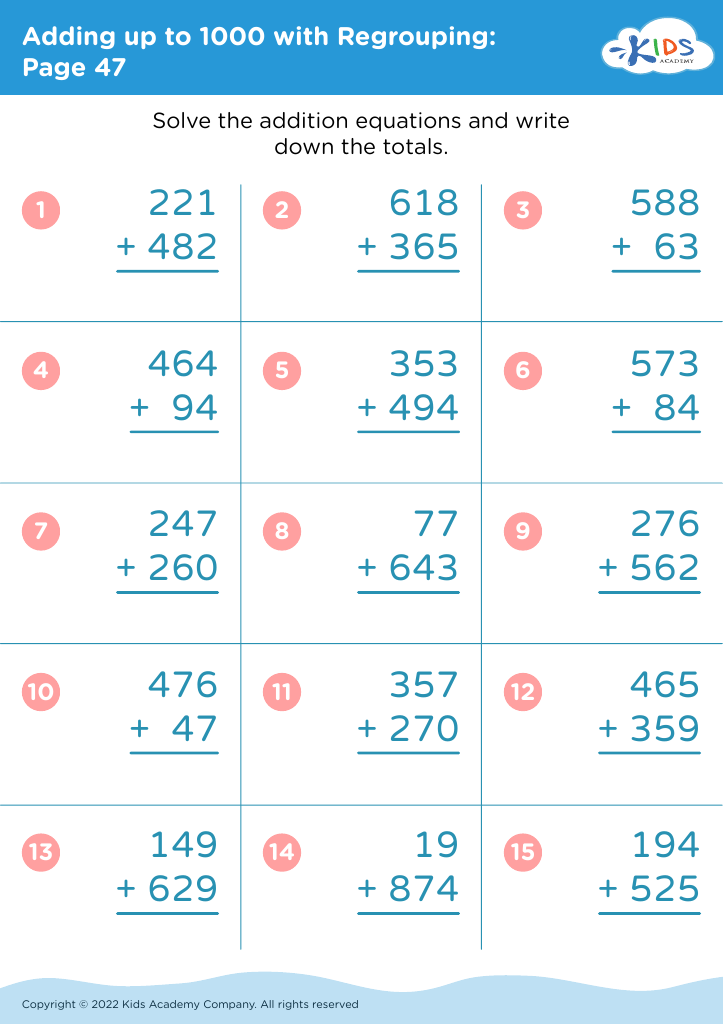
Adding up to 1000 with Regrouping: Page 47
Worksheet
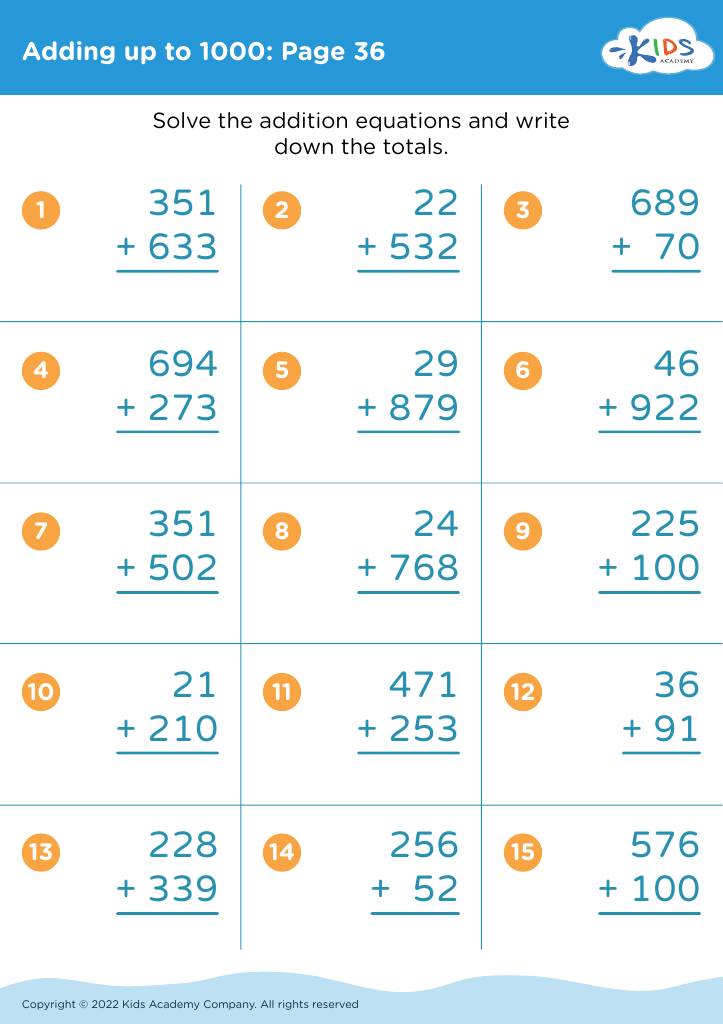
Adding up to 1000: Page 36

Adding up to 1000: Page 36

Adding up to 1000: Page 36
Worksheet
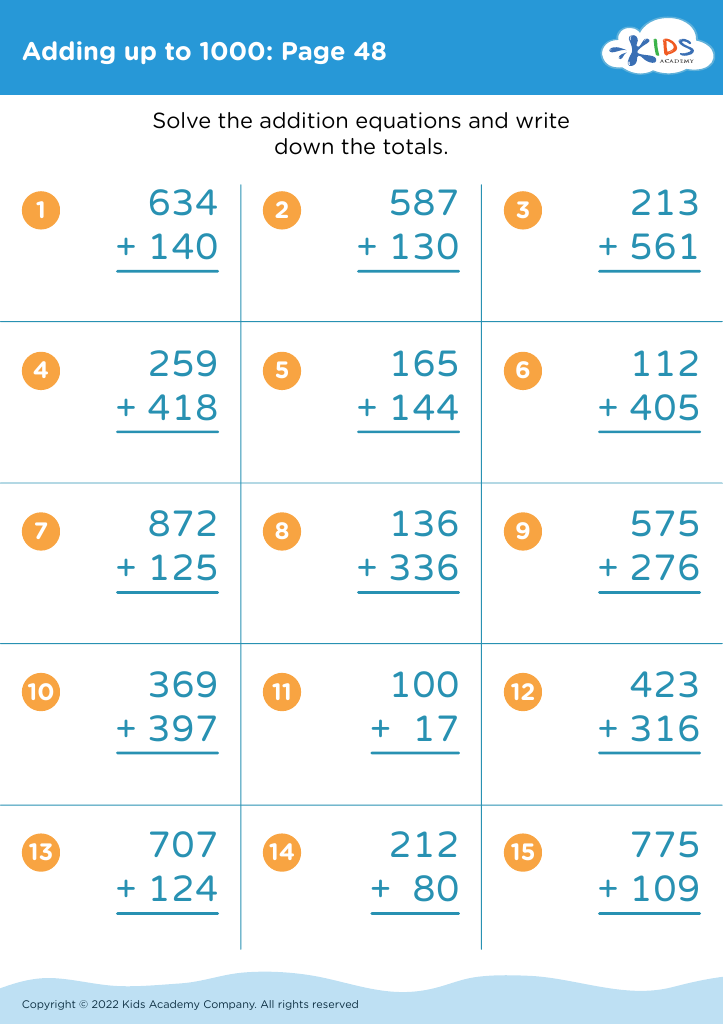
Adding up to 1000: Page 48

Adding up to 1000: Page 48

Adding up to 1000: Page 48
Worksheet
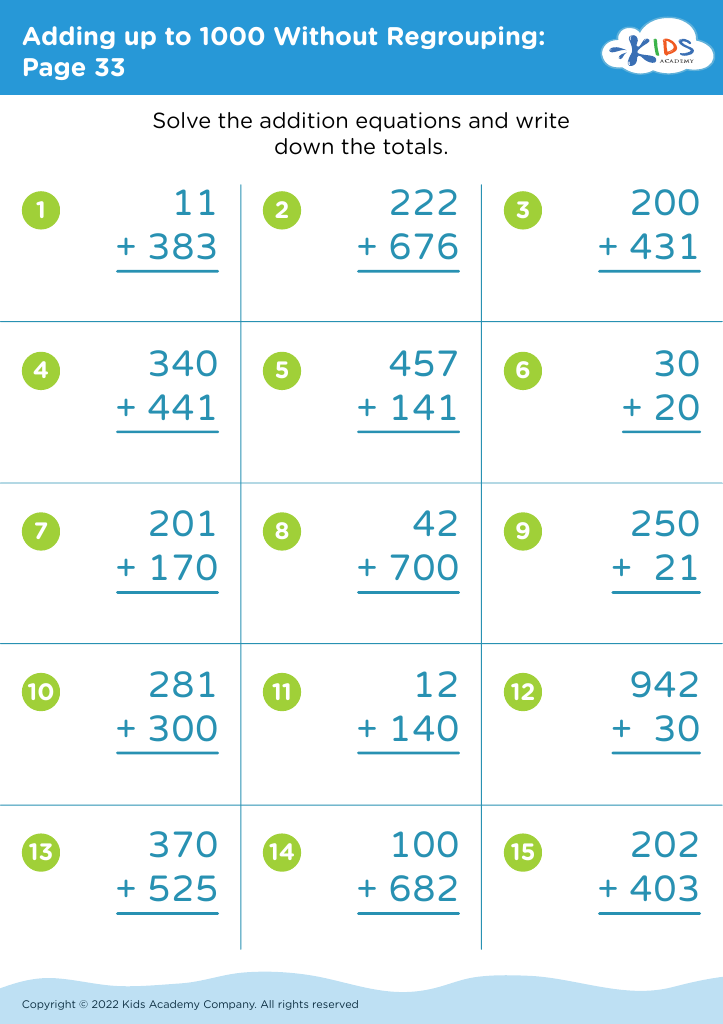
Adding up to 1000 Without Regrouping: Page 33
Worksheet


Counting practice and learning to add up to 1000 for children ages 7-9 is crucial for several reasons that extend beyond simply enhancing their arithmetic skills. Firstly, proficiency in counting and addition builds a solid foundational mathematical understanding, making complex concepts such as multiplication, division, and place value more accessible later on. This foundational knowledge is essential for fostering a positive relationship with math as children advance through their education.

Secondly, early practice in counting and addition enhances cognitive development, honing skills such as memory, focus, and problem-solving. These cognitive benefits are not limited to mathematics; they contribute to improved performance in other academic areas and everyday problem-solving scenarios.

Furthermore, developing competence in basic arithmetic has practical implications. It encourages the application of math in daily life, such as telling time, handling money, and gauging measurements, which fosters independence and confidence in children. Practical skills with real-world applications help children see the relevance of what they are learning, thereby maintaining their motivation and engagement with the subject matter.

Lastly, early mastery of fundamental math skills provides a sense of achievement and self-efficacy, cultivating an early confidence that supports academic perseverance and a growth mindset. Therefore, it is imperative for parents and teachers to actively support counting practice and addition up to 1000, ensuring children are equipped for future academic challenges and everyday life.