Develop critical thinking Adding up to 1000 Worksheets for Ages 7-9
3 filtered results
-
From - To
Explore our comprehensive "Develop Critical Thinking: Adding Up to 1000 Worksheets" for ages 7-9, designed to enhance math skills and promote analytical thinking. These worksheets provide engaging tasks to boost addition fluency, crucial for understanding larger numerical concepts. Crafted to challenge young minds, each worksheet stimulates problem-solving and logical reasoning, preparing your child for advanced math. Perfect for homeschooling or supplementing classroom learning, our resources foster math confidence through interactive and fun exercises. Help your child excel with our expertly designed materials, ensuring a strong foundation in arithmetic and critical thinking skills.
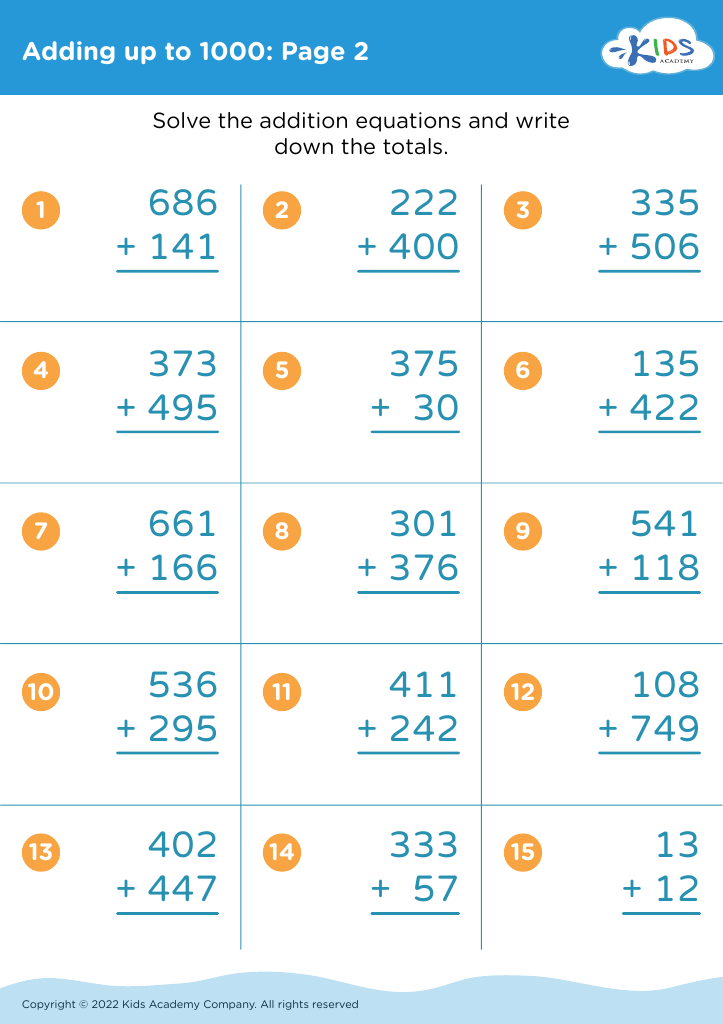
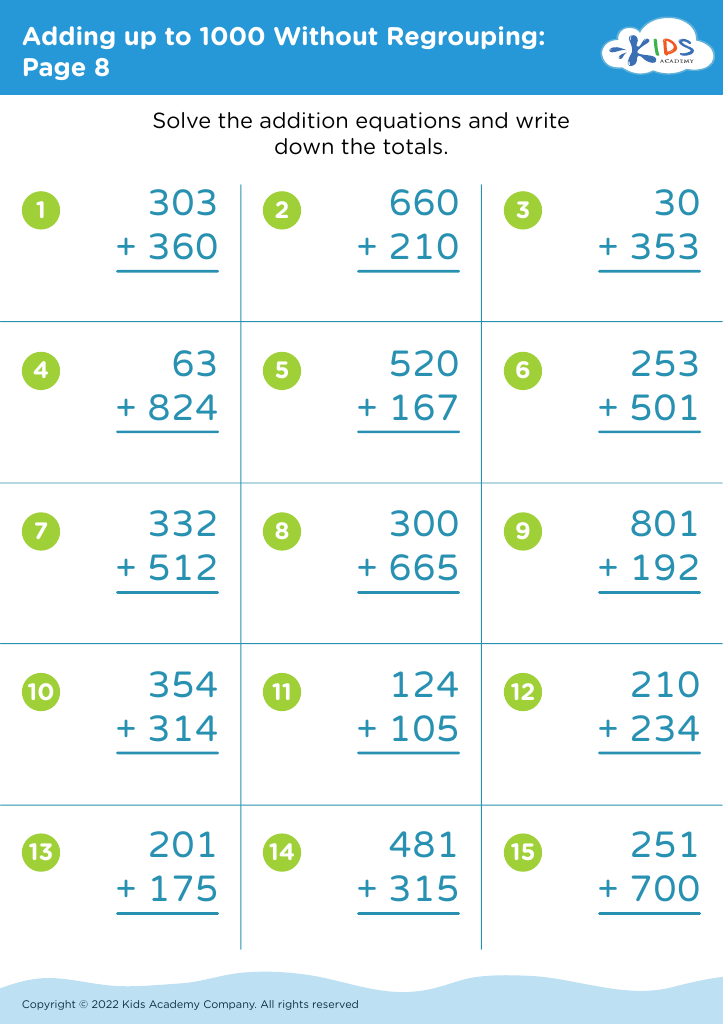
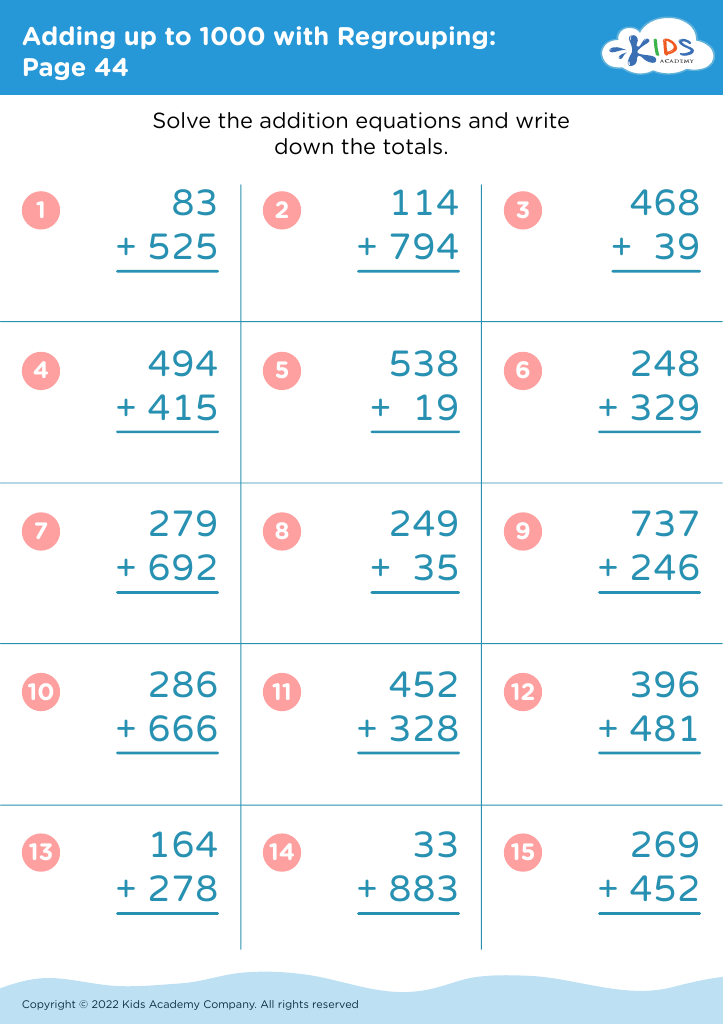



Developing critical thinking and learning to add up to 1,000 at ages 7–9 is crucial for a child's overall growth and success in later life. At this formative stage, fostering critical thinking skills enables children to analyze situations, make logical connections, and solve problems independently. This foundation not only aids academic performance but also helps in everyday decisions, making them more adaptable, resourceful, and confident individuals. Critical thinking encourages curiosity and creativity, promotes a love for learning, and prepares them for more complex cognitive tasks in later academic years.
Simultaneously, mastering addition up to 1,000 builds essential numerical fluency. This mathematical competence is the backbone for future advanced topics such as multiplication, division, and fractions. Children with strong numeracy skills perform better in standardized tests and are more likely to enjoy math. Practical applications, like managing pocket money or understanding measurements in everyday activities, become seamless.
Together, developing both critical thinking and numerical fluency creates a balanced skill set that is invaluable in academic pursuits and real-world interactions. Parents and teachers should prioritize these areas, recognizing that these foundational skills not only advance academic success but also equip children with the tools to navigate the complexities of everyday life with confidence and resilience.








