Fine Motor Skills Adding up to 1000 Worksheets for Ages 7-9
12 filtered results
-
From - To
Boost your child’s mathematical abilities and dexterity with our "Fine Motor Skills Adding up to 1000 Worksheets" designed for ages 7-9. These engaging worksheets help children strengthen their fine motor skills while mastering addition up to 1000. Perfect for young learners, each activity combines fun illustrations with practical math problems, promoting pencil control and accuracy in calculations. Ideal for reinforcing classroom learning or supplementary home practice, these worksheets help build confidence and competence in a crucial aspect of early education. Enhance your child's development and watch their skills flourish with these expertly crafted resources. Explore now and start adding up the benefits!
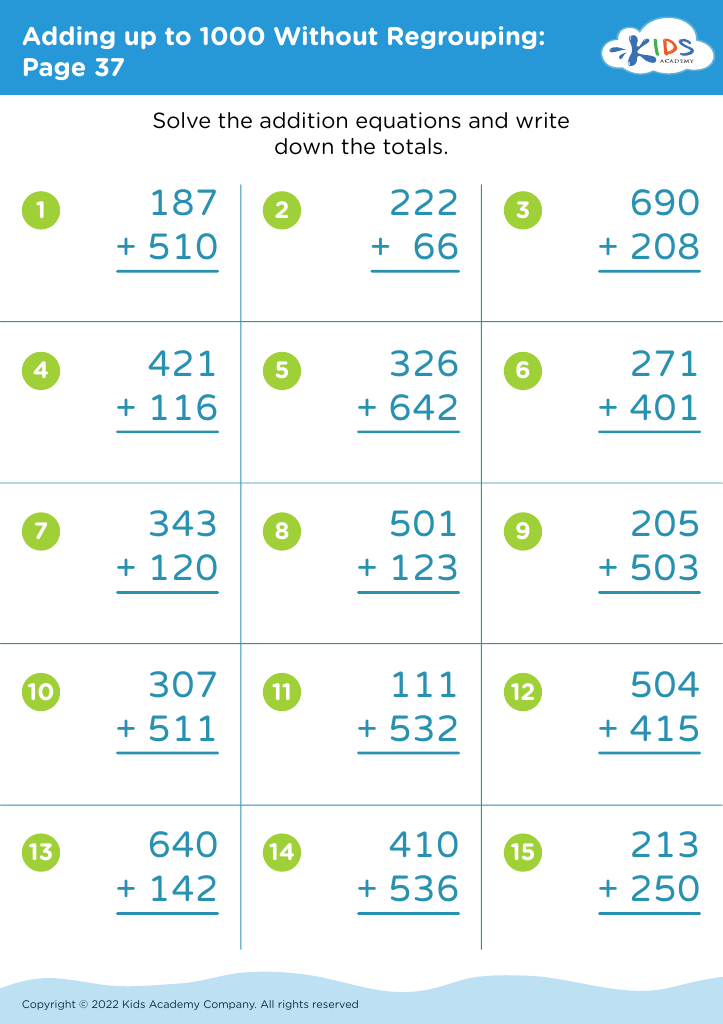
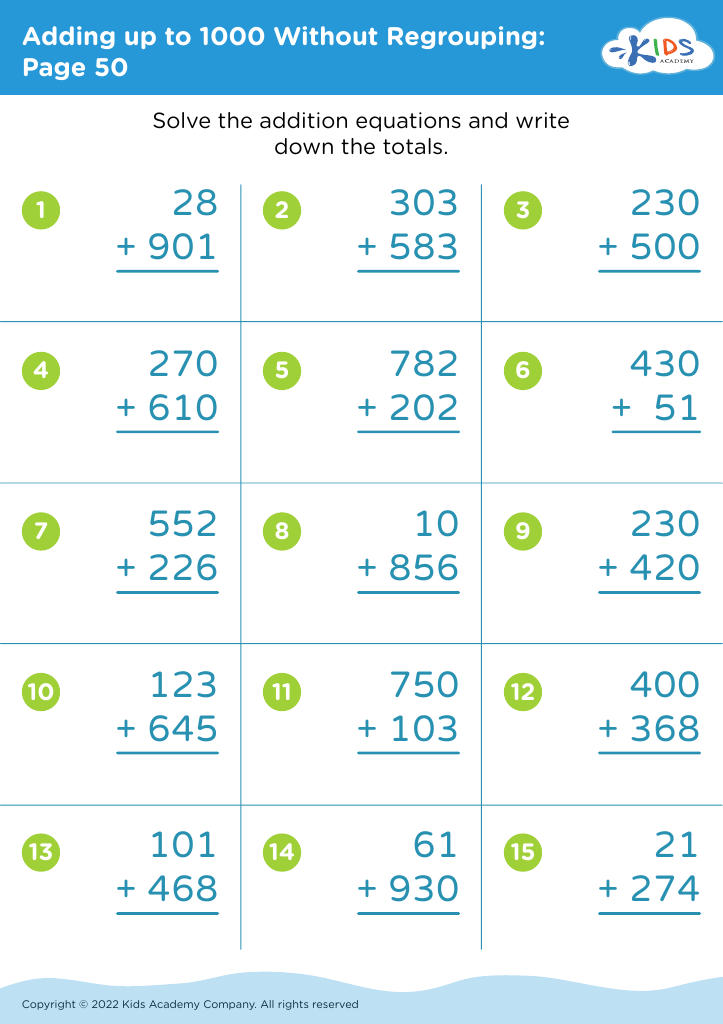
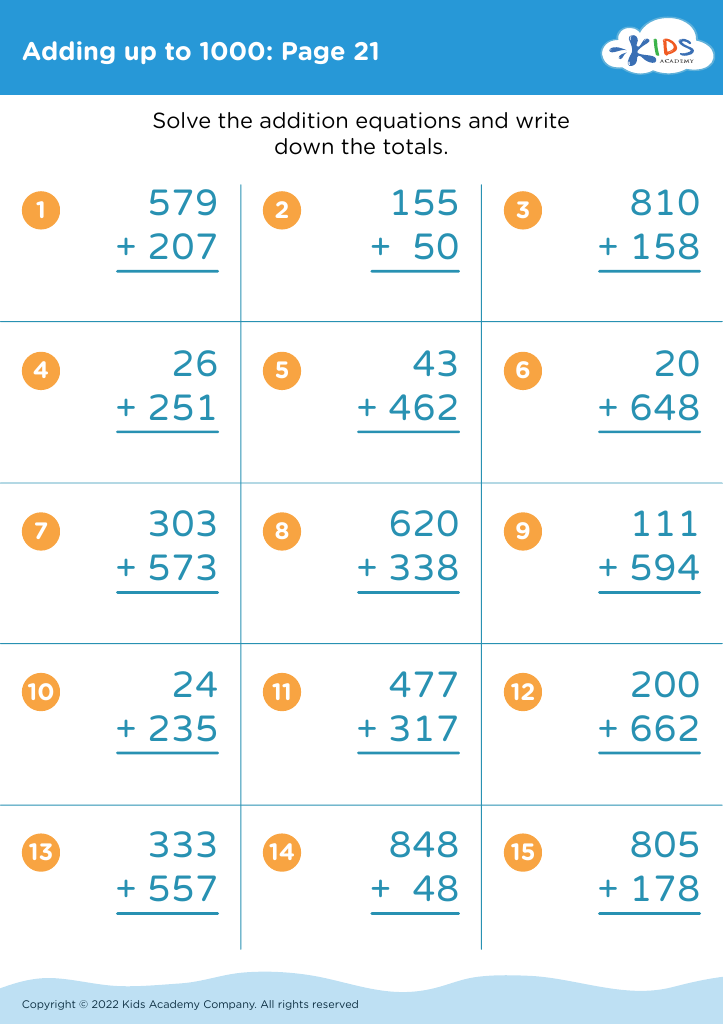
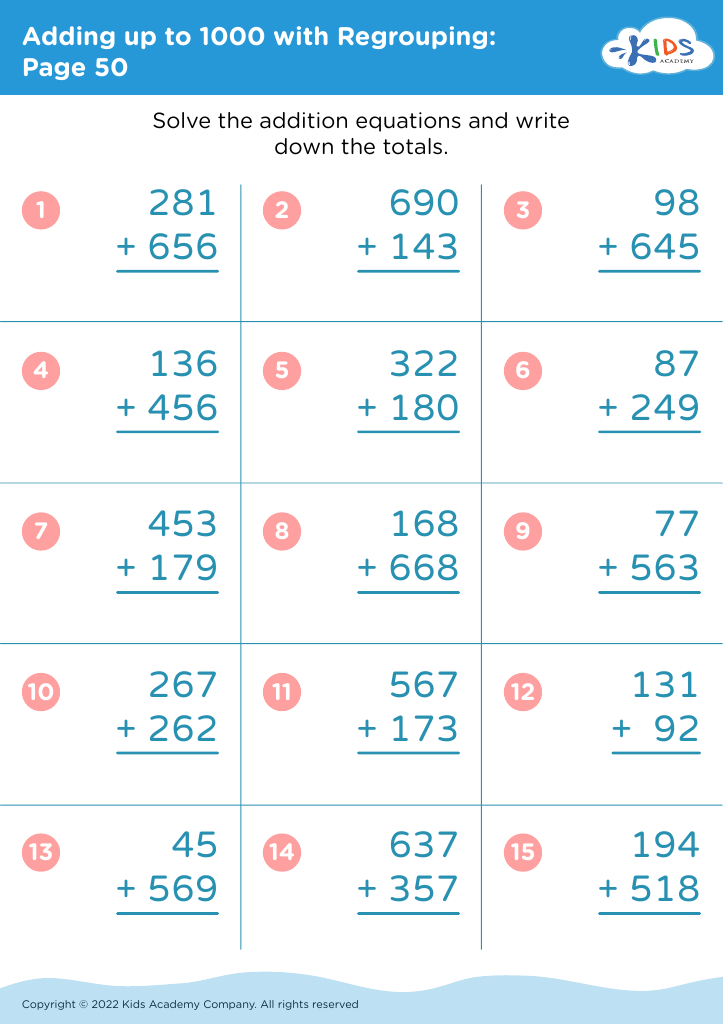
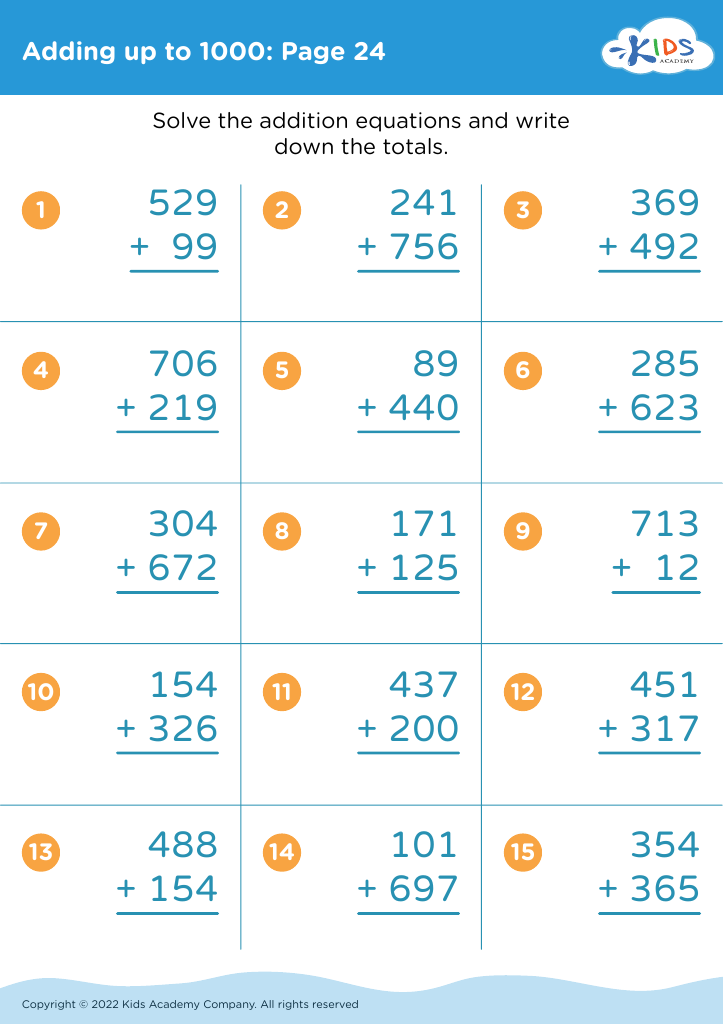
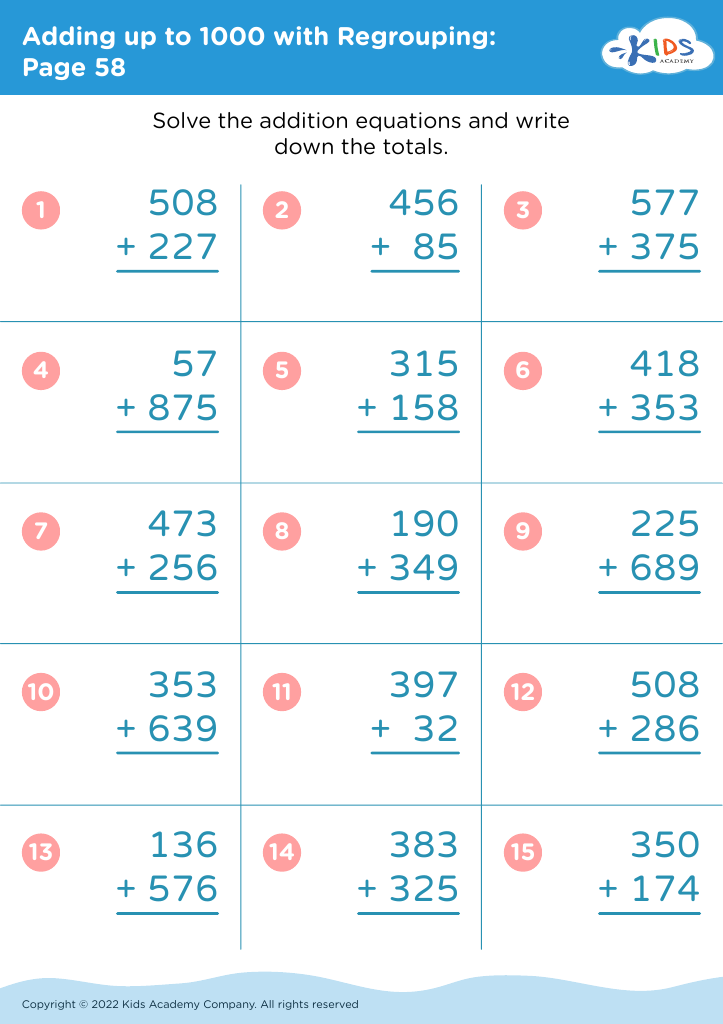
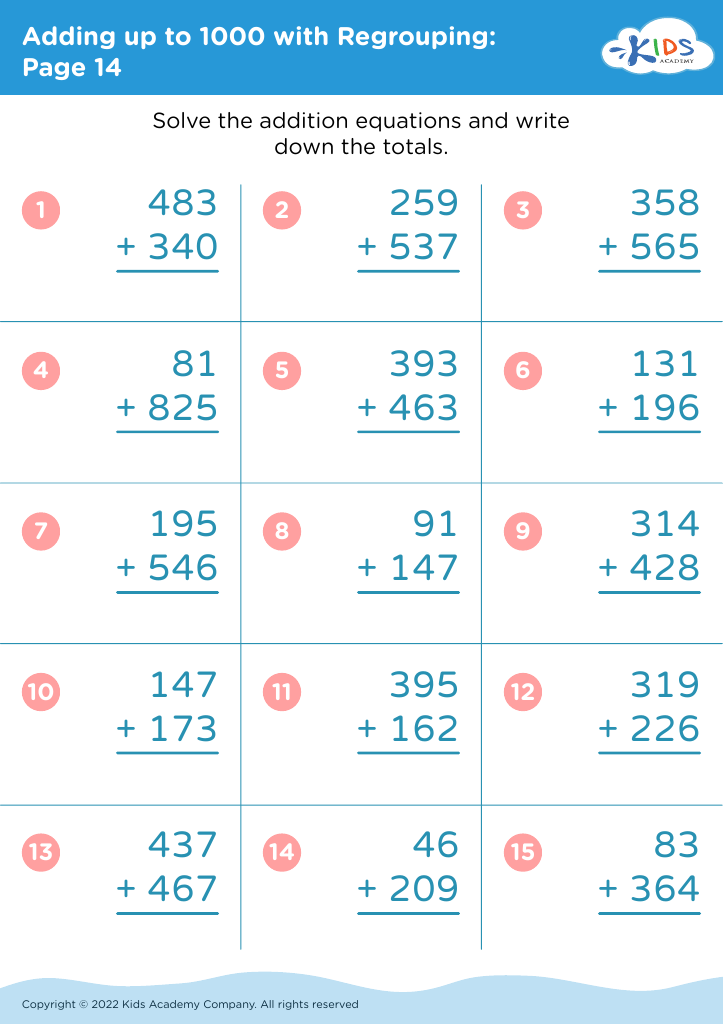
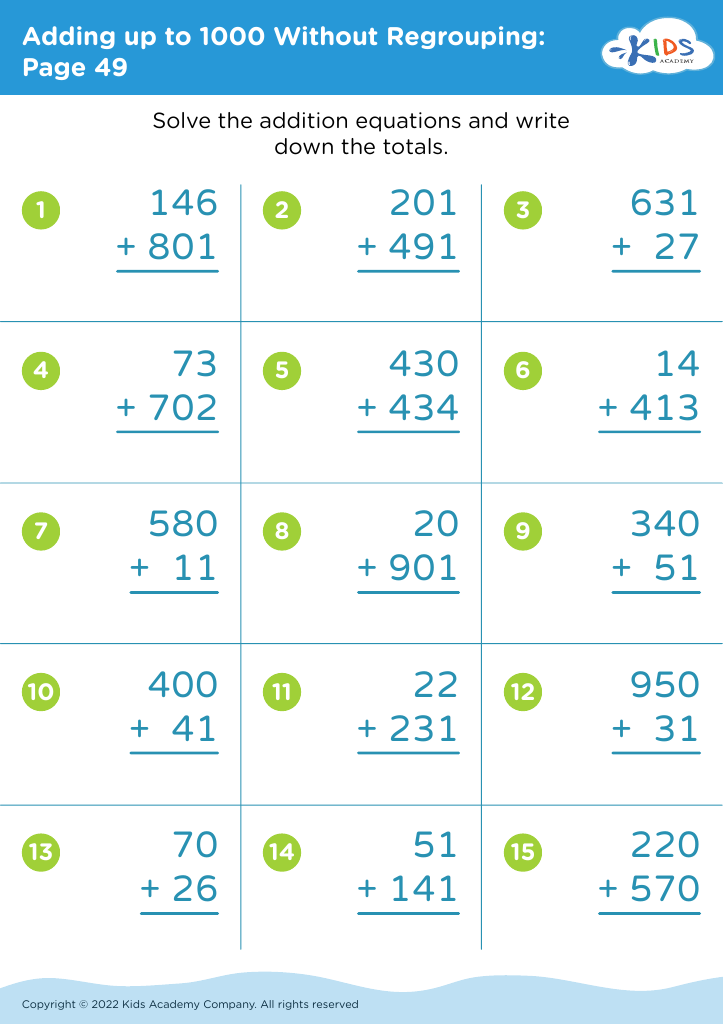
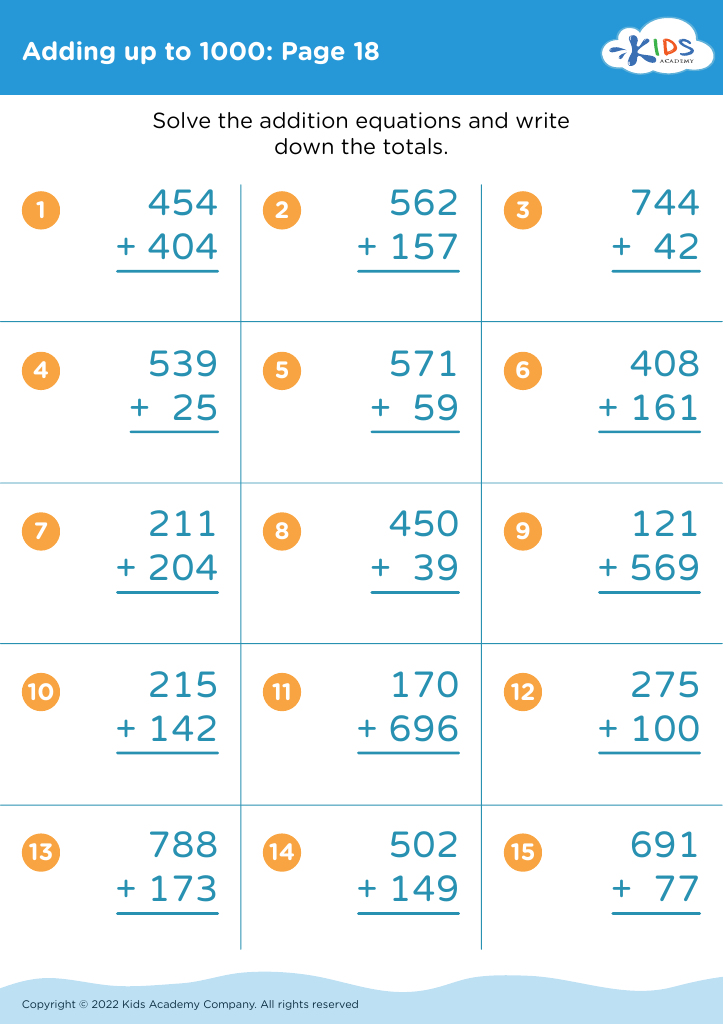
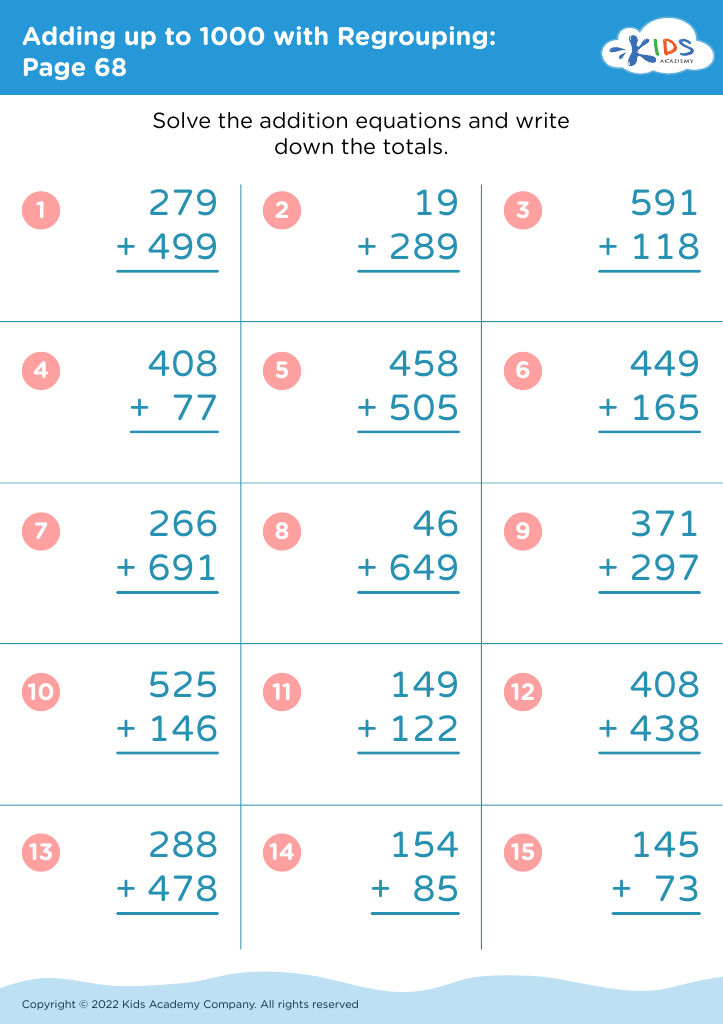
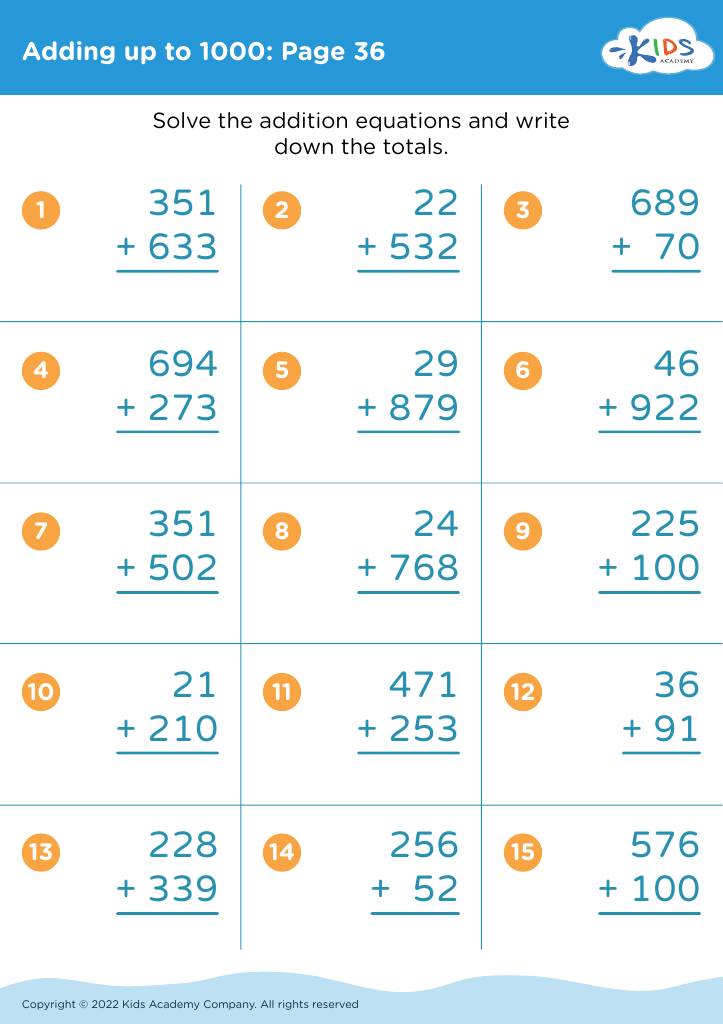
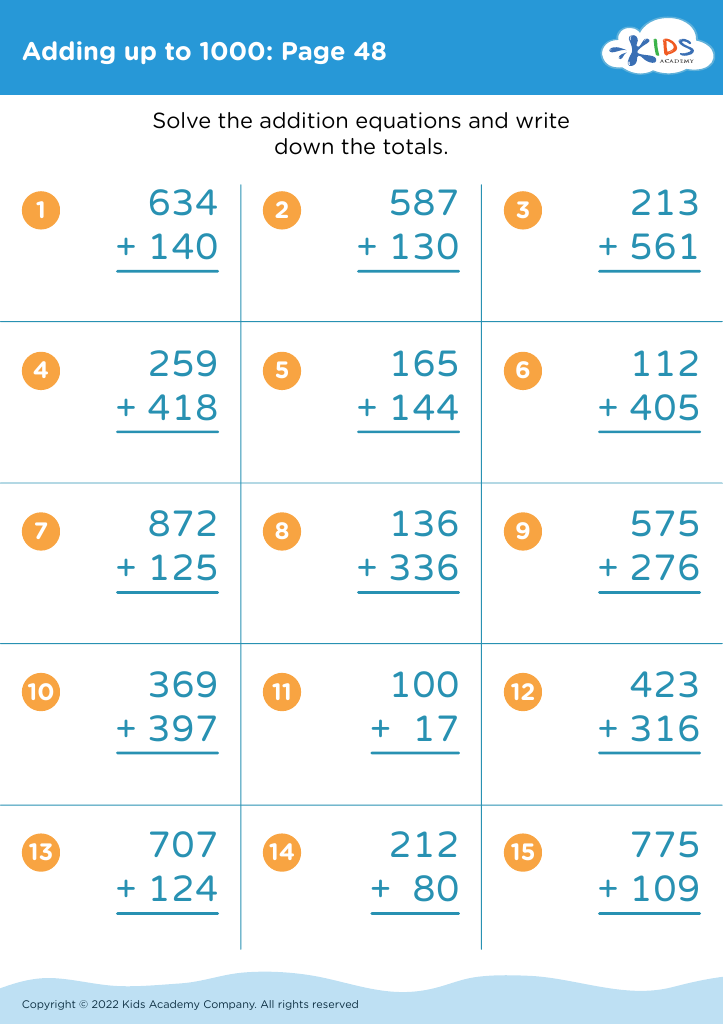



Fine motor skills are critical for children aged 7-9 because these abilities deeply influence their overall development and academic success. Fine motor skills involve the coordination of small muscles, particularly in the hands and fingers, allowing for tasks such as writing, buttoning a shirt, and using scissors. Mastery of these skills is crucial during this developmental stage as children begin more complex classroom tasks that require precision and dexterity. Adding numbers up to 1000, for instance, requires fine motor skills for tasks like manipulating objects, writing numerals accurately, and using math tools such as rulers or calculators. Solid fine motor skills enhance children’s capacity to learn mathematics, boosting their confidence and academic performance.
Additionally, improving fine motor skills fosters independent daily living skills, increasing a child's self-reliance and self-esteem. When children have well-developed fine motor abilities, they are less likely to become frustrated or demotivated by tasks requiring hand-eye coordination. Teachers and parents should prioritize activities that promote fine motor skills, like drawing, playing with building blocks, and engaging in crafts. Not only does this support academic victories, but it also contributes to a child’s holistic development - encouraging sharper problem-solving skills, greater creativity, and a can-do attitude that facilitates lifelong learning and personal growth.








