Following instructions Adding up to 1000 Worksheets for Ages 7-9
5 filtered results
-
From - To
Enhance your child's math skills with our "Following Instructions: Adding Up to 1000" worksheets, specially designed for ages 7-9. These engaging worksheets help young learners practice essential math concepts while refining their ability to follow directions accurately. Each activity adds fun to learning, empowering children to solve addition problems up to 1000 through step-by-step guidance. Ideal for home or classroom use, these worksheets promote critical thinking and boost confidence in math. Foster your child's educational growth and watch their skills soar as they tackle varying difficulties and enjoy interactive opportunities to learn while having fun! Download now and let the adventure begin!
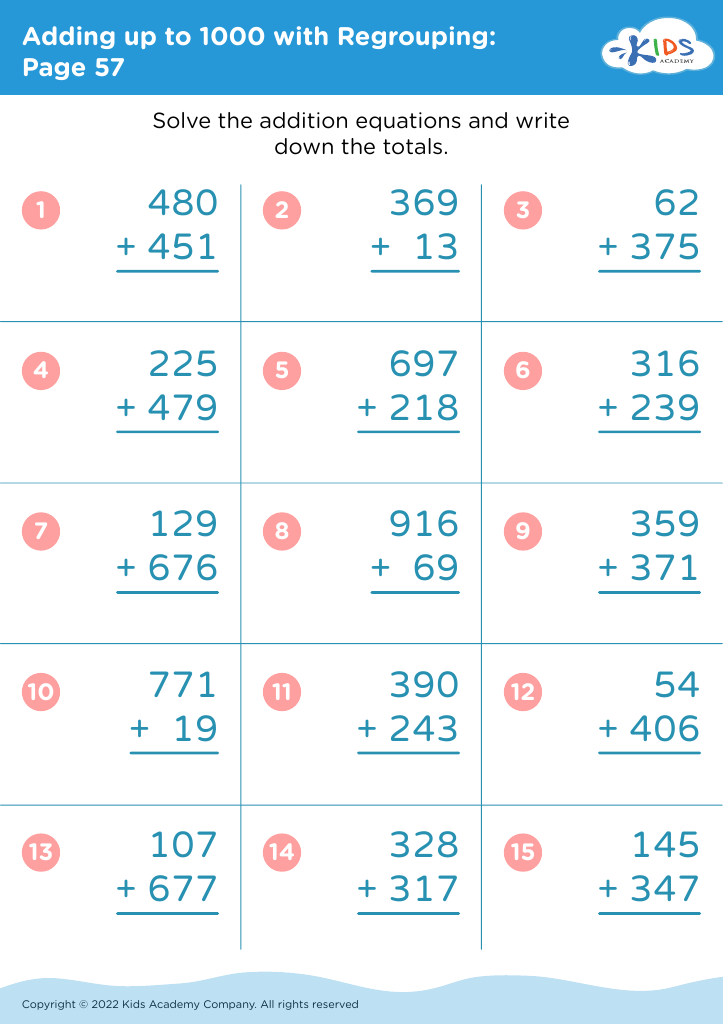
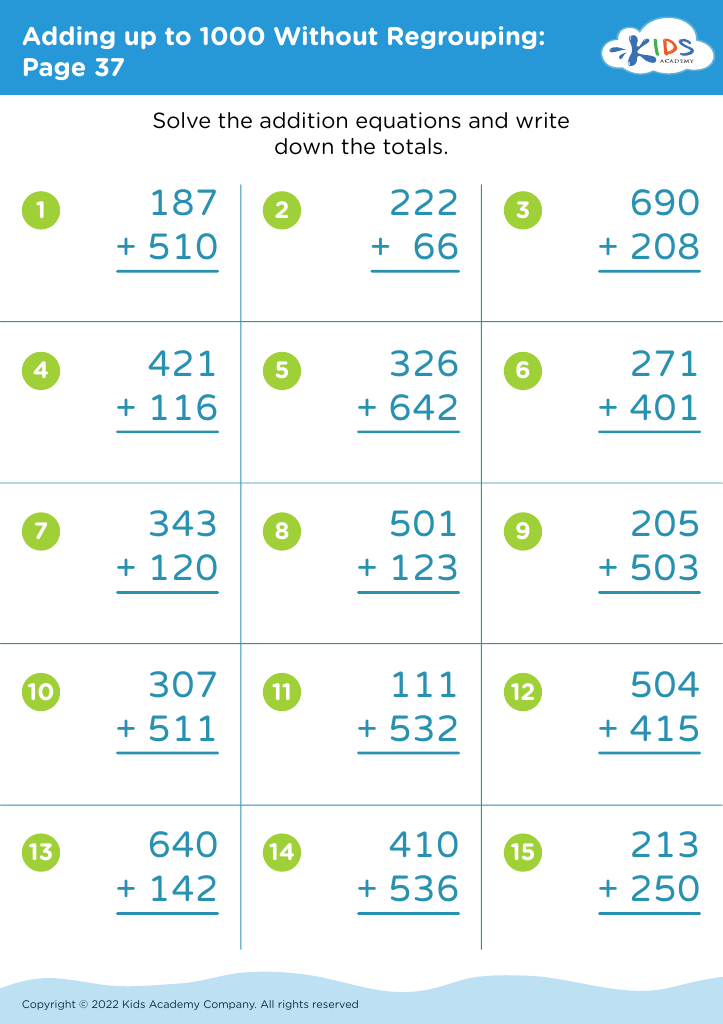
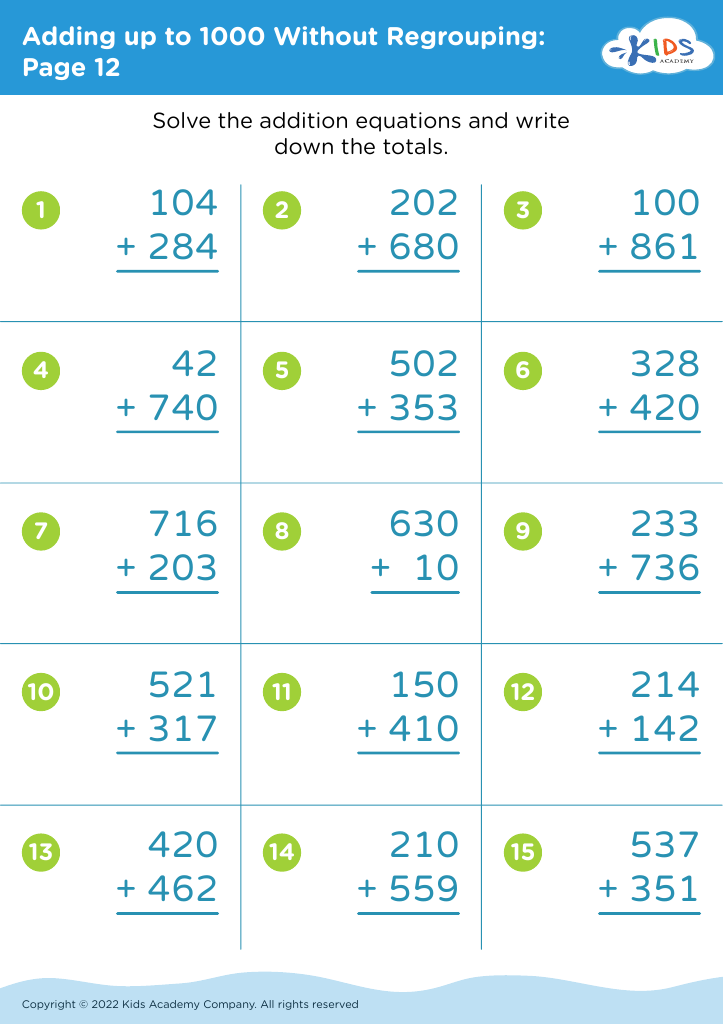
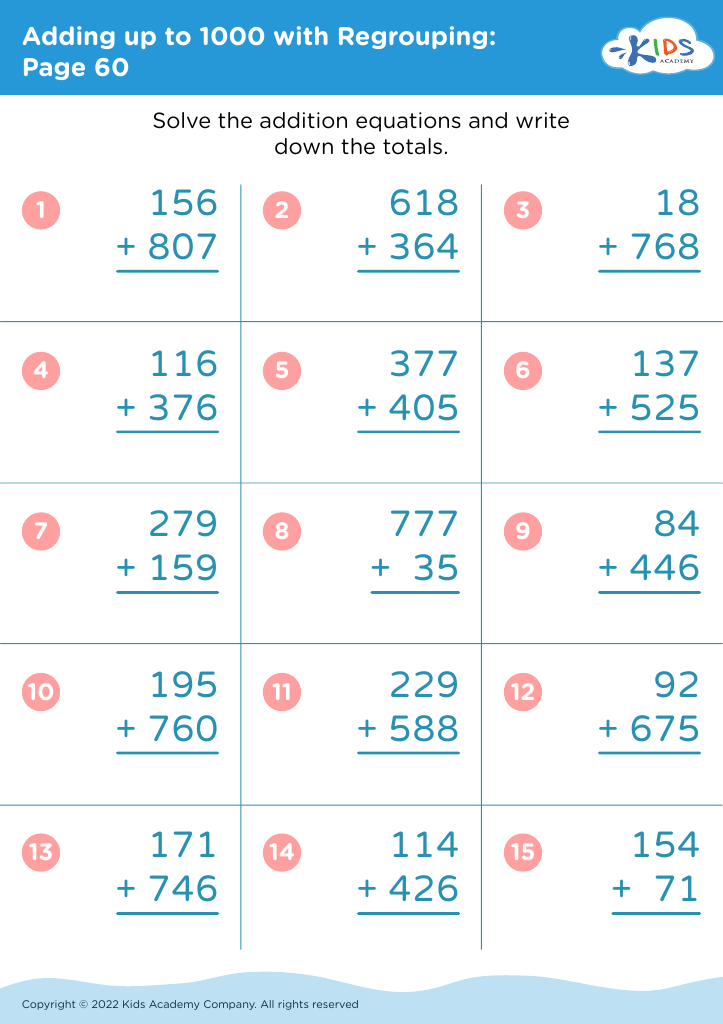
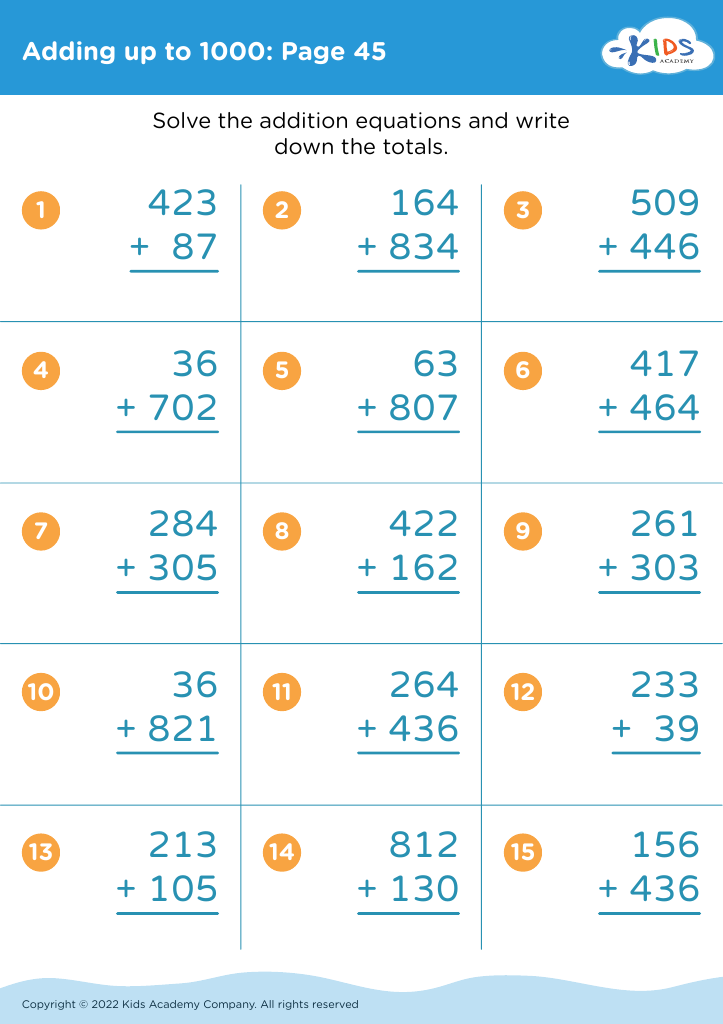



Teaching children how to follow instructions and engage in activities like "Adding up to 1000" is vital for several reasons, particularly for ages 7-9. At this developmental stage, children are sharpening their cognitive and social skills, and their ability to follow instructions is fundamental to their learning process.
First, following instructions enhances comprehension and critical thinking. When children can interpret and execute step-by-step directions, they become more independent learners. Mastery of these skills aids in their overall academic achievement and lays the groundwork for future learning experiences.
Second, activities like "Adding up to 1000" cultivate foundational math skills. Fluency in addition within a manageable range fosters confidence in handling larger numbers, preparing them for more complex arithmetic tasks ahead. This practical application enables them to see the relevance of mathematics in everyday contexts, enhancing their engagement.
Furthermore, the discipline of following instructions promotes patience, focus, and persistence—qualities essential for success in both academic and life challenges. Teaching these skills nurtures respectful communication and collaboration among peers, building a positive learning environment. Ultimately, when parents and teachers emphasize instruction-following and math fluency, they equip children with the necessary tools for lifelong learning and problem-solving.








