Fraction Addition Adding up to 1000 Worksheets for Ages 7-9
5 filtered results
-
From - To
Enhance your child's math skills with our Fraction Addition Adding up to 1000 Worksheets, specially designed for ages 7-9! These fun and interactive worksheets help young learners master fraction addition through engaging exercises and step-by-step instructions. Perfect for developing a deeper understanding of fractions and addition, these worksheets provide ample practice for students striving to boost their confidence and accuracy in math. Ideal for both classroom and home use, our expertly crafted resources align with educational standards, ensuring your child stays ahead of the curve. Start building a strong mathematical foundation today with Kids Academy!
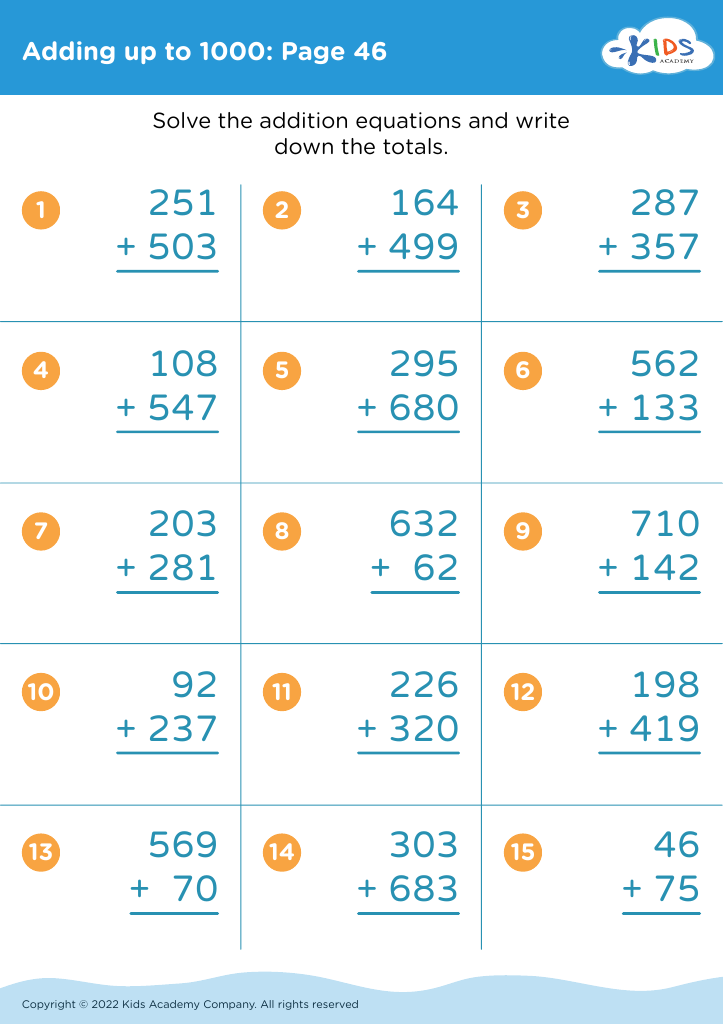
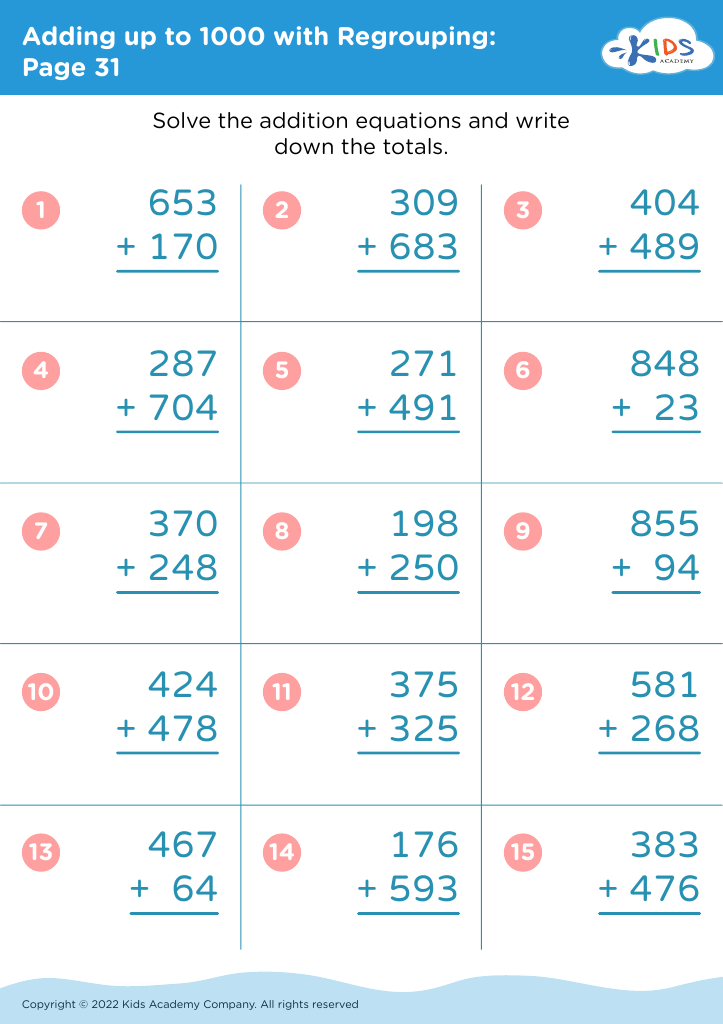
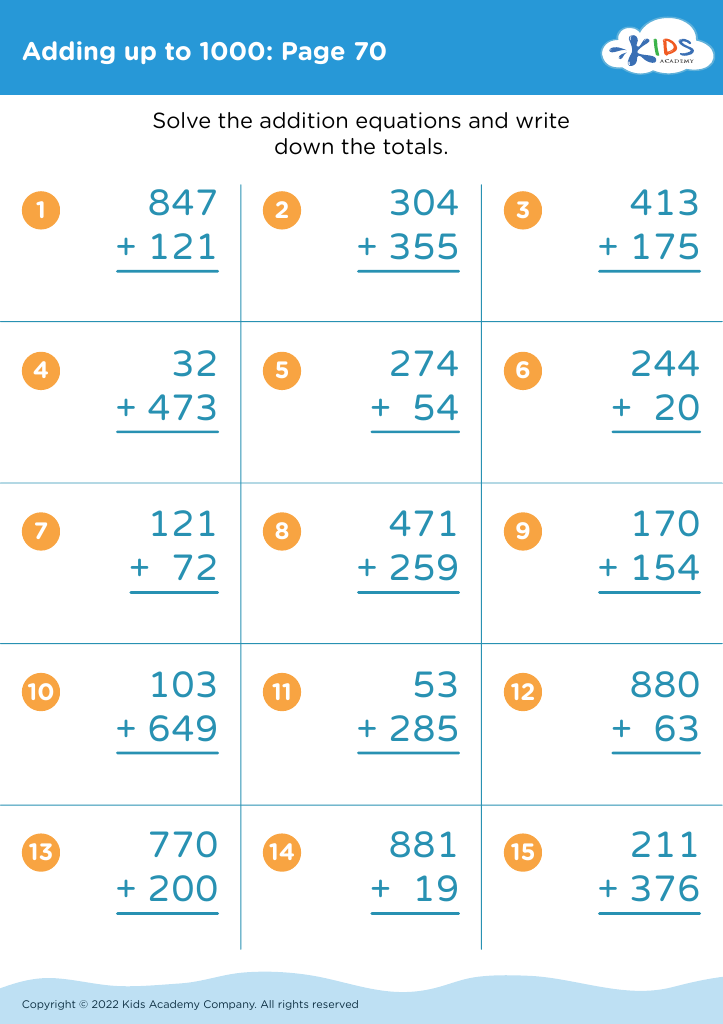
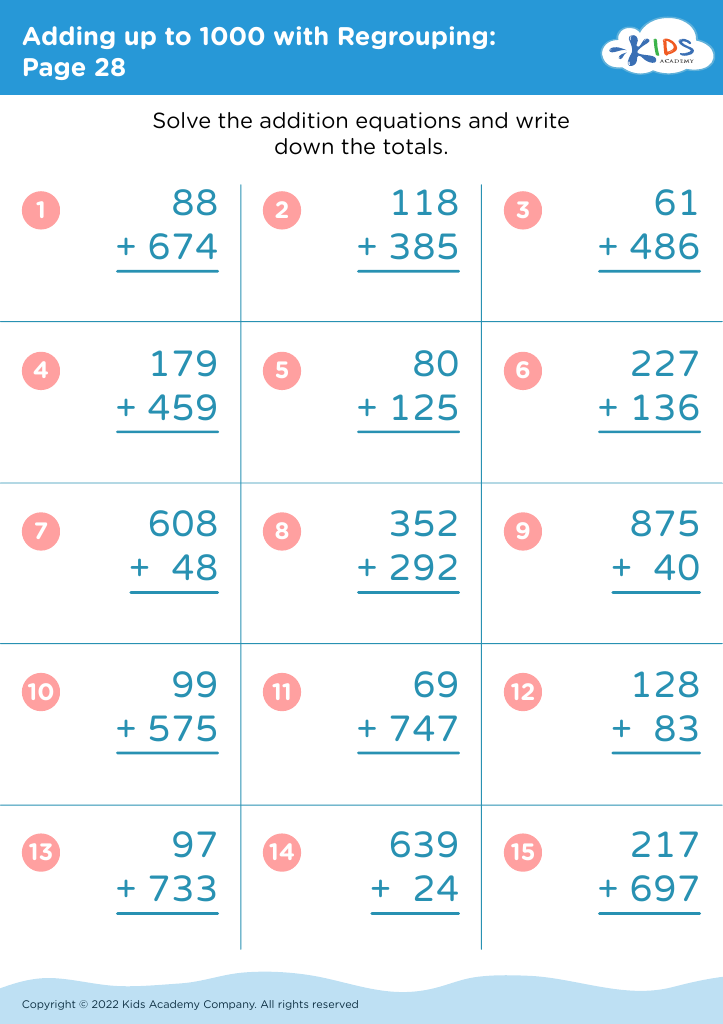
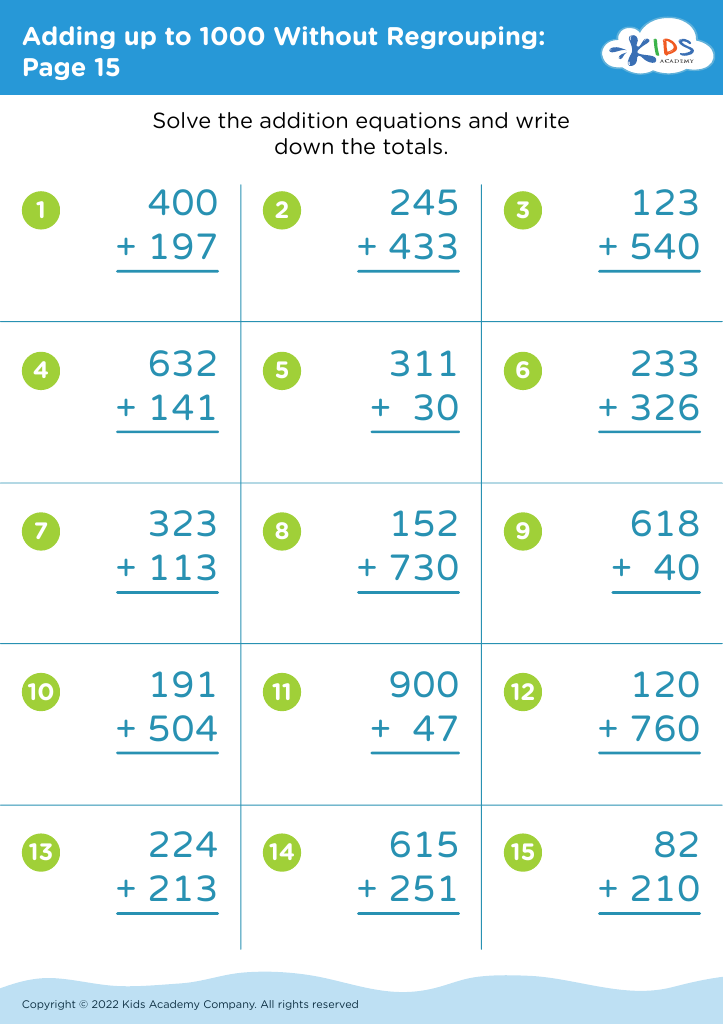



Fraction addition is a fundamental math skill that lays a crucial foundation for higher-level mathematics and everyday problem-solving. For children aged 7-9, understanding how to add fractions, especially those adding up to significant numbers like 1000, has several benefits. Firstly, it enhances their numerical fluency and develops a deeper understanding of the relationship between parts and wholes. This skill fosters logical thinking and precision, valuable not just in academics but also in everyday decision-making.
When children learn to add fractions correctly, they develop improved computational skills. Handling fractions that sum up to 1000 challenges them to become comfortable with larger numbers and more complex operations, boosting their arithmetic confidence. Additionally, this practice often involves skills such as finding common denominators and reducing fractions, which reinforces their overall math competency.
From a cognitive perspective, working with fractions promotes critical thinking. It requires students to identify patterns and make connections, fostering analytical skills that are transferable across various subjects.
Parents and teachers caring about fraction addition are investing in a child's future problem-solving abilities. These early math skills are predictors of academic success, and their mastery opens doors to advanced STEM (Science, Technology, Engineering, and Mathematics) careers. Nurturing these skills in young learners sets a strong groundwork for lifelong learning and curiosity.








