Mathematical reasoning Adding up to 1000 Worksheets for Ages 7-9
9 filtered results
-
From - To
Explore our "Mathematical Reasoning: Adding Up to 1000" worksheets designed for children aged 7 to 9. These engaging resources are perfect for young learners to develop their mathematical reasoning skills through fun, interactive activities. Each worksheet encourages students to solve problems, make connections, and apply their knowledge effectively. Covering various techniques such as estimation and addition strategies, these exercises not only sharpen computation skills but also enhance critical thinking abilities. Ideal for both classroom use and home learning, our worksheets are tailored to make mastering addition up to 1000 enjoyable and rewarding. Start boosting your child’s math confidence today!
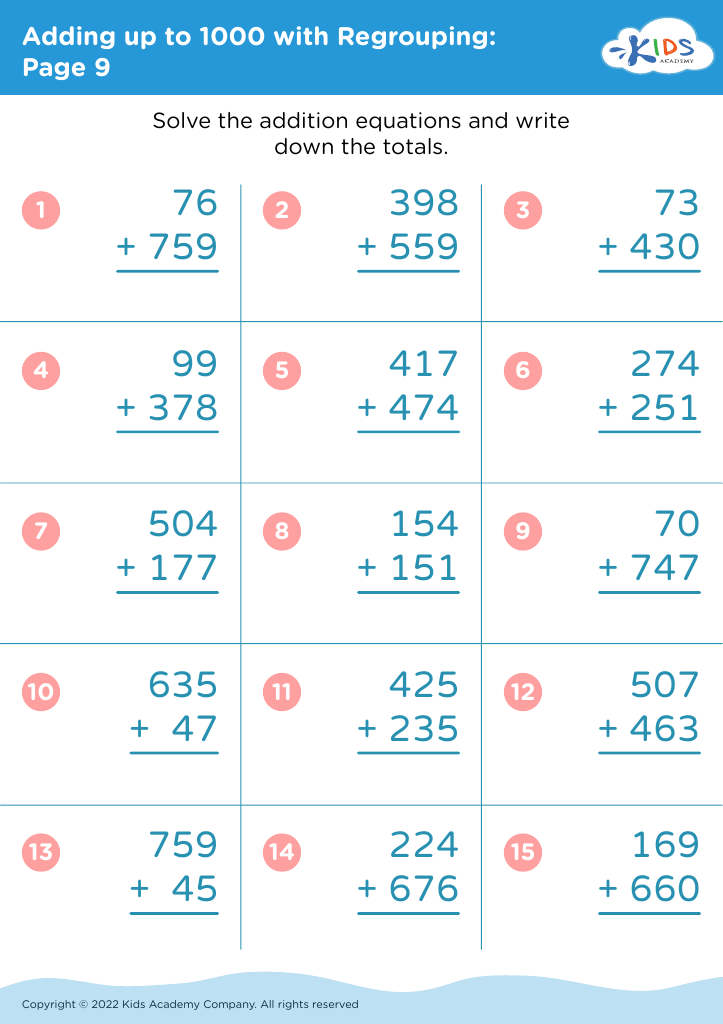
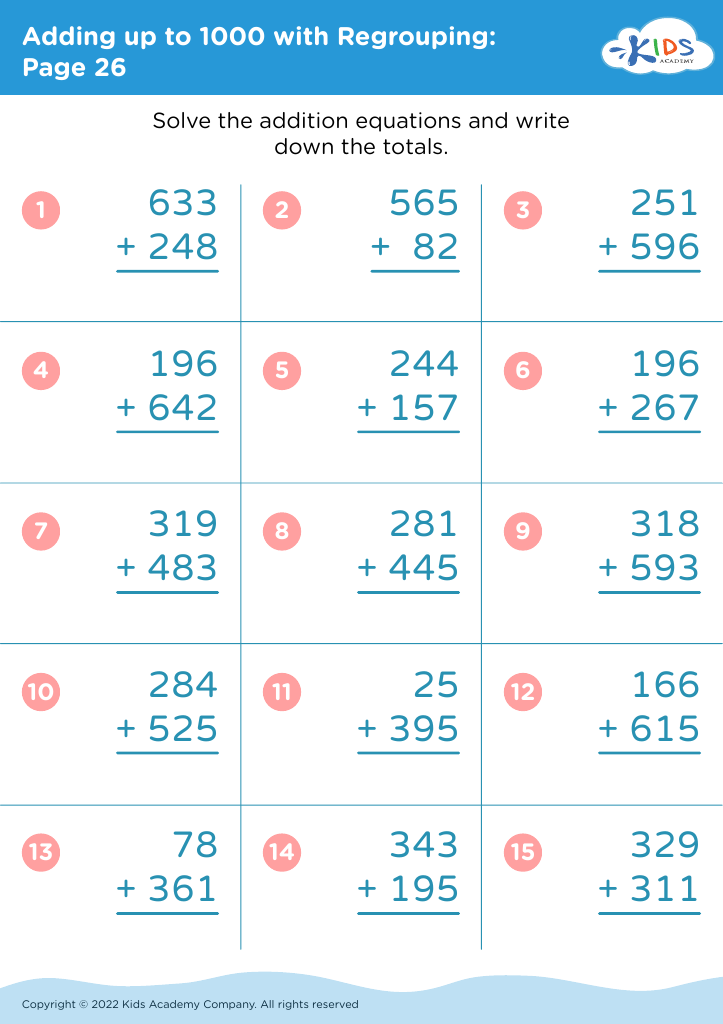
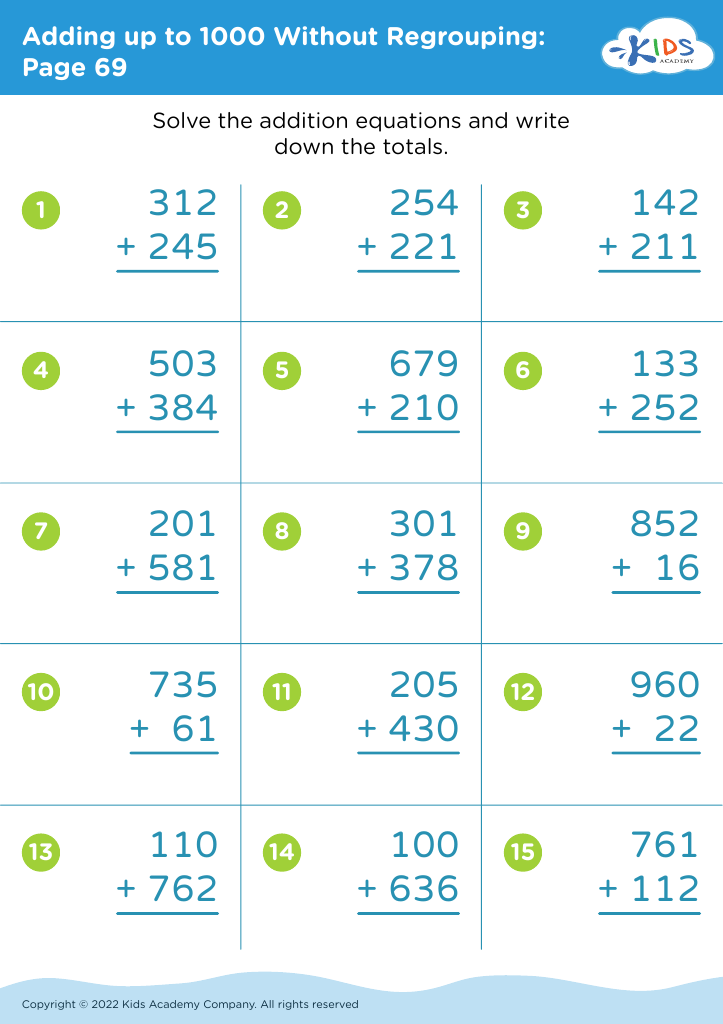
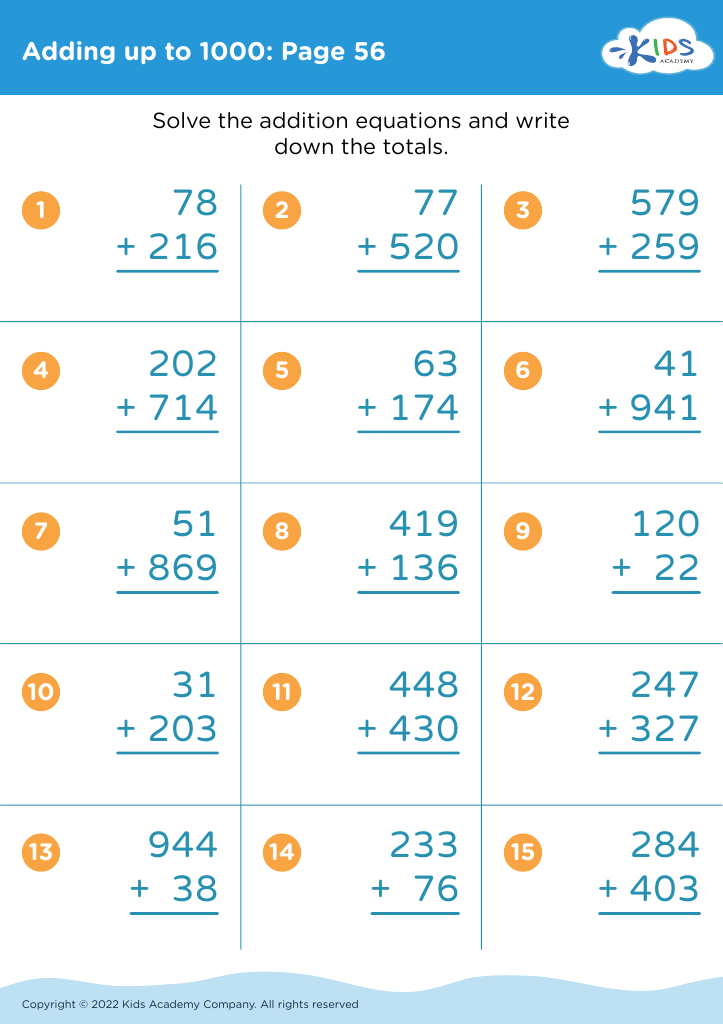
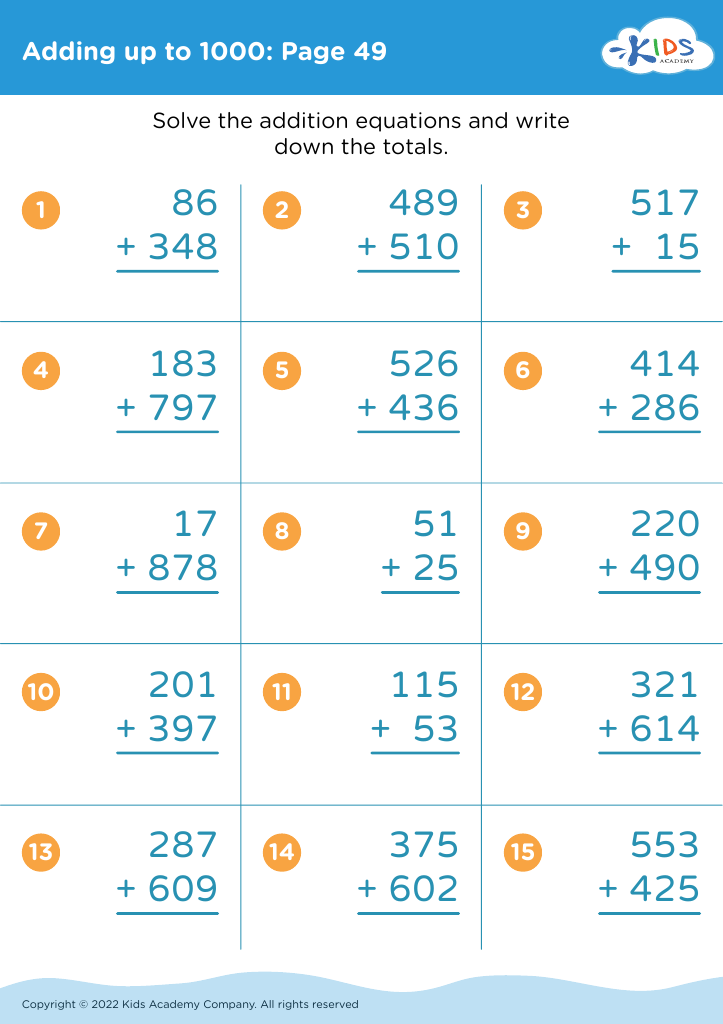
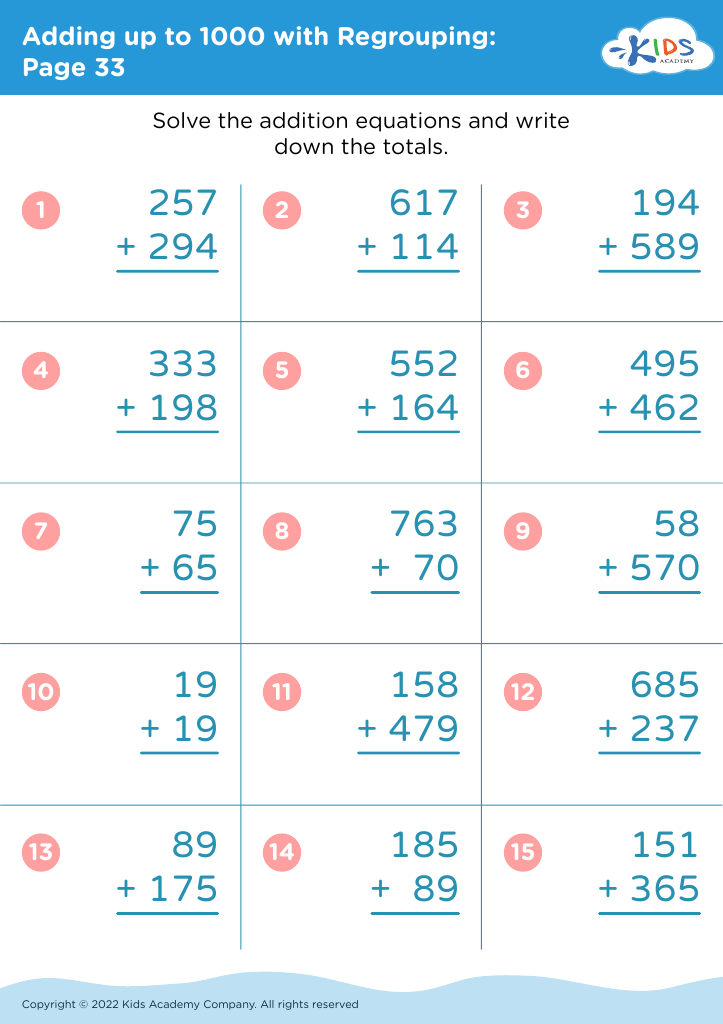
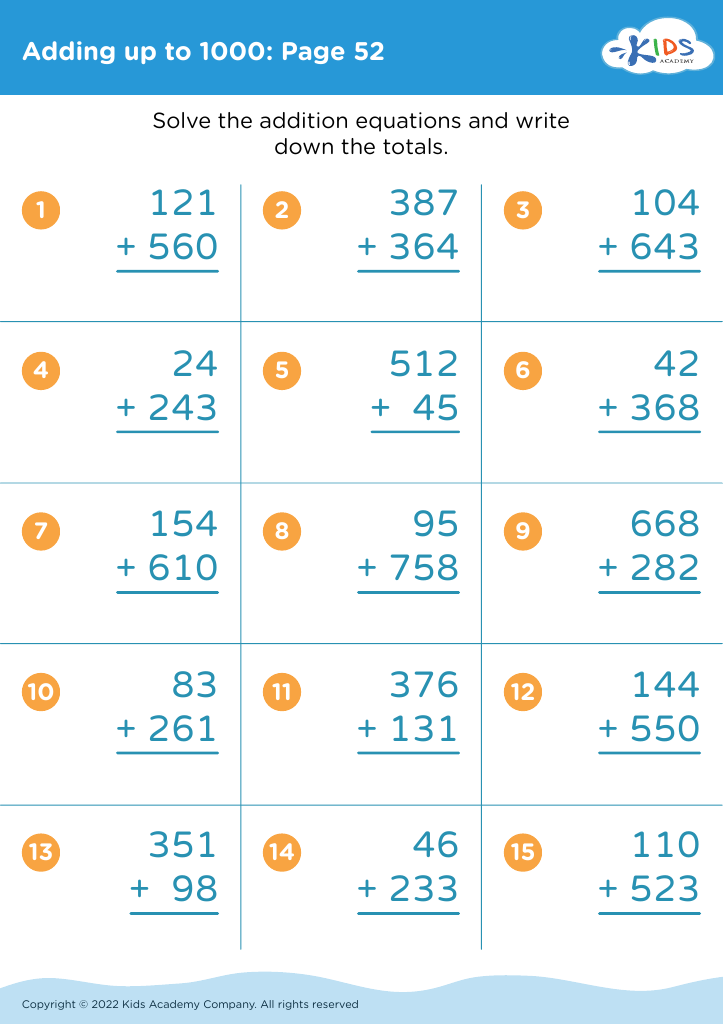
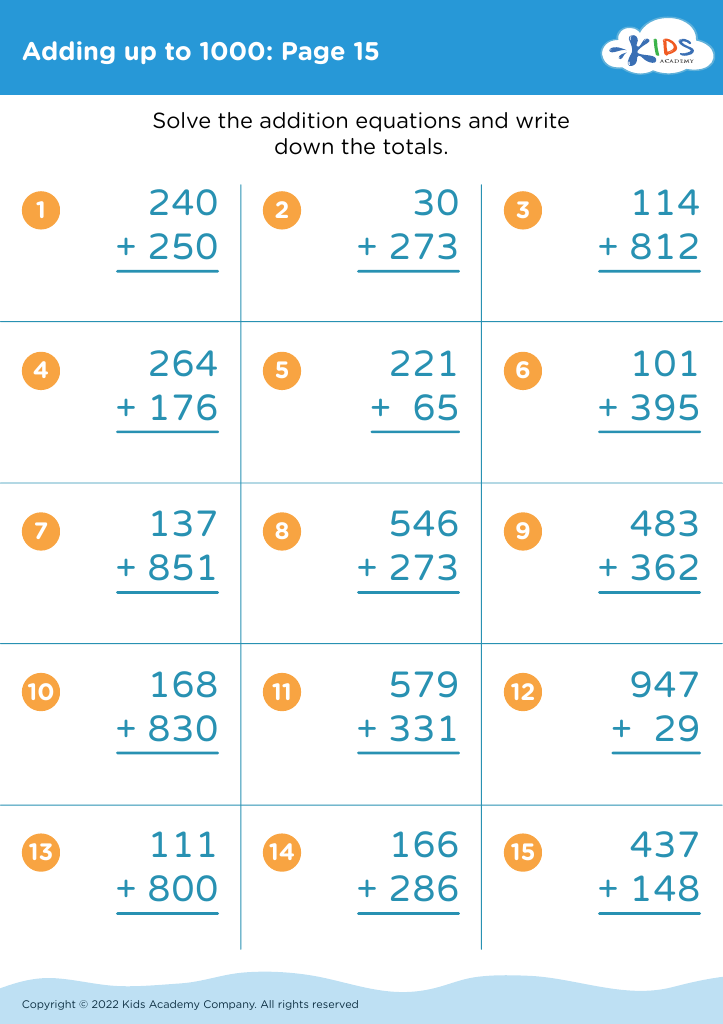
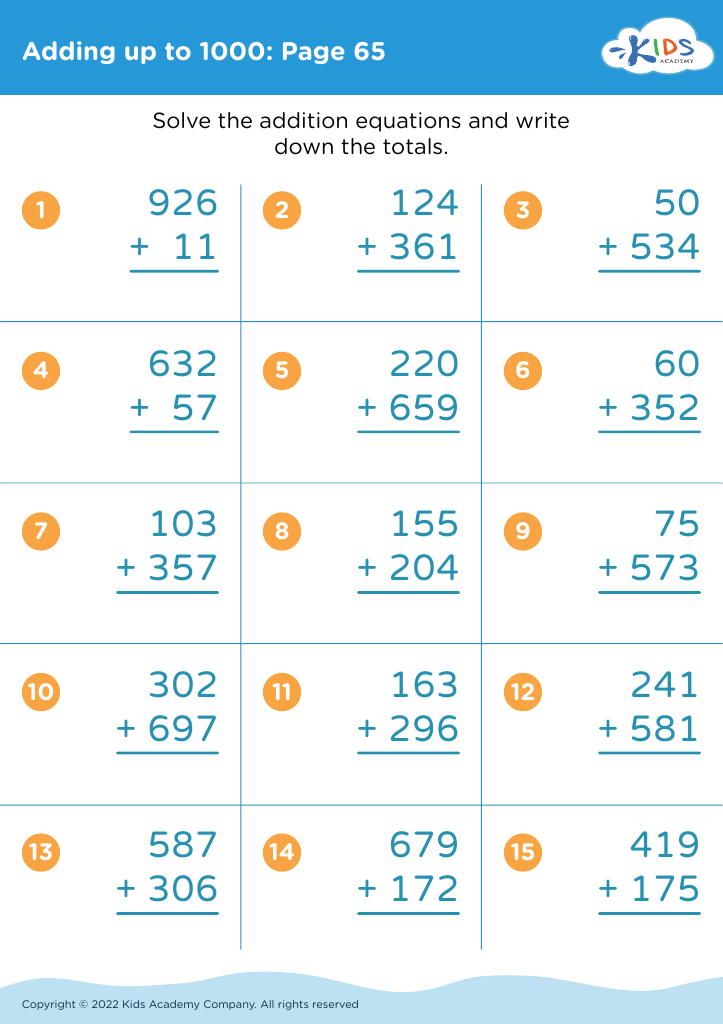



Mathematical reasoning, particularly in the context of adding up to 1000, is crucial for children aged 7-9 as it lays a strong foundation for their future mathematical understanding and problem-solving skills. At this stage, children develop cognitive skills that enable them to grasp more complex mathematical concepts, and enhancing their ability to reason through addition promotes critical thinking.
By learning to add numbers up to 1000, students not only practice basic arithmetic but also improve their number sense, which involves being comfortable and flexible with numbers. This skill set is vital for real-world applications, from managing money to planning time. Additionally, it helps them recognize patterns, understand place value, and develop strategies for mental mathematics—skills that will be advantageous in higher-level math.
For teachers and parents, fostering this kind of reasoning nurtures confidence and a positive attitude towards mathematics, transforming it from a daunting task to an engaging puzzle. By creating supportive environments for exploration and discussion around numerical relationships and problem-solving strategies, adults can encourage lifelong learning habits. Committing to strengthen children's mathematical reasoning equips them with essential tools for academic success and everyday life, ultimately supporting their overall cognitive development.








