
Number identification Adding up to 1000 Worksheets for Ages 7-9
3 filtered results
Difficulty Level
Grade
Age
-
From - To
Subject
Activity
Standards
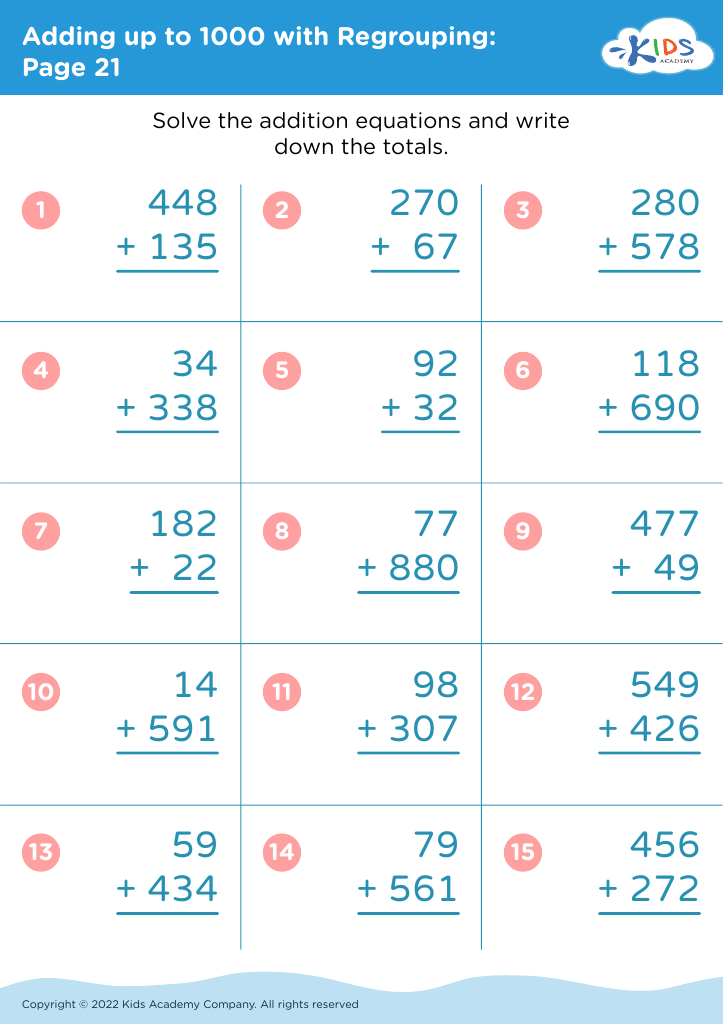
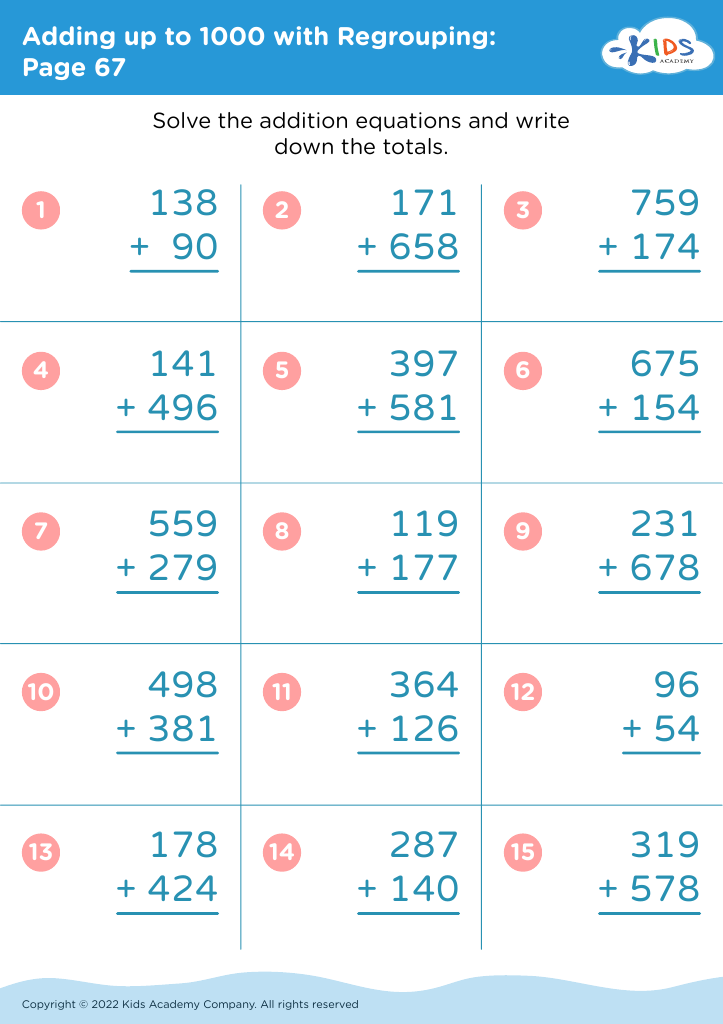
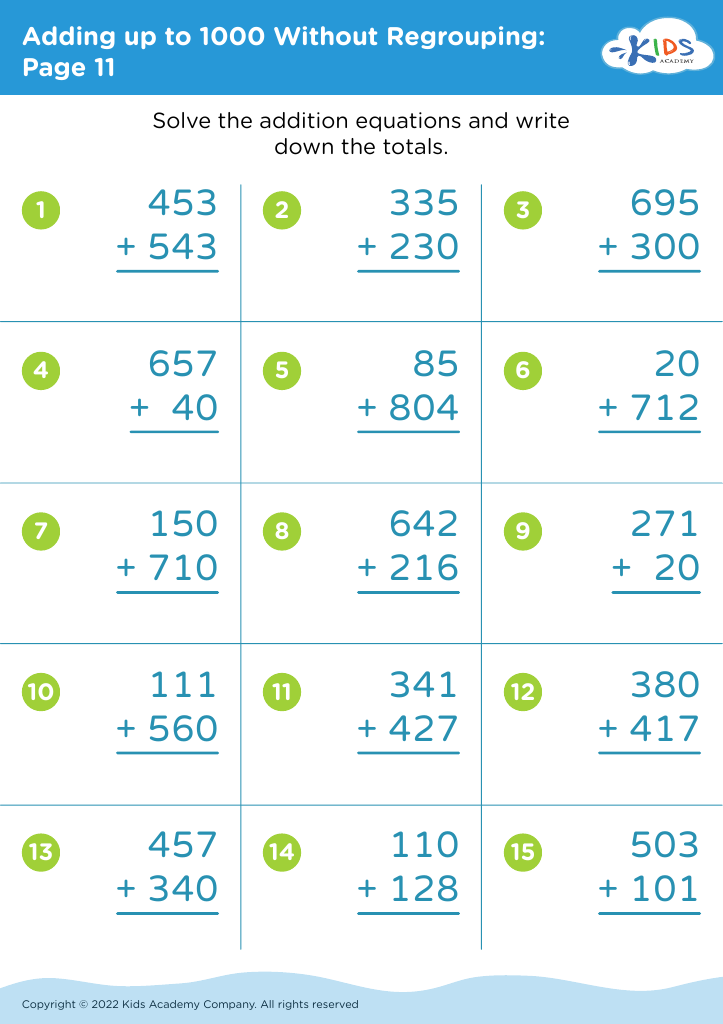
Our "Number Identification and Adding up to 1000 Worksheets for Ages 7-9" are expertly designed to help children develop vital math skills. These engaging worksheets enable young learners to identify and understand large numbers while practicing addition up to 1000. Perfect for children ages 7-9, they promote numerical confidence and provide a solid foundation for future math success. Each worksheet offers fun, interactive activities that combine education with enjoyment, ensuring students stay motivated and engaged. Whether used at home or in the classroom, these resources support skill-building through practice and play. Foster your child's mathematical ability today!
Favorites
With answer key
Interactive
Join Kids Academy for Free
Who is primarily going to use this learning content?



Number identification and addition skills up to 1000 are foundational for children aged 7-9, serving as a critical cornerstone for their future mathematical understanding and overall academic success. At this age, children are transitioning from basic counting to more complex arithmetic, and proficiency in recognizing and manipulating numbers helps them build confidence and problem-solving skills.
Firstly, mastering number identification up to 1000 enhances children's ability to understand the concept of quantity, place value, and the relationships between numbers. These skills are pivotal for grasping more advanced topics such as multiplication, division, and eventually, algebra. Children who are proficient in basic arithmetic operations are more likely to excel in later grades and standardized tests, which often form the gateway to advanced educational opportunities.
Secondly, strong numerical skills contribute to practical life competencies. From managing time and money to understanding measurements in real-world scenarios, addition and number recognition up to 1000 equips children with essential skills needed in their daily lives.
Lastly, early success in math fosters a positive attitude toward learning. Children who achieve proficiency experience a sense of accomplishment and are thus more motivated to tackle increasingly challenging concepts. Teachers and parents play a crucial role in supporting this developmental stage, laying down a solid foundation for lifelong numerical and analytical abilities.








