Number Recognition Adding up to 1000 Worksheets for Ages 7-9 - Page 2
31 filtered results
-
From - To
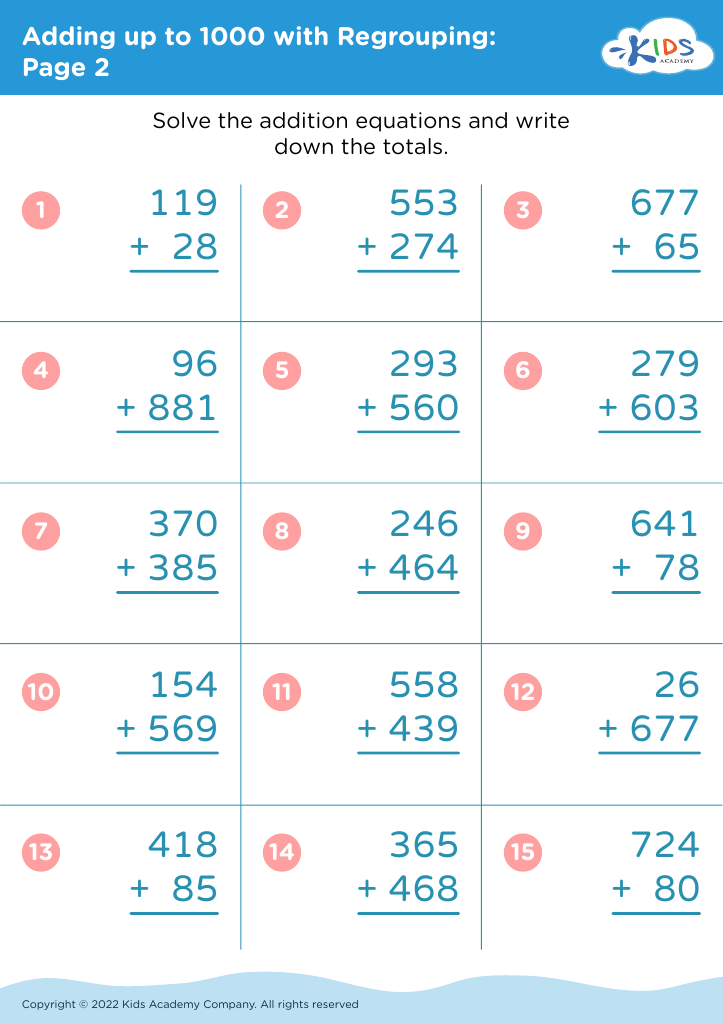
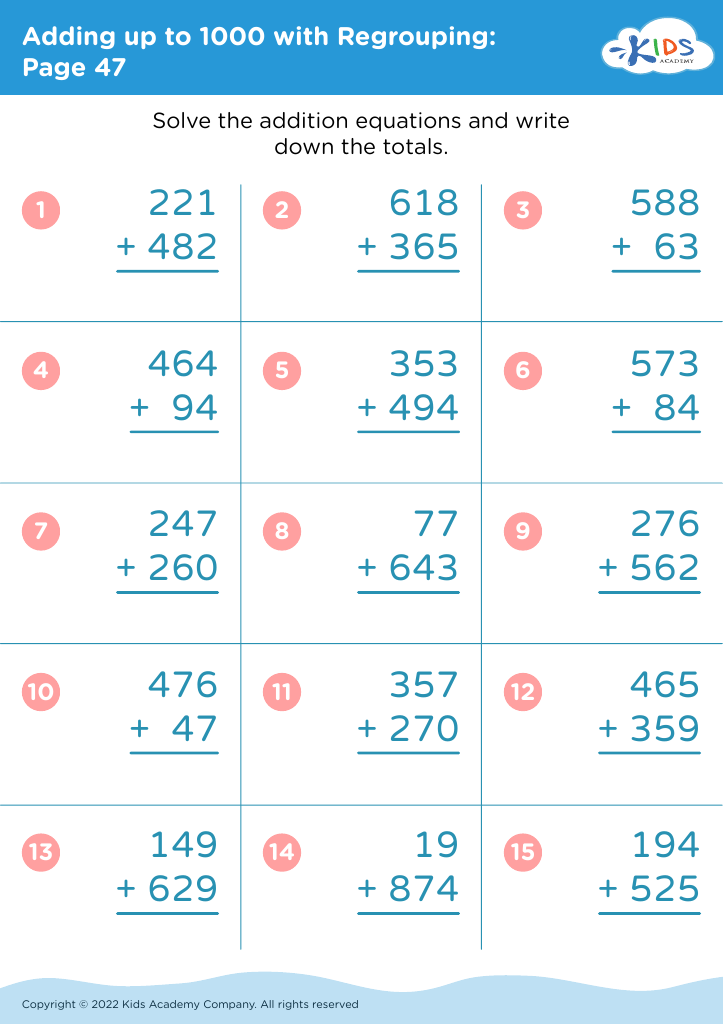
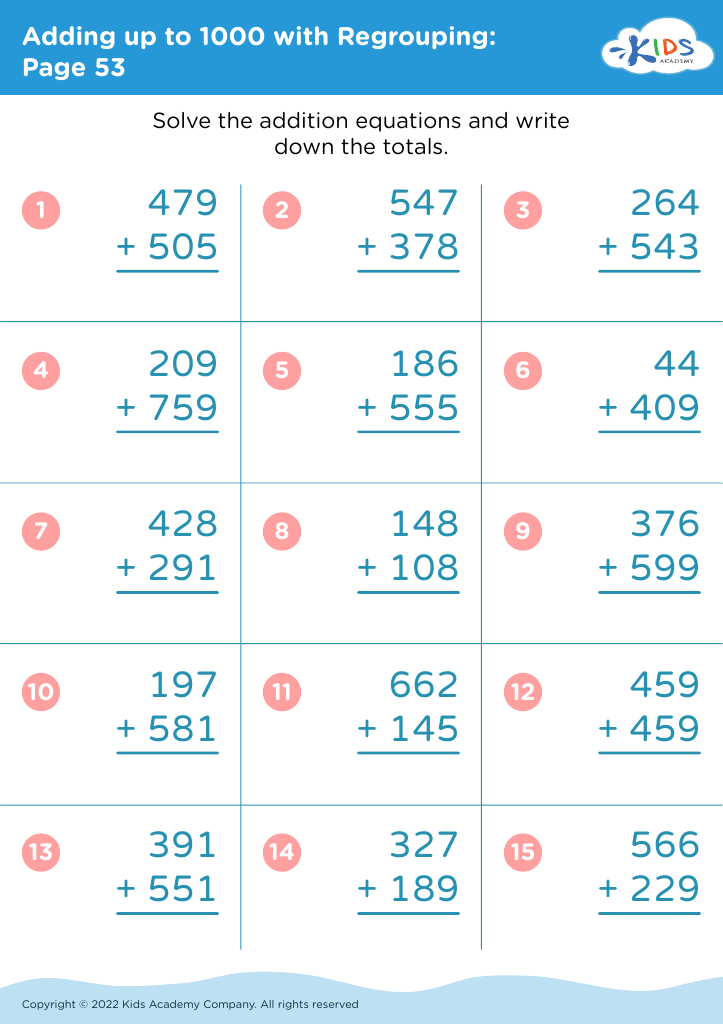
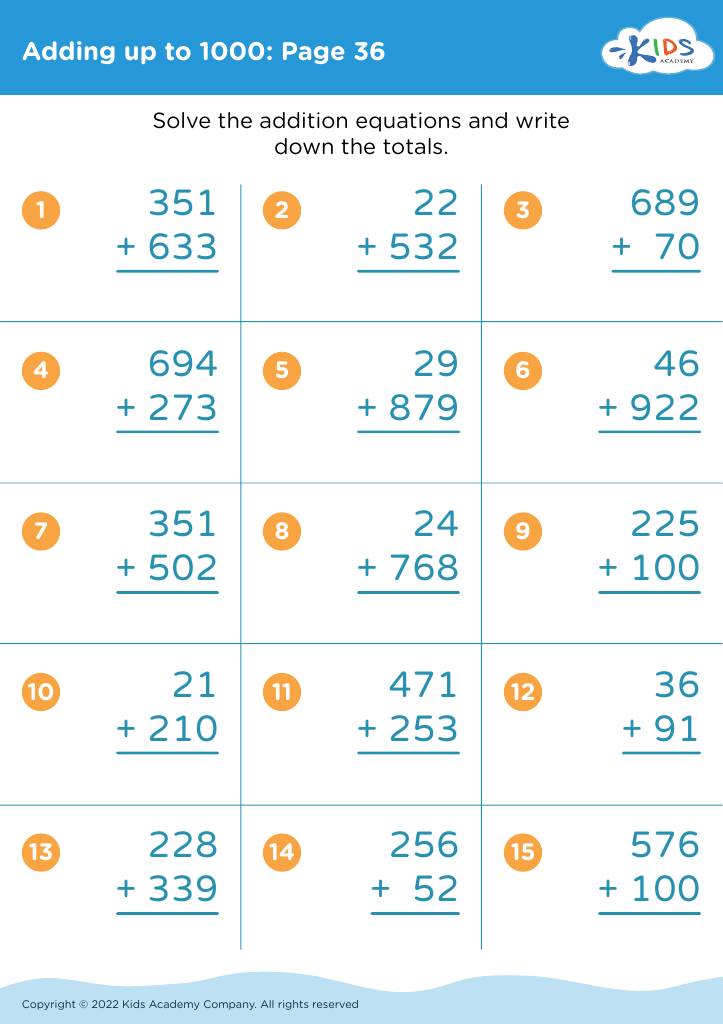
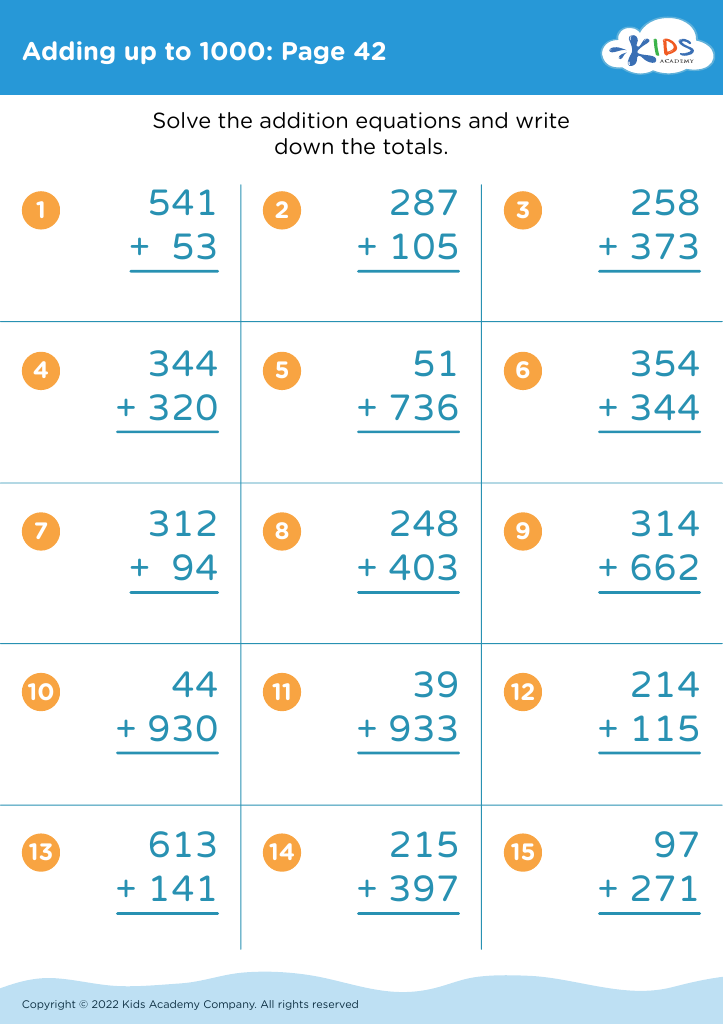
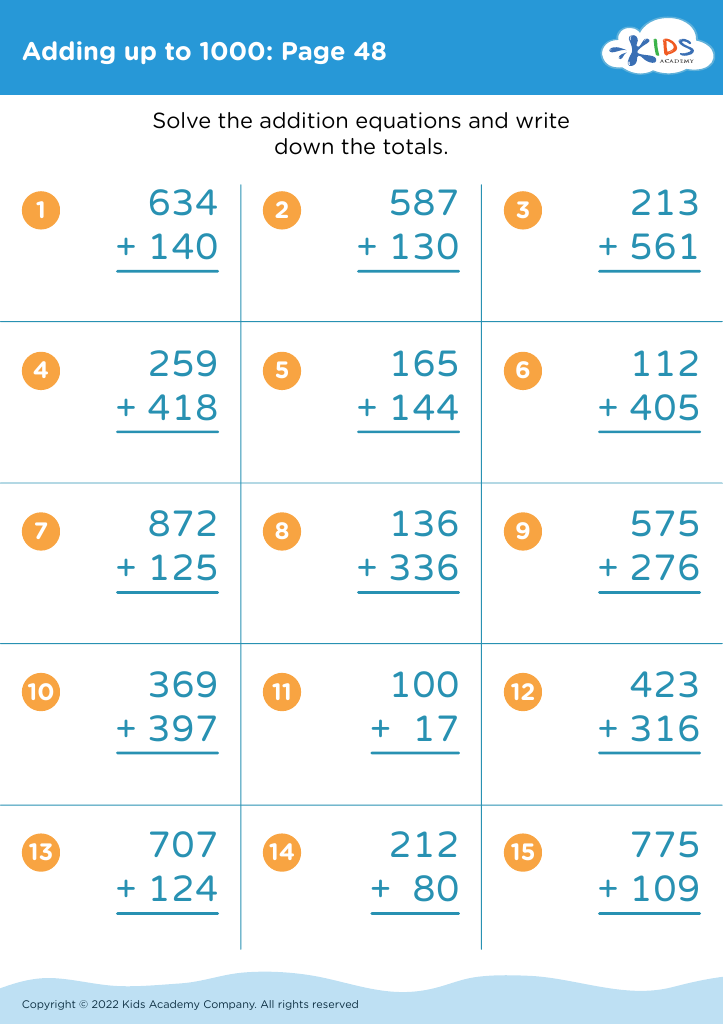
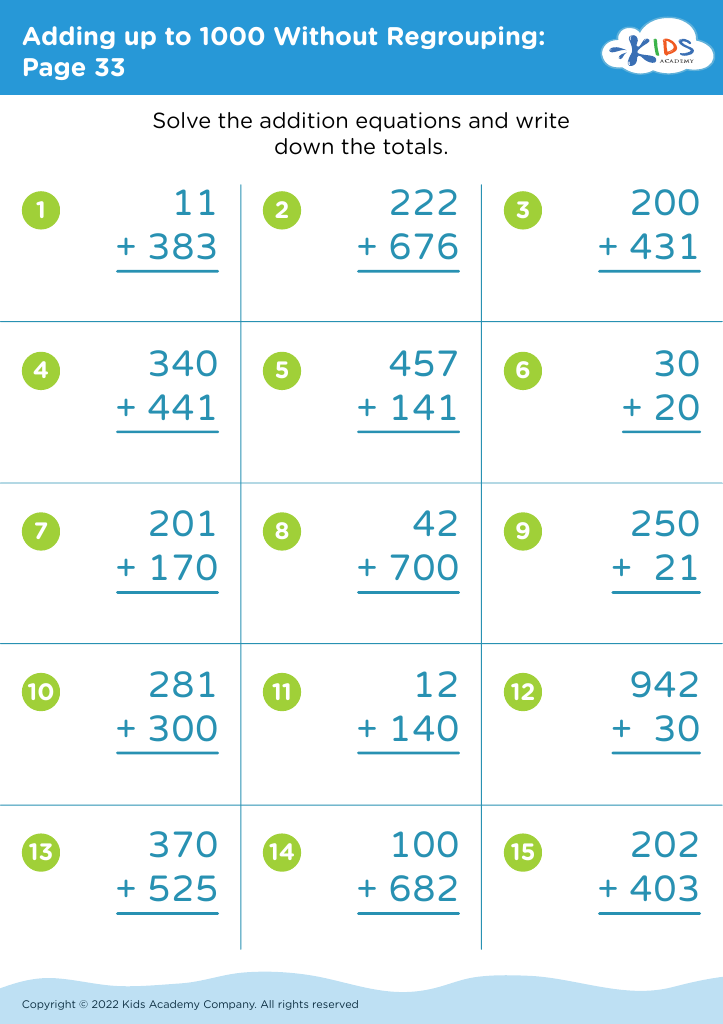




Number recognition is a fundamental skill for children aged 7-9, serving as a building block for more complex mathematical concepts. When parents and teachers prioritize number recognition and understanding numbers up to 1000, they lay a solid foundation for children's numerical literacy.
At this age, children begin to encounter multi-digit numbers, making it essential for them to confidently identify and work with numbers in various contexts—whether in measurement, currency, or daily tasks. Mastery of number recognition allows children to perform tasks like addition, subtraction, and understanding larger quantities.
This skill also fosters a positive attitude towards mathematics. Children who struggle with number recognition may experience anxiety or a lack of confidence in math, leading to disengagement. By supporting their development in this area, parents and teachers nurture a growth mindset and encourage perseverance.
Furthermore, number recognition aids in the infusion of math into everyday life, from understanding the significance of numbers in recipes to comparing items during shopping. Ultimately, mastering number recognition sets students up for future academic success in math and empowers them to engage fully in everyday problem-solving situations. Thus, cultivating this skill deserves attention and effort from both parents and educators.








