Practice writing numbers Adding up to 1000 Worksheets for Ages 7-9
3 filtered results
-
From - To
Explore our engaging "Practice Writing Numbers Adding Up to 1000" worksheets designed for children aged 7-9! These worksheets help young learners develop essential math skills by practicing number formation and understanding numerical order while adding up to 1000. Fun and interactive, our resources encourage kids to engage with numbers creatively, improving their writing and arithmetic skills simultaneously. Ideal for classroom or home use, the worksheets include a variety of activities that cater to different learning styles. Give your child the tools they need to master writing numbers with ease and confidence, making math both enjoyable and educational!
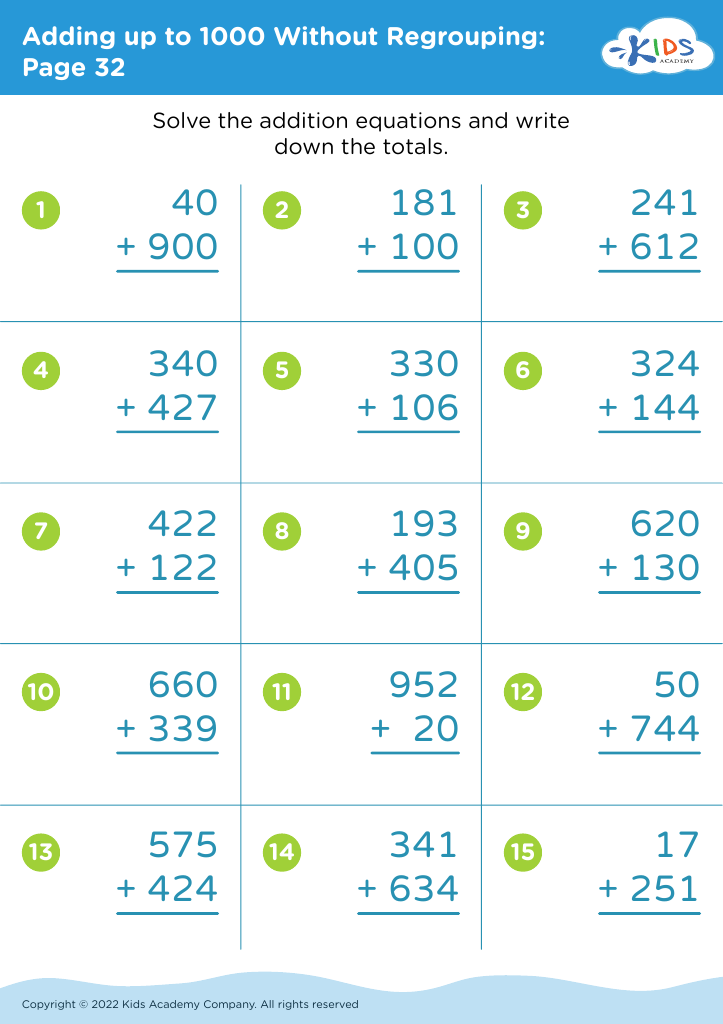
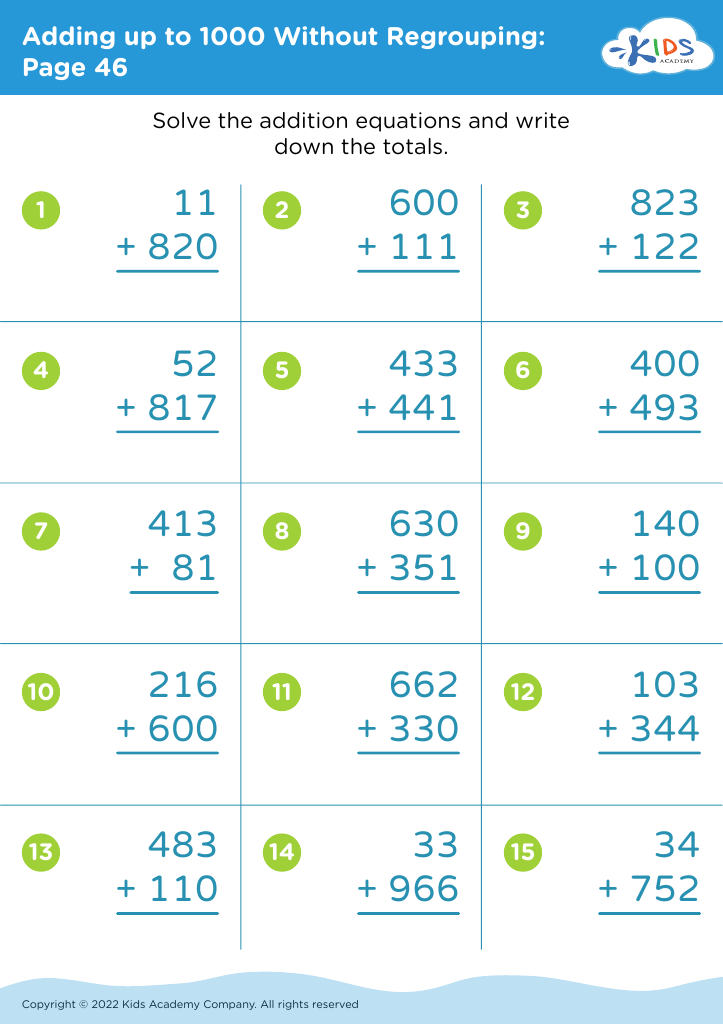
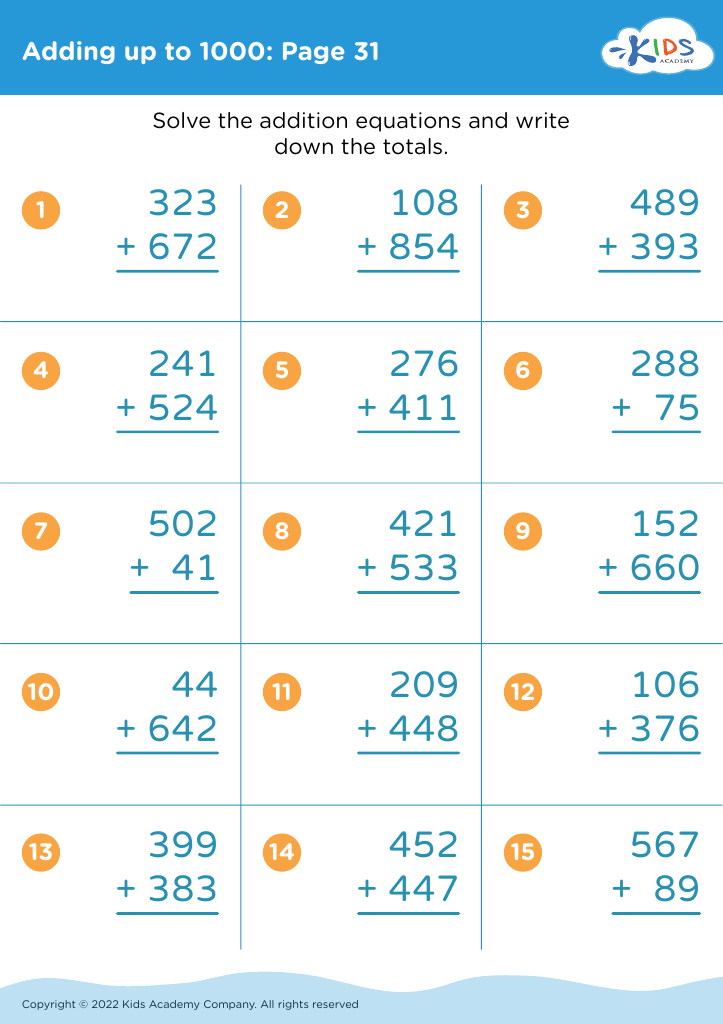



Practicing writing numbers that add up to 1000 is essential for children aged 7-9, as it reinforces foundational math skills critical for their academic growth. During these formative years, students transition from simple arithmetic to more complex concepts like addition, subtraction, and problem-solving. Encouraging practice with number combinations that total 1000 promotes number sense, increases fluency with addition, and helps children understand how different values relate to one another.
Moreover, writing numbers enhances fine motor skills and improves handwriting. This combination of skills supports overall literacy and lays the groundwork for exploring more advanced mathematical topics in the future. Teachers and parents should recognize that regular practice in composing number sentences fosters confidence in young learners, making them more comfortable with mathematics as they progress through school.
In a digital age, where reliance on technology is common, the tactile experience of writing numbers is more crucial than ever, as it engages children actively in their learning. By prioritizing number writing exercises, educators and caregivers can equip students with the tools needed for successful problem-solving in real-world situations, encouraging a positive attitude towards math as an essential life skill. Thus, reinforcing the importance of this practice in children's growth and education.








