Reading analog clocks Adding up to 1000 Worksheets for Ages 7-9
3 filtered results
-
From - To
Enhance your child's arithmetic and time-telling skills with our "Reading Analog Clocks & Adding Up to 1000 Worksheets" designed for ages 7-9. Our expertly crafted worksheets blend engaging exercises for reading analog clocks with comprehensive addition problems, helping young learners master essential math concepts. These activities offer a dynamic approach to learning, reinforcing their ability to read time accurately while boosting their addition skills up to 1000. Ideal for classroom use or at-home practice, our worksheets provide a fun and educational way to build confidence and proficiency in math for students aged 7-9. Download today and see the progress!
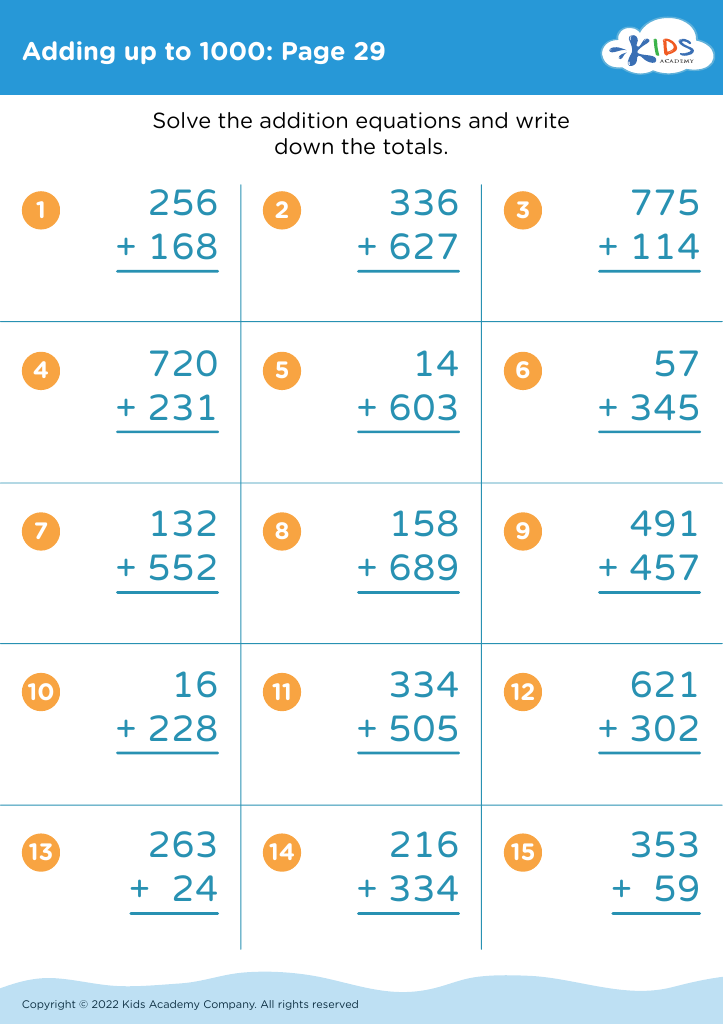
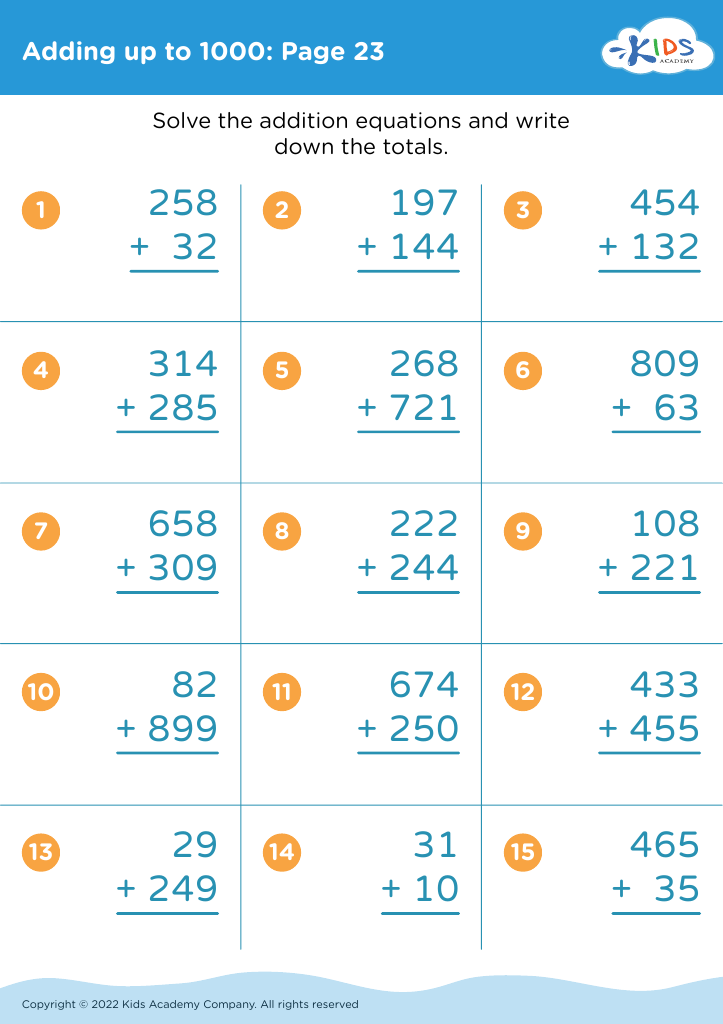
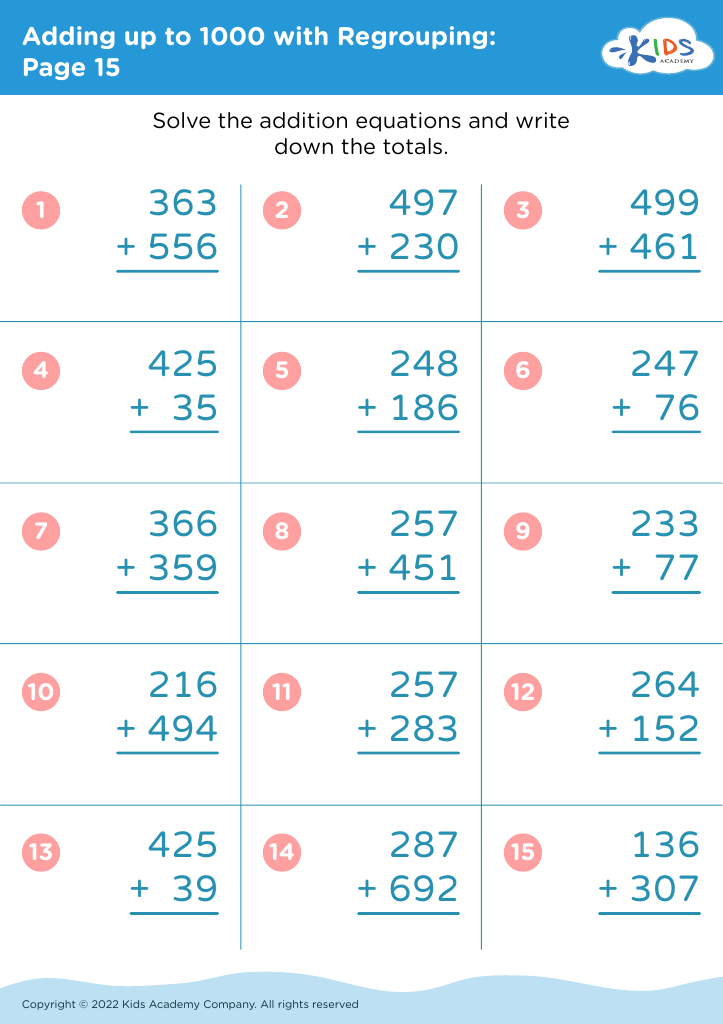



Understanding how to read analog clocks and adding up to 1000 are fundamental skills for children aged 7-9, forming a crucial part of their cognitive and academic development. Grasping the concept of time fosters a sense of order and punctuality in a child’s daily routine. It aids them in organizing their activities, understanding the flow of their day, and managing time effectively. Apart from daily practical usage, reading analog clocks strengthens their cognitive skills by encouraging them to synthesize visual information with the concept of time.
Learning to add up to 1000 significantly enhances mathematical competency, which is essential for tackling more complex mathematical concepts in the future. This skill serves as a building block for understanding arithmetic operations like addition, subtraction, multiplication, and division. It also lays the groundwork for future problem-solving and critical thinking.
Both skills go beyond academics; they build confidence. When children grasp these concepts at a young age, they are more likely to face future academic challenges with a positive attitude and persistence. For teachers and parents, investing time in honing these skills in children aged 7-9 means laying a solid foundation for their lifelong learning journey, equipping them to excel in everyday tasks and more complex academic pursuits.








