Recognize patterns Adding up to 1000 Worksheets for Ages 7-9
6 filtered results
-
From - To
Explore our "Recognize Patterns Adding Up to 1000 Worksheets" designed for children aged 7-9! These engaging worksheets help young learners identify and understand numerical patterns as they work towards mastering addition skills up to 1000. Through a variety of fun activities and exercises, students will develop critical thinking and problem-solving abilities while enhancing their mathematical knowledge. Tailored for early grade students, our worksheets encourage a hands-on learning experience that promotes confidence and comprehension in math. Perfect for classroom use or at-home practice, these resources are essential for building a solid foundation in arithmetic. Discover the joy of learning today!
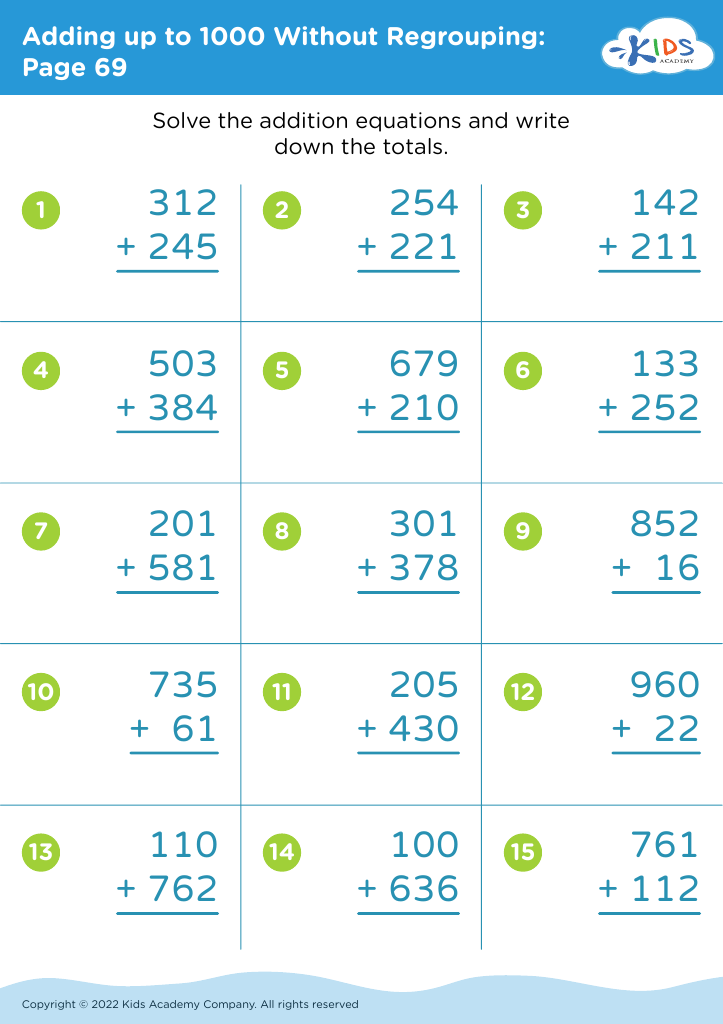
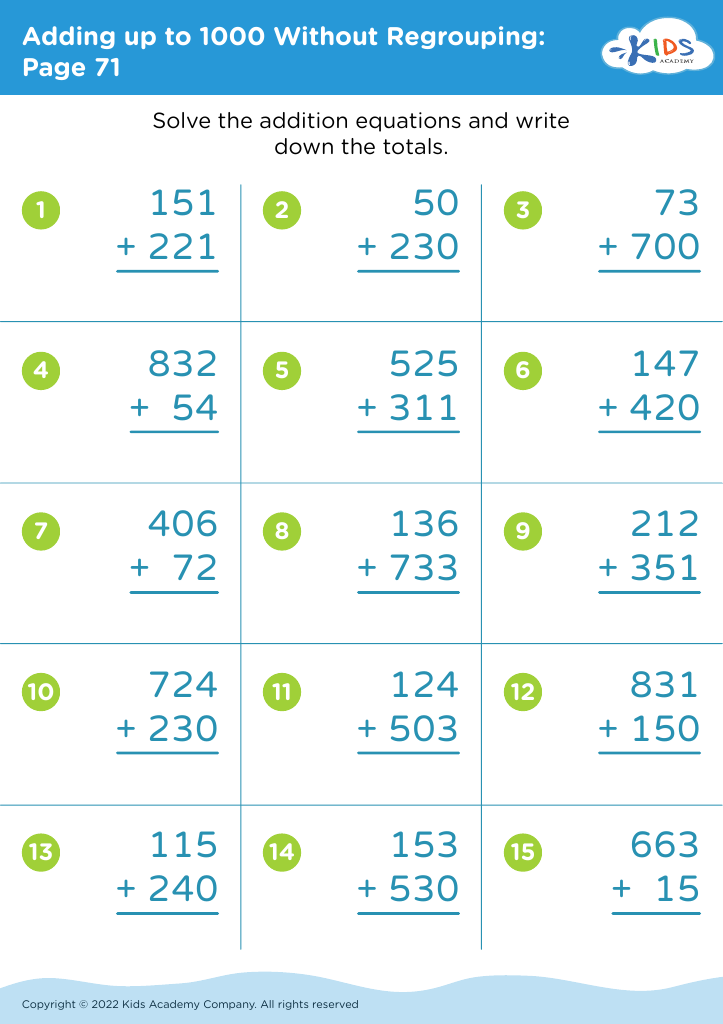
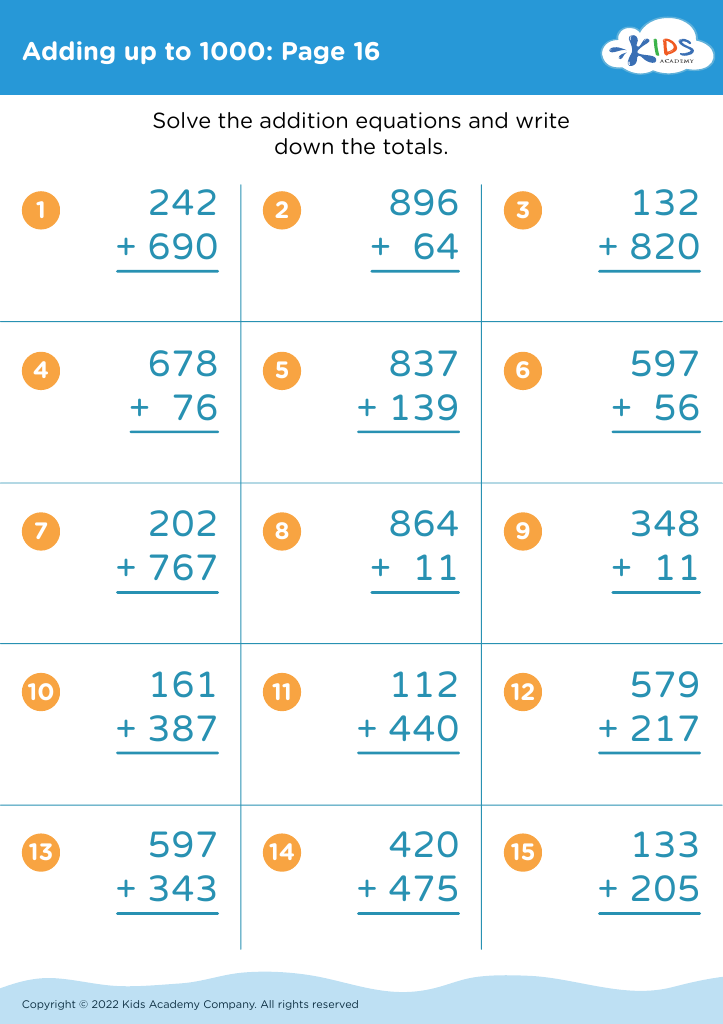
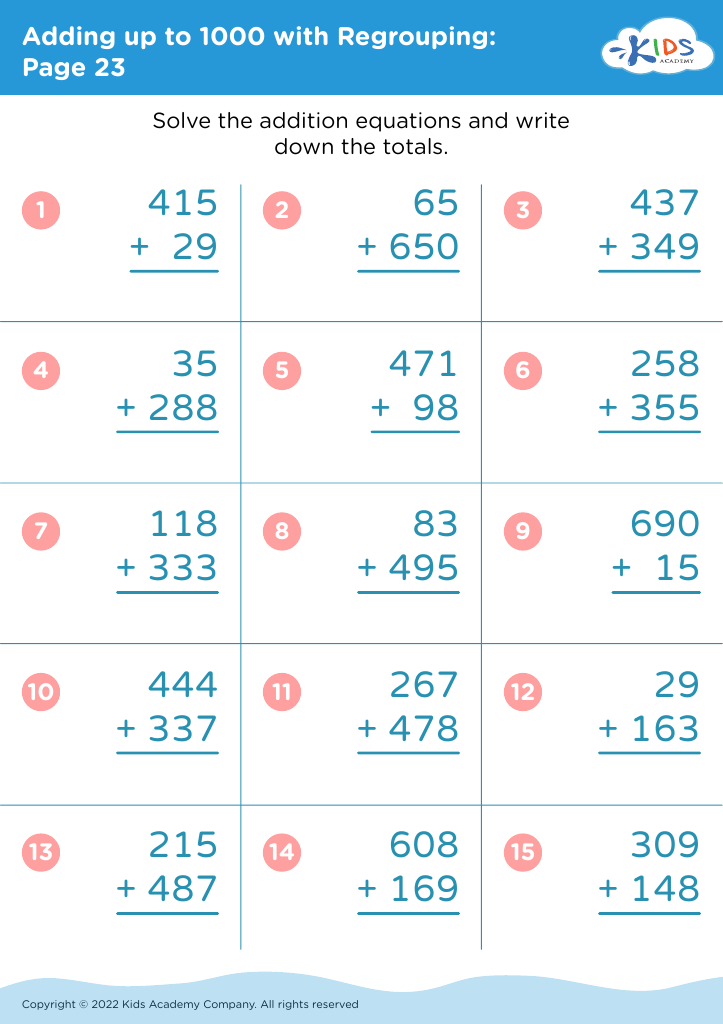
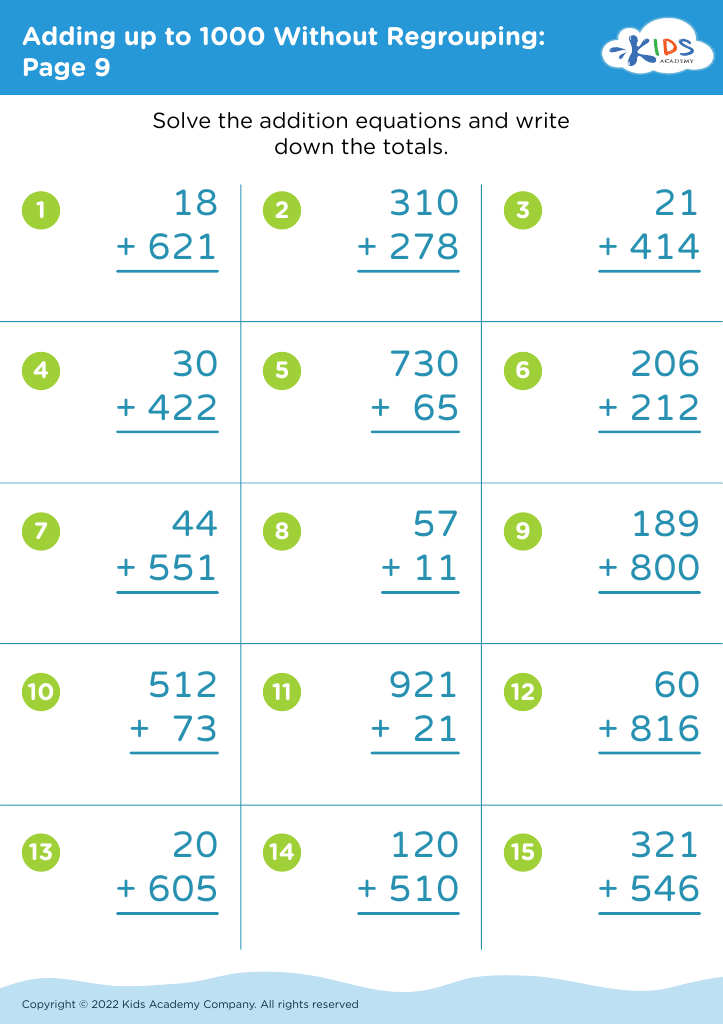
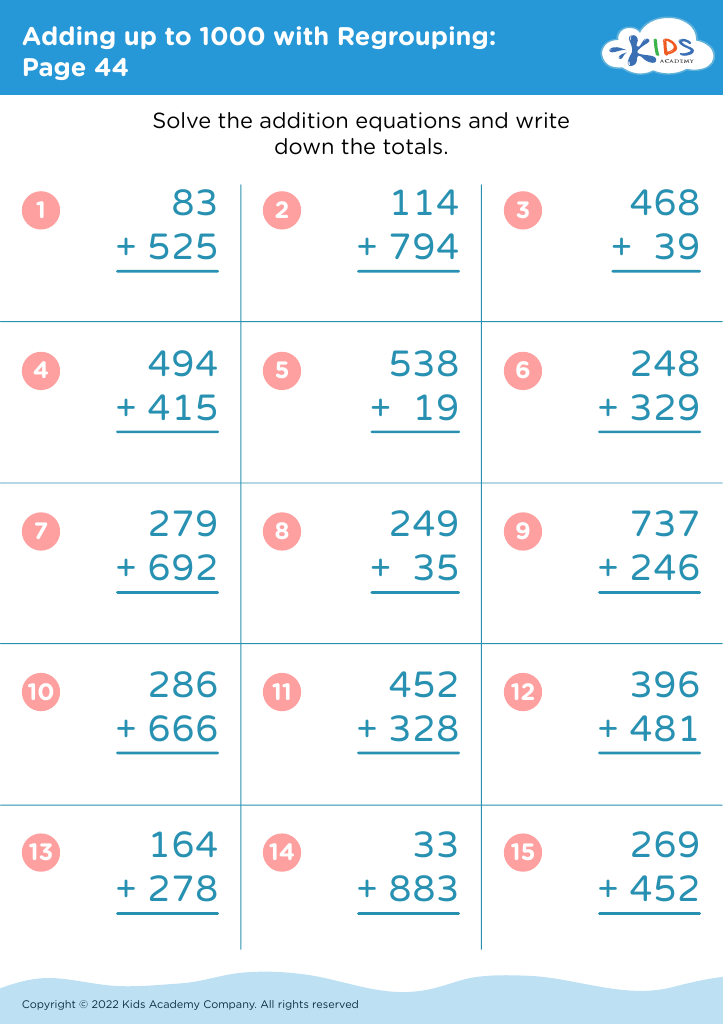



Recognizing patterns in mathematics, especially when adding numbers up to 1000, is essential for children aged 7-9 as it lays the groundwork for advanced problem-solving skills. Understanding patterns helps young learners develop a sense of number relationships and enables them to approach addition in an efficient, strategic manner.
When students recognize patterns, such as linear sequences or groupings (like sums of 10s, 50s, or 100s), they can simplify complex addition problems, which builds their confidence. For example, knowing that 950 + 50 equals 1000 or observing that adding two numbers with the same tens digit will lead to easily predictable results encourages mental math and number fluency.
Moreover, these skills have broader applications beyond math; they enhance critical thinking and reasoning abilities applicable to various subjects. When teachers and parents support the recognition of patterns, they foster a growth mindset in children, demonstrating that learning is a process where strategic thinking matters. Finally, early mastery of these skills promotes a strong mathematical foundation, setting the stage for more complex topics in later grades, such as algebra, where pattern recognition becomes even more crucial.








