Shape Recognition Adding up to 1000 Worksheets for Ages 7-9
11 filtered results
-
From - To
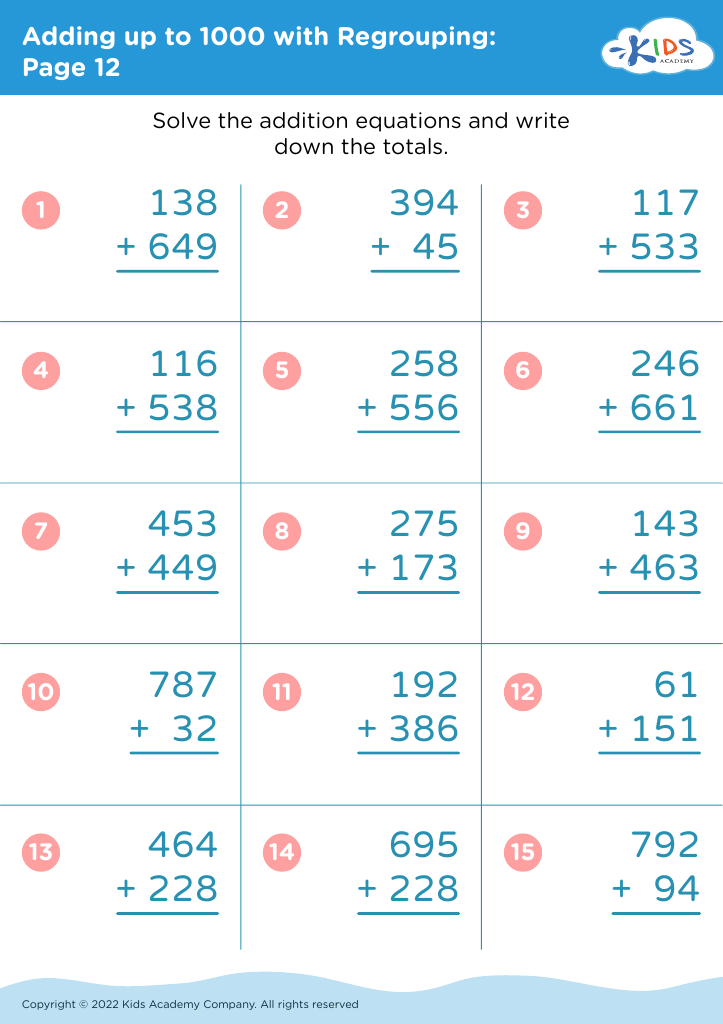
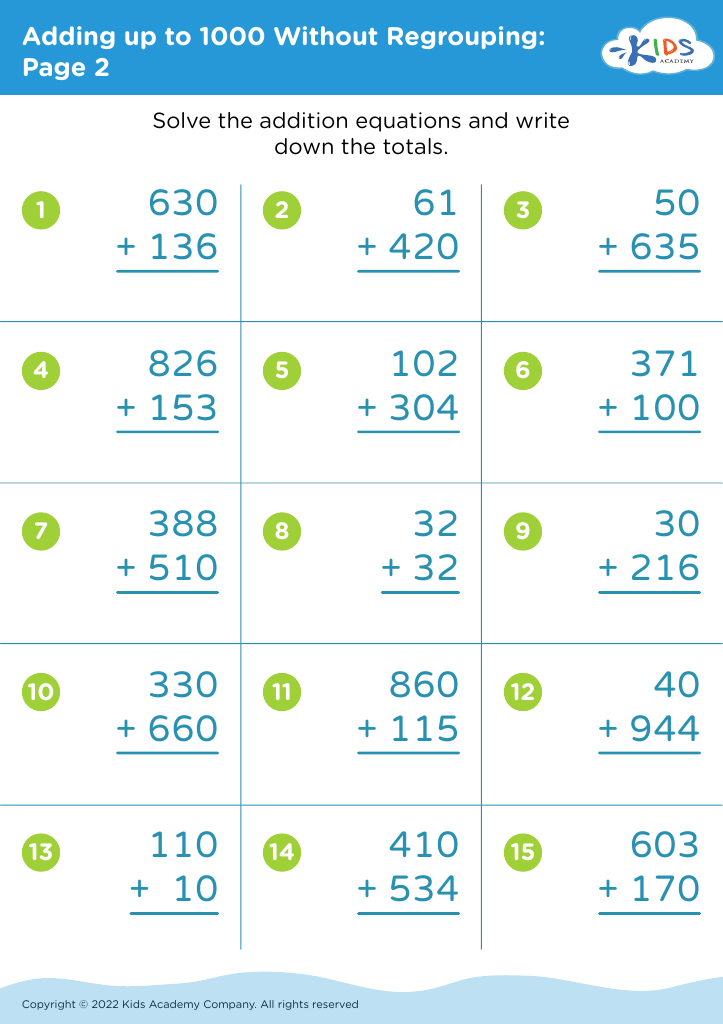
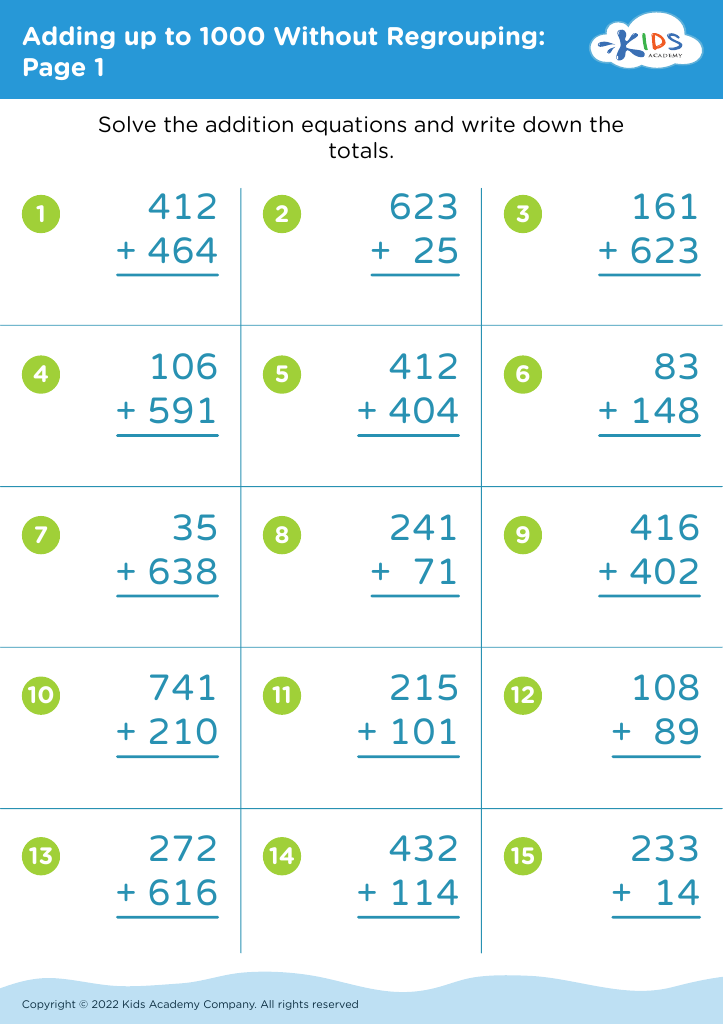
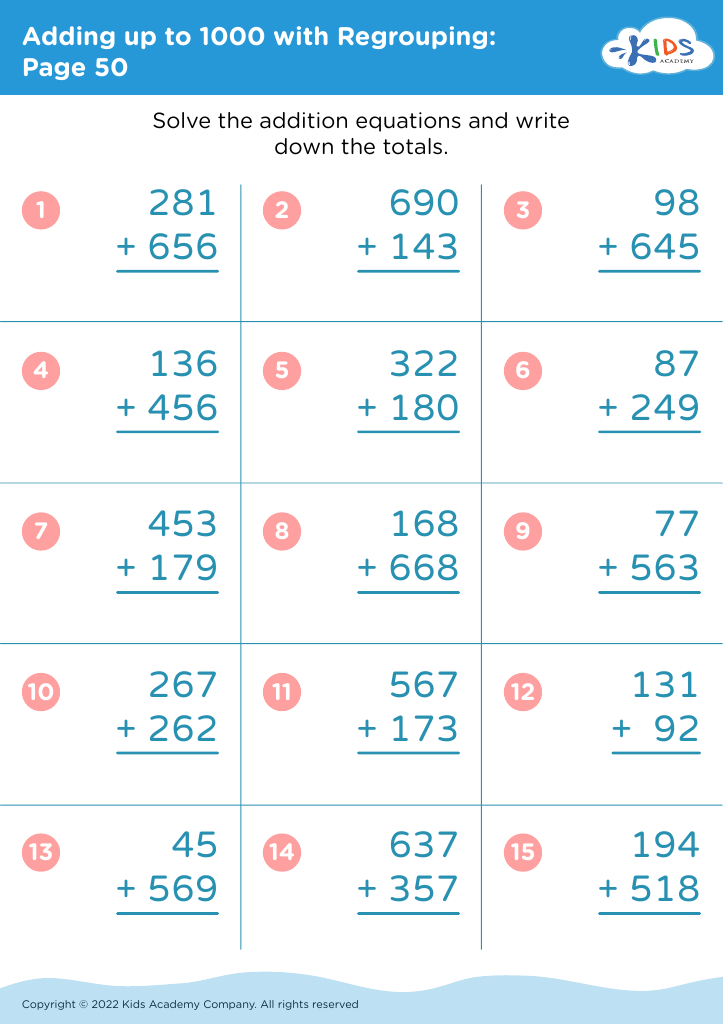
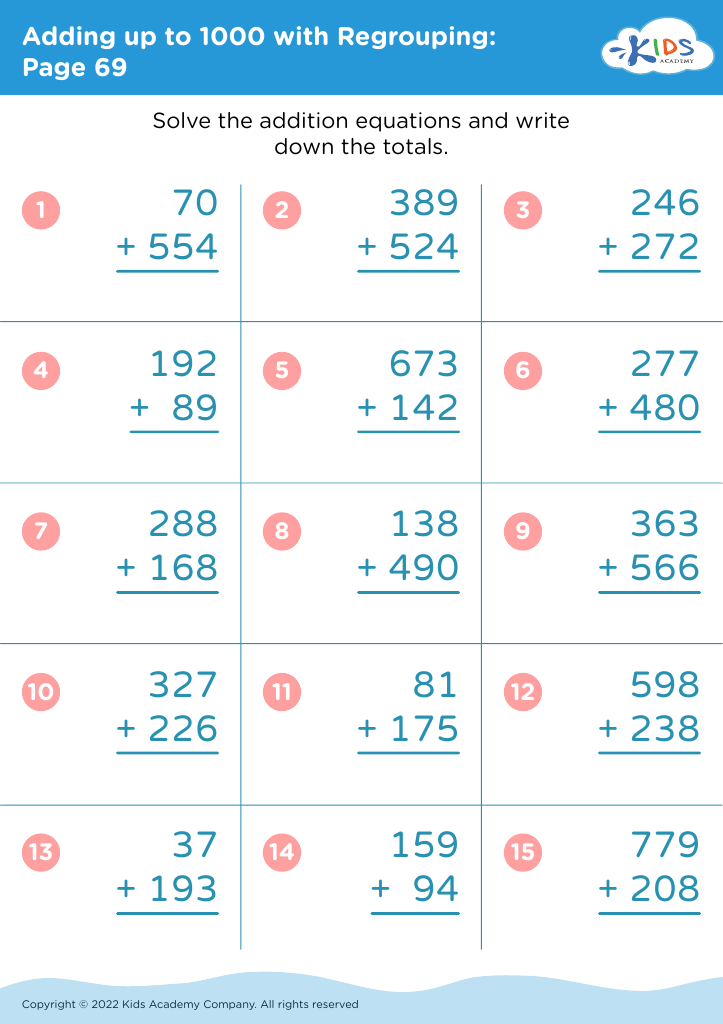
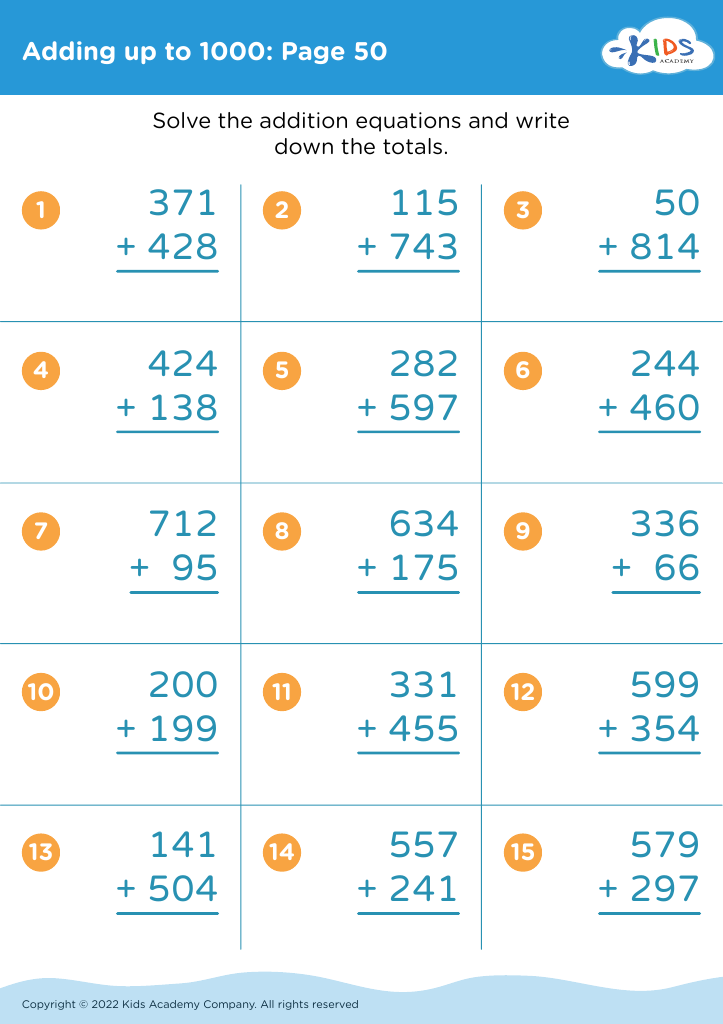
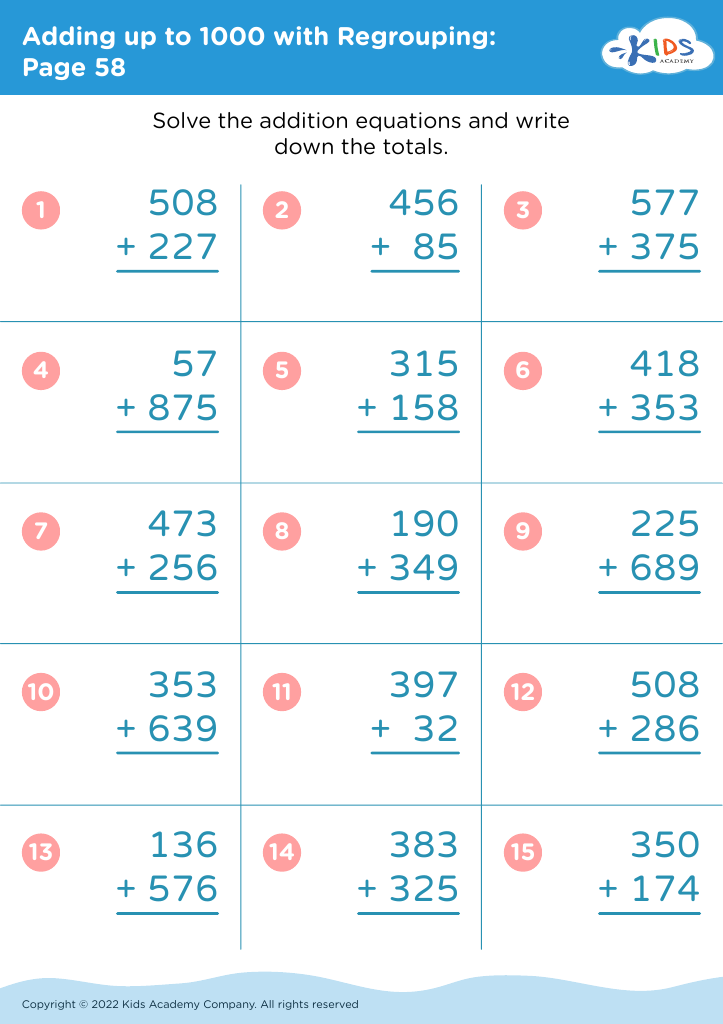
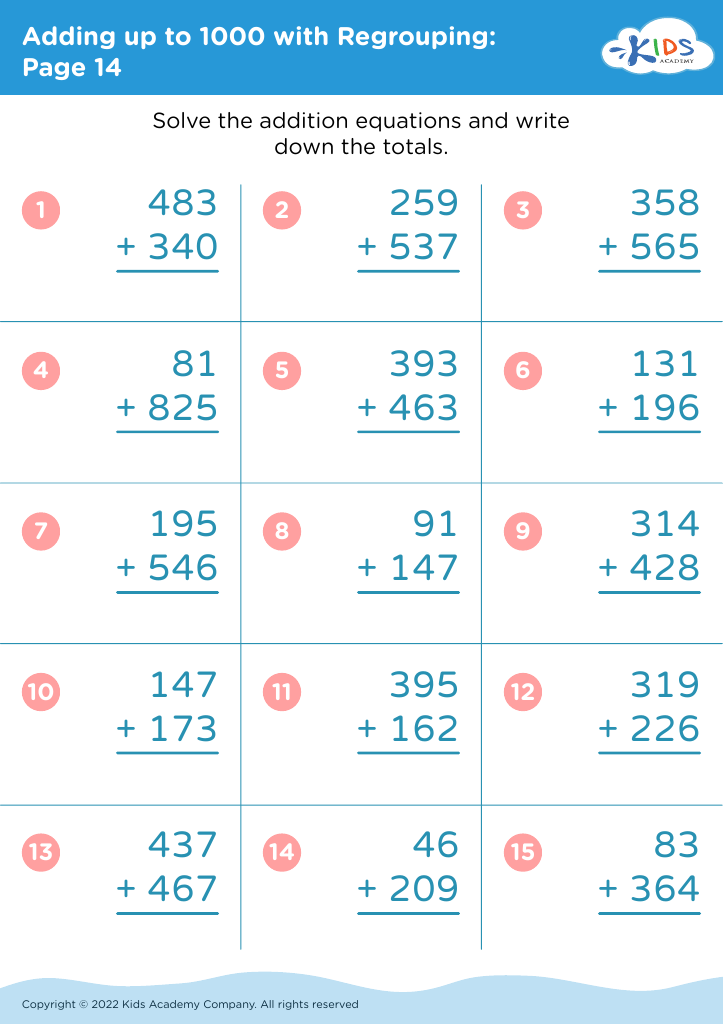
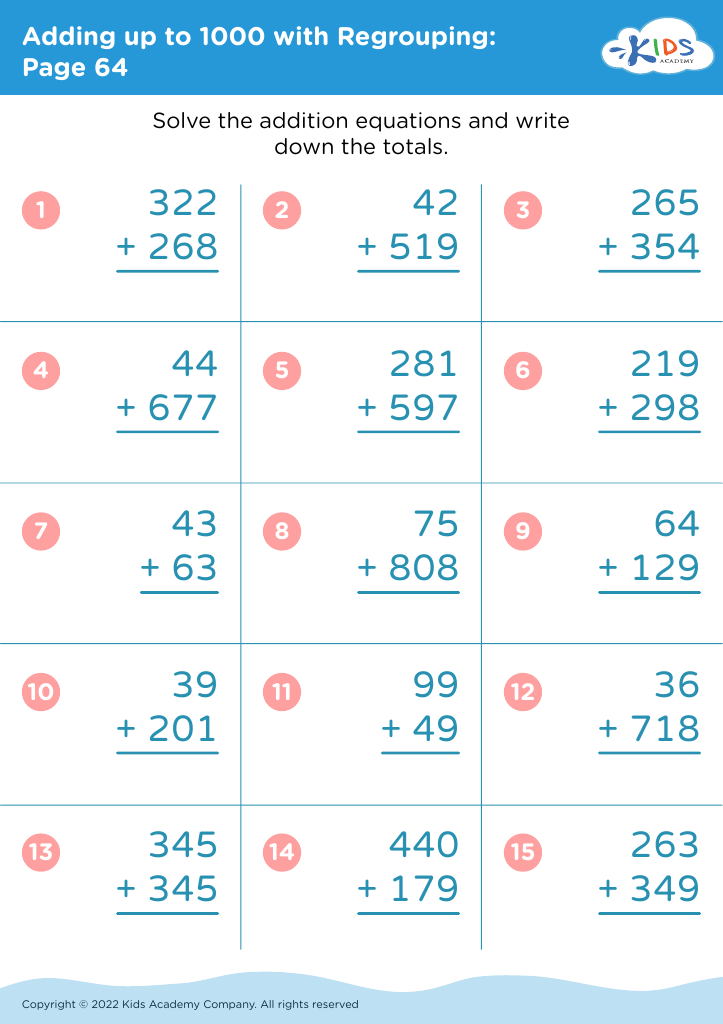
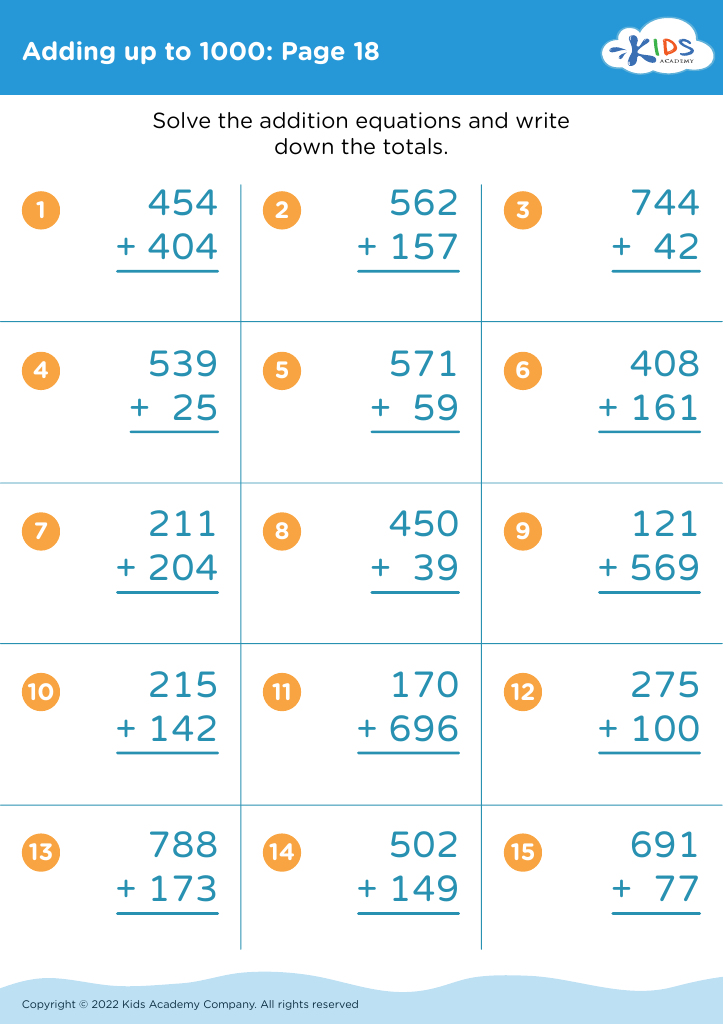
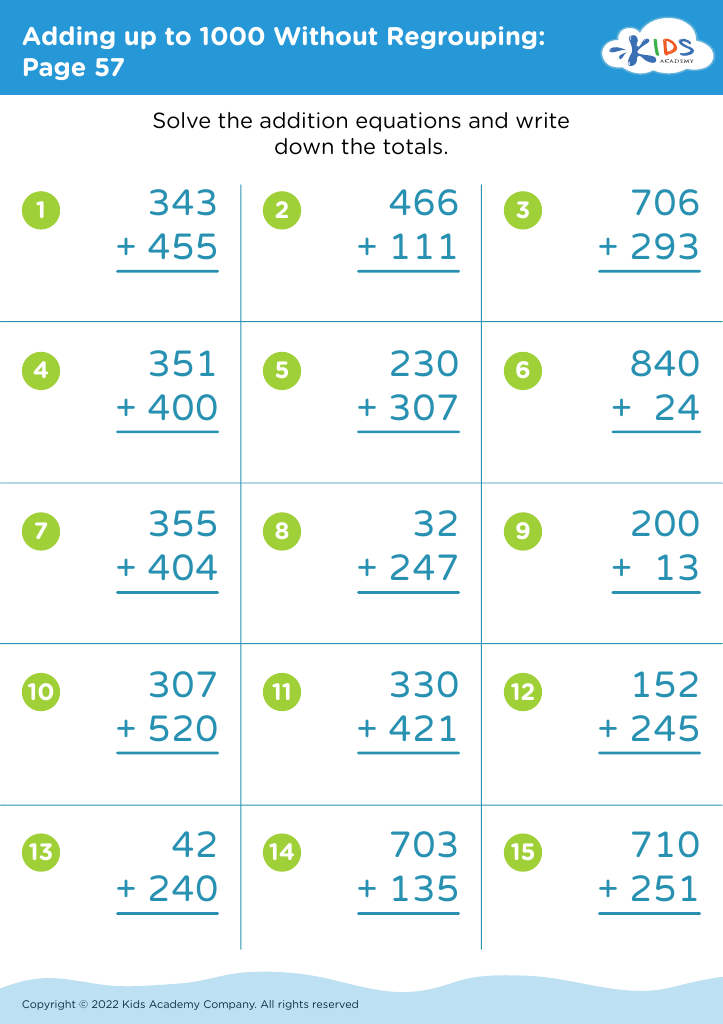
Explore our "Shape Recognition Adding up to 1000 Worksheets" designed for children ages 7-9! These engaging resources cultivate essential math skills while enhancing shape recognition. Perfect for reinforcing geometry concepts, our worksheets challenge learners to identify various shapes and their properties. Each activity seamlessly integrates shape identification with addition problems that sum up to 1000, allowing students to practice their math skills in a versatile manner. Ideal for classroom use or at-home learning, these worksheets make math fun and interactive. Start your child's journey towards mastery in math and shape recognition today — empowering them for future academic success!



Shape recognition is a fundamental skill within early mathematics education that parents and teachers should prioritize, especially for children aged 7-9. At this developmental stage, children begin to build a strong foundation for critical thinking and problem-solving skills. Shape recognition not only enhances spatial awareness but also underpins geometry, necessary for future math concepts. Understanding shapes helps children identify and categorize objects in their environment, fostering observational skills that are important for scientific inquiry.
Furthermore, children in this age group are learning to combine, compare, and manipulate shapes, which can lead to an understanding of addition and subtraction. Engaging in shape-related activities allows for hands-on learning experiences that solidify these concepts through play and interaction. Additionally, activities involving shape recognition can aid in developing fine motor skills through drawing and crafting.
Recognizing shapes can also improve cognitive development; children deepen their understanding of symmetry, patterns, and measurements, which are integral to higher-level math problems. Overall, nurturing shape recognition is vital in building numerical fluency and encouraging a positive attitude toward math, setting a strong groundwork for lifelong learning in both mathematics and related fields. Prioritizing this skill is therefore crucial for a child's academic success and confidence.








