Understand multiplication Adding up to 1000 Worksheets for Ages 7-9
3 filtered results
-
From - To
Unlock the world of numbers with our "Understand Multiplication Adding Up to 1000" worksheets, tailored for ages 7-9! These engaging activities reinforce essential math skills, helping young learners grasp the concept of multiplication while mastering addition up to 1000. Through interactive exercises, students will build confidence, enhance problem-solving abilities, and achieve math milestones with ease. Perfect for both classroom and home use, these worksheets are designed to make learning fun and effective. Equip your child with the tools they need to excel in math by exploring our thoughtfully crafted resources today!
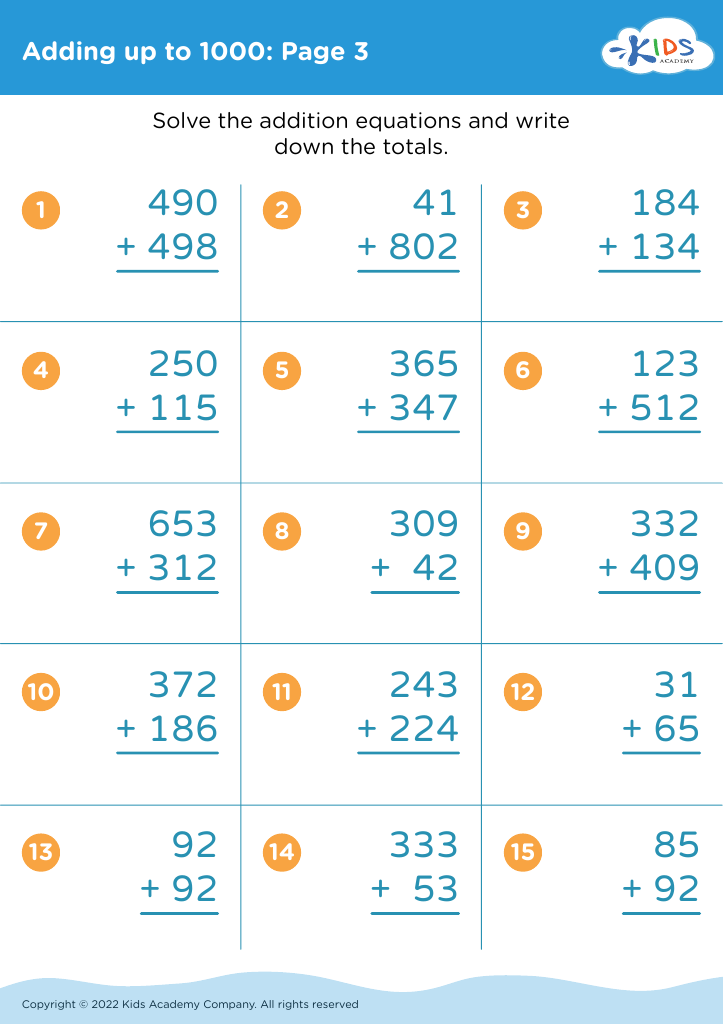
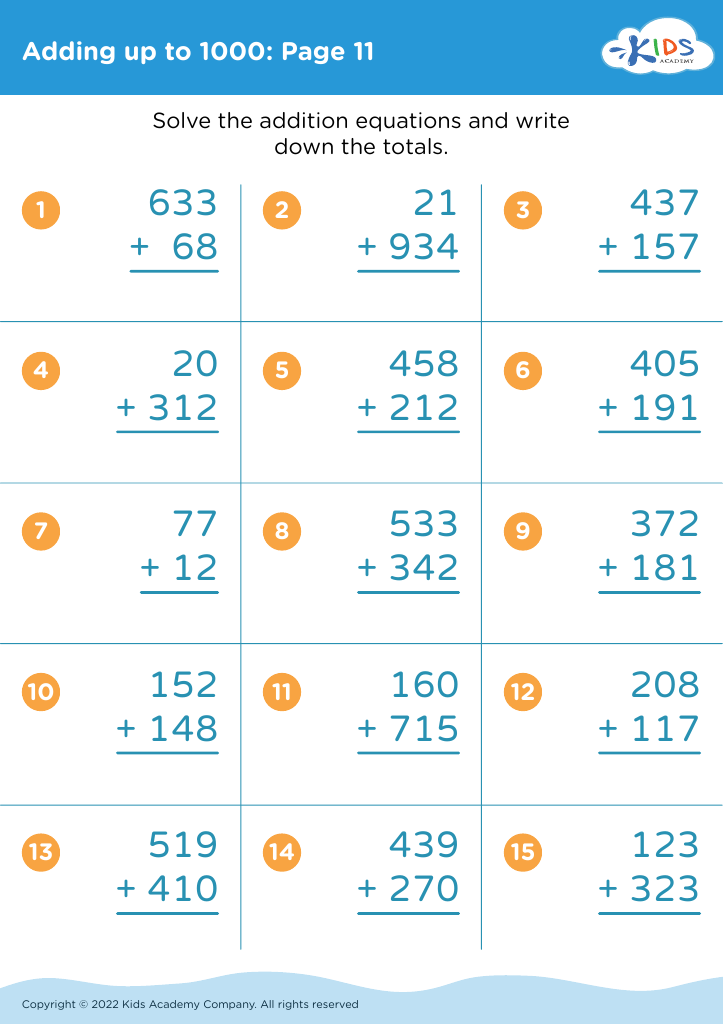
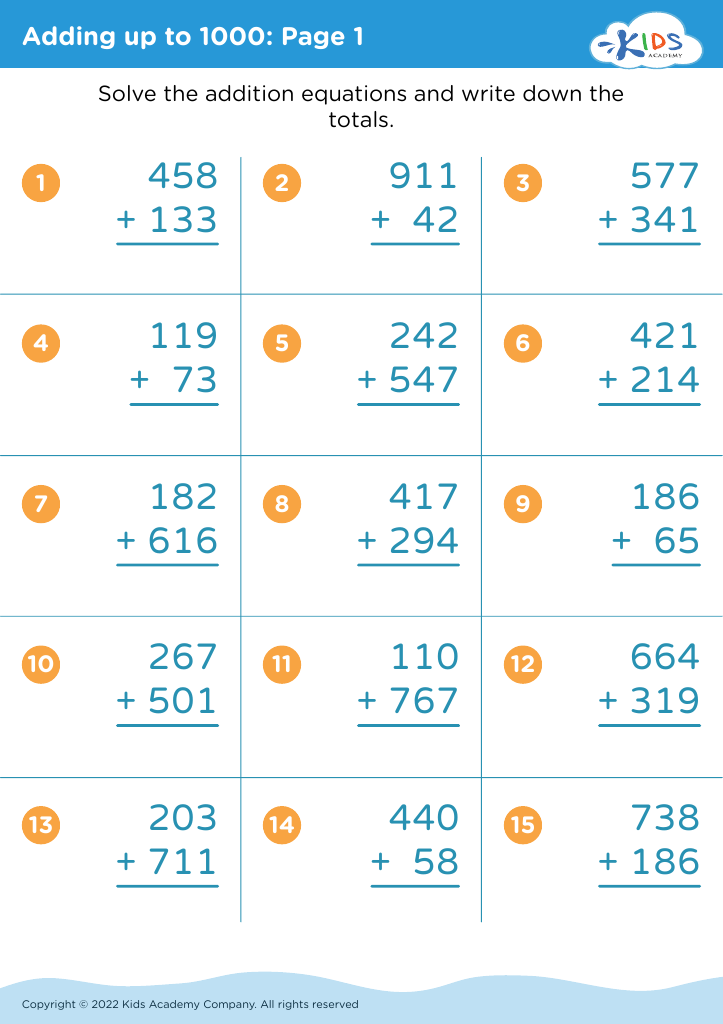



Understanding multiplication and adding up to 1000 is fundamental for children aged 7-9, as it establishes a critical foundation for their future mathematical learning. At this age, children transition from basic arithmetic to more complex mathematical concepts. Mastering multiplication signifies a deeper comprehension of repeated addition, patterns, and relationships between numbers, which are essential for tackling advanced topics like division, fractions, and algebra.
Multiplication skills also promote problem-solving abilities and logical thinking. For example, knowing how to multiply allows children to quickly derive answers to larger problems without relying solely on addition, thus, enhancing their efficiency and confidence in math.
Moreover, accurate addition up to 1000 sharpens mental calculation skills, encourages number sense, and equips children with practical life skills. This proficiency is particularly useful in everyday scenarios, like counting money or measuring ingredients.
Parents and teachers nurturing these skills provide children with a toolkit for academic success and real-world situations. Supporting this learning phase with adequate practice, encouragement, and positive reinforcement leads to a stronger educational foundation, which is crucial for future academic endeavors, including STEM-related fields. Overall, focusing on multiplication and large number addition during these formative years cultivates a lasting appreciation and competence in mathematics.








