Understand subtraction Adding up to 1000 Worksheets for Ages 7-9
3 filtered results
-
From - To
Discover engaging subtraction worksheets designed for students aged 7-9, perfect for mastering skills related to subtracting up to 1000. Our resources emphasize understanding the concept of subtraction through interactive exercises and practical applications. Young learners will develop confidence in solving subtraction problems while enhancing their critical thinking skills. Each worksheet incorporates relatable examples, helping children make connections between subtraction and real-life situations. Packed with fun activities, these worksheets support differentiated learning, catering to various skill levels. Equip your child with essential subtraction skills and watch them thrive in their math journey! Explore our extensive collection today to fuel their love for learning.
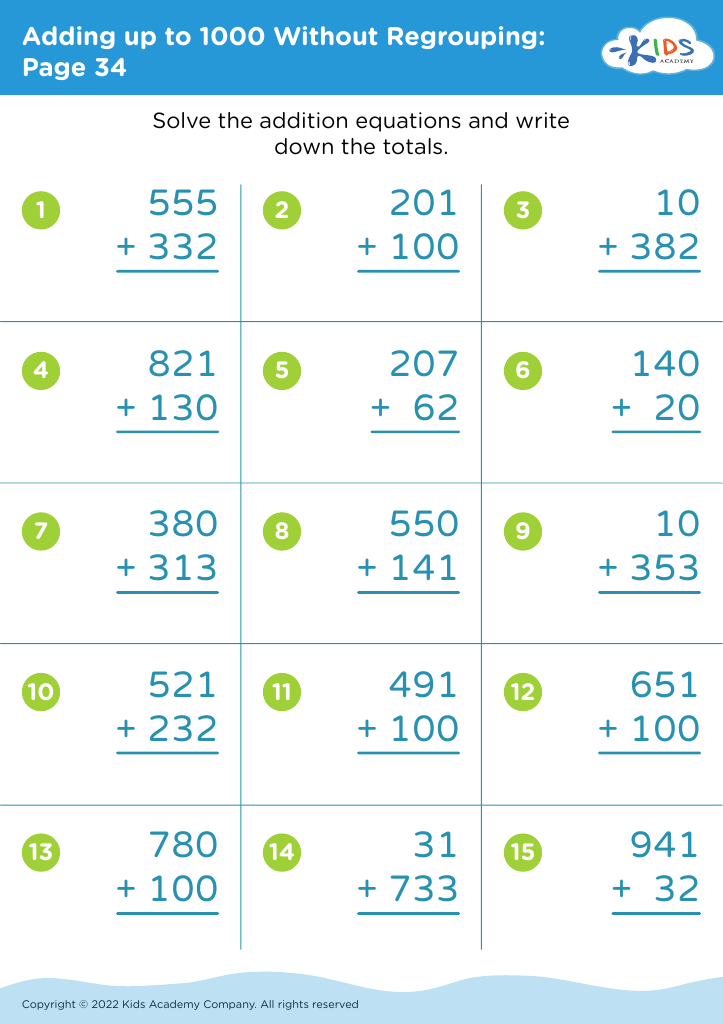
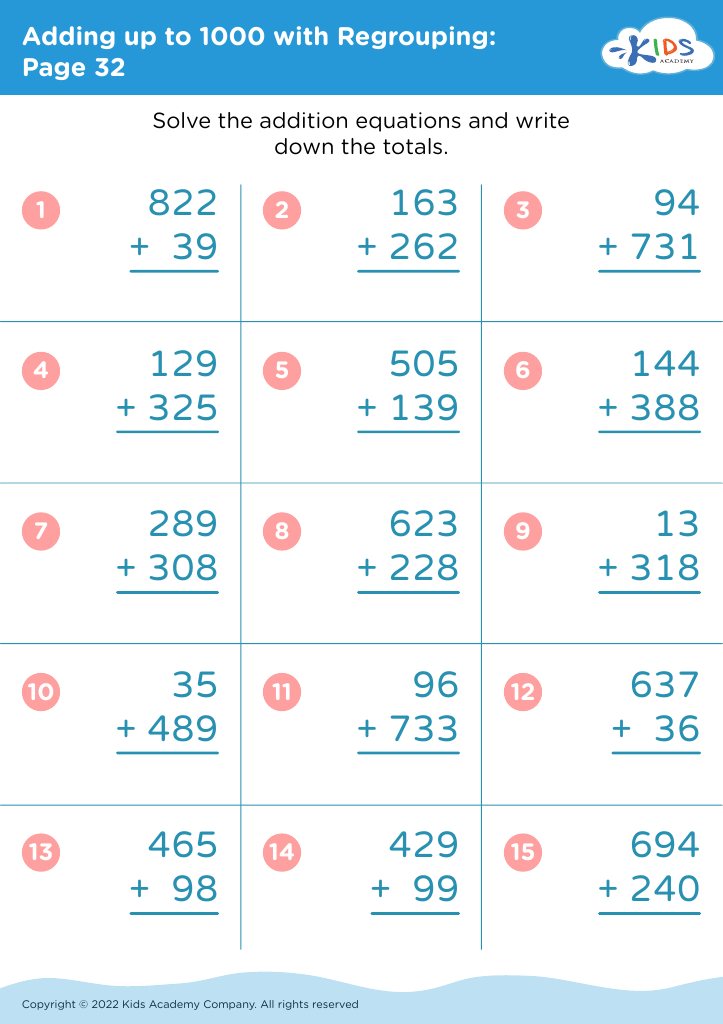
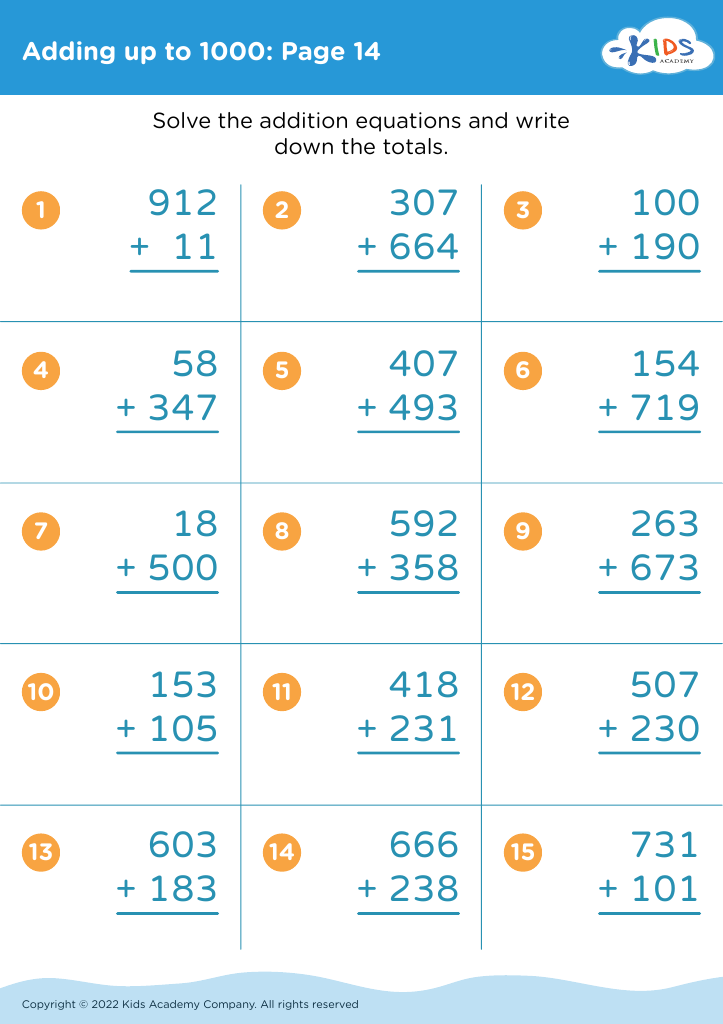



Understanding subtraction for numbers up to 1000 is crucial for children aged 7-9, as it lays the foundation for advanced mathematical concepts. At this developmental stage, students are transitioning from basic arithmetic to more complex problem-solving, and building strong subtraction skills enhances their number sense and confidence.
Subtraction is not just a standalone skill; it is interconnected with addition, multiplication, and division. By mastering subtraction, children will find it easier to grasp these related concepts, fostering a deeper understanding of mathematics overall. This foundation can influence success in higher-grade arithmetic and real-world applications, such as budgeting, time management, and measurement.
Additionally, developing fluency with subtraction helps in cognitive development. As children articulate and solve subtraction problems, they engage critical thinking and reasoning skills that are essential in everyday decision-making.
Teachers and parents play a vital role in supporting this growth by encouraging practice, providing engaging activities, and reinforcing the significance of subtraction in daily life. Ultimately, prioritizing subtraction proficiency not only supports academic achievement but also prepares children for comprehensive numerical competency as they progress in their education.








