Understanding patterns Adding up to 1000 Worksheets for Ages 7-9
5 filtered results
-
From - To
Dive into our "Understanding Patterns: Adding up to 1000 Worksheets" designed specifically for children ages 7-9! These engaging worksheets help young learners recognize patterns while building their addition skills up to 1000. Our carefully crafted activities encourage critical thinking, reinforce math concepts, and promote independent learning. Students will explore number sequences, find relationships between numbers, and tackle various challenges that strengthen their understanding of mathematical patterns. Perfect for classroom use or at-home practice, these worksheets provide invaluable support for early math development. Empower your child’s learning journey today and watch their confidence soar with every completed worksheet!
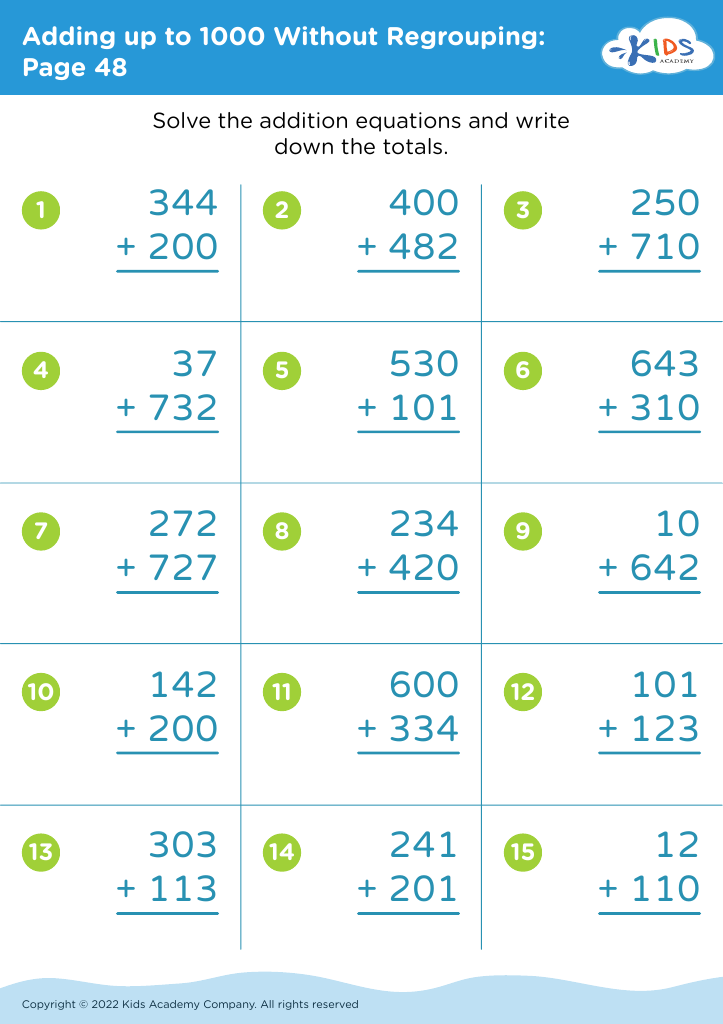
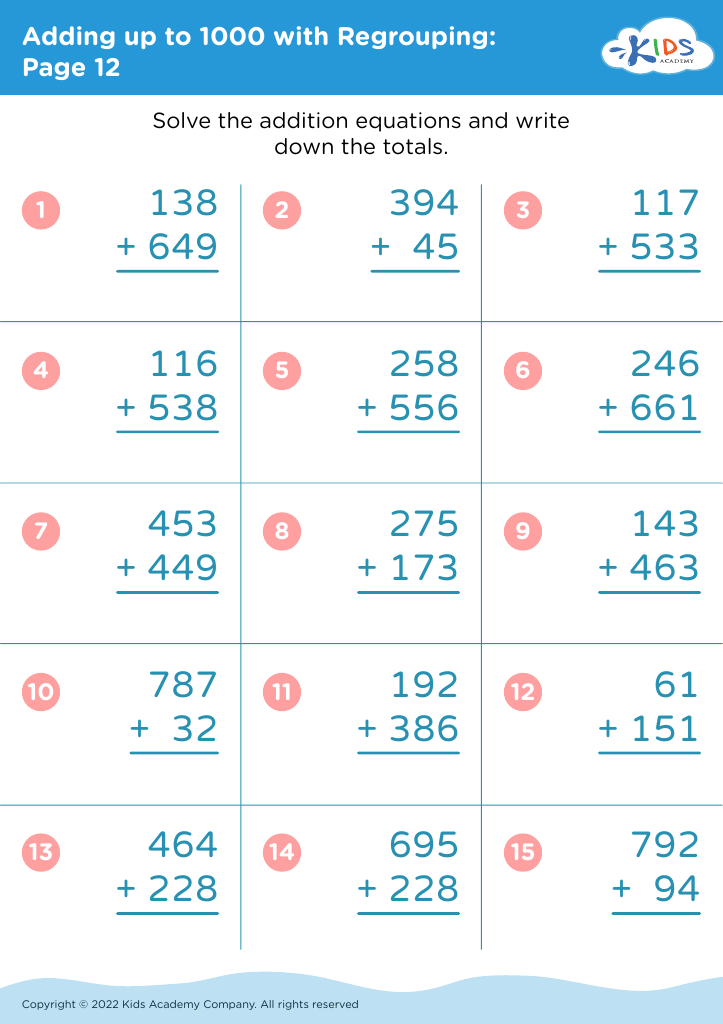
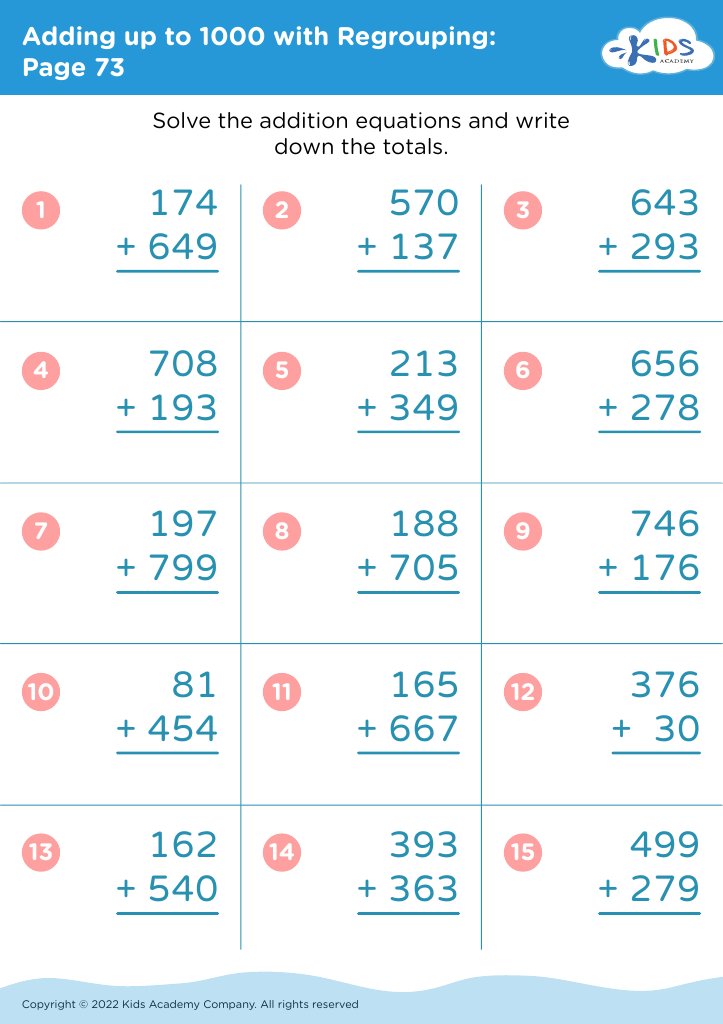
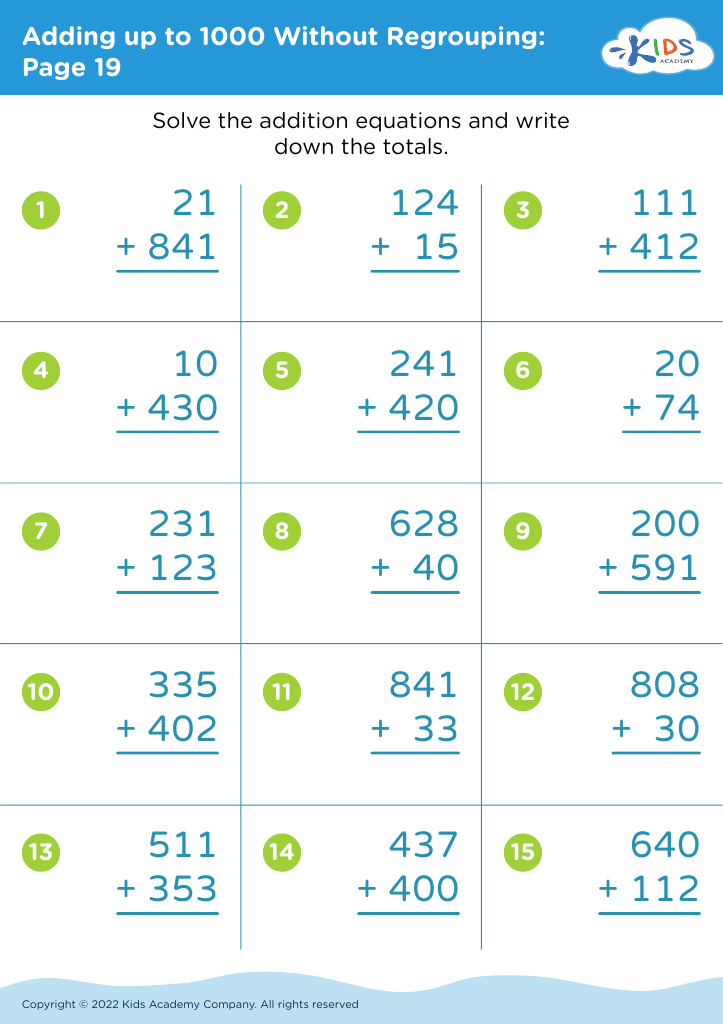
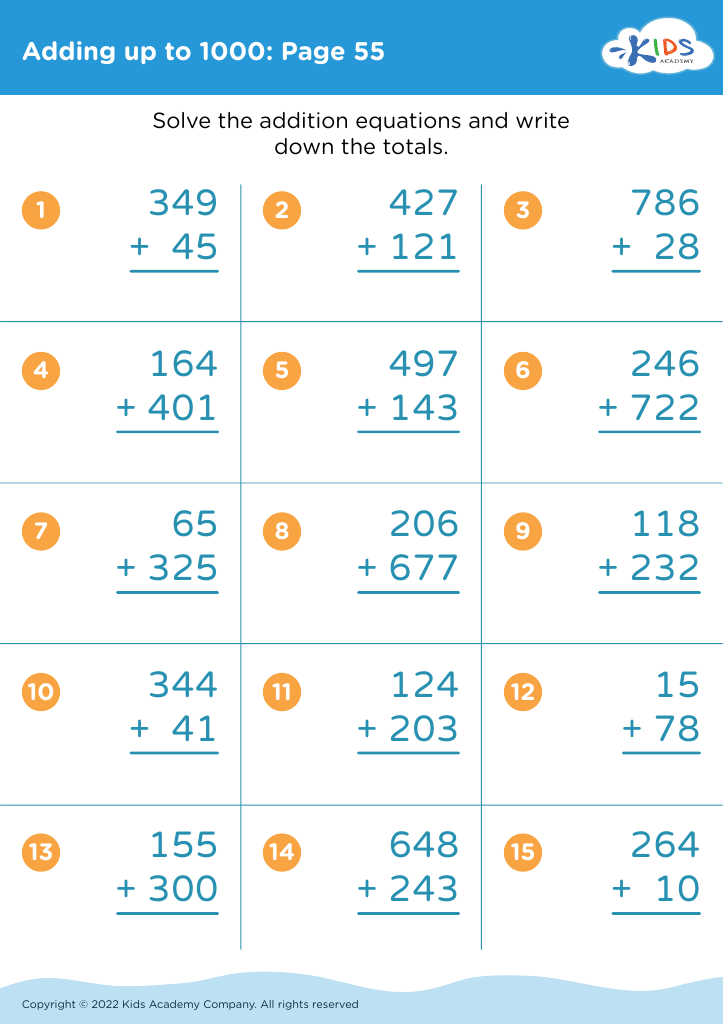



Understanding patterns, especially in the context of adding up to 1000, is crucial for children aged 7-9 as it lays a strong foundation for critical thinking and advanced mathematical skills. At this age, children are transitioning into more complex operations, and recognizing patterns helps them grasp how numbers relate to one another. For instance, when children learn to add multiple numbers up to 1000, they can identify trends and relationships, making the process intuitive and less daunting.
Teachers and parents should emphasize this concept to help children develop problem-solving skills. By recognizing patterns, children learn to predict outcomes, which enhances their analytical capabilities. This skill is transferrable beyond mathematics; it fosters a mindset that embraces logical reasoning in science, language arts, and everyday life.
Moreover, working with patterns instills confidence, as children become more adept at manipulating numbers and tackling bigger ideas, such as estimation and budgeting, later in life. Encouraging exploration of numerical patterns boosts engagement, making learning fun and effective. Ultimately, nurturing these abilities in young learners prepares them for future academic success and real-world applications, setting a positive trajectory for their educational journey.








