Understanding Sequences Adding up to 1000 Worksheets for Ages 7-9
6 filtered results
-
From - To
Welcome to our “Understanding Sequences Adding Up to 1000 Worksheets” designed specifically for children aged 7-9! These engaging worksheets help young learners grasp the concept of number sequences while developing their addition skills. Through fun and interactive exercises, students will learn to identify patterns, fill in the blanks, and complete sequences that total up to 1000. These worksheets not only aid in enhancing mathematical understanding but also foster critical thinking and problem-solving skills. Ideal for classroom settings or homeschooling, our resources provide a solid foundation in numeracy and help instill a love for mathematics. Start exploring and learning today!
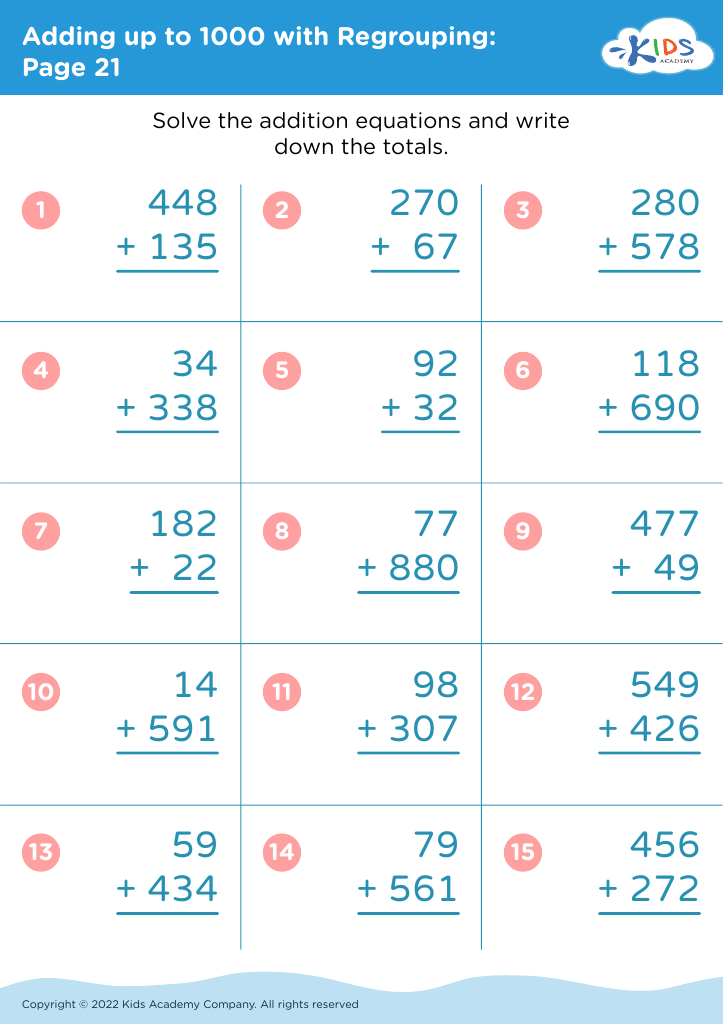
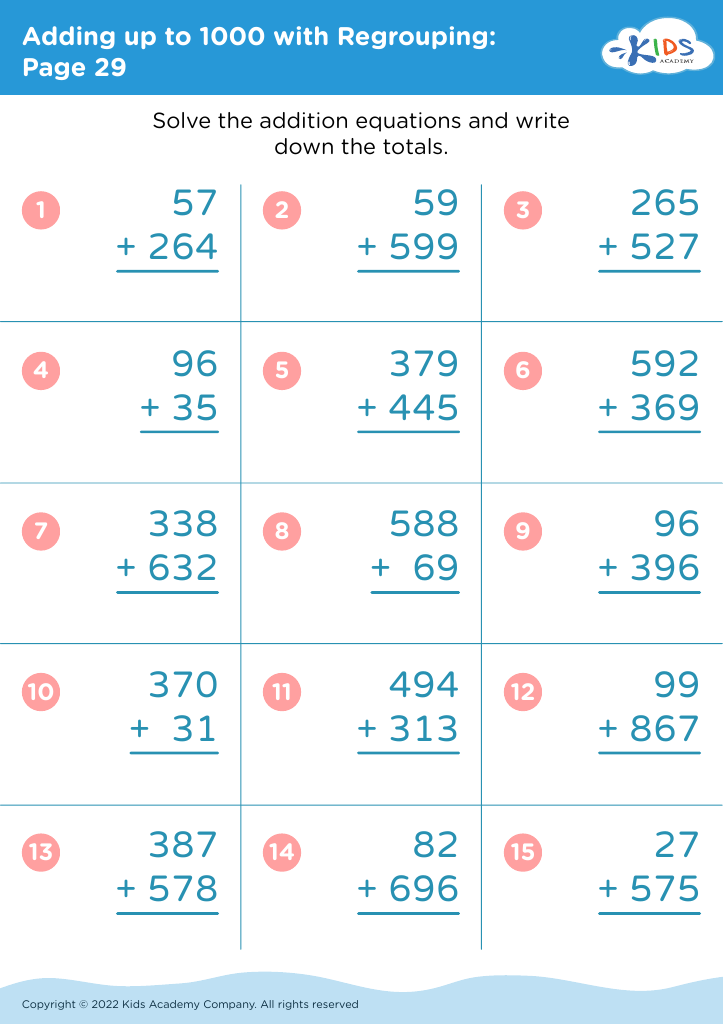
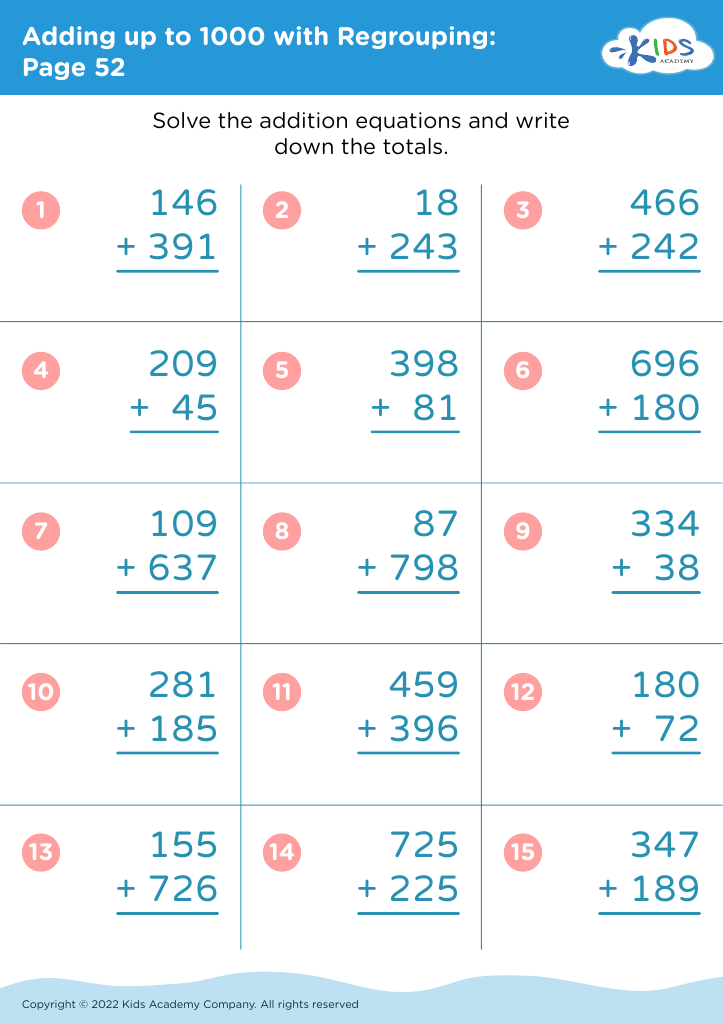
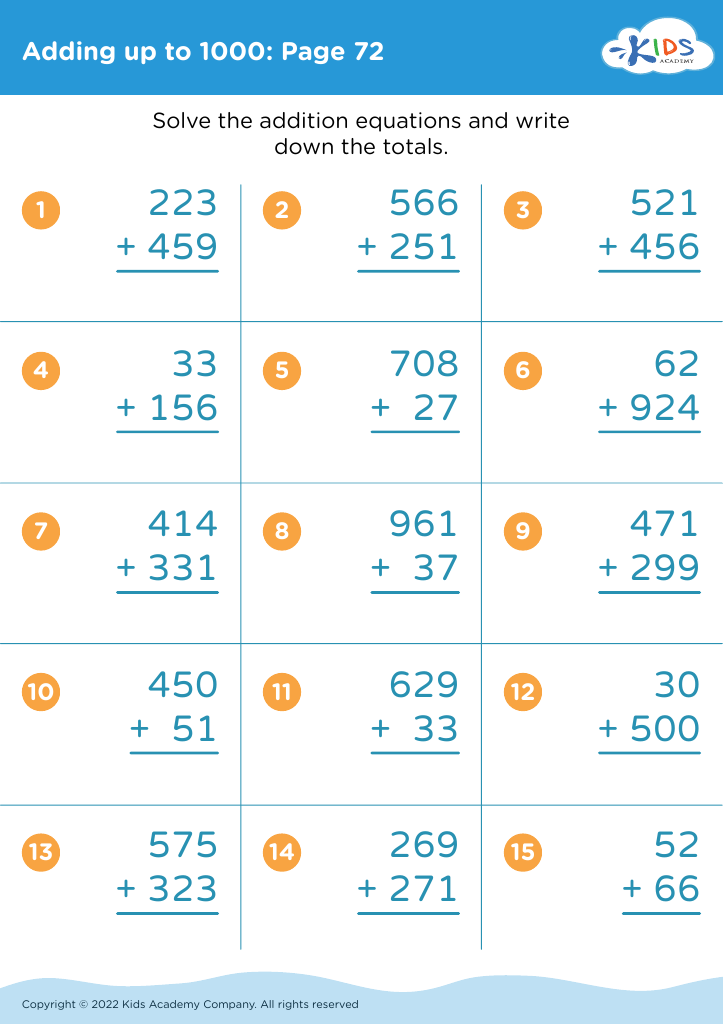
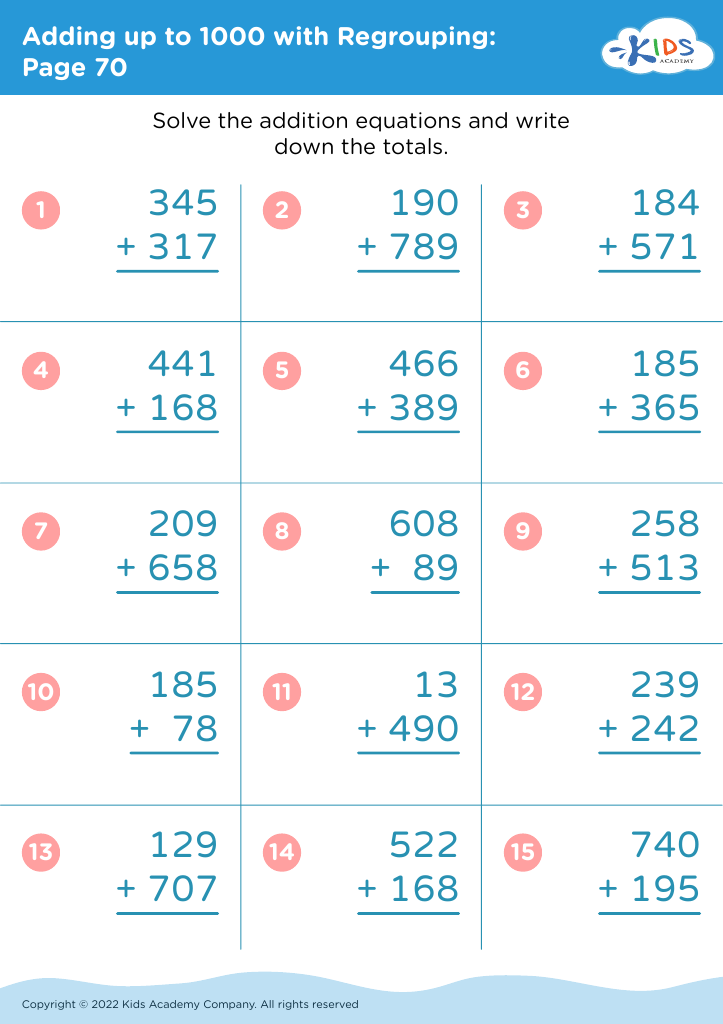
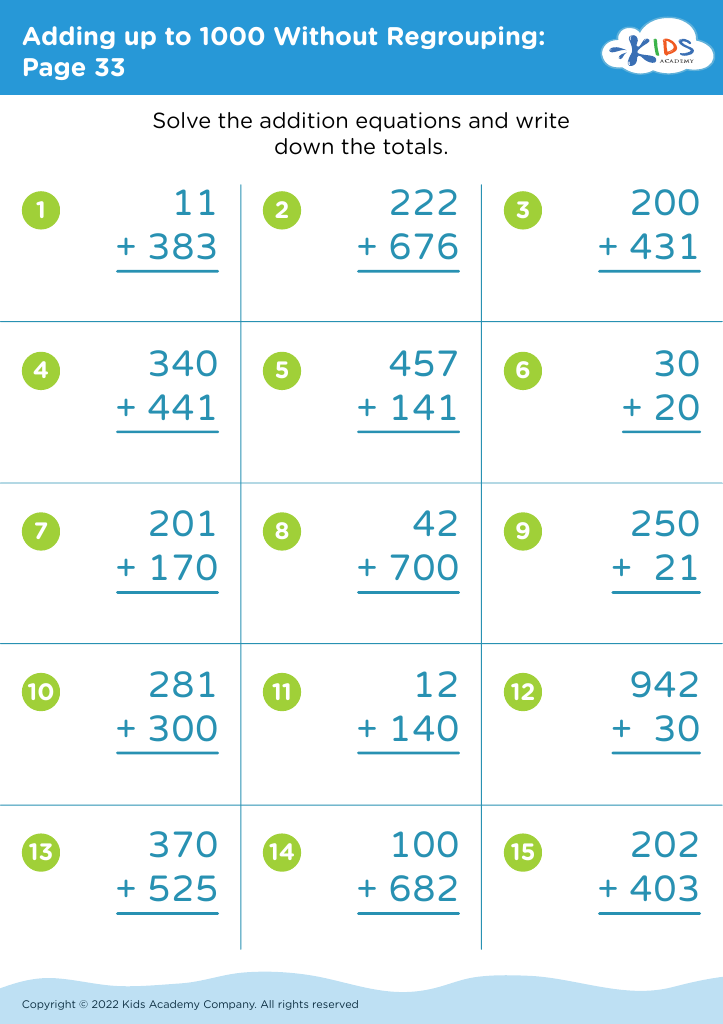



Understanding sequences that add up to 1000 is crucial for children aged 7-9 as it forms a foundational element of their mathematical development. At this age, children are building their numeric literacy, and grasping sequences enhances their ability to recognize patterns, which is essential for problem-solving and critical thinking.
When teachers and parents emphasize sequences, they encourage children to think methodically. This skill is valuable not only in mathematics but also in various life situations where planning and organization are necessary. For instance, understanding how numbers relate within a sequence can aid children in learning addition and subtraction more effectively. Mastery of these concepts promotes confidence in their numerical abilities.
Furthermore, as children transition to more complex mathematical operations, a solid grounding in sequences enables smoother learning. This foundational knowledge leads to improved future abilities in multiplication, division, and eventually algebra. Parents and teachers, therefore, should actively engage children in activities and games that involve sequences up to 1000. These practices cultivate a positive attitude toward mathematics, reducing anxiety around numbers and fostering a lifelong appreciation for math, which is critical in our increasingly data-driven world.








