Word Recognition Adding up to 1000 Worksheets for Ages 7-9
3 filtered results
-
From - To
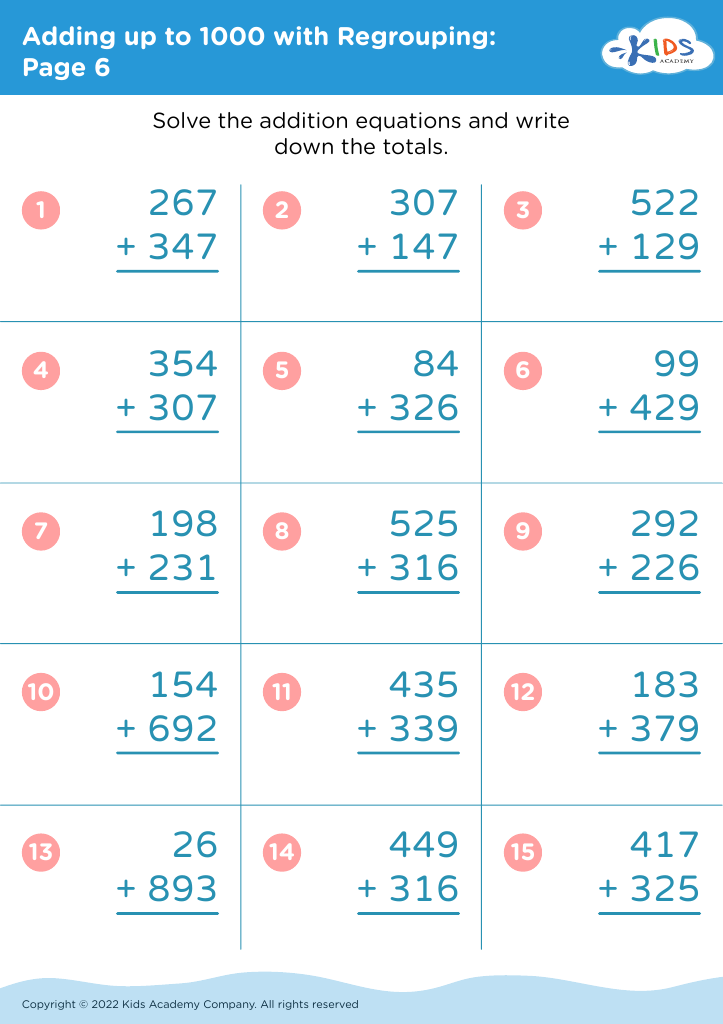
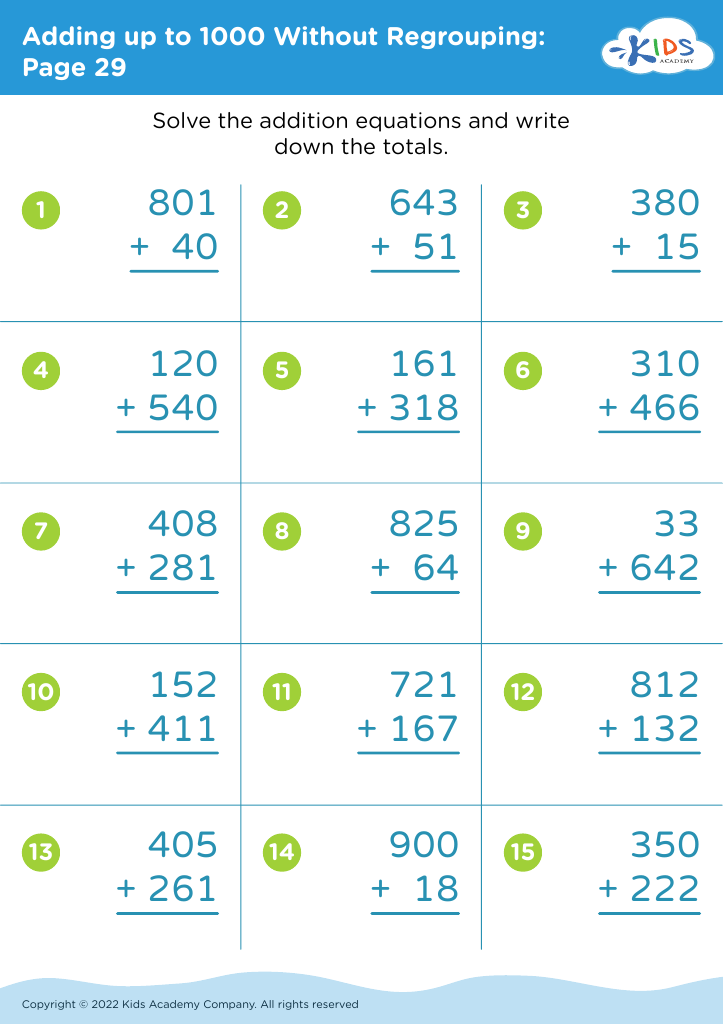
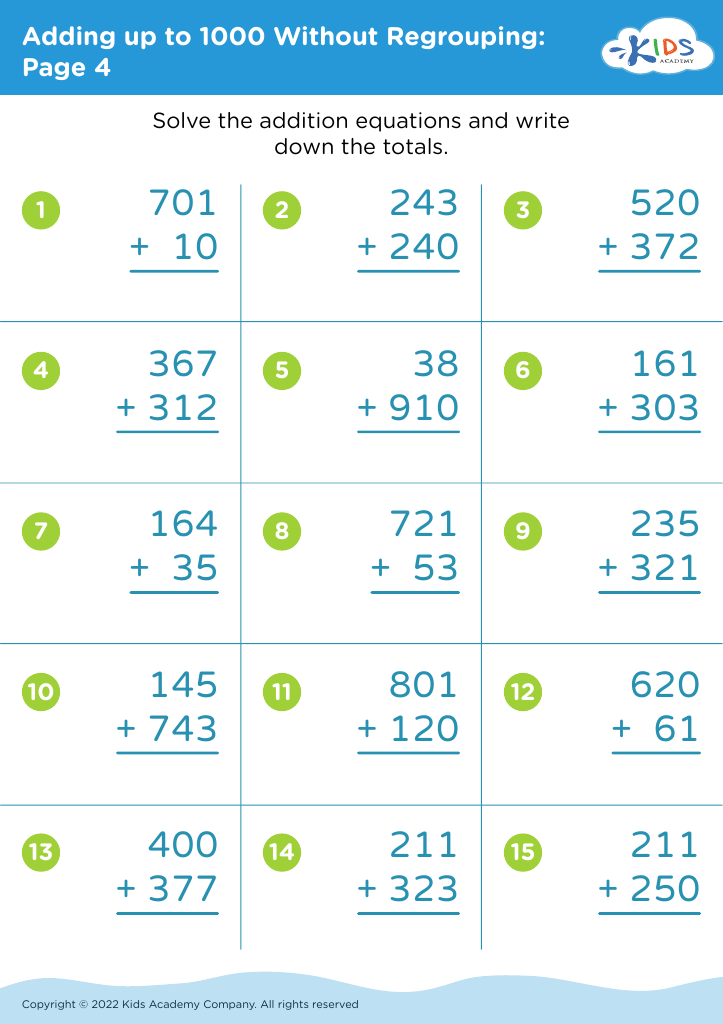
Elevate your child's learning experience with our "Word Recognition Adding up to 1000 Worksheets" designed specifically for ages 7-9! These engaging worksheets enhance vocabulary and comprehension while integrating essential math skills. Kids will practice identifying and understanding various words related to numbers and addition, reinforcing both literacy and numeracy. Fun and interactive exercises keep youngsters motivated as they explore the world of numbers in a unique way. Perfect for classroom use or at-home enrichment, these resources cater to different learning styles and abilities. Watch your child's confidence grow as they master word recognition and addition up to 1000! Start today!



Word recognition is a critical skill for children aged 7-9, greatly influencing their reading fluency and overall academic success. At this stage, children transition from "learning to read" to "reading to learn." Proficient word recognition enables them to decode words quickly and accurately, which is essential for comprehension. When children can effortlessly recognize words, they can focus on understanding the content rather than struggling with pronunciation.
For parents and teachers, fostering word recognition is particularly important in building a solid foundation for literacy. It enhances vocabulary development and encourages a love for reading, which is vital for lifelong learning. Engaging children with diverse reading materials, including fiction and nonfiction, supports their exposure to new words and contexts, making the learning process more enriching.
Supporting word recognition through various strategies, such as repeated reading or flashcards, creates a positive reading experience and boosts children's confidence. Moreover, strong word recognition skills often lead to improved performance across subjects, as reading is essential to grasping concepts in mathematics, science, and social studies. By prioritizing word recognition, parents and teachers equip children with the tools necessary for academic achievement and a brighter future.








