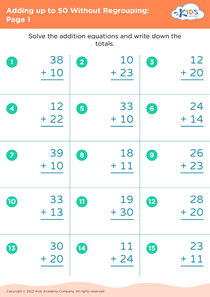
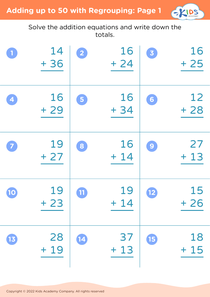
Addition Practice Adding up to 50 Misc Worksheets for Ages 7-9
5 filtered results
-
From - To
Enhance your child’s math skills with our "Addition Practice: Adding Up to 50 Misc Worksheets" designed for ages 7-9. These engaging worksheets provide a variety of addition problems to practice, helping kids solidify their understanding of basic math concepts. Each worksheet features colorful illustrations and diverse exercises that keep learning fun and interactive. Perfect for reinforcing classroom lessons or as a supplementary resource at home, these activities cater to different learning styles. Whether it’s simple addition or slightly challenging problems, your child will gain confidence and improve their math proficiency. Start their journey to mastery today!
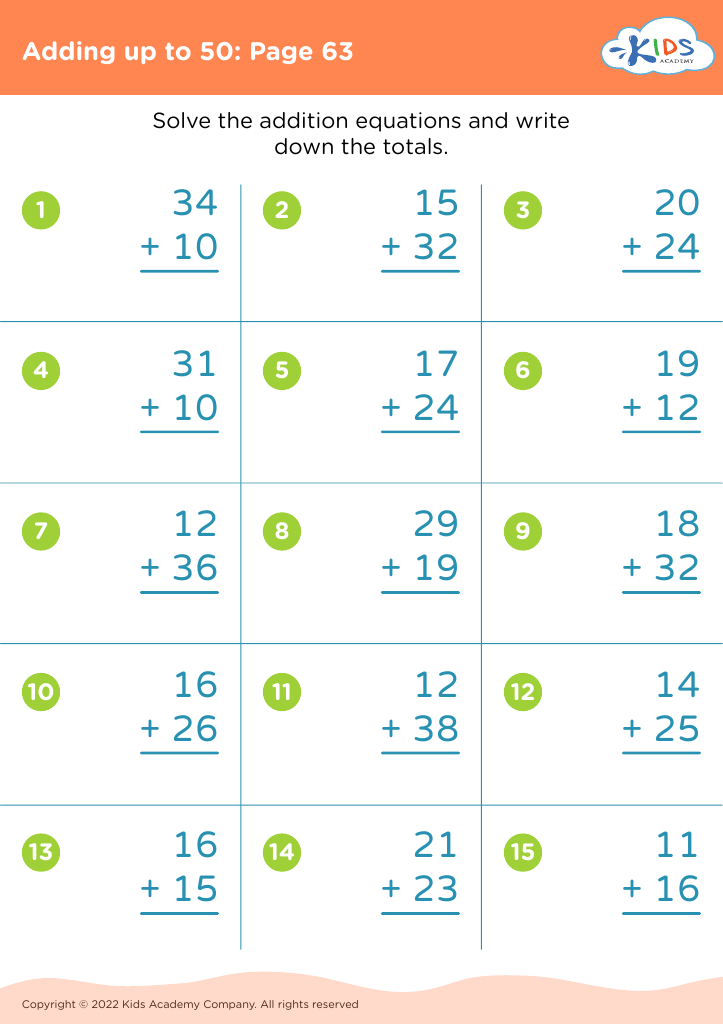
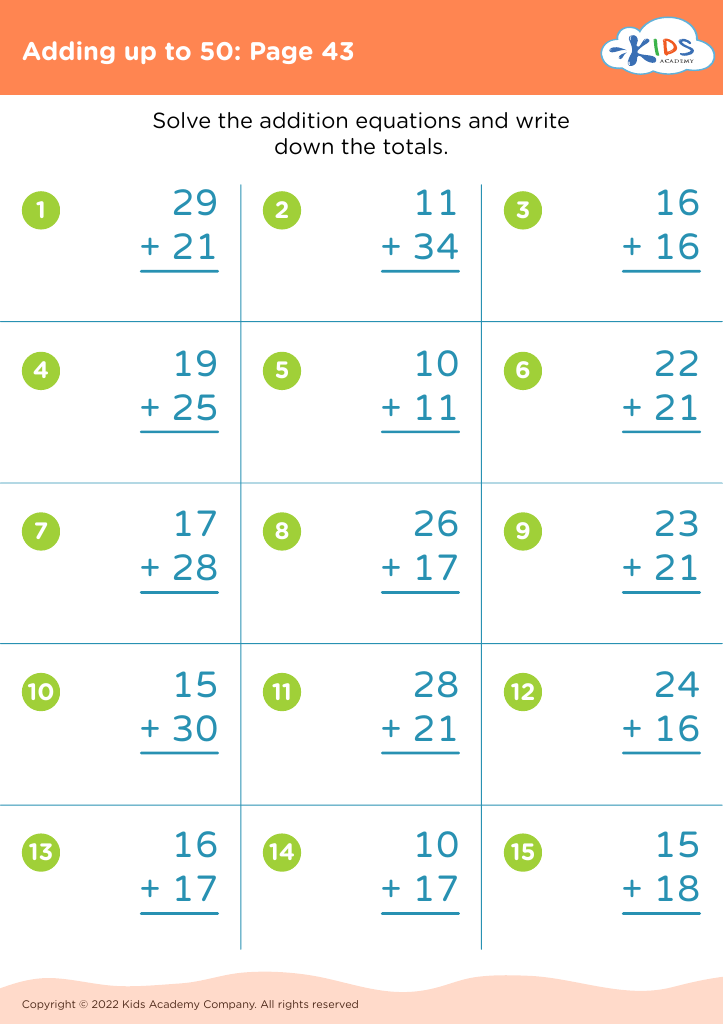
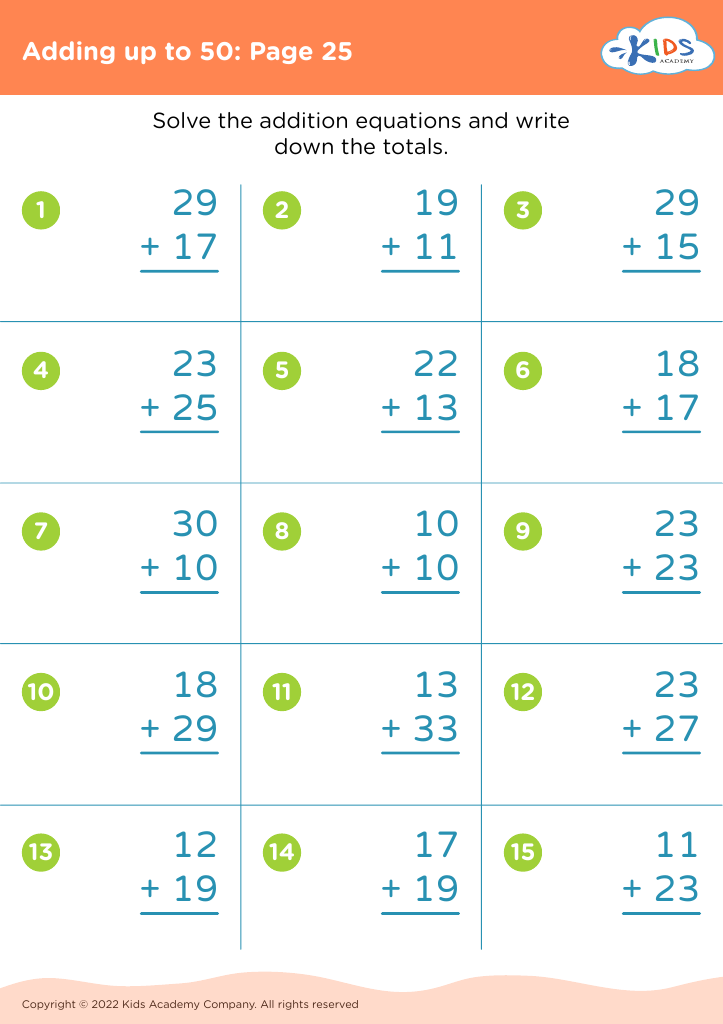
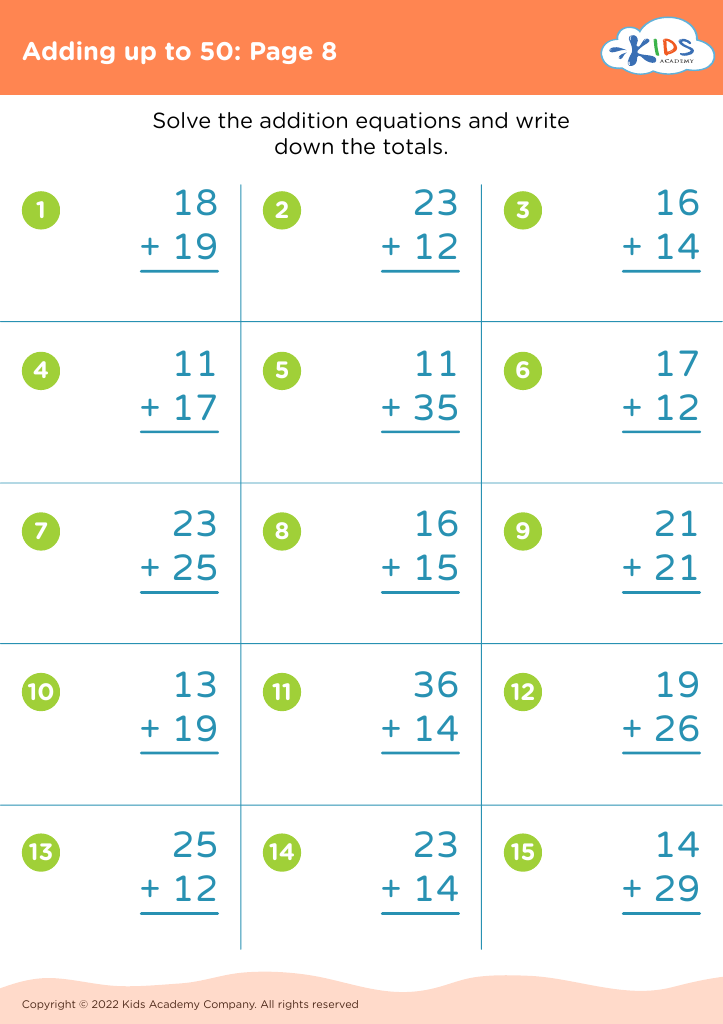
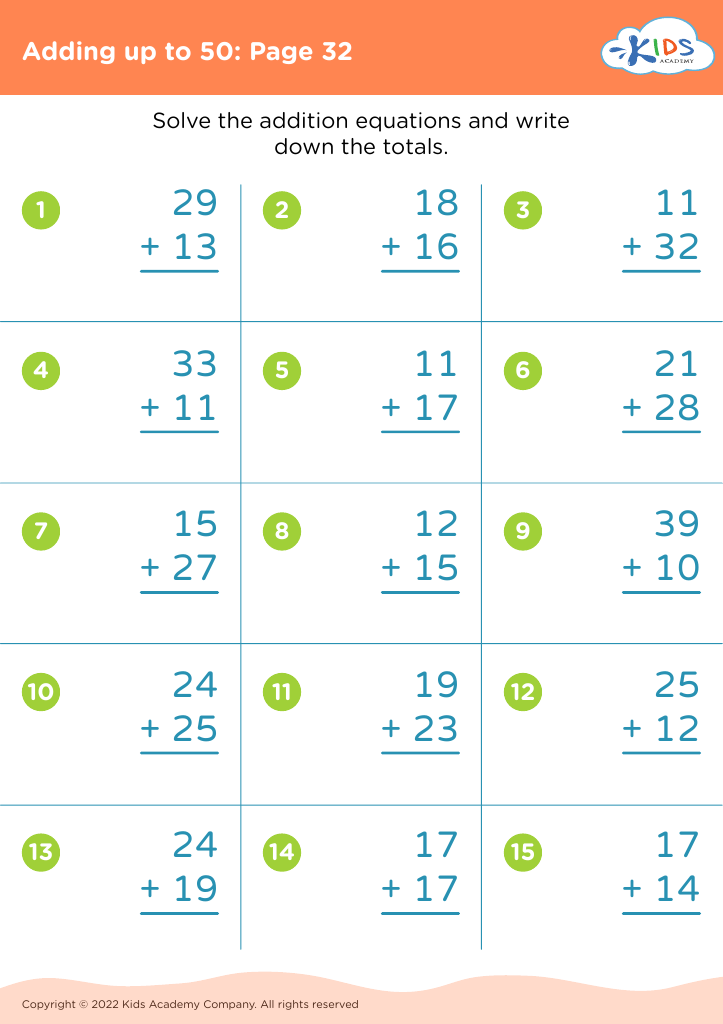


Parents and teachers should prioritize Addition Practice for children aged 7-9, particularly with exercises involving adding up to 50, for several vital reasons. First, mastering addition is foundational for mathematical literacy, enabling children to tackle more complex concepts later on, such as multiplication and division. This early competence bolsters their confidence and fosters a positive attitude towards math.
Moreover, engaging in addition practice enhances cognitive skills, including problem-solving, logical thinking, and perseverance. Children learn to approach problems methodically, developing resilience and critical thinking abilities essential in academic settings and real-life situations.
Additionally, practicing addition allows for assessment of a child’s learning progress. Teachers and parents can identify areas needing improvement and customize learning activities accordingly, ensuring a tailored educational experience.
Lastly, fun, interactive addition activities can strengthen the parent-child or teacher-student relationship. Collaborative practice reinforces social skills and a love for learning. Overall, by emphasizing Addition Practice Adding up to 50 for this age group, caregivers and educators are laying a robust mathematical foundation that supports future educational success and personal growth.