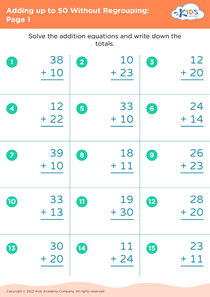
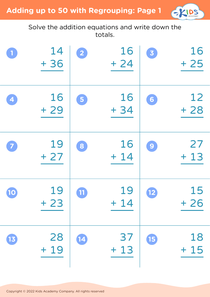
Fraction comparison Adding up to 50 Misc Worksheets for Ages 7-9
4 filtered results
-
From - To
Explore our engaging Fraction Comparison Worksheets, specifically designed for children ages 7-9 learning to master math skills. These fun and interactive printables help students compare fractions while ensuring they develop a solid foundation in mathematics. Ideal for reinforcing classroom learning or offering extra practice at home, our worksheets focus on fraction comparison through various exercises. Each activity challenges kids to analyze and understand the relationships between different fractions, enhancing their problem-solving abilities. With a creative approach to math, these resources will make learning enjoyable and effective. Perfect for supplementing curriculum and fostering a love of math!
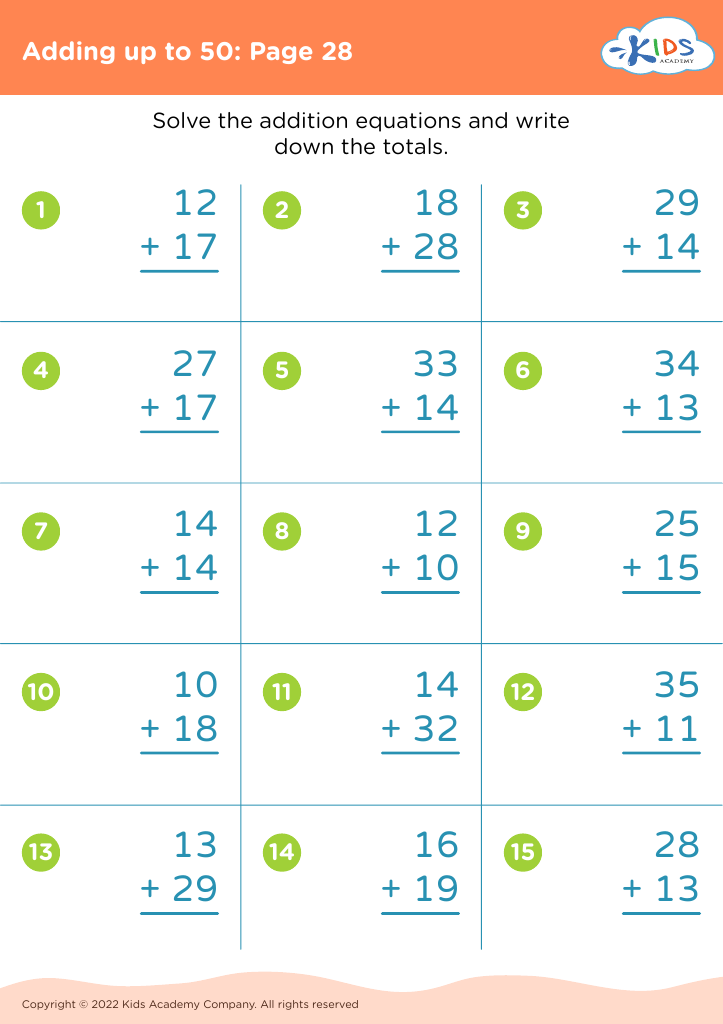
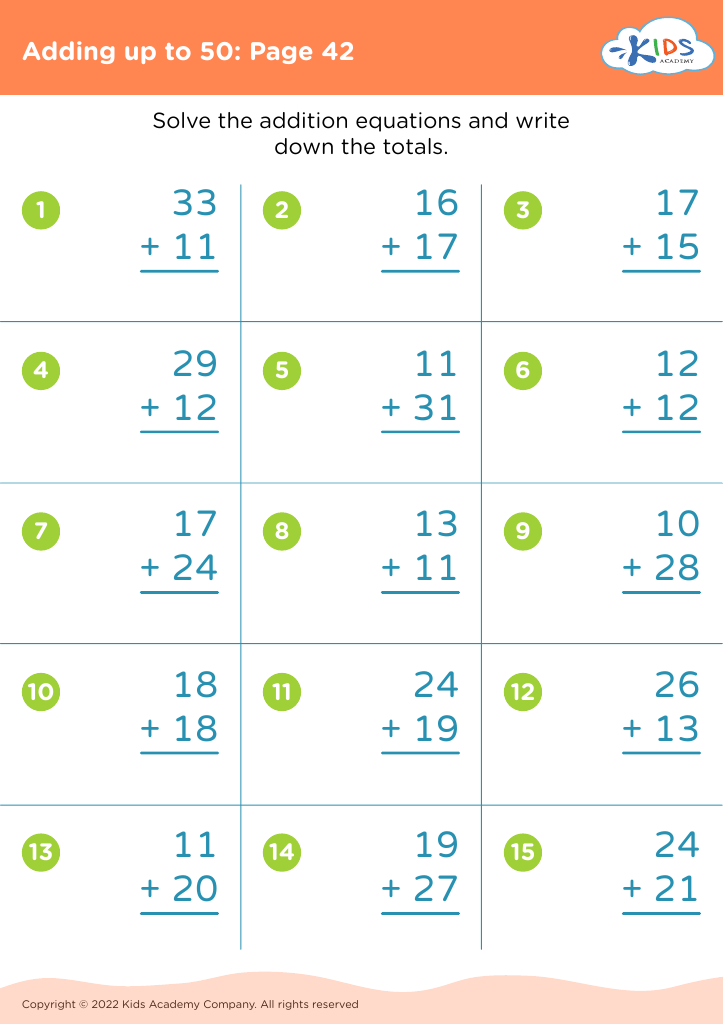
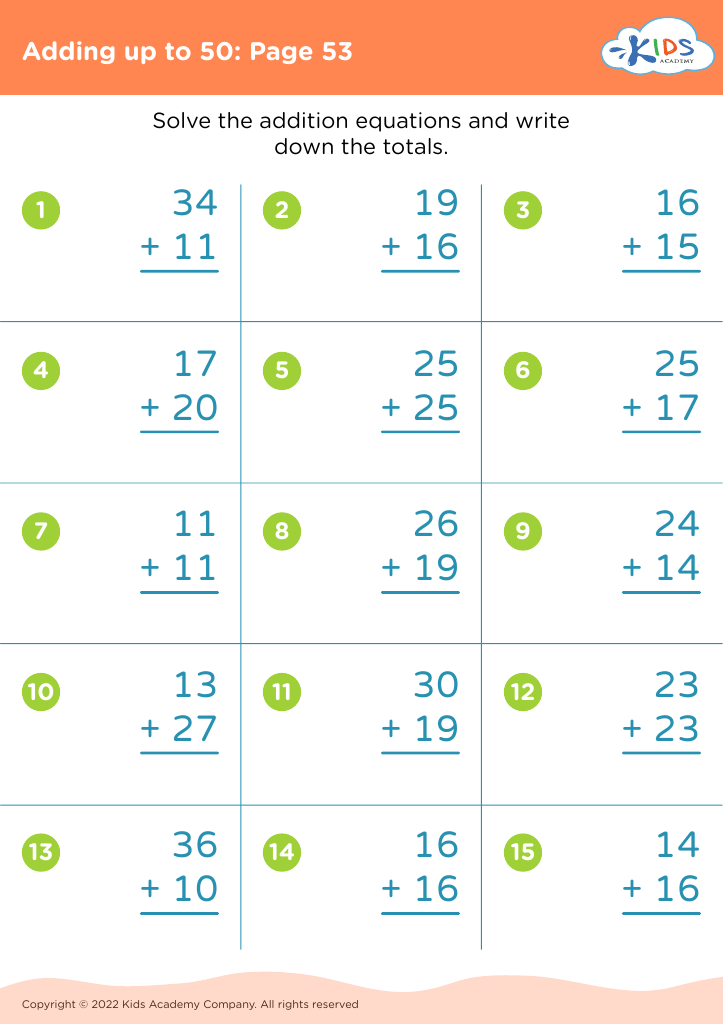
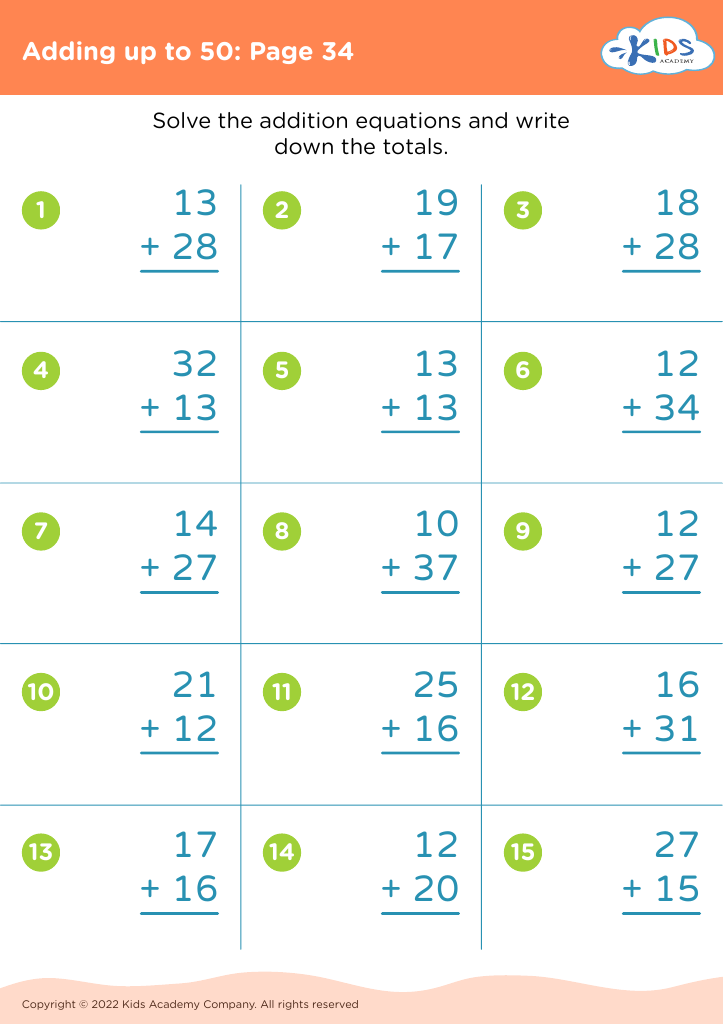


Understanding fraction comparison and addition is crucial for children aged 7-9, as it lays a foundational skill that transcends mathematics. Parents and teachers should prioritize this topic for several reasons. First, mastering fractions enhances a child's problem-solving abilities and critical thinking skills. By comparing fractions, students can develop logical reasoning capabilities that apply to various real-life scenarios, such as cooking or sharing.
Second, this age group is at a developmental stage where they are building essential cognitive skills. Engaging with fractions fosters not only their mathematical comprehension but also their spatial awareness and symbolism understanding. Furthermore, grasping fractions can boost a child's confidence in math, combating anxiety around more complex mathematical concepts they will encounter later.
Additionally, fractions frequently appear in everyday contexts, making their understanding relevant and practical. Whether helping with homework, measuring ingredients in a recipe, or even discussing sharing treats, fractions become integral to daily life.
For parents and teachers, supporting the learning of fractions can lead to more profound educational outcomes and ease the pathway to more advanced concepts like decimals and percentages. Encouraging a positive approach to fractions now can significantly impact a child's future academic success and attitude toward mathematics.