Basic Math Skills Adding up to 50 with Regrouping Worksheets for Ages 7-9
5 filtered results
-
From - To
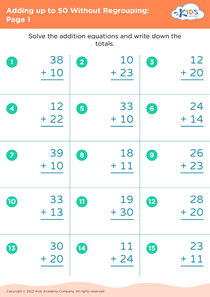
Discover essential math skills with our "Adding up to 50 with Regrouping Worksheets" designed specifically for children ages 7 to 9. These engaging worksheets help young learners master addition through fun activities that encourage critical thinking and problem-solving. Equipped with various exercises, they focus on adding numbers up to 50 while teaching the concept of regrouping effectively. Our printable resources are perfect for home or classroom use, providing a structured way to enhance math fluency and confidence. Utilize these worksheets to support your child’s development in basic math skills and watch their enthusiasm for learning grow!
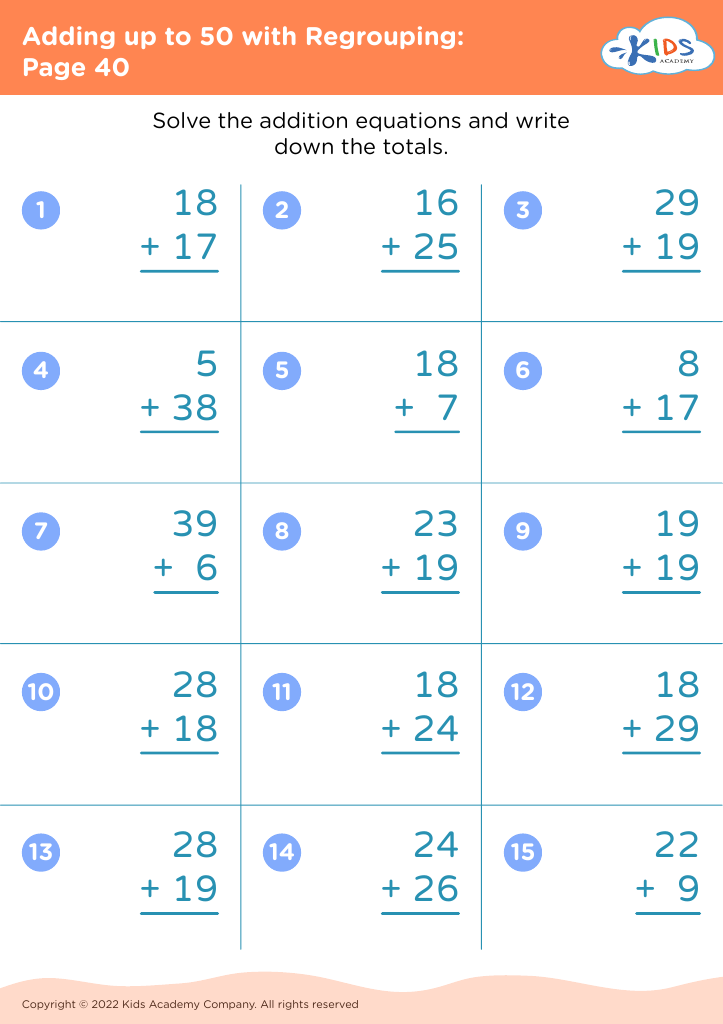
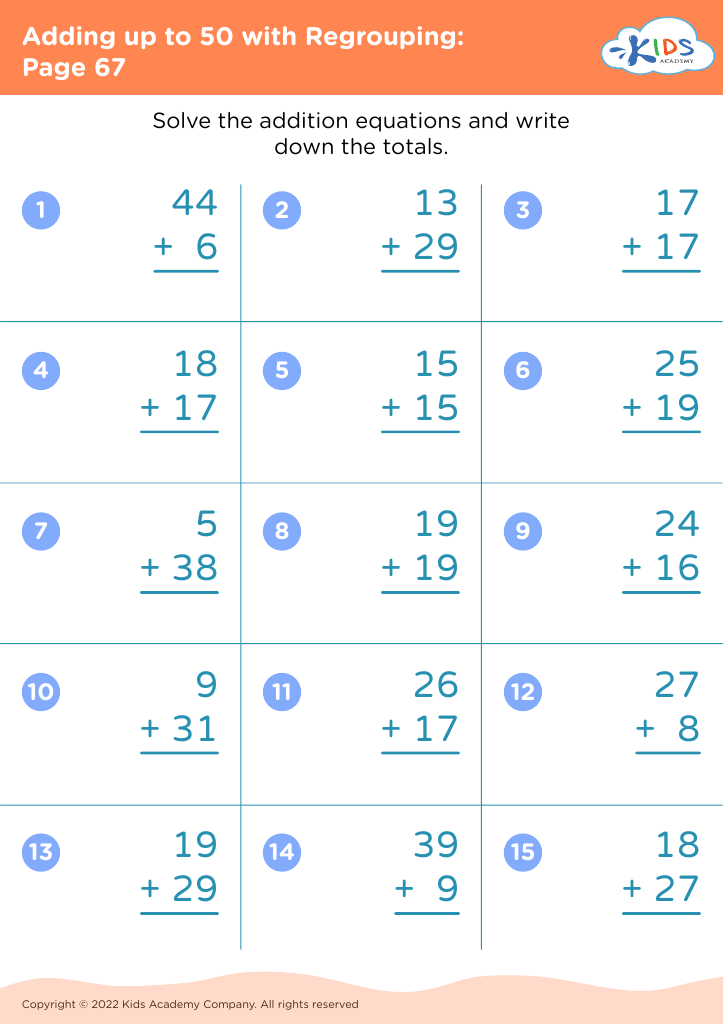
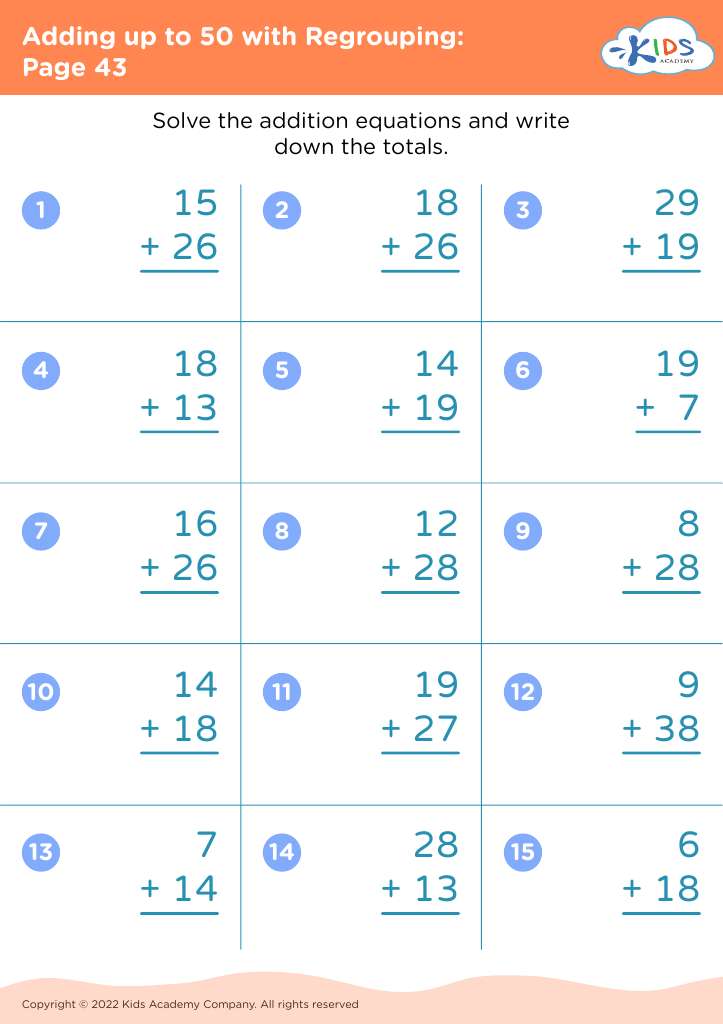
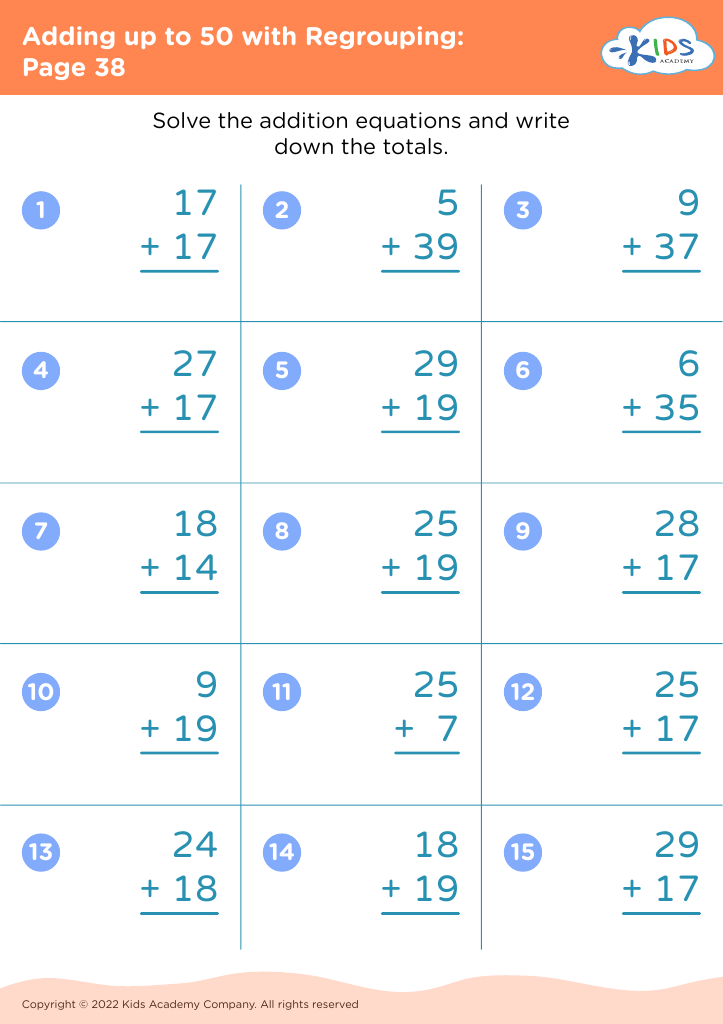
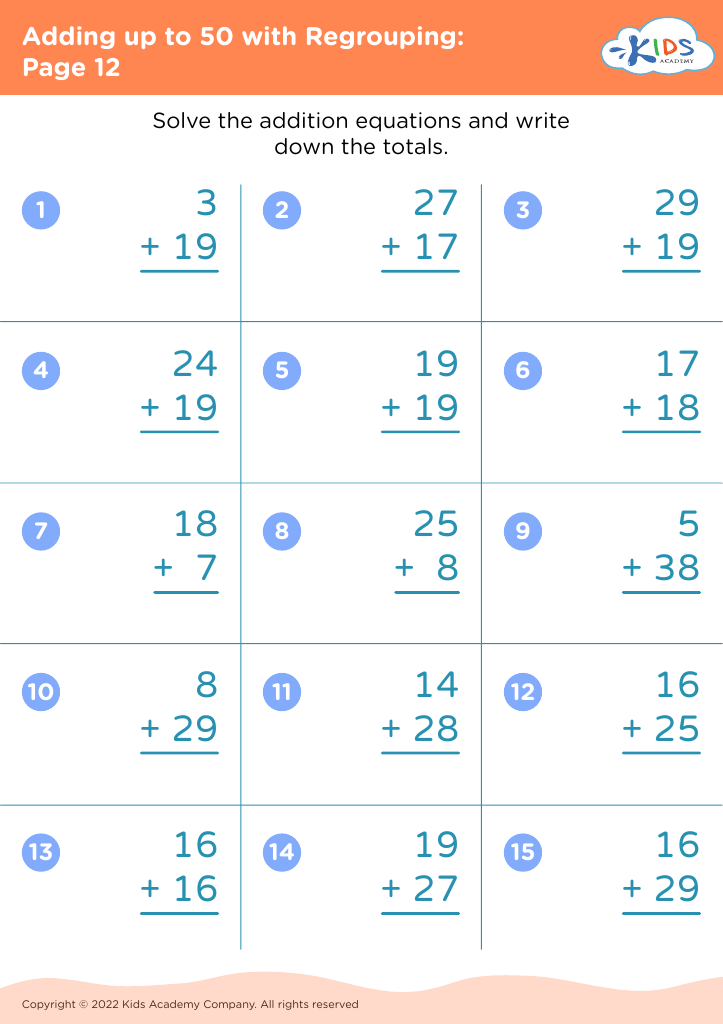


Parents and teachers should prioritize teaching basic math skills, particularly adding up to 50 with regrouping, for children ages 7 to 9 for several reasons. At this developmental stage, children are transitioning from simple arithmetic to more complex problem-solving skills. Mastering addition with regrouping not only strengthens their numerical understanding but also cultivates critical thinking and logical reasoning abilities essential for future math success.
Furthermore, these skills lay a foundation for more advanced mathematical concepts, such as subtraction, multiplication, and beyond. Proficiency in regrouping can boost a child’s confidence, encouraging a positive attitude towards math as they grasp more challenging concepts.
Additionally, strong basic math skills are fundamental for daily life integration: be it budgeting, time management, or simple measurement tasks. As early educators and caregivers, focusing on this area can bridge gaps in knowledge and ensure all children are equipped with essential life skills. Recognizing the importance of mathematical fluency helps create proficient learners who can engage with technology and contemporary workforce demands effectively. Overall, fostering addition skills is not just about arithmetic; it promotes cognitive development and prepares children for future educational challenges.