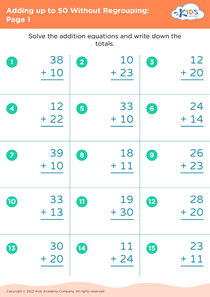
Shape Recognition Adding up to 50 with Regrouping Worksheets for Ages 7-9
6 filtered results
-
From - To
Enhance your child's math skills with our "Shape Recognition Adding up to 50 with Regrouping Worksheets" designed for ages 7-9! These engaging worksheets combine essential concepts of addition and shape identification, promoting early math fluency. Children will practice adding numbers up to 50 while recognizing different geometric shapes, reinforcing their spatial awareness and critical thinking skills. Each activity is crafted to encourage problem-solving, boost confidence, and strengthen foundational math abilities. Perfect for at-home learning or classroom use, our worksheets make math fun and interactive. Download today to help your child excel in both mathematics and shape recognition!
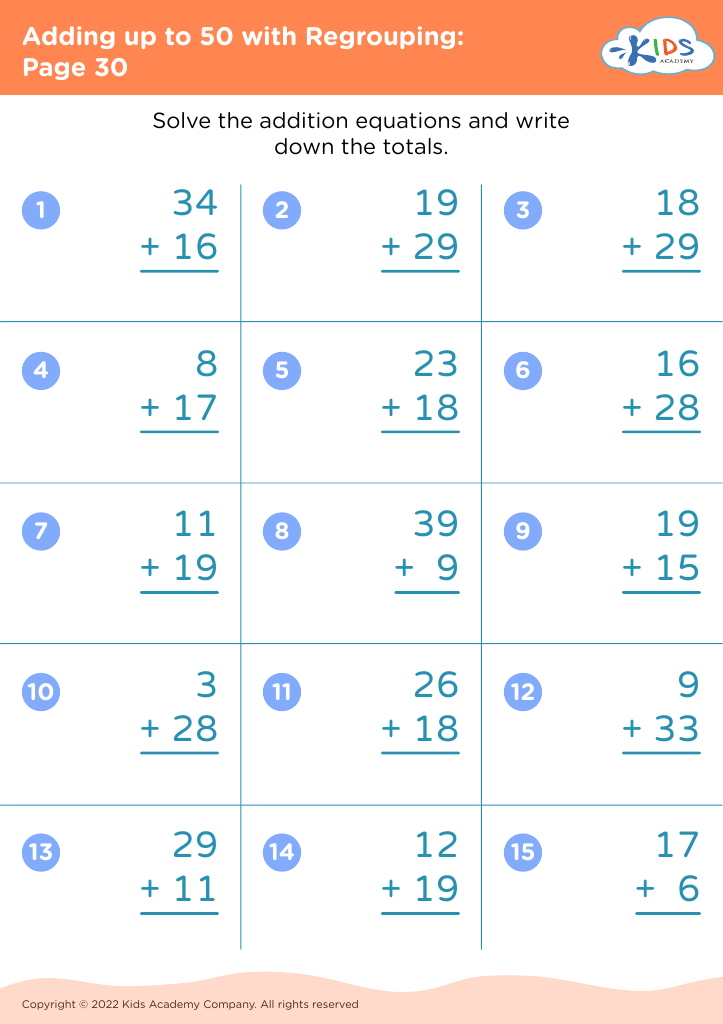
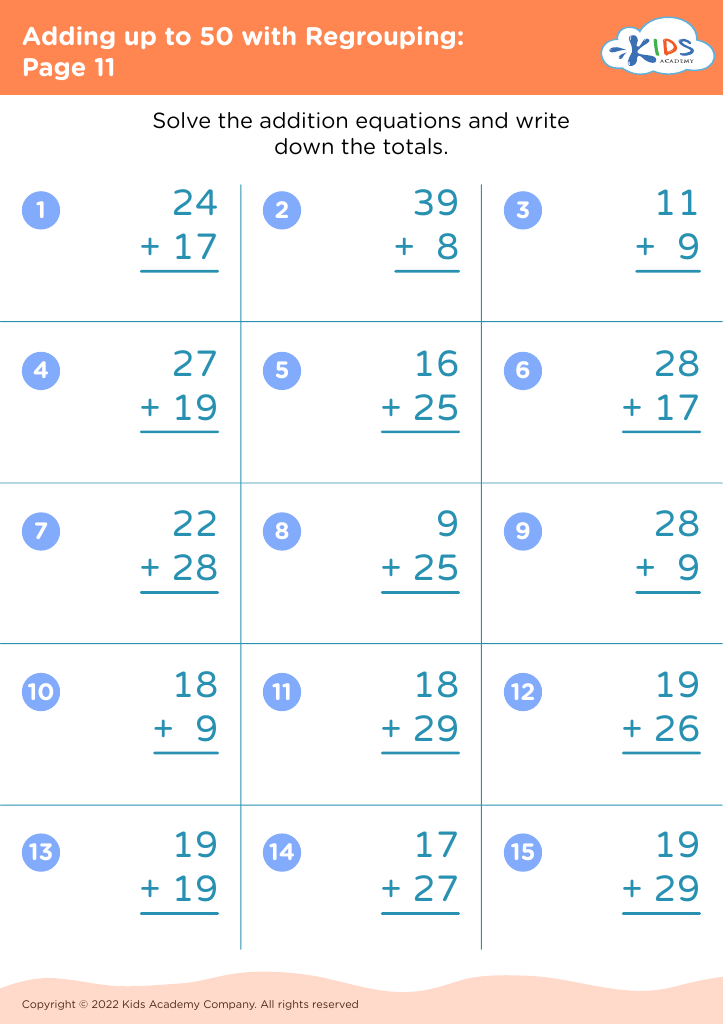
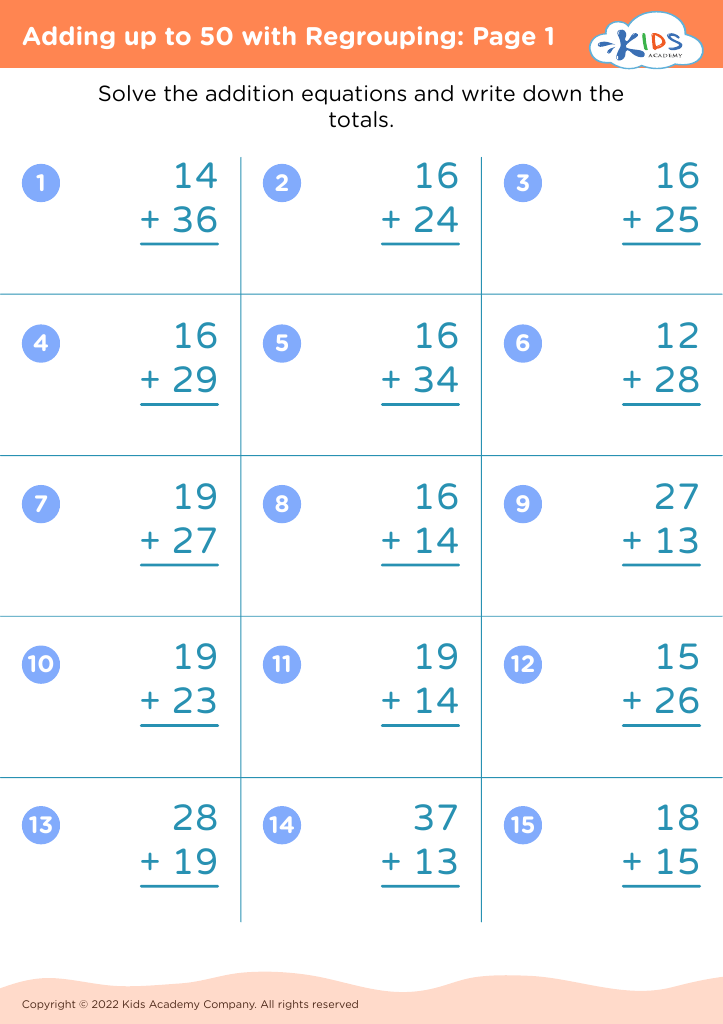
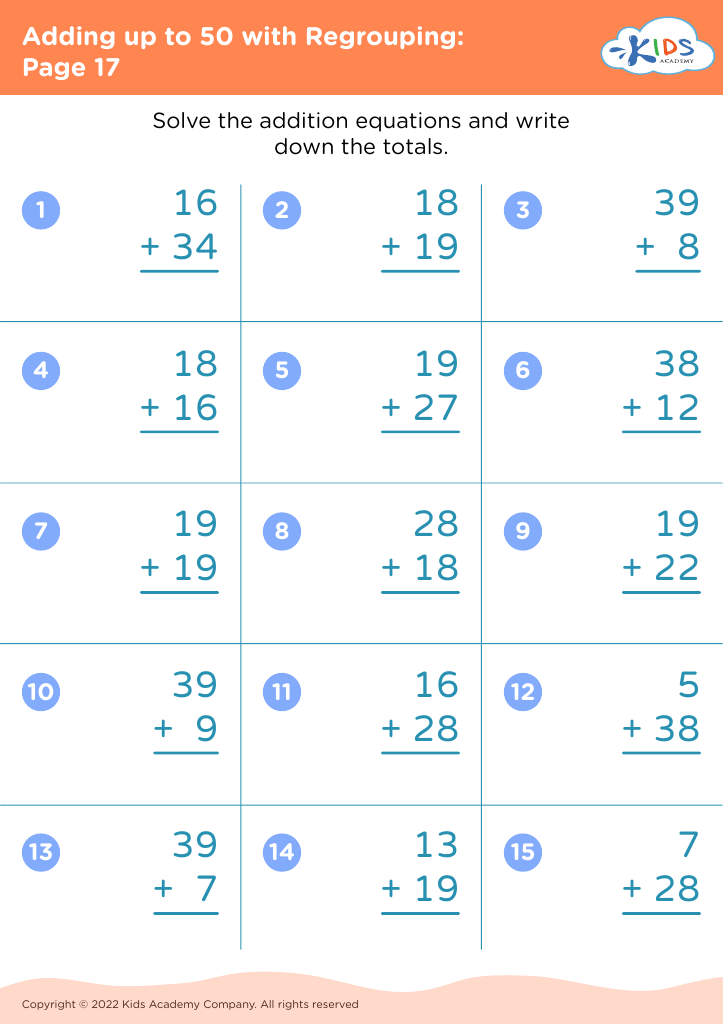
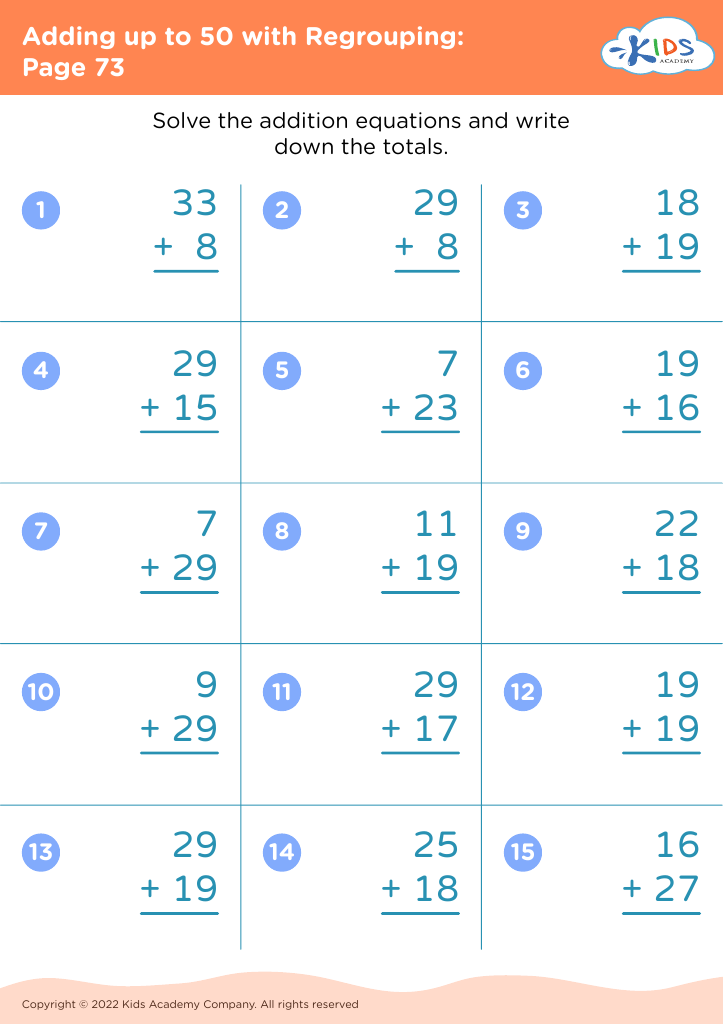
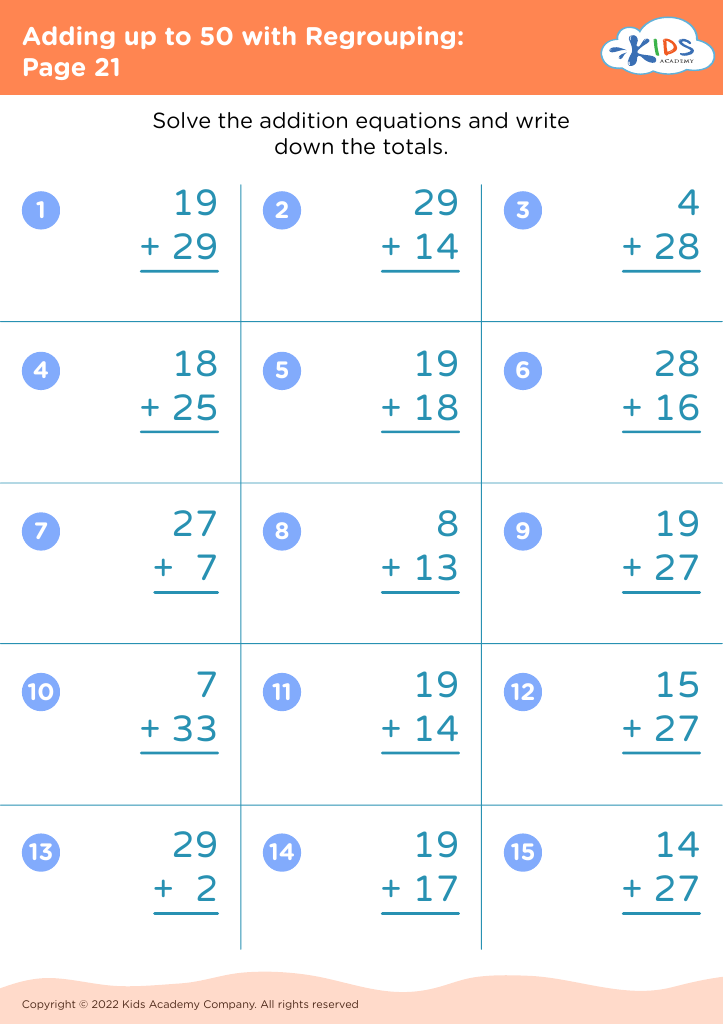


Shape recognition and understanding how to add up to 50 with regrouping are crucial skills for children aged 7-9 as they form foundational concepts in geometry and arithmetic. Shape recognition helps children identify and categorize various geometrical figures, fostering spatial awareness and enhancing their ability to visualize and understand the world around them. This skill is essential not just in math, but also in art, science, and daily problem-solving scenarios.
On the other hand, adding up to 50 with regrouping introduces children to essential arithmetic processes like carrying and borrowing, which are critical for their future math education. Mastering these addition techniques strengthens their number sense, promotes mental math skills, and builds confidence when tackling more complex calculations.
Both skills work in tandem to nurture a child’s cognitive development, encouraging logical reasoning and analytical thinking. By focusing on these areas, parents and teachers can support children in developing a solid foundation that enhances their academic performance and problem-solving abilities. Ultimately, fostering these skills empowers students to navigate more advanced concepts with ease, preparing them for future challenges in mathematics and beyond. Investing in these early learning milestones promotes holistic growth and academic success in the long run.