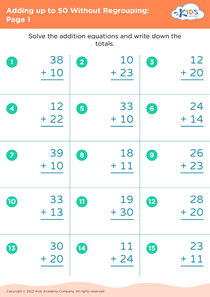
Understanding symmetry Adding up to 50 with Regrouping Worksheets for Ages 7-9
4 filtered results
-
From - To
Unlock the wonders of symmetry while mastering addition with our "Understanding Symmetry: Adding up to 50 with Regrouping" worksheets, designed for ages 7-9. These engaging resources will help young learners explore the concept of symmetry through fun activities and challenging math problems. Fostering critical thinking, these worksheets encourage students to develop their mathematical skills while understanding visual balance and symmetry in numbers. By integrating playful exercises into the learning process, children will enhance their ability to add numbers up to 50, using regrouping techniques effectively. Ideal for teachers and parents looking to boost math confidence in young learners!
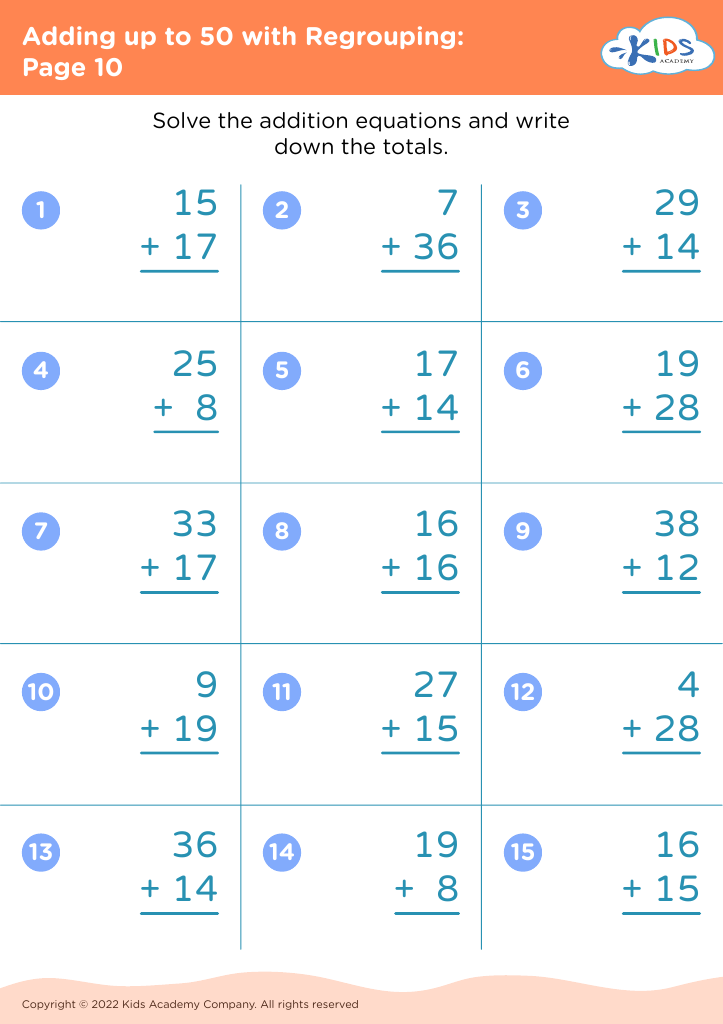
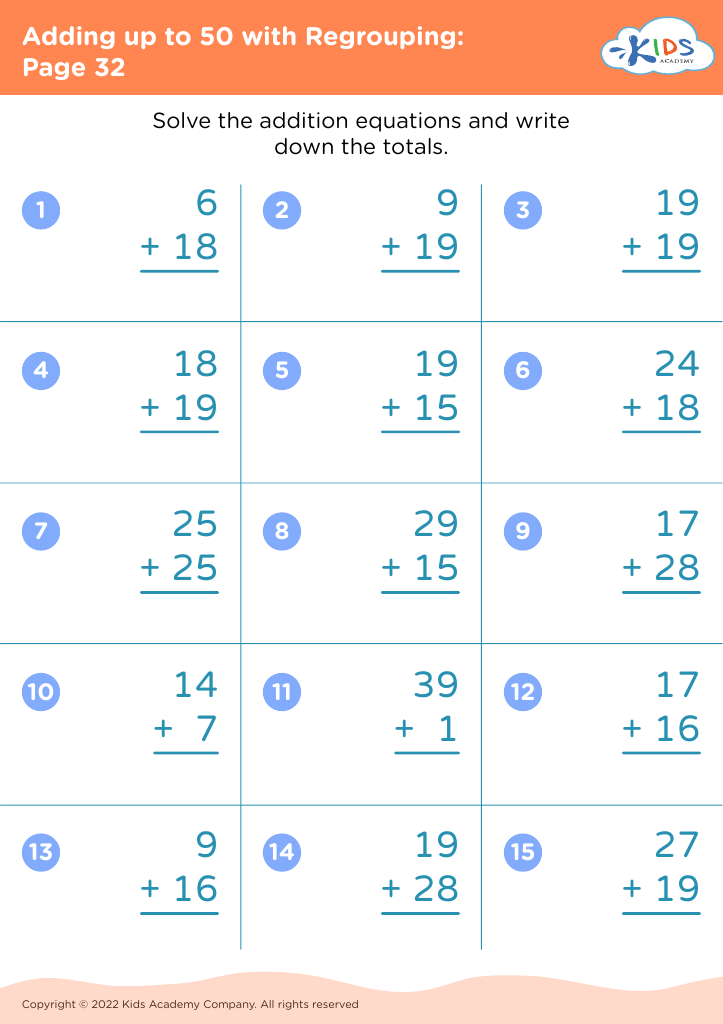
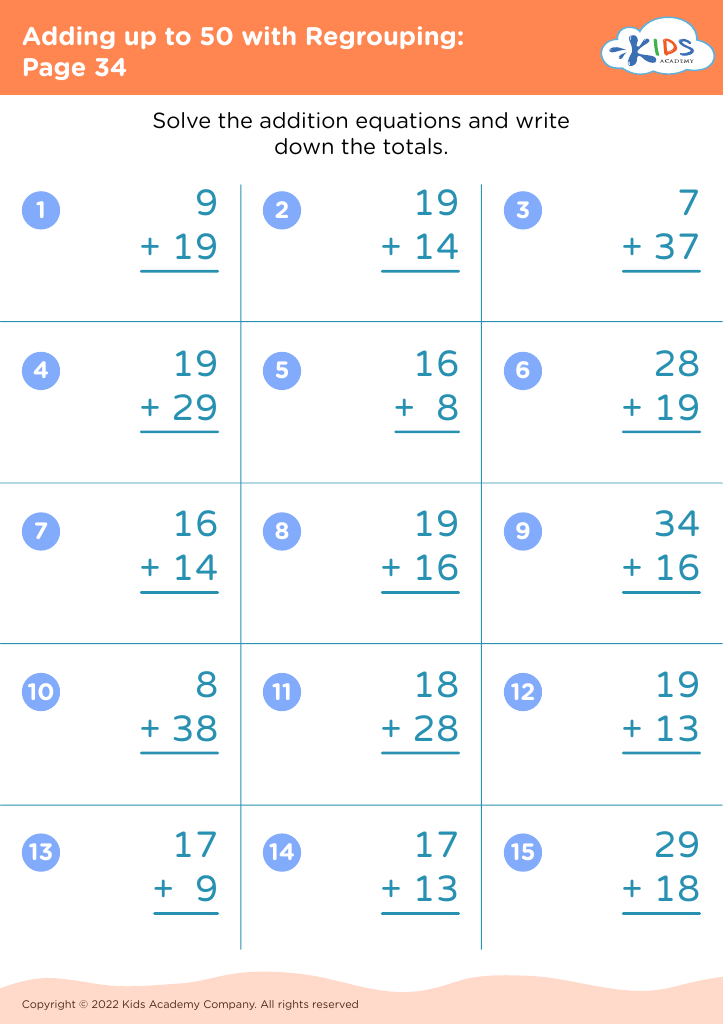
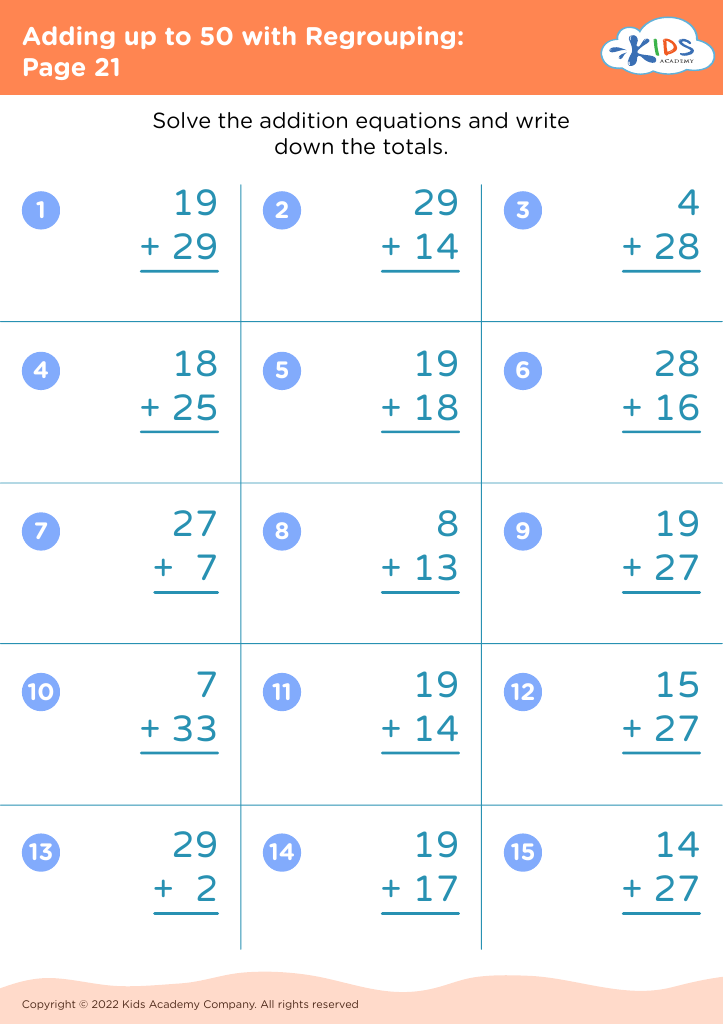


Understanding symmetry and regrouping when adding up to 50 are essential mathematical concepts for children aged 7-9, and here's why parents and teachers should care.
Firstly, symmetry fosters visual-spatial awareness, which is foundational for many aspects of mathematics and real-world problem-solving. Recognizing symmetrical patterns helps children grasp concepts like addition, subtraction, and fractions more easily. This not only aids in mathematical comprehension but also enhances critical thinking skills.
Secondly, group activities and games that involve symmetry can make learning more engaging. When children explore symmetry through fun, hands-on experiences, they become more motivated learners.
Moreover, the skill of regrouping in addition is crucial when it comes to efficient problem-solving. As children add numbers to 50, they learn to break down complex problems into manageable parts, developing their abilities to think logically and systematically.
By emphasizing these concepts during the critical ages of 7 to 9, parents and teachers can equip children with skills that will serve them well throughout their academic journey and beyond. Building a strong mathematical foundation encourages a lifelong appreciation for math and fosters confidence in their problem-solving abilities. Understanding symmetry and regrouping strengthens overall cognitive development, making these concepts invaluable.