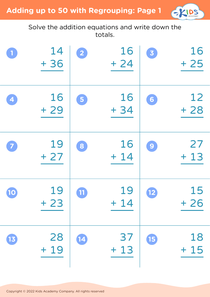
Basic addition practice Adding up to 50 Without Regrouping Worksheets for Ages 7-9
3 filtered results
-
From - To
Enhance your child's math skills with our "Basic Addition Practice: Adding Up to 50 Without Regrouping Worksheets"! Designed for ages 7-9, these engaging worksheets provide ample opportunities for young learners to practice addition in a fun and challenging way. Focusing on simple calculations without regrouping, these resources help build foundational skills, boost confidence, and foster a love for math. The worksheets offer clear instructions and appealing visuals that make learning approachable and enjoyable. Perfect for home or classroom use, our printable worksheets are an excellent way to support your child's educational journey while mastering essential addition skills!
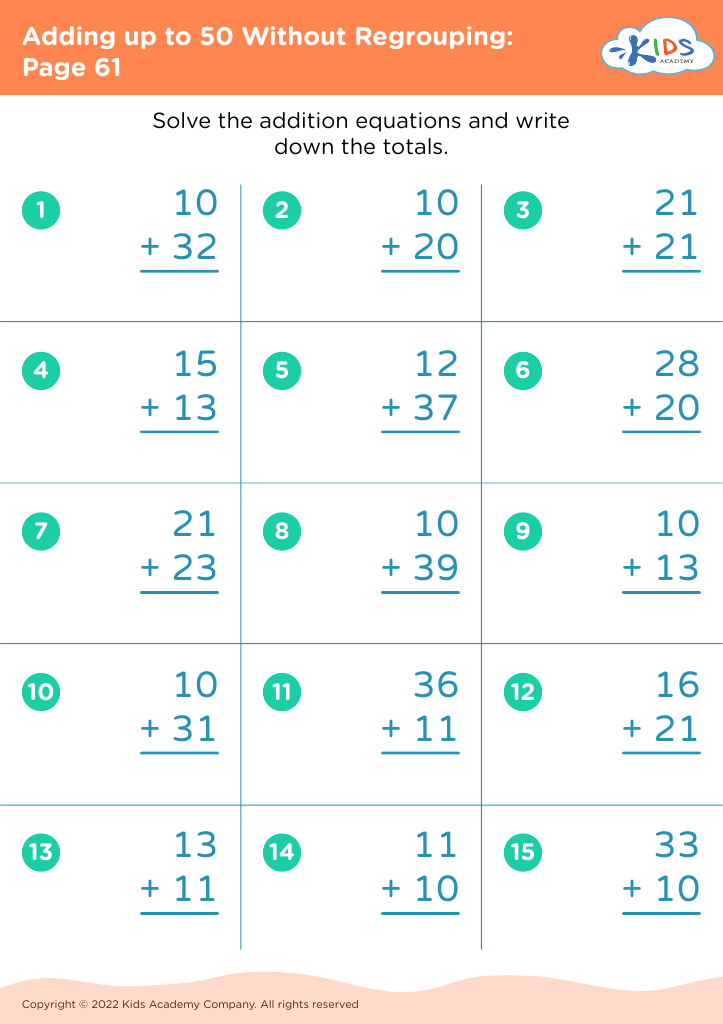
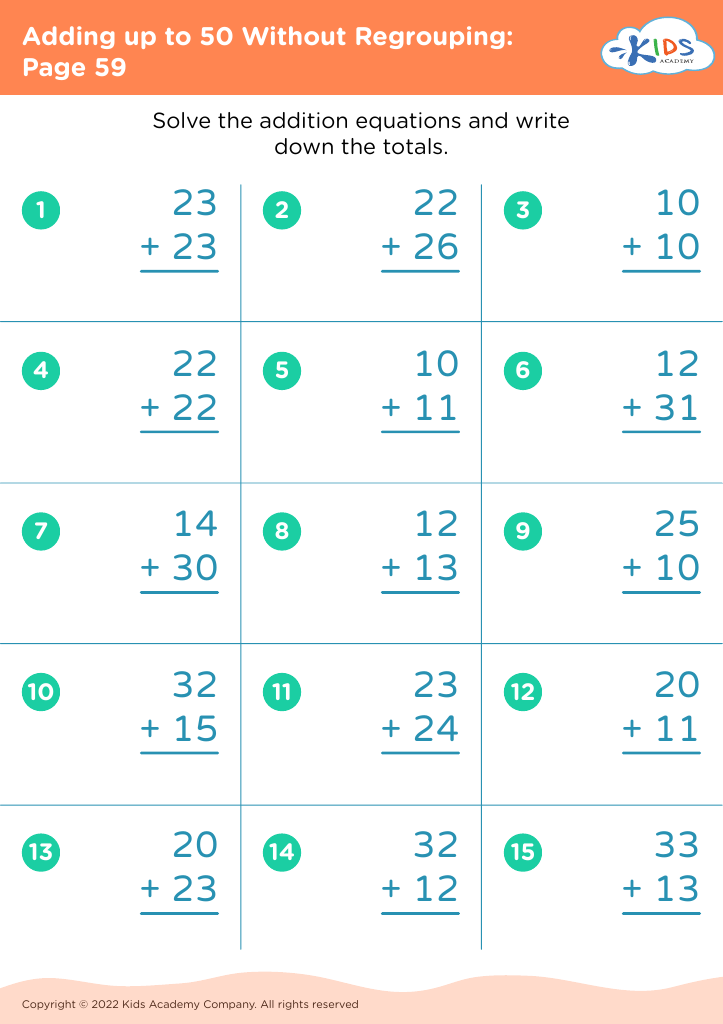
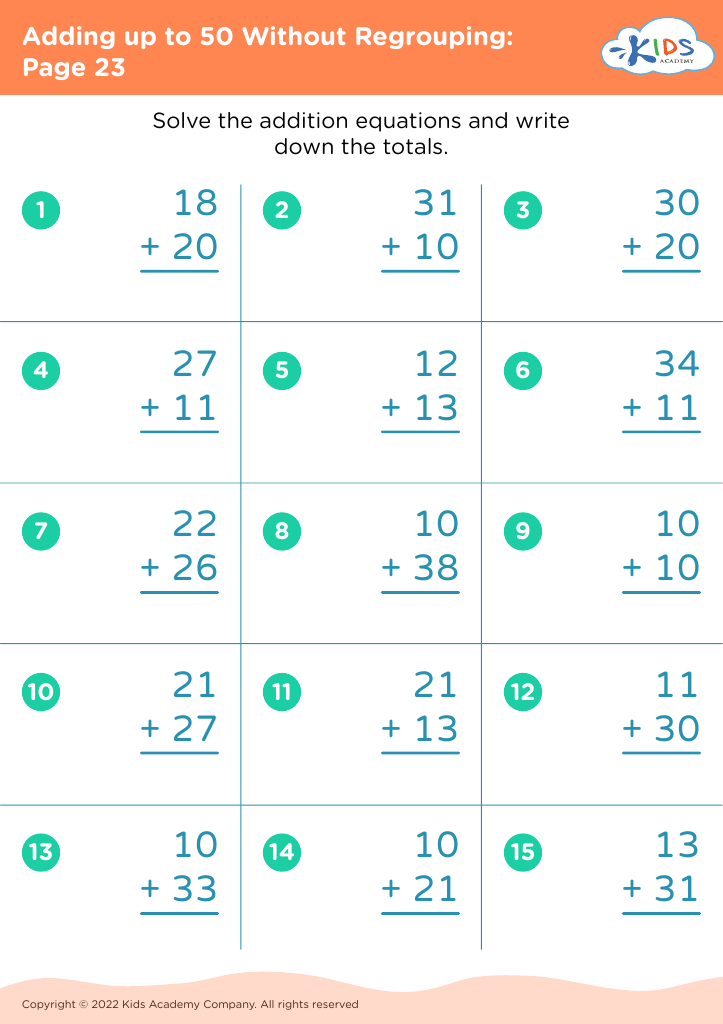


Basic addition practice, particularly adding up to 50 without regrouping, is crucial for children ages 7-9 as it lays the foundational skills necessary for more advanced mathematical concepts. At this age, children are developing their number sense, which enables them to understand quantity, relationships between numbers, and the basic principles of arithmetic. Mastering addition helps boost their confidence, making them more willing to tackle challenging problems in the future.
Moreover, practical applications abound; whether counting objects, measuring ingredients in cooking, or shopping, strong addition skills are vital in daily life. Engaging in consistent practice also fosters improvement in concentration and cognitive development, encouraging children to focus better on tasks.
For teachers and parents, providing consistent, encouraging practice helps identify learning difficulties early, allowing for timely intervention tailored to individual needs. Creating a supportive environment reinforces the enjoyment of learning and makes mathematics more approachable. Overall, stressing the importance of basic addition skills is significant, as it significantly influences not only academic performance in mathematics but also supports a broader understanding of problem-solving throughout a child’s education and life.