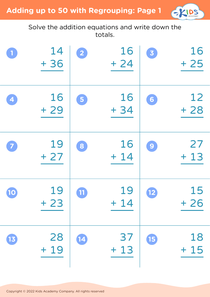
Basic Math Skills Adding up to 50 Without Regrouping Worksheets for Ages 7-9
6 filtered results
-
From - To
Enhance your child's math abilities with our "Basic Math Skills: Adding Up to 50 Without Regrouping" worksheets, specifically designed for children ages 7-9. These engaging and interactive worksheets focus on building foundational addition skills, allowing young learners to sum numbers quickly and accurately without the need for regrouping. Each worksheet offers a variety of colorful exercises that promote an understanding of basic math principles, helping children develop confidence as they progress. Perfect for home or classroom use, these worksheets are an excellent tool for educators and parents looking to reinforce math skills in a fun and effective way. Get started today!
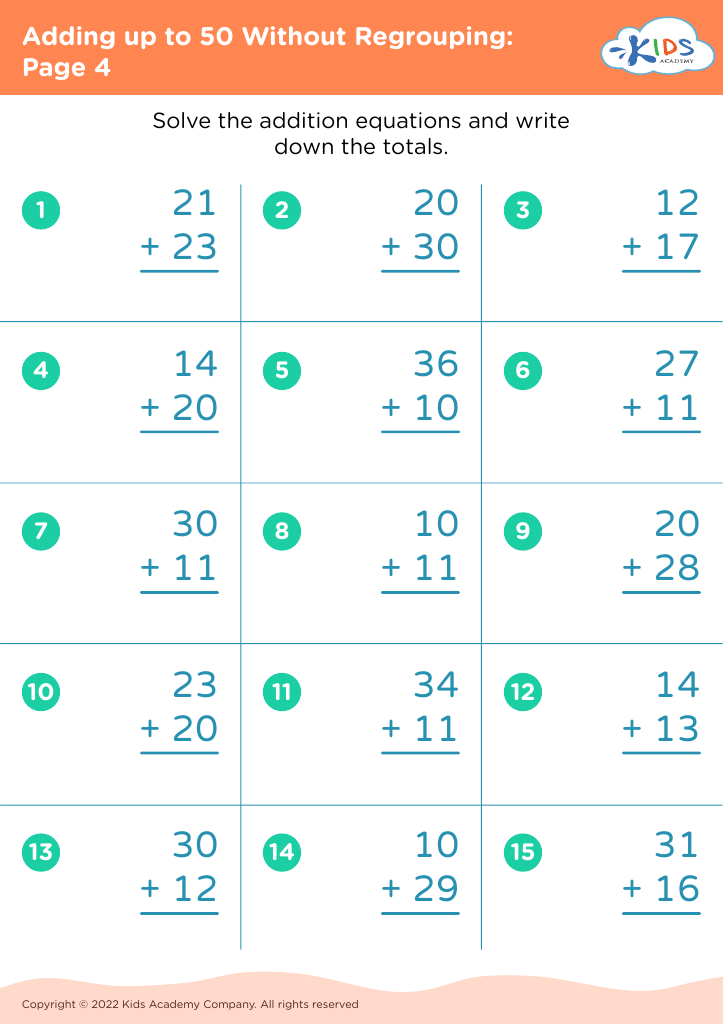
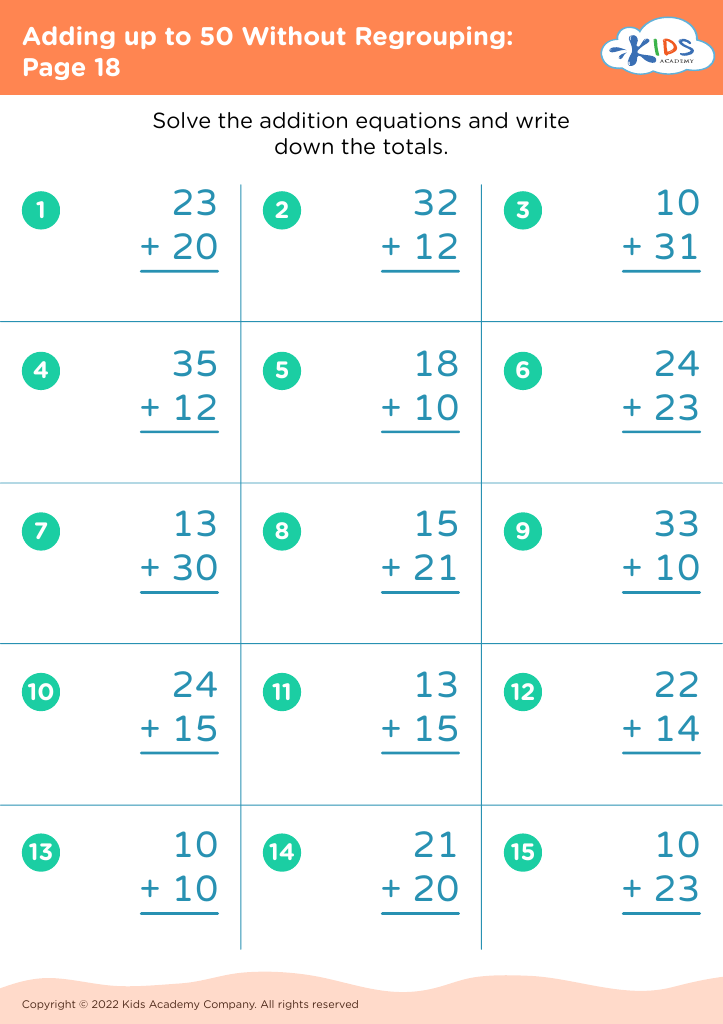
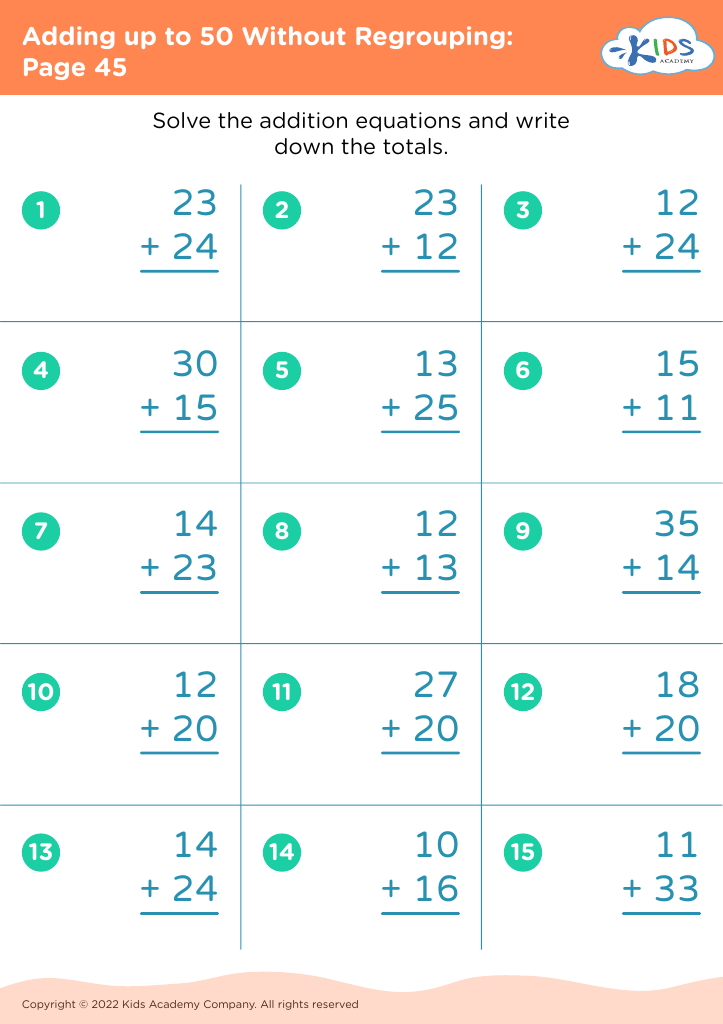
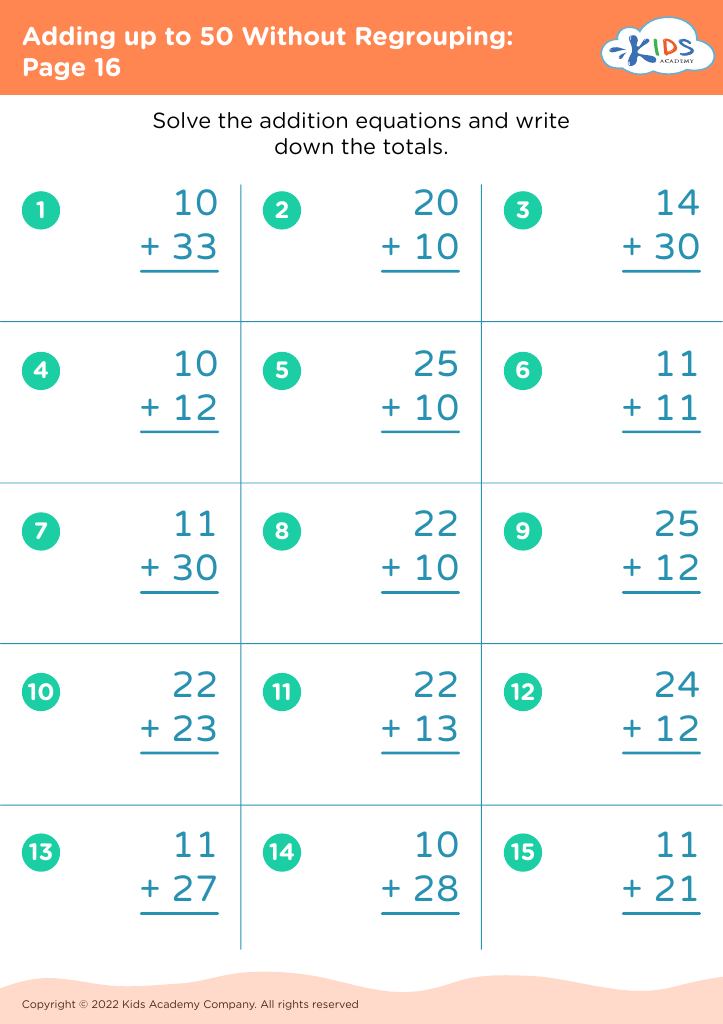
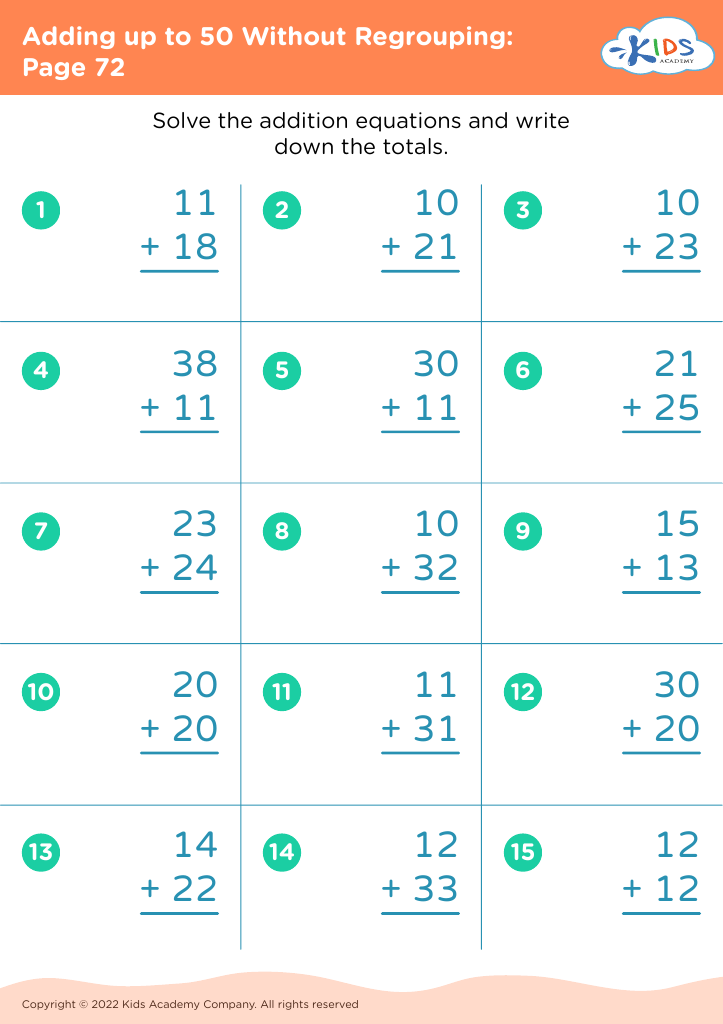
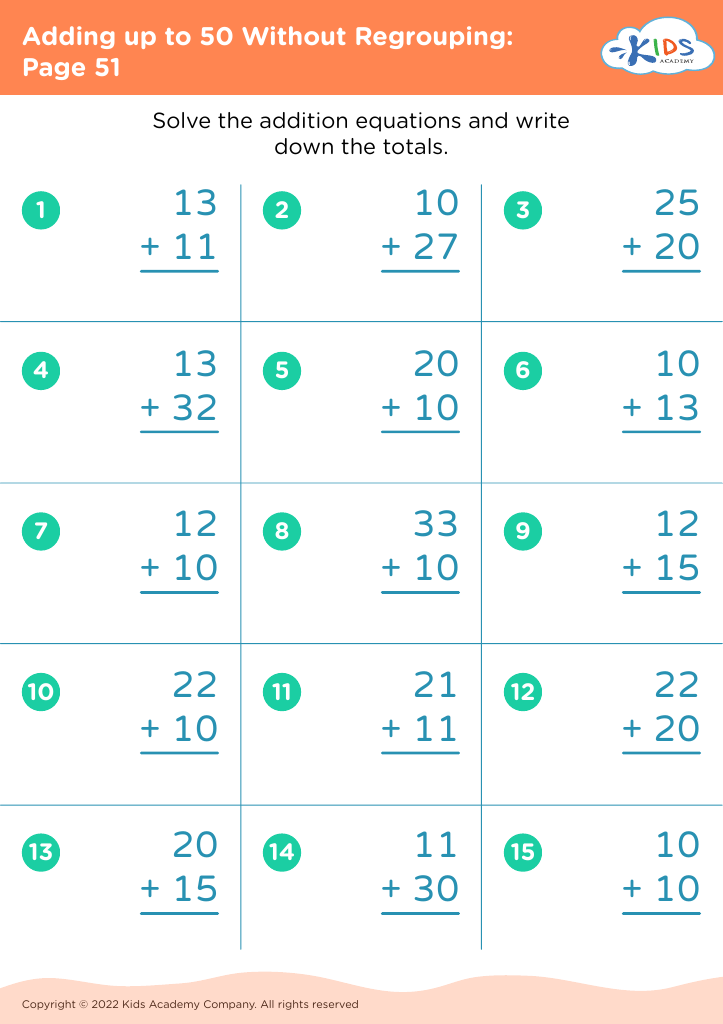


Basic math skills, such as adding up to 50 without regrouping, are crucial for children aged 7-9 as they form the foundation for more complex mathematical concepts later on. Mastery of addition not only enhances a child's numerical fluency but also boosts their confidence in handling everyday math situations, such as budgeting, telling time, or measuring ingredients in cooking.
For parents and teachers, fostering these basic skills supports cognitive development and encourages logical thinking. When children practice simple addition, they're not merely memorizing facts but also developing problem-solving strategies that can be applied in various contexts. This foundational stage helps reinforce place value understanding, teaching them the significance of numbers and their relationships.
Additionally, proficiently adding numbers helps children participate more fully in classroom activities, engage in group work, and develop a love for learning. Early math skills are also linked to future academic success; children who struggle with these basics may face challenges as they encounter more complex math operations later. Therefore, prioritizing these skills in educational settings and at home prepares children not just for math tests, but for a life where math plays a significant role in their decision-making and daily activities.