Identifying shapes Adding up to 50 Without Regrouping Worksheets for Ages 7-9
6 filtered results
-
From - To
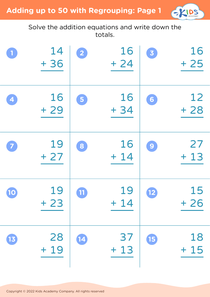
Enhance your child's math skills with our "Identifying Shapes Adding Up to 50 Without Regrouping Worksheets" designed specifically for ages 7-9. These engaging worksheets blend shape identification with addition techniques, allowing young learners to practice their math skills in a fun and interactive way. Students will develop their understanding of geometric shapes while mastering addition problems that sum up to 50—all without the need for regrouping. Perfect for classroom activities or at-home learning, these worksheets provide endless opportunities for practice, ensuring that your child builds confidence and competence in both math and geometry. Foster a love for learning today!
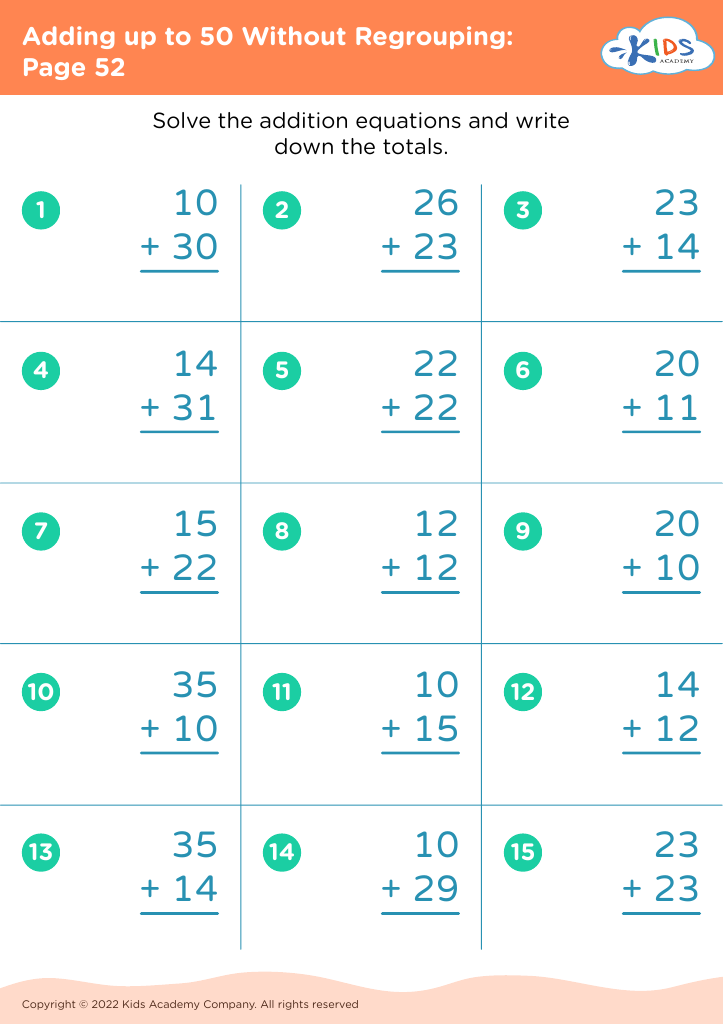
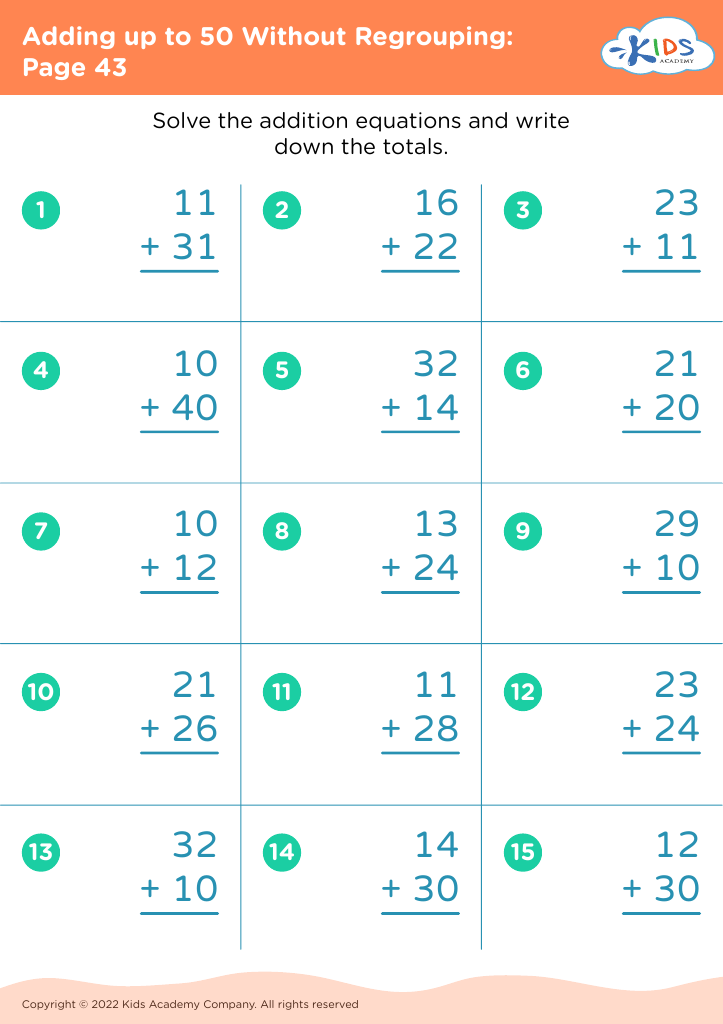
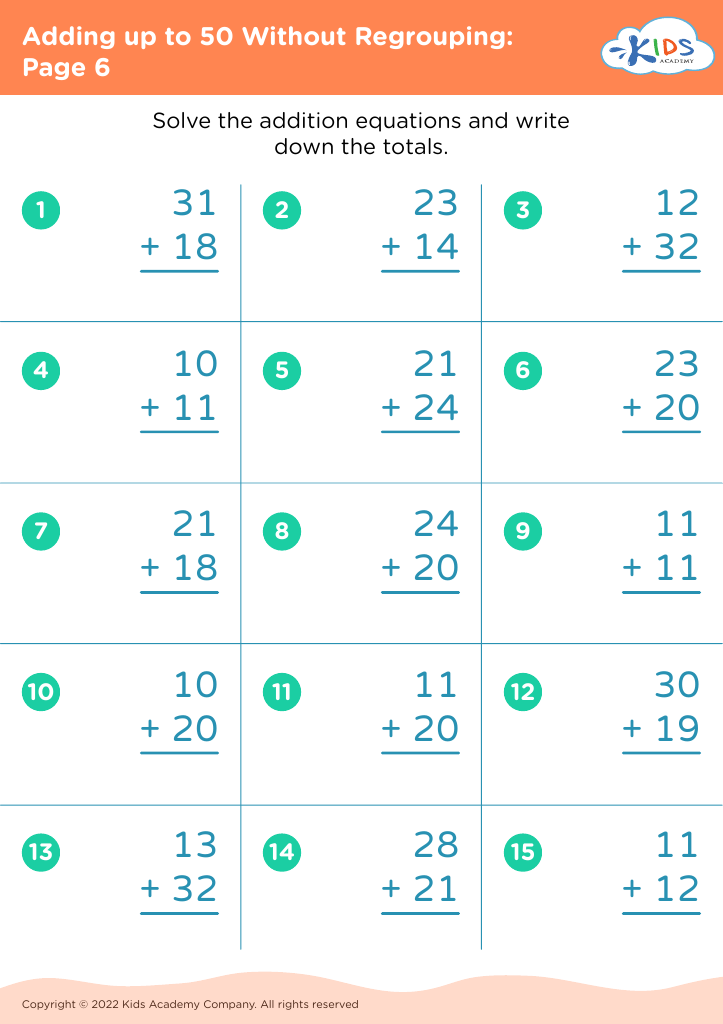
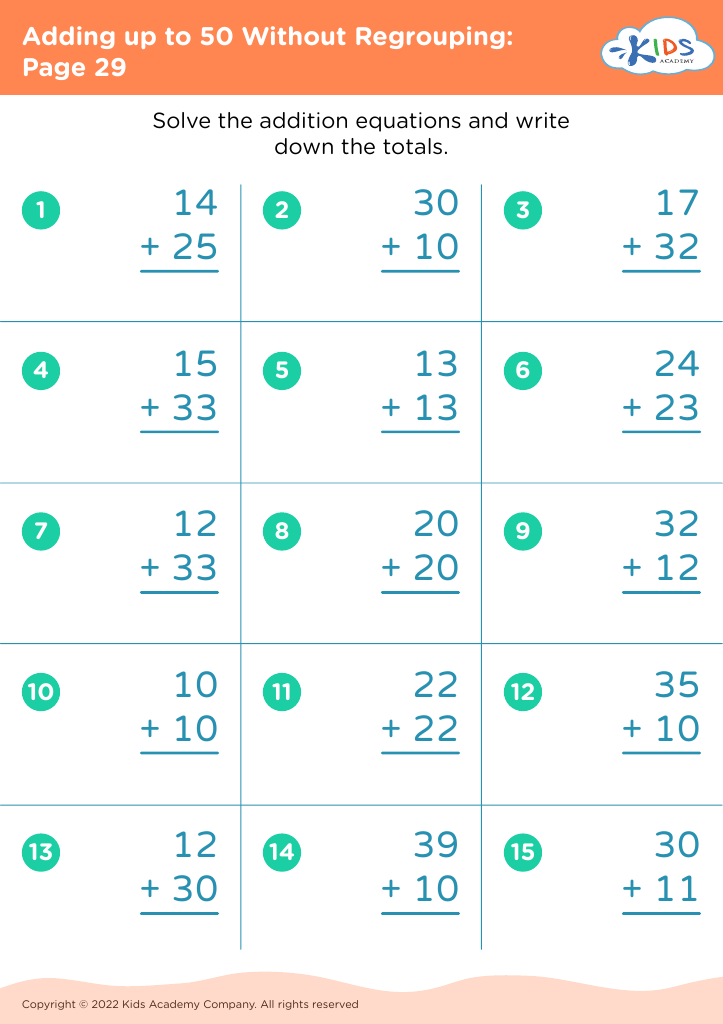
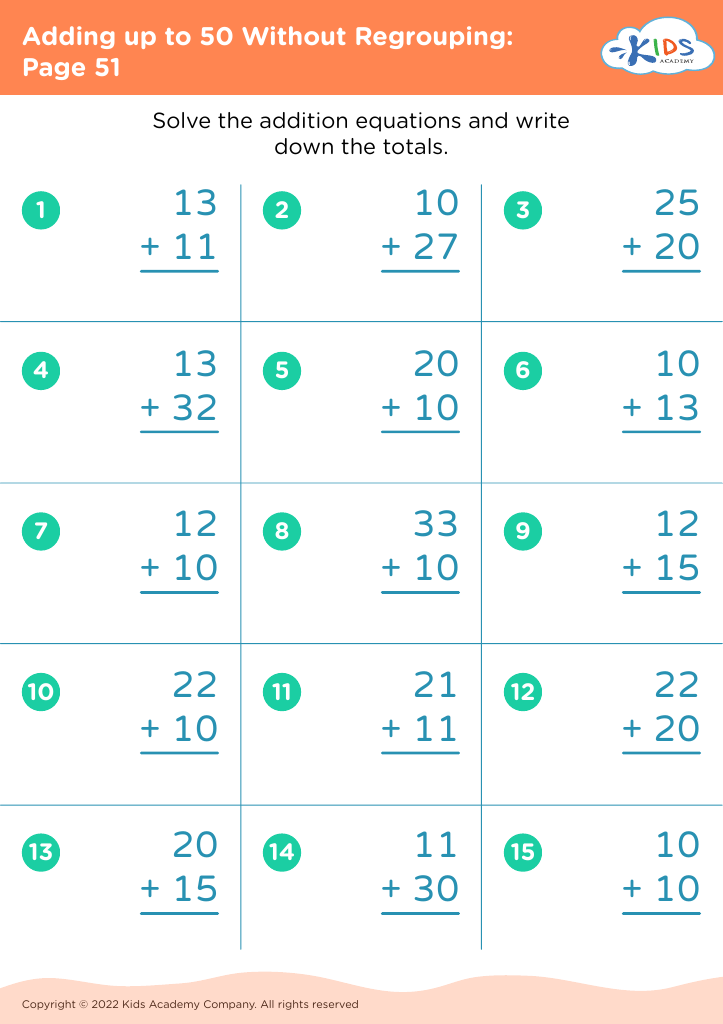
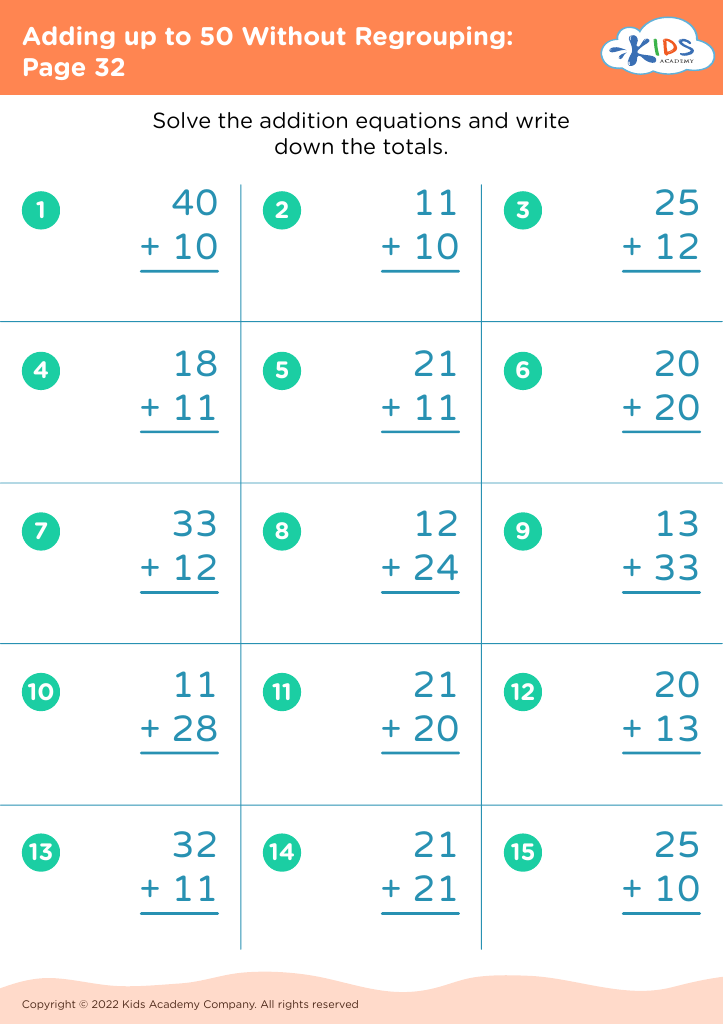


Identifying shapes and adding numbers up to 50 without regrouping are foundational skills crucial for children ages 7-9. These skills form the building blocks of mathematics and support cognitive development in various ways.
First, understanding shapes enhances spatial awareness, enabling children to interpret their surroundings, which is essential for subjects like geometry and even everyday activities such as understanding maps or constructing models. Recognizing shapes also stimulates critical thinking, as students learn to classify and compare different forms.
On the other hand, addition without regrouping helps children develop fundamental arithmetic skills. Mastering this concept allows students to perform calculations quickly and accurately, boosting their confidence in math. Since addition is a basis for more complex operations, such as subtraction, multiplication, and even fractions, solidifying these skills early on ensures a smoother transition into higher-level math.
Moreover, when teachers and parents focus on these skills, they foster a positive attitude toward learning in children, showing them that math can be fun and applicable to daily life. A solid foundation in these areas not only supports academic success but also equips children with valuable problem-solving skills that they will use beyond the classroom. Hence, prioritizing these competencies is instrumental for holistic development.