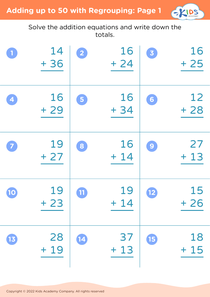
Improve counting skills Adding up to 50 Without Regrouping Worksheets for Ages 7-9
6 filtered results
-
From - To
Enhance your child's counting abilities with our "Improve Counting Skills: Adding up to 50 Without Regrouping Worksheets" designed for ages 7-9. These dynamic, engaging exercises aid students in mastering addition without needing to regroup, reinforcing essential math concepts. Focused on numbers up to 50, our worksheets provide the perfect practice to boost confidence and accuracy in young learners. Explore various fun, educative approaches that gradually build competency and ensure a strong foundation in basic arithmetic. Visit us today to transform math learning into an exciting and rewarding journey for your child!
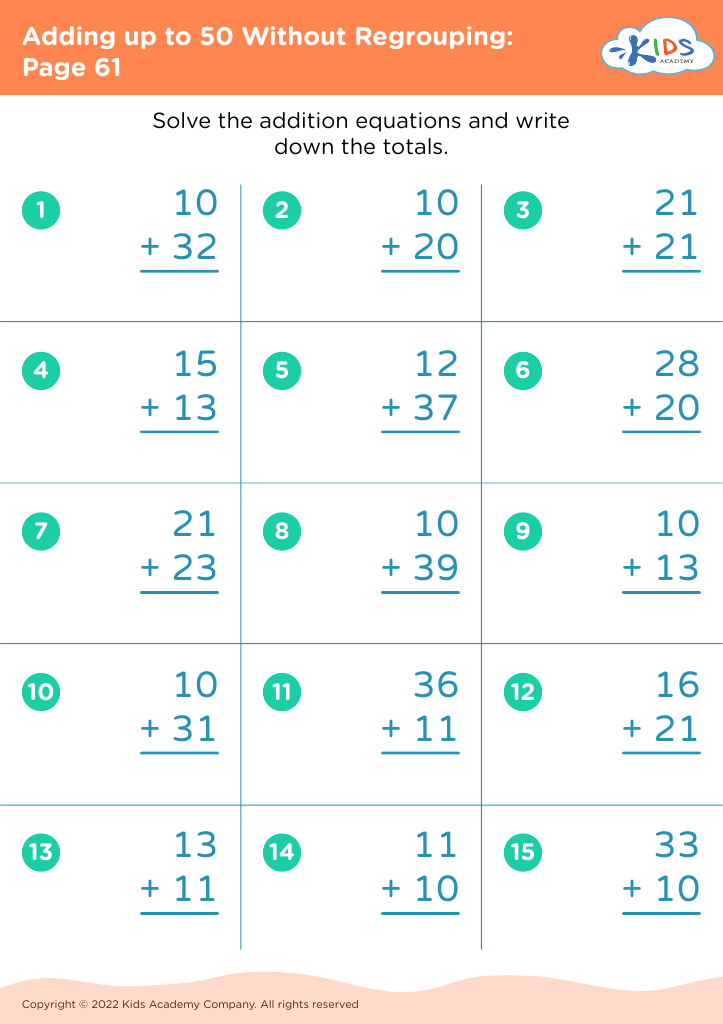
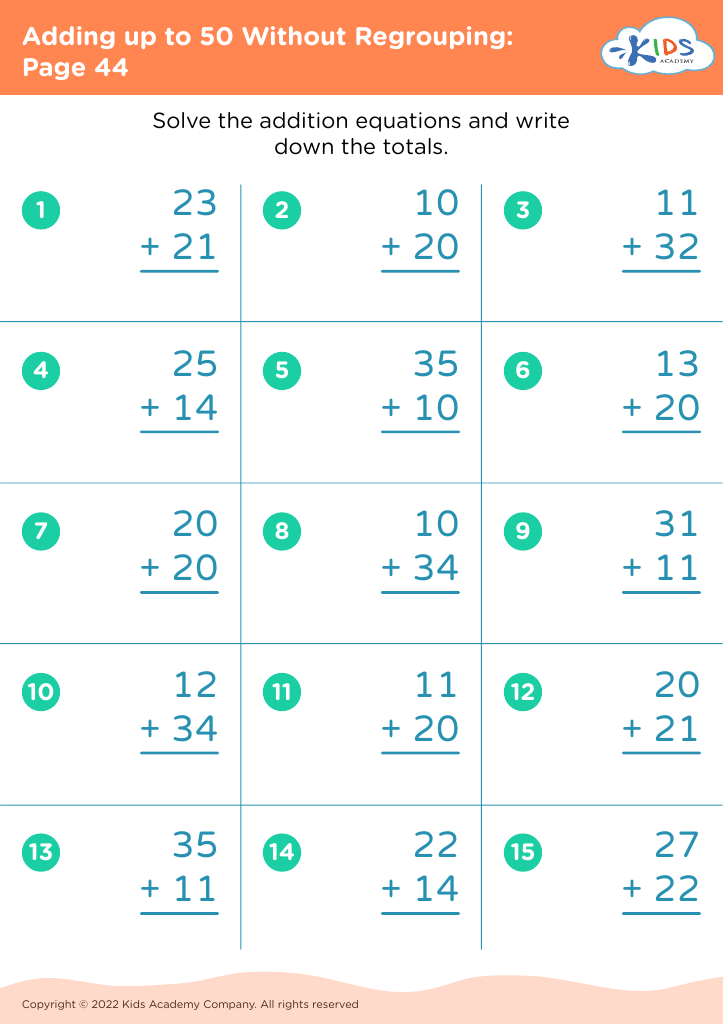
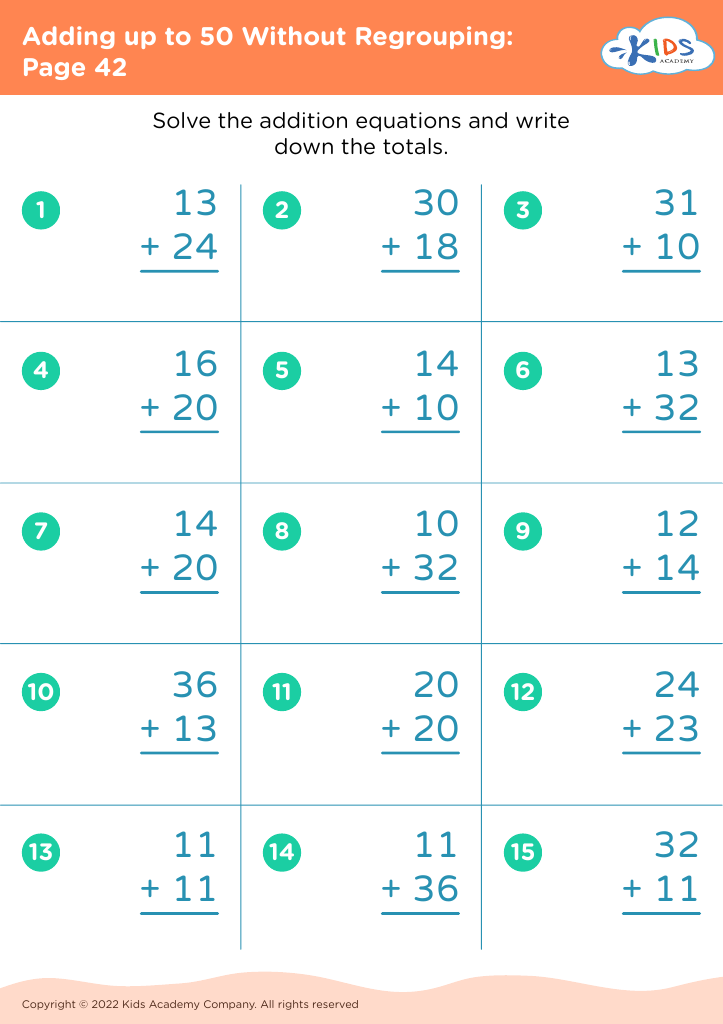
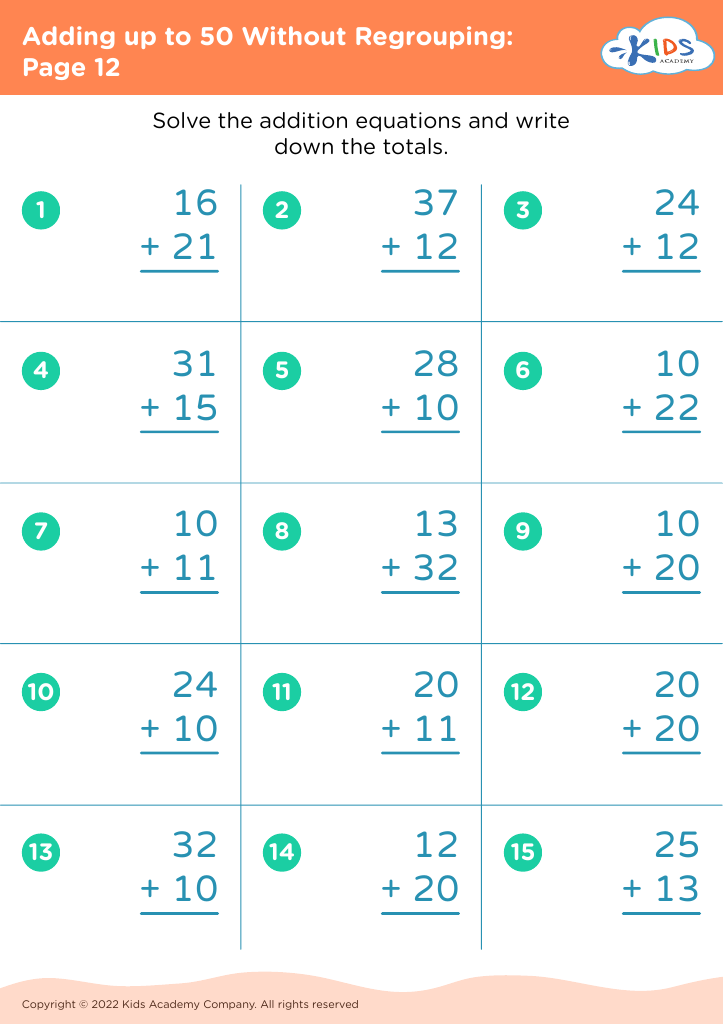
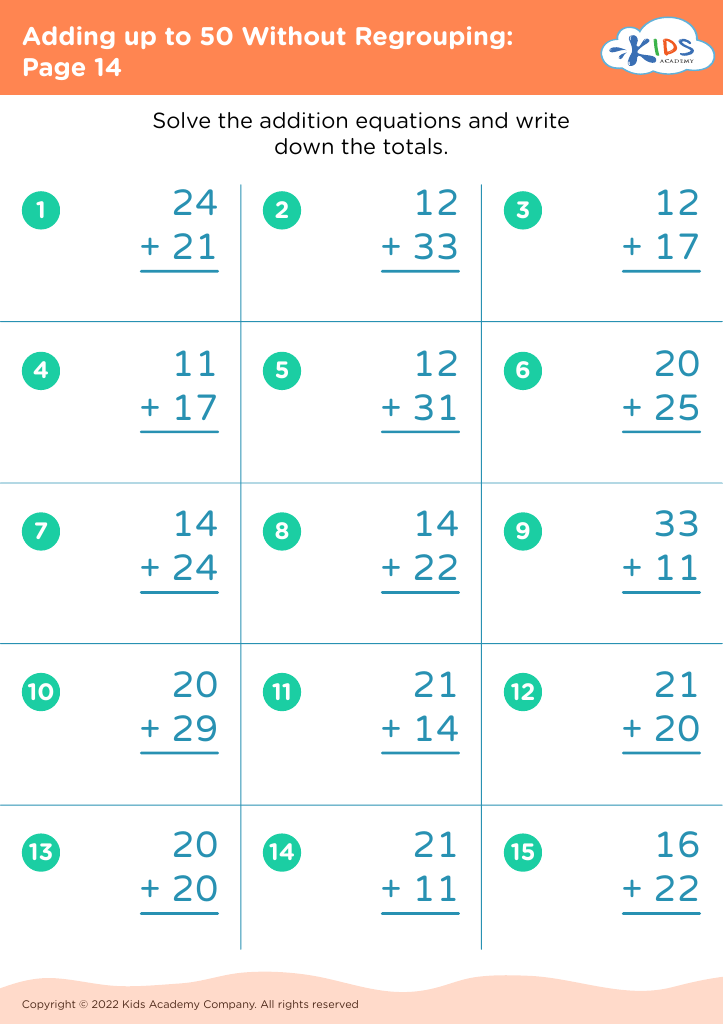
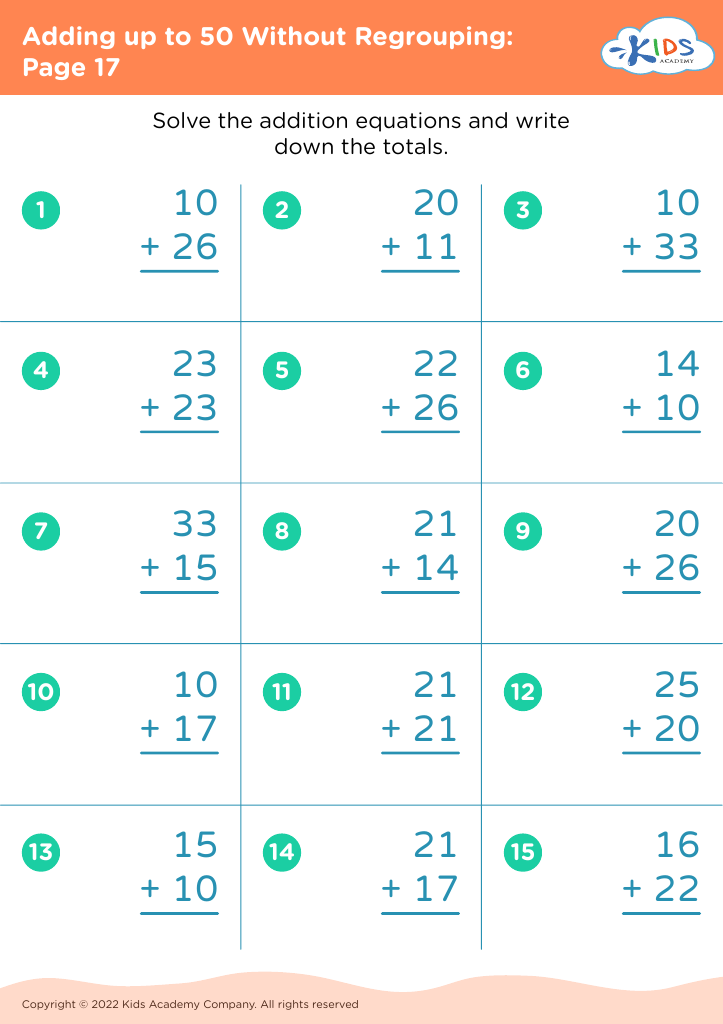


Parents and teachers should prioritize improving counting skills and teaching addition up to 50 without regrouping for children ages 7-9 because these foundational skills are crucial for their mathematical development and overall cognitive growth. At this age, children are transitioning from basic number recognition to more complex arithmetic operations. Proficiency in counting and simple addition helps solidify their understanding of number relationships and place value, establishing a strong base for future math learning, such as multiplication and more advanced problem-solving.
Developing these skills can enhance children's confidence and enthusiasm for math, reducing anxiety and fostering a positive attitude towards learning. Strong counting and addition abilities also support everyday tasks, such as making transactions, understanding time, and following sequences, promoting practical life skills.
Teachers can create engaging and interactive lessons, using manipulatives and visual aids, to make learning more appealing. Parents can reinforce these concepts at home through games and real-life applications, creating a supportive learning environment. Together, this collaborative effort between parents and teachers helps children build a robust mathematical foundation, setting them up for ongoing academic success and critical thinking skills, which are essential for their future education and life endeavors.