Reading comprehension Adding up to 50 Without Regrouping Worksheets for Ages 7-9
3 filtered results
-
From - To
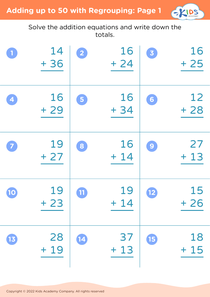
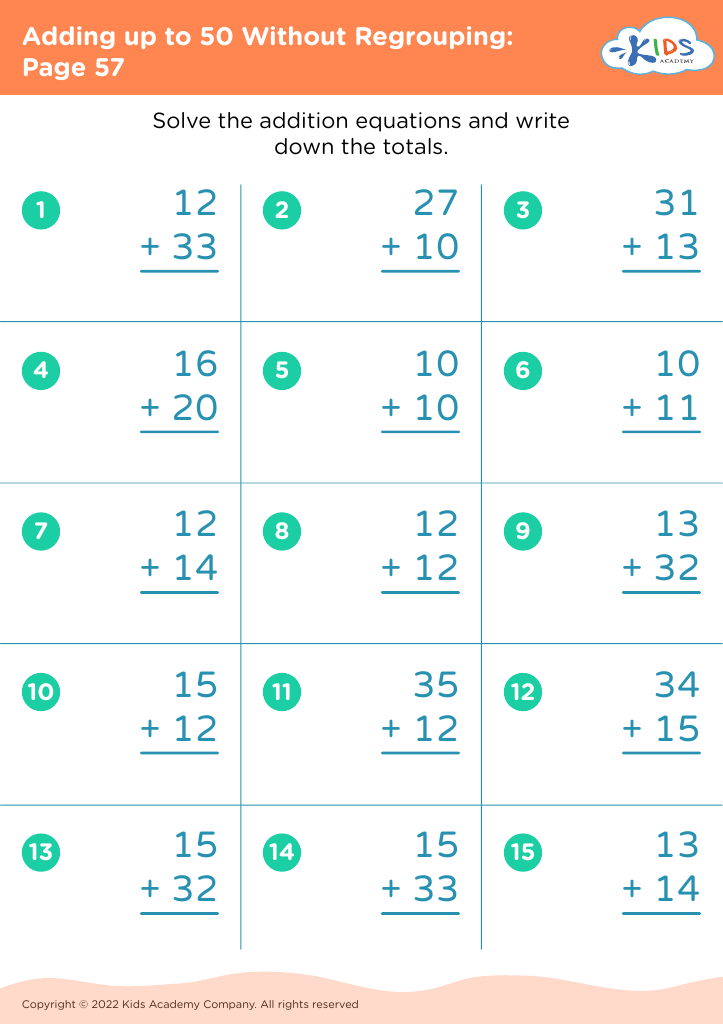
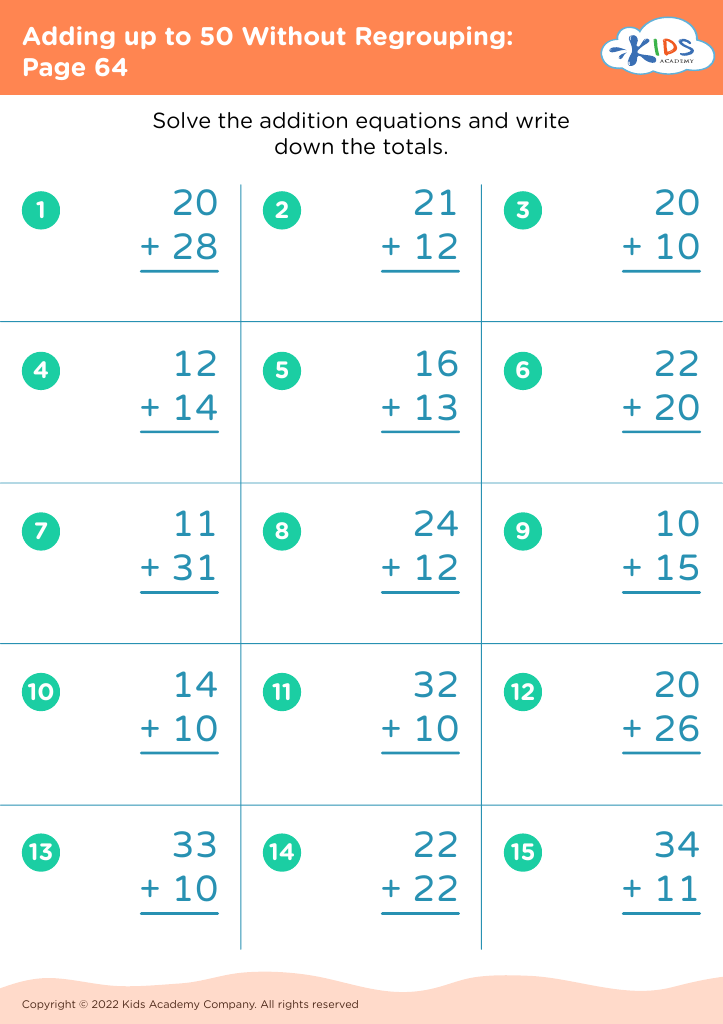
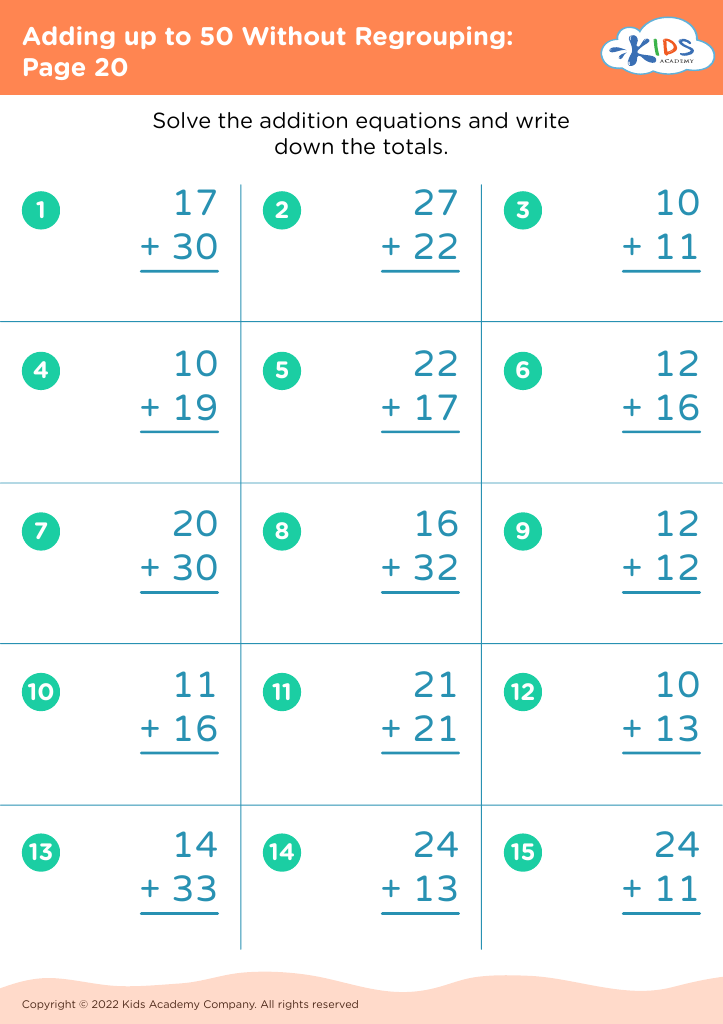
Enhance your child's reading comprehension and math skills with our "Adding Up to 50 Without Regrouping Worksheets" designed specifically for ages 7-9. These engaging worksheets focus on simple addition problems that reinforce basic math concepts without the need for regrouping. Each worksheet encourages students to practice reading instructions carefully, ensuring they understand the problems before solving them. Ideal for classroom use or at-home learning, these resources promote critical thinking and problem-solving abilities while building a strong foundation in both literacy and numeracy. Give your child the tools they need to succeed in math and reading with our interactive worksheets!


Reading comprehension is a vital skill for children, particularly for those aged 7-9, as it forms the foundation for their overall academic success. When children understand what they read, they are better equipped to absorb information across various subjects, enhancing their learning experiences. Strong reading comprehension also fosters critical thinking, allowing children to analyze and reflect on the material they engage with.
Adding numbers up to 50 without regrouping is another essential skill for this age group. It promotes arithmetic fluency, enabling children to perform calculations quickly and accurately. This skill is crucial for their mathematical development, helping them build confidence in problem-solving and higher-level math concepts. When comprehension and basic math skills are integrated, students can better grasp real-world applications, such as budgeting or measuring.
For parents and teachers, focusing on these skills not only supports children’s academic progress but also encourages a love for learning. Engaging them in reading and math activities can stimulate their curiosity and enthusiasm, laying the groundwork for lifelong learning. Overall, nurturing reading comprehension and basic math skills equips children with the tools they need to navigate their education successfully and thrive in future endeavors.